


Weak rupee makes gold smuggling, bets attractive

September 15, 2012

New Delhi, September 15: When 26-year-old Abdul Salam from Dubai was arrested at Mumbai airport last month with 156 gold chains concealed in his shoes, he was trying to land an irresistible windfall. Gold prices are rising faster in India than overseas. And this has brought back a profit opportunity, legal, not-quite-legal and illegal.

Gold arbitrage is promising punters as much as 12% annual return on investment. For some, it's almost Haji Mastan time again. But here's a difference - the infamous gold smuggler arbitraged on government ban on gold imports, today's shadier punters rely on the rupee's weakness against the dollar and the impact a weak rupee has on local gold prices.

There has been a 10-fold increase in the number of gold smuggling cases in recent months. Between April and June this year, authorities impounded gold worth 940 crore in some 200 cases of smuggling, up 272% over the same period last year, finance ministry data shows.

Smugglers make money if they can successfully avoid paying duties - 4% customs duty and other taxes, which add 5%-plus to the landed cost of gold.

Arbitraging on gold in less risky ways is possible - but complicated. The incentives, for all kinds of punters, is however simple to understand.

Take this price comparison. On September 10, 2011, the spot London price was $1,857/ounce. The price on MCX in Mumbai was 28,152/10 gms. On September 10, 2012, the spot London price was $1,736. The price on MCX was 32,035. In other words, while gold overseas dropped 6.5% in last one year, gold on MCX has risen almost 14%.

Why? Last September, the dollar was trading at 46.48. Now, the exchange rate is 55.36. It's this near- 20% depreciation of the rupee that has pushed up local gold prices.

The thumb rule is that every one rupee rise or fall in the exchange rate leads to a movement of 500-550 per 10 gm in the same direction on MCX. Since the rupee is expected to further weaken against the dollar as companies scramble to pay back overseas loans in the next couple of months, gold's faster rise in India is virtually guaranteed for the rest of the year.

"Normally international gold prices rise on the back of a weakening dollar. Currently, while the dollar's weakness continues to push up gold, the dollar has strengthened against the rupee. That is why Indian prices are higher than the world market. It is a pure currency play," says analyst Thiagarajan Gnanasekar at CommTrendz Research and Fund Management.

How does a canny investor - assuming he's not keen on smuggling - take advantage of this currency play?

When gold lands legally in India, it attracts taxes that add up to more than 5% (4% customs duty and local taxes). After paying that duty, there's no real possibility of arbitrage. That's why NRIs, allowed to legally import 1 kg gold per head, can't play the local market.

Theoretically, an Indian investor can buy a gold contract on New York Mercantile Exchange's Comex division, hedge the rupee against the dollar, and sell an equivalent contract on the MCX, says Ashok Mittal, CEO, Emkay Commotrade, a brokerage.

This can be a high risk strategy. You have to pay some cash upfront as margin money in both MCX and Comex along with the brokerage fees. There is the cost of hedging the rupee against the dollar.
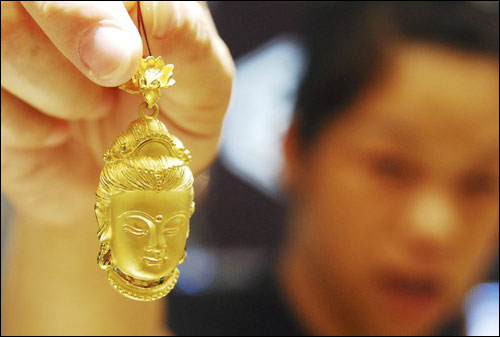

gold


Comments

Add new comment

  • Coastaldigest.com reserves the right to delete or block any comments.
  • Coastaldigset.com is not responsible for its readers’ comments.
  • Comments that are abusive, incendiary or irrelevant are strictly prohibited.
  • Please use a genuine email ID and provide your name to avoid reject.
Agencies
July 7,2020

New Delhi, Jul 7: The University Grants Commission (UGC) has issued revised guidelines regarding the conduct of terminal semesters and final year exams by Universities and educational institutions. It has been suggested that exams may be completed by September in online or offline modes.

Releasing a statement, the UGC said it accepted the recommendations suggested by the expert committee. "In continuation to earlier Guidelines issued on 29.04.2020 and based on the Report of the Expert Committee, the UGC Revised Guidelines on Examination and Academic Calendar for the Universities in view of COVID-19 Pandemic were also approved by the Commission in its emergent meeting held on 6th July 2020," the statement read.

The Commission further said that while it was important to safeguard principles of health, safety and equal opportunities, it was also very important to ensure academic credibility, career opportunities and future progress of students.

"The Commission approved the recommendations of the Expert Committee regarding the conduct of terminal semester(s)/ final year(s) examinations by the universities/ institutions to be completed by the end of September 2020 in offline (pen & paper online/ blended (online + offline) mode," it added.

The UGC also said that if required it would also issue relevant details related to admissions and academic calendar in the universities and colleges. It asked the students to adopt the latest guidelines and complete the terminal semester or final year exams accordingly. 

Comments

Add new comment

  • Coastaldigest.com reserves the right to delete or block any comments.
  • Coastaldigset.com is not responsible for its readers’ comments.
  • Comments that are abusive, incendiary or irrelevant are strictly prohibited.
  • Please use a genuine email ID and provide your name to avoid reject.
News Network
January 9,2020

New Delhi, Jan 9: Amazon founder and CEO Jeff Bezos will be visiting India next week and is likely to meet Prime Minister Narendra Modi and officials, besides industry leaders, according to sources.

The top executive will also attend SMBhav – an event focussing on small and medium businesses in India - that is slated for January 15-16 in the capital city.

When contacted, Amazon declined to comment.

Amazon, which has seen significant growth in its business in India, has also witnessed protest from a section of traders in the country who claim that e-commerce giants including Amazon and Walmart-owned Flipkart offer deep discounts and engage in unfair business practices.

Last year, the government had tightened rules for e-commerce marketplaces with foreign investment. These rules barred such platforms from offering products of sellers in which they hold a stake and banned exclusive marketing arrangements among other clauses. Following this, Amazon restructured its joint ventures to ensure compliance.

Bezos is likely to discuss regulatory issues in his meeting with the government officials.

He is also slated to engage with SMBs during the SMBhav event. The event - which will focus on discussions around how technology adoption can enable SMBs in India - is slated to see participation from industry experts, policymakers, solution providers and Amazon leadership.

Comments

Add new comment

  • Coastaldigest.com reserves the right to delete or block any comments.
  • Coastaldigset.com is not responsible for its readers’ comments.
  • Comments that are abusive, incendiary or irrelevant are strictly prohibited.
  • Please use a genuine email ID and provide your name to avoid reject.
News Network
June 18,2020

New Delhi, Jun 18: Prime Minister Narendra Modi on Thursday launched the auction process for 41 coal blocks for commercial mining, a move that opens India’s coal sector for private players, and termed it a major step in the direction of India achieving self-reliance.

Launching the auction of mines for commercial mining, that is expected to garner ₹33,000 crore of capital investment in the country over next five to seven years, the Prime Minister said India will win the coronavirus war and turn this crisis into an opportunity, and the pandemic will make India self-reliant.

The launch of the auction process not only marks the beginning of unlocking of the country’s coal sector from the lockdown of decades , but aims at making India the largest exporter of coal, the Prime Minister said.

Presently, despite being the world’s fourth largest producer, he said India is the second largest importer of the dry-fuel.

“Allowing private sector in commercial coal mining is unlocking resources of a nation with the world’s fourth-largest reserves,” he pointed out.

Major scams had taken place in coal action earlier, but the system has been made “transparent” now, the Prime Minister said lambasting past policies of keeping the sector closed.

Mr. Modi said that this auction process will result in major revenues to states and create employment besides developing the far-flung areas.

The commencement of auction process of these blocks, part of the series of announcements made under ‘Atmanirbhar Bharat Abhiyan’, is likely to contribute ₹20,000 crore revenues annually to the state governments.

In line with the Prime Minister’s self-reliance call, the aim behind the auction process is to achieve self-sufficiency in meeting energy needs and boosting industrial development.

The government has taken an important decision to open up coal and mining sector to competition, capital and technology, he said.

Coal and Mines Minister Pralhad Joshi, who was also be present during the launch event, said ₹50,000 crore is being invested in the sector to jack up India’s coal output to 1 billion tonne.

With a view to achieve self-reliance in the coal sector, the Ministry of Coal in association with FICCI launched the process of auction of 41 coal mines under the provisions of Coal Mines (Special Provisions) Act and Mines and Minerals (Development and Regulation) Act.

Upon attainment of peak rated capacity of production of 225 million tonnes (MT), the government said, these mines will contribute about 15% of the country’s projected total coal production in 2025-26.

It will also lead to employment generation for more than 2.8 lakh people — direct employment to approximately 70,000 people and indirect employment to approximately 2,10,000 people, as per the government.

Comments

Add new comment

  • Coastaldigest.com reserves the right to delete or block any comments.
  • Coastaldigset.com is not responsible for its readers’ comments.
  • Comments that are abusive, incendiary or irrelevant are strictly prohibited.
  • Please use a genuine email ID and provide your name to avoid reject.