


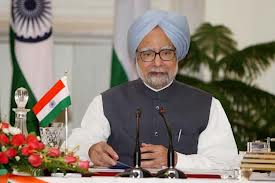
Cabinet to consider FDI in pension, insurance today

October 4, 2012

singh

New Delhi, October 4: In another round of big-ticket reforms, the Union Cabinet will consider on Thursday raising the FDI cap in insurance sector to 49 percent and opening the pension sector to foreign investment besides creation of a National Investment Board.

The Cabinet will also consider a number of other crucial measures like giving more powers to commodity market regulator FMC, Competition Bill to bring all sectors under Companies Act, and model tripartite agreement for operationalising the Infrastructure Development Fund (IDF), sources said.

This is the second time within a month that the Cabinet would consider such major proposals to push reform initiative. On September 13, the government had approved the controversial decision of allowing 51 percent FDI in multi-brand retail, besides relaxing FDI norms for civil aviation and broadcasting sector.

While the Insurance Bill seeks to raise the FDI cap insurance sector to 49 percent, from the 26 percent at present, the proposal in the Pension Fund regulatory and Development Authority (PFRDA) Bill seeks to open up the pension sector to foreign Direct Investment (FDI).

Besides, the NIB, to be headed by the Prime Minister, is proposed to be set up for according fast-track clearances to infrastructure projects.

The Forward Contract Regulation Act (Amendment) Bill that aims to give more powers to commodity markets regulator FMC. The Bill seeks to strengthen Forward Market Commission (FMC) by providing it financial autonomy, facilitate the entry of institutional investors and introduce new products for trading such as options and indices.

The Union Cabinet is also likely to approve tomorrow, the 12th Five-Year Plan (2012-17) document that proposes to lower annual average economic growth rate target during the period to 8.2 percent from 9 percent envisaged earlier in view of fragile recovery.

The Cabinet is also expected to consider proposal from the Civil Aviation Ministry for approving Lucknow, Varanasi, Tiruchirapalli, Mangalore and Coimbatore as international airports.

Besides, it would also take up the proposal from the Ministry of Corporate Affairs (MCA) to amend the Competition Act 2002 and amendments to the Companies Bill, 2011, following the report of the Standing Committee.

The proposal for IDF before the Cabinet includes a tripartite agreement between developer, lender (bank) and the IDF. The loans by the banks would be refinanced by the IDF so that banks have free funds for more lending.

The IDF, which was proposed in the Union Budget for 2011-12 fiscal, is aimed at accelerating and enhancing flow of long term debt for funding the ambitious programme of infrastructure development in the country.

Besides, the Cabinet would also take up the proposal of amending the Double Taxation Avoidance Agreement (DTAA) with Armenia and Poland.

Comments

Add new comment

  • Coastaldigest.com reserves the right to delete or block any comments.
  • Coastaldigset.com is not responsible for its readers’ comments.
  • Comments that are abusive, incendiary or irrelevant are strictly prohibited.
  • Please use a genuine email ID and provide your name to avoid reject.
Agencies
February 23,2020

New Delhi, Feb 23: Dreaded underworld don Ravi Pujari, operating from overseas, has been reportedly arrested in South Africa and efforts are on for his deportation to India.

Pujari, who parted ways with underworld don Chhota Rajan, had jumped bail from Senegal, last year and had escaped to South Africa, where he was involved in big-time drug trafficking and extortion racket.

Sources in Indian Intelligence said that Ravi Pujari, who was hiding with a false identity of Anthony Fernandes, a Burkina Faso passport holder, was located in a remote village in South Africa.

On a tip-off from Indian external intelligence agency, the Senegal police air dashed South Africa last week. Pujari, 52, wanted in over 200 cases of heinous crimes, including murder and extortion, was detained with the help of South African agencies.

Sources in Mumbai Police said that Pujari's arrest has not yet been confirmed officially but Ministry of External Affairs is in touch with its mission in South Africa. An official in MEA refused to speak on the issue. Embassy of Senegal in Vasant Vihar, New Delhi, also did not respond to IANS' queries in connection with Pujari's arrest.

The mafioso first came into news in early 2000 when he started extorting huge amounts from famous Bollywood personalties and builders. He was involved in an attempt to murder case, aimed at killing a prominent lawyer of Mumbai.tip-off

Pujari's wife Padma and three children also fled India and some of them hold Burkina Faso passport. His son who was recently married in Australia reportedly holds an Australian passport.

Earlier last year Ravi Pujari, living under the identity of Anthony had jumped bailed from a Senegal court through fraudulent means. IANS had accessed the don's new passport. Pujari now goes under the name of Anthony Fernandes and is a citizen of Burkina Faso, a West African country, his date of birth is shown as 25.1.1961.

Pujari, a movie junkie influenced by Amitabh Bachchan's portrayal as Anthony Gonsalves in 'Amar Akbar Anthony' was using the name, Anthony Fernandes. This passport was issued on 10.7.2013 and is valid till 8.7.2023. The passport showed his profession as Agent Commercial which means that he is designated as a businessman running a chain of restaurants Namaste India in Senegal, Burkina Faso and neighbouring countries.

Pujari's lawyers in Senegal had argued in the court citing that he is Anthony Fernandes, a businessman from Burkina Faso as mentioned in his passport and not a fugitive as claimed by the Indian Government.

Clearly indicating a collision between top government functionaries of Burkina Faso and Pujari in which an influential Indian businessman, who is his partner in a restaurant chain, may have played the role of a conduit.

Comments

Add new comment

  • Coastaldigest.com reserves the right to delete or block any comments.
  • Coastaldigset.com is not responsible for its readers’ comments.
  • Comments that are abusive, incendiary or irrelevant are strictly prohibited.
  • Please use a genuine email ID and provide your name to avoid reject.
Agencies
January 9,2020

The World Bank says that a lack of credit and drop in private consumption have led to a gloomy growth outlook for India with a steep cut in growth rate for the current fiscal year and only a modest gain projected for the next year.

India's growth rate is forecast to be only 5 per cent for the current fiscal year, weighed down by a growth of only 4.5 per cent in the July-September quarter, according to the 2020 Global Economic Prospects report released on Wednesday.

"In India, [economic] activity was constrained by insufficient credit availability, as well as by subdued private consumption," the Bank said.

The growth rate is forecast by the Bank to pick up to 5.8 per cent in the next fiscal year and to 6.1 per cent in 2021-22.

India's growth rate was 6.8 per cent in 2018-19.

The 5 per cent growth rate projection for the current financial year is a sharp cut of 2.5 per cent from the 7.5 per cent forecast made by the Bank in January last year, toppling it from the rank of the world's fastest growing economy.

India's performance follows a global trend of lowered growth weighed down by developed economies.

The report estimated world economic growth rate to be only 2.4 per cent last year and forecast it to edge up 0.1 per cent to 2.5 per cent in the current year.

Even with the lower growth rate of 5 per cent in the current fiscal year and 5.8 per cent forecast for the next, India holds the second rank among large economies, behind only China with an estimated growth rate of 6.1 per cent for 2019 and 5.9 per cent this year.

The report blamed "weak confidence, liquidity issues in the financial sector" and "weakness in credit from non-bank financial companies" for India's slowdown.

The Bank predicated India's recovery to 5.8 per cent in the coming financial year for India but "on the monetary policy stance remaining accommodative" and the assumption that "the stimulative fiscal and structural measures already taken will begin to pay off."

It also warned that sharper-than-expected slowdown in major external markets such as United States and Europe, would affect South Asia through trade, financial, and confidence channels, especially for countries with strong trade links to these economies."

The Bank said that the growth of advanced economies was 1.6 per cent last year and "is anticipated to slip to 1.4 per cent in 2020 in part due to continued softness in manufacturing."

In contrast the growth of emerging market and developing countries is expected to accelerate from 3.5 per cent last year to 4.1 per cent this year, the report said.

In South Asia, Bangladesh is estimated to have the highest growth rate of 7.2 per cent in the current fiscal year, although down from 8.1 per cent last fiscal year.

But its higher regional growth rates are coming off a lower base with a per capital gross domestic product of $1,698 compared to $2,010 for India.

Bangladesh is expected to grow by 7.3 per cent in the next financial year.

Pakistan's growth rate is estimated at only 2.4 per cent in the current fiscal year and is projected to rise to 3 per cent in the next, according to the Bank.

The Bank blamed monetary tightening in Pakistan for a sharp deceleration in fixed investment and a considerable softening in private consumption for the fall in growth rate from 3.3 per cent in the 2018-19 fiscal year.

Sri Lanka's growth rate was estimated to be 2.7 per cent last year and forecast to grow to 3.3 per cent this year.

Nepal grew by an estimated 6.4 per cent in the current fiscal year and will rise to 6.5 per cent in the next.

Comments

Add new comment

  • Coastaldigest.com reserves the right to delete or block any comments.
  • Coastaldigset.com is not responsible for its readers’ comments.
  • Comments that are abusive, incendiary or irrelevant are strictly prohibited.
  • Please use a genuine email ID and provide your name to avoid reject.
Agencies
January 4,2020

New Delhi, Jan 4: "Sovereign, socialist, secular, democratic republic" is how India is referred to in the preamble of the Constitution. However, J Nandakumar, a key RSS leader and All India Convenor Prajna Pravah, a Sangh offshoot, wants India to reconsider the inclusion of the word "secular", claiming secularism is a "western, Semitic concept".

In an exclusive interview to news agency, Nandakumar said: "Secularism is a western, Semitic concept. It came into existence in the West. It was actually against Papal dominance."

He argued that India does not need a secular ethos as the nation has moved "way beyond secularism" since it believes in universal acceptance as against the western concept of tolerance.

The RSS functionary on Thursday released a book here named "Hindutva in the changing times". The book launch event was also attended by senior RSS functionary Krishna Gopal.

Nandakumar, who has attacked the Mamata Banerjee government in his book for alleged "Islamisation of West Bengal", told IANS: "We have to see whether we need to put up a board of being secular, or that whether we should prove this through our behaviour, actions and roles."

It is for society to take a call on this, rather than by any political class, on whether the preamble to the Indian Constitution should continue to have the word "secular" in it or not, he added.

In between signing his books and obliging wannabe Hindutva cadres with selfies, Nandakumar said that the very existence of the word "secular" in the preamble was not necessary and how the constitution founders too were against it.

"Baba Saheb Ambedkar, Ladi Krishnaswamy Aiyaar -- all debated against it and said it (secular) wasn't necessary to be included in the preamble. That time it was demanded, discussed and decided not to include it," he said.

Ambedkar's opinion was, however, disregarded when Indira Gandhi "bulldozed" the word "secular", in 1976, said the head of the Prajna Pravah, an umbrella body of several right-wing think-tanks

As Nandakumar prepared to return to his base in Kerala, where, he emphasises, the RSS has its work cut out in the "fight against the Kunnor model", he said that the inclusion of "secular" was done with the intent to damage the concept of Hindutva.

"It was to demolish, destroy the overarching principle of Hindutva that binds us together", he said.

Asked whether the Sangh would pressurise the BJP, which has 303 seats in the Lok Sabha, to omit "secular" from the Constitution preamble, Nandakumar smilingly refused to reply.

Comments

Add new comment

  • Coastaldigest.com reserves the right to delete or block any comments.
  • Coastaldigset.com is not responsible for its readers’ comments.
  • Comments that are abusive, incendiary or irrelevant are strictly prohibited.
  • Please use a genuine email ID and provide your name to avoid reject.