


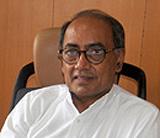
Digvijay writes to PM, seeks probe against Gadkari

October 23, 2012

digvijay_copy


New Delhi, October 23: Congress General Secretary Digvijay Singh today wrote to Prime Minister Manmohan Singh demanding a probe into allegations of dubious funding of companies run by BJP president Nitin Gadkari.


In his communication, Digvijay Singh urged the Prime Minister to ask the Ministry of Corporate Affairs to institute an inquiry by the Serious Fraud Investigation Office (SFIO) into the matter, saying that, "a prima facie case does exist".


He was referring to reports related to the association of BJP chief with a Nagpur-based company Purti Power and Sugar Limited, regarding which "irregularities" have come to the fore.


"Gadkari has also said that he is open to a free and fair investigation. Being the National President of BJP, it is in the fitness of things that his case is properly investigated and he gets a fair opportunity to prove his innocence and clear his name," Singh said.


It is for the first time that any Congress leader has demanded a probe into the issue.

The Party has so far been maintaining that there should not be any politics on the private business of individuals and unless some investigating agency stumbles upon any irregularity, there is no need for Congress to target the BJP chief.


Singh has also attached with the letter a report compiled from information taken from the official site of the Ministry of Corporate Affairs and said that findings of a TV investigation as well as this report make "some very pertinent points that requires serious attention."


In his letter, Singh, a known detractor of Gadkari, said that it is believed that the BJP chief had acquired Purti Sugar Mill, which had shut down.


Complimenting NDTV for the "exhaustive investigation" carried out by it on PPSL, he said certain points require serious attention.


"The companies that bought equity in PPSL appear to be defunct companies which had not done business for a long time. Out of nowhere these companies got the capital to buy equity in PPSL, most likely from another layer of Shell Companies...


"Most of these companies have given bogus addresses... It is also interesting that all the companies have used a single email ID that is [email protected]," he said.


Singh mentioned in the letter that four names are common to list of Board of Directors of all the 18 companies.


Gadkari had recently filed a defamation suit against the Congress general secretary.

At the AICC briefing, party spokesperson Sandeep Dikshit merely said that it was for the government to decide about probing the issue when asked whether the party endorses the demand made by Singh.


At the same time, he sought to insist that the allegations of corruption against Gadkari were "qualitatively different" than those faced by Robert Vadra, son-in-law of Sonia Gandhi, when asked about parallel between the two episodes.


"The cases of Gadkari and Vadra are different. After the statement of the Haryana government and DLF, it is clear that no favour has been done to him. This issue is only political. Since somebody has made money, he should not be targetted only because he is related to somebody.


"We are also saying on Gadkari issue that let the government agencies first examine the issue and something comes out that the allegations are true, then we will see it," Dikshit said.


On BJP MP Ram Jethmalani asking Gadkari not to seek a second term in office in the wake of allegations of corruption against him, the Congress spokesman said it was BJP's internal issue.


"It is for the BJP to decide what kind of President they would like," he said.

A senior party leader, who declined to be identified, said that the continuance of Gadkari in such a situation is to the benefit of Congress.


Replying to questions why Congress is soft-pedalling the issue of Gadkari, Dikshit said.


"There is no issue of compromise. Institutions will do their job. If they come out certain facts, political parties will respond... Every business deal of a private individual is not a political issue."


Asked about Digvijay's letter to the Prime Minister on the issue, Dikshit said that since a letter has been sent, "let the Prime Minister take a decision on it".

Comments

Add new comment

  • Coastaldigest.com reserves the right to delete or block any comments.
  • Coastaldigset.com is not responsible for its readers’ comments.
  • Comments that are abusive, incendiary or irrelevant are strictly prohibited.
  • Please use a genuine email ID and provide your name to avoid reject.
News Network
February 10,2020

New Delhi, Feb 10: Former finance minister P Chidambaram on Monday tore into the Modi government's handling of the economy, saying it was close to collapse and was been attended by "very incompetent doctors."

Initiating the debate on the Union Budget for 2020-21, he said rising unemployment and falling consumption was making India poorer.

The economy, he said, is facing demand constraints and is investment starved. The economy is facing fall in consumption and rising unemployment.

"Fear and uncertainty prevails in the country," he added.

He said the chief economic advisor to the BJP government for four years, Arvind Subramanian has stated that the economy is in the ICU. But "I would say the patient has been kept out of ICU and incompetent doctors are looking at the patient," Chidambaram said.

"It is dangerous to have a patient out of ICU and being looked upon by incompetent doctors. What is the point standing around and chanting slogan 'Sab ka saath, sab ka vishwas'," he said, adding every competent doctor the Modi government could ever identify has left the country.

His said a list of such people included former RBI governor Raghurman Rajan, former CEA Arvind Subramanian, former RBI governor Urjit Patel and former NITI Aayog vice chairman Arvind Panagariya.

"Who are your doctors, I want to know," he said, adding the government considers Congress as untouchable and doesn't think of any good about the rest of the opposition and so doesn't consult them.

Chidambaram charged that instead of putting money in the hands of people, the Modi government "put money in hands of 200 corporates" by way of corporate tax.

He said Finance Minister Nirmala Sitharaman in her 160- minute budget speech did not talk of the economy and its management.

"You are living in echo chambers. You want to hear your own voice," he said.

Listing problems with the Modi government, Chidambaram said it refuses to admits in mistakes, lives in denial and has predispositions.

The demonetisation of old 1000 and 500 rupee notes, as well as the hurried implementation of the Goods and Services Tax (GST), are "monumental blunders" that ruined the economy, he said, adding the Modi regime is predisposed to protectionism, a 'strong' rupee and is against bilateral and multilateral agreements.

"It is living in denial," he said, adding the economic growth has fallen for hereto unseen six consecutive quarters.

He wondered on the narrative Finance Minister Nirmala Sitharaman was trying to give after reading out a 160-minute budget speech with few pages left unread.

Her budget neither made any reference to the Economic Survey nor picked up a single idea from it, he said.

Chidambaram, who is credited with presenting a 'dream budget' more than two decades back, said the GDP growth has declined for six consecutive quarters, agriculture is growing by just 2 per cent, while consumer price inflation has risen from 1.9 per cent in January 2019 to 7.4 per cent in a matter of 11 months.

Also, food inflation is at 12.2 per cent. Bank credit is growing 8 per cent with non-food credit rising by 7-8 per cent and credit to industry by just 2.7 per cent. Credit to agriculture has declined from 18.3 per cent to 5.3 per cent and that for MSMEs from 6.7 per cent to 1.6 per cent.

Overall industrial index showed just 0.6 per cent growth. "Every major industry is either near zero or in negative zone," he said, adding thermal power plants are operating at just 55 per cent of the capacity as factories have either closed or are on the verge of closure.

"That gives you a good picture of the state of economy. You don't require MRI," he said. "You are in management for six years. How long can you blame previous managers."

He charged the government with burying unfavourable reports such as the labour survey that put unemployment at 45 -year high of 6.1 per cent at end of 2017-18. Also, consumer expenditure has falling to 3.7 per cent between 2011-12 and 2017-18.

Drilling holes in Budget numbers, he said the 2019-20 budget projected a nominal GDP growth of 12 per cent but ended with just 8.5 per cent. Fiscal deficit was targeted to be shrunk to 3.3 per cent of the GDP but ended by at 3.8 per cent and in the next fiscal it is being targeted at 3.5 per cent.

Revenue deficit was targeted at 2.3 per cent in fiscal ending March 31, 2020 but ended up at 2.4 per cent and in the next it will rise to 2.8 per cent, he said, adding capital expenditure in the next fiscal will shrink to 0.7 per cent from 1.4 per cent in the current.

Net tax revenue in the current fiscal was targeted at Rs 16.49 lakh crore but only Rs 9 lakh crore was collected in first nine months till December 2019 and "you want us to believe this will rise to Rs 15 lakh crore by March 2020," he said.

Similarly, expenditure in 2019-20 was pegged at Rs 27.86 lakh crore but only Rs 11.78 lakh crore spent during April- December and by March this is projected to rise to Rs 27 lakh crore.

"You have no money to spend... and these are masked by numbers," he said. "Numbers are not easily acceptable or believable."

Chidambaram said the government is facing shortfall in all forms of taxes - Rs 1.56 lakh crore on corporate tax, Rs 10,000 crore on personal income tax, Rs 30,000 crore on customs, Rs 52,000 crore on excise and Rs 51,000 crore on GST.

This despite "the extraordinary powers" and "all kinds of power" given to lower level tax officials, he said.

He read of list of heads under which allocation has fallen - food subsidy, agriculture, PM-Kisan, rural roads, mid-day meal scheme, ICDS, skill development, Ayushman Bharat, rural development and MGNEGA.

Comments

Add new comment

  • Coastaldigest.com reserves the right to delete or block any comments.
  • Coastaldigset.com is not responsible for its readers’ comments.
  • Comments that are abusive, incendiary or irrelevant are strictly prohibited.
  • Please use a genuine email ID and provide your name to avoid reject.
Agencies
July 18,2020

New Delhi, Jul 18: National carrier Air India on Friday said that it is in a ‘very challenging financial’ situation and is taking recourse to several initiatives, with a view to ensuring the continuance of its operations.

The airline, in a statement, noted that it has introduced the partially voluntary 'Leave Without Pay' (LWP) scheme on July 14.

"The scheme primarily enables employees to avail the benefits of proceeding on leave without pay on a voluntary basis. The LWP scheme has been introduced for grant of leave without pay and allowances for permanent employees for a period of six months or two years, which is extendable upto 5 years," the statement said.

"Air India had brought out similar scheme earlier... Several hundred employees have, in the past, availed of the LWP Scheme."

As per the statement, in the wake of the ongoing Covid-19 pandemic, there may be employees who are unable to attend their office duties in person on account of personal reasons.

"The LWP scheme enables employees to take a break from their office responsibility for a defined period of time with the approval of the management, while retaining their employment with the company," the statement said.

"They will continue to avail facilities such as passage, medical and housing at specified rates."

Accordingly, the LWP scheme provides the opportunity to employees to take up alternative employment with the approval of the management during the period of the said leave, the airline said.

"The LWP scheme is a win-win situation for both the management as well as employees as it provides flexibility to employees and simultaneously reduces the wage bill for the company," the statement said.

"It is important to note here that the Covid-19 outbreak has very seriously impacted the airline sector and currently, the airline operations of the company are a small fraction of the prior Covid level operations."

The airline said that employees are encouraged to apply for availing the benefit of the scheme, in the prescribed format, by August 15.

"The only addition in this scheme as compared to the earlier LWP scheme is that the management can pass an order requiring the employees to go on leave for a period of six months or two years (extendable upto 5 years) compulsorily taking into consideration 'Suitability, Efficiency, Competence, Quality of performance, Health, Non-availability of employee and Redundancy'," the statement said.

Furthermore, the airline said that this provision has been introduced for use, "very sparingly", with a view to ensuring that the overall efficiency of the organisation, improves and the management will ensure that this will be implemented with complete fairness and transparency as per prescribed procedure.

Consequent to the announcement of the scheme, Air India unions are discussing their strategy against the move which might involve legal recourse.

An Air India union leader on Friday told IANS: "This is going to affect the livelihood of many. Why not every employee of AI take LWP a few days every month. This way the burden can be shared."

"The motive of the top management is to save their money by snatching money from lower employees."

According to Air India PIM document, as on November 1, 2019, the airline, on a standalone basis (without subsidiaries), had around 14,000 employees, including fixed term contract staff.

The development comes as the Centre has re-initiated the airline's divestment plan with new norms.

Interestingly, this time, it has sweetened the deal by substantially reducing the debt on the airline's account books and offered a 100 per cent stake in the loss-making airline.

The last date for bid submission to acquire Air India has also been extended to August 31.

Comments

Add new comment

  • Coastaldigest.com reserves the right to delete or block any comments.
  • Coastaldigset.com is not responsible for its readers’ comments.
  • Comments that are abusive, incendiary or irrelevant are strictly prohibited.
  • Please use a genuine email ID and provide your name to avoid reject.
News Network
March 27,2020

Mumbai, Mar 27: The Reserve Bank of India (RBI) on Friday lowered the key repo rate by 75 basis points to 4.4 per cent in a bid to arrest the economic slowdown amid coronavirus (COVID-19) outbreak.
The reverse repo rate now stands at 4 per cent, down by 90 basis points, said RBI Governor Shaktikanta Das adding this has been done to make it unattractive for banks to passively deposit funds with the central bank and instead lend it to the productive sectors.
The six-member monetary policy committee (MPC) met on March 24, 25 and 27 and voted 4:2 in favour of the repo rate reduction. The MPC also decided to continue with the accommodative stance as long as it is necessary to revive growth and mitigate the impact of COVID-19 on the economy while ensuring that inflation remains within the target.
"The need of the hour is to shield the economy from the pandemic," said Das. "We need to mitigate the impact of coronavirus, revive economic growth and provide financial stability."
Repo rate is the rate at which a country's central bank lends money to commercial banks, and the reverse repo rate is the rate at which it borrows from them.
The RBI Governor further said that the economic growth and inflation projection will be highly contingent depending on the duration, spread and intensity of the pandemic.
"Global economic activity has come to a near standstill as COVID-19 related lockdowns and social distancing are imposed across a widening swathe of affected countries. Expectations of a shallow recovery in 2020 from 2019's decade low in global growth have been dashed," said Das.
"The outlook is now heavily contingent upon the intensity, spread and duration of the pandemic. There is a rising probability that large parts of the global economy will slip into recession," he said.
However, the RBI has injected liquidity of Rs 2.8 lakh crore via various instruments equal to 1.4 per cent of GDP. "Along with today's measures, liquidity measures equal to 3.2 per cent of GDP. The RBI will take continuous measures to ensure liquidity in the system."
The RBI governor has said that all banking institutions can offer a three-month moratorium on all loans for a period of three months. The RBI has also allowed banks to restructure the working capital cycle for companies without worrying that these will have to be classified as a non-performing asset (NPA).
The three-month moratorium will permit banks to avoid a large onset of NPAs during the 21-day lockdown and keep their books healthy.
Das said banks and other financial institutions should do all they can to keep credit flowing to economic agents facing financial stress on account of the isolation that the virus has imposed.
"Market participants should work with regulators like the RBI and the Securities and Exchange Board of India (SEBI) to ensure the orderly functioning of markets in their role of price discovery and financial intermediation," he said.

Comments

Add new comment

  • Coastaldigest.com reserves the right to delete or block any comments.
  • Coastaldigset.com is not responsible for its readers’ comments.
  • Comments that are abusive, incendiary or irrelevant are strictly prohibited.
  • Please use a genuine email ID and provide your name to avoid reject.