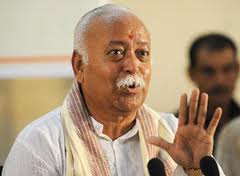
Nitin Gadkari issue BJP's internal matter: RSS

October 24, 2012

rss

New Delhi, October 24: RSS chief Mohan Bhagwat has refused to comment on the corruption allegation against BJP chief Nitin Gadkari, saying it was an internal matter of the saffron party.

"Gadkari's issue is BJP's internal matter," said Bhagwat.

Media reports on Tuesday said an infrastructure company, Ideal Road Builders (IRB), had made major investments in and given a large loan to a company controlled by Gadkari.

IRB had won contracts between 1995 and 1999 when Gadkari was the PWD minister in Maharashtra.

The reports said the addresses of some of the companies that had invested in Gadkari's company appeared to be dubious.

Gadkari, who seemingly has the backing of the RSS, did not react to the latest allegations — the way he promptly responded to IAC when it accused him of questionable land deals.

On Tuesday, however, BJP MP Jethmalani suggested that Gadkari should not aspire for a second term as party president.

Jethmalani told television channels that there "was suspicion about his integrity" and his continuation as BJP chief will weaken the party's fight in upcoming elections.

Comments

Add new comment

  • Coastaldigest.com reserves the right to delete or block any comments.
  • Coastaldigset.com is not responsible for its readers’ comments.
  • Comments that are abusive, incendiary or irrelevant are strictly prohibited.
  • Please use a genuine email ID and provide your name to avoid reject.
News Network
February 24,2020

New Delhi, Feb 24: They hail from vastly different backgrounds — Donald Trump is the son of a property tycoon while Narendra Modi is a descendant of a poor tea-seller.

Yet the two teetotallers, loved by right-wing nationalists in their home countries, share striking similarities that have seen them forge a close personal bond, analysts say.

Ahead of the American leader's first official visit to India, which begins in Modi's home state of Gujarat on Monday, the world's biggest democracy has gone out of its way to showcase the chemistry between them.

In Gujarat's capital Ahmedabad, large billboards with the words "two dynamic personalities, one momentous occasion" and "two strong nations, one great friendship" have gone up across the city.

"There's a lot that Trump and Modi share in common, and not surprisingly these convergences have translated into a warm chemistry between the two," Michael Kugelman of the Washington-based Wilson Center said.

"Personality politics are a major part of international diplomacy today. The idea of closed-door dialogue between top leaders has often taken a backseat to very public and spectacle-laden summitry."

Since assuming the top political office in their respective countries — Modi in 2014 and Trump in 2017 — the two men have been regularly compared to each other.

Trump, 73, and Modi, 69, both command crowds of adoring flag-waving supporters at rallies. A virtual cult of personality has emerged around them, with their faces and names at the centre of their political parties' campaigns.

A focus of Trump's administration has been his crackdown on migrants, including a travel ban that affects several Muslim-majority nations, among others, while critics charge that Modi has sought to differentiate Muslims from other immigrants through a contentious citizenship law that has sparked protests.

Both promote their countries' nationalist and trade protectionist movements — Trump with his "America First" clarion call and Modi with his "Make in India" mantra.

And while they head the world's largest democracies, critics have described the pair as part of a global club of strongmen that includes Russia's Vladimir Putin and Brazil's Jair Bolsonaro.

"There are many qualities that Trump and Modi share — a love for political grandstanding and an unshakable conviction that they can achieve the best solutions or deals," former Indian diplomat Rakesh Sood said.

Modi and Trump have sought to use their friendship to forge closer bonds between the two nations, even as they grapple with ongoing tensions over trade and defence.

Despite sharing many similarities in style and substance, analysts say there are some notable differences between the pair.

Modi is an insider who rose through the ranks of the Bharatiya Janata Party after starting out as a cadre in Rashtriya Swayamsevak Sangh.

Trump is a businessman and a political outsider who has in some sense taken over the Republican Party.

"Modi is a more conventional leader than is Trump in that he hasn't sought to revolutionise the office he holds in the way that Trump has," said Kugelman, a longtime observer of South Asian politics.

He added that genuine personal connections between leaders of both countries have helped to grow the partnership.

"George Bush and Manmohan Singh, Barack Obama and Singh, Obama and Modi, now Modi and Trump — there has been a strong chemistry in all these pairings that has clearly helped the relationship move forward," he added.

Trump has also stood by the Indian leader during controversial decisions, including his revocation of autonomy for Kashmir and his order for jets to enter Pakistani territory following a suicide bombing.

Analysts said the leaders would use the visit to bolster their image with voters.

A mega "Namaste Trump" rally in Ahmedabad on Monday will be modelled after the "Howdy, Modi" Houston extravaganza last year when the Indian leader visited the US and the two leaders appeared before tens of thousands of Indian-Americans at a football stadium.

"The success of this visit... will have a positive impact on his (Trump's) re-election campaign and the people of Indian origin who are voters in the US — a majority of them are from Gujarat," former Indian diplomat Surendra Kumar said.

"On the Indian side, the fact that Prime Minister Modi... (shares) such warmth, bonhomie and informality with the most powerful man on Earth adds to his stature... as well as with hardcore supporters."


Comments

Add new comment

  • Coastaldigest.com reserves the right to delete or block any comments.
  • Coastaldigset.com is not responsible for its readers’ comments.
  • Comments that are abusive, incendiary or irrelevant are strictly prohibited.
  • Please use a genuine email ID and provide your name to avoid reject.
Agencies
May 18,2020

India is among 58 nations, including 27 European Union members, who have moved a draft resolution demanding evaluation of the World Health Organisation (WHO)'s response towards the novel coronavirus pandemic.

The European Union-led draft resolution on global COVID-19 response is set to be tabled at the upcoming World Health Assembly on Monday.

The draft resolution demands initiation "at the earliest appropriate moment to review experience gained and lessons learned from the WHO-coordinated international health response to COVID-19".

"We are deeply concerned by the morbidity and mortality caused by COVID-19 pandemic, the negative impacts on physical and mental health and social well-being, the negative impacts on economy and society and the consequent exacerbation of inequalities within and between countries," read the draft.

"We express solidarity to all countries affected by the pandemic, as well as condolences and sympathy to all the families of the victims of COVID-19," it added.

The resolution says timelines are to be evaluated regarding "recommendations the WHO made to improve global pandemic prevention, preparedness, and response capacity".

The WHO on January 23 declare a global health emergency, but did not declare it and waited for a week for its director-general Tedros Adhanom Ghebreyesus to return from China.

By that time, COVID-19 cases increased 10 times and the virus entered 18 countries.

According to Health Policy Watch, till as late as February, the WHO did not support countries for imposing travel restrictions to China.

"When countries began evacuating their citizens from Wuhan, the COVID-19 epicentre, the WHO said it did not favour this step".

The WHO finally declared it a pandemic on March 11.

The global health body has come under criticism not just from the US for its response being "China-centric".

Comments

Add new comment

  • Coastaldigest.com reserves the right to delete or block any comments.
  • Coastaldigset.com is not responsible for its readers’ comments.
  • Comments that are abusive, incendiary or irrelevant are strictly prohibited.
  • Please use a genuine email ID and provide your name to avoid reject.
Agencies
February 10,2020

New Delhi, Fevb 10: Of the countries most at risk of importing coronavirus cases, India ranks 17th, researchers have found on the basis of a mathematical model for the expected global spread of the virus that originated in China's Wuhan area in December 2019.

So far, India has reported three coronavirus positive cases -- all from Kerala.

Among the airports in India, the Indira Gandhi International Airport in New Delhi is most at risk, followed by airports in Mumbai, Kolkata, Bengaluru, Chennai, Hyderabad and Kochi, according to the model.

The new model for predicting global novel coronavirus cases has been developed by researchers from Humboldt University and Robert Koch Institute in Germany.

"The spread of the virus on an international scale is dominated by air travel," said the study.

"Wuhan, the seventh largest city in China with 11 million residents, was the relevant major domestic air transportation hub with many connecting international flights before the city was effectively quarantined on January 23, 2020, and the Wuhan airport was closed. By then the virus had already spread to other Chinese provinces as well as other countries," it added.

The researchers said that it is possible to estimate how likely it is that the virus spreads to other areas by looking at air travel passenger numbers.

"The busier a flight route, the more probable it is that an infected passenger travels this route. Using these probabilistic concepts, we calculate the relative import risk to other airports. When calculating the import risk, we also take into account connecting flights and travel routes that involve multiple destinations," said the study.

The top 10 countries and regions at risk of importing coronavirus cases are: Thailand, Japan, South Korea, Hong Kong, Taiwan, USA, Vietnam, Malaysia, Singapore and Cambodia, according to the model.

While Thailand's national import risk is 2.1%, it is 0.2% for India, found the research.

The foundation of the model is the worldwide air transportation network (WAN) that connects approximately 4,000 airports with more than 25,000 direct connections.

The model accounts for both, the current distribution of confirmed cases in mainland China as well as airport closures that were implemented as a mitigation strategy.

This network theoretic model is based on the concept of effective distance and is an extension of a model introduced in the 2013 paper "The Hidden Geometry of Complex, Network-Driven Contagion Phenomena" published in the journal Science.

The current outbreak of the 2019-nCoV virus started in Wuhan city, Hubei province, China. While the first cases were reported as early as December 8, 2019, the outbreak gained global attention on December 31, 2019, when the World Health Organization was alerted to "several cases of pneumonia" by an unknown virus.

The new virus was soon identified as a novel coronavirus and named 2019-nCOV. It belongs to the family of viruses that include the common cold and viruses such as SARS and MERS. On January 20, 2020, it was confirmed that the coronavirus can be transmitted between humans, greatly increasing the risk of a global spread.

The death toll due to the novel coronavirus outbreak in China has increased to 811 on Sunday, surpassing that of the Severe Acute Respiratory Syndrome (SARS) epidemic in 2003.

Although about 20 countries have confirmed cases, China has accounted for about 99 per cent of those infected. The first foreign victims of the virus both died on Saturday in Wuhan.

Comments

Add new comment

  • Coastaldigest.com reserves the right to delete or block any comments.
  • Coastaldigset.com is not responsible for its readers’ comments.
  • Comments that are abusive, incendiary or irrelevant are strictly prohibited.
  • Please use a genuine email ID and provide your name to avoid reject.