Delhi court convicts passenger for hijack drama in 2009

October 25, 2012

jitender-mohalla

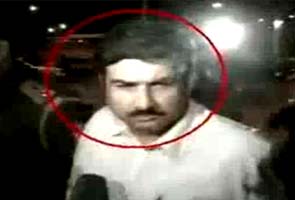
New Delhi, October 25: A Delhi court has convicted a man named Jitender Mohalla for his lead role in a hijack drama on a flight from Goa to Delhi in 2009.

Mr Mohalla will be sentenced later today. The prosecution has asked for life imprisonment for him.

Mr Mohalla and two other passengers of an Indigo flight had claimed to be armed.

The crew sent a hijack alert which created a massive security drill at the Delhi airport. The pilot made an emergency landing and was isolated for several hours till Mr Mohalla's warning was declared a hoax.

Today's verdict comes as six passengers of an Air India flight are being questioned about allegedly forcing their way into the cockpit of their plane last week after it landed in Thiruvanathapuram instead of Kochi. The pilot, Captain Rupali Wagmhare, has said in a police complaint that the passengers threatened to kill her co-pilot and her if they tried to deplane. Captain Waghmare and the crew's shift had ended. The airline wanted to bring in a replacement crew to fly the passengers, who had boarded the plane in Abu Dhabi, to Kochi. The flight had been diverted because of bad weather.

The Kerala government has indicated its support for the passengers, accusing Air India of harassing them. The passengers deny that they threatened or assaulted the pilot, or that they entered the cockpit.

The cockpit voice recorder of the aircraft has been submitted to the regulator of civil aviation, the DGCA. The recordings will help piece together what transpired between the pilot and the passengers.


Comments

Add new comment

  • Coastaldigest.com reserves the right to delete or block any comments.
  • Coastaldigset.com is not responsible for its readers’ comments.
  • Comments that are abusive, incendiary or irrelevant are strictly prohibited.
  • Please use a genuine email ID and provide your name to avoid reject.
Agencies
May 23,2020

New Delhi, May 23: The nationwide lockdown will no longer help India in its fight against COVID-19, and in its place community-driven containment, isolation and quarantine strategies have to be brought into play, leading virologist Shahid Jameel said.

The recipient of Shanti Swarup Bhatnagar Prize for Science and Technology also stressed that testing should be carried out vigorously to identify coronavirus hotspots and isolate those areas.

"Our current testing rate at 1,744 tests per million population is one of the lowest in the world. We should deploy both antibody tests and confirmatory PCR tests. This will tell us about pockets of ongoing infection and past (recovered) infection. This will provide data to open up gradually and let economic activity resume," Jameel told PTI in an interview.

He stressed that testing has to be dynamic to continuously monitor red, orange and green zones and change these based on that data.

About community transmission of COVID-19 in India, Jameel said the country reached that stage long ago.

"We reached community transmission a long time ago. It's just that the health authorities are not admitting it. Even ICMR's own study of SARI (severe acute respiratory illness) showed that about 40 per cent of those who tested positive for SARS-CoV-2 did not have any history of overseas travel or contact to a known case. If this is not community transmission, then what is?" he posed.

Lockdown bought India time in its fight against coronavirus, but continuing it is unlikely to yield any further dividend, Jameel said.

"Instead, community-driven local lockdowns, isolations and quarantines have to come into play. Building trust is most important so that people follow rules. A public health problem cannot be dealt with as a law-and-order problem."

The nationwide lockdown, initially imposed from March 25 to April 14, has been extended thrice and will continue at least till May 31. The virus has claimed 3,720 lives and infected over 1.25 lakh people in the country so far.

Jameel has expertise in the fields of molecular biology, infectious diseases, and biotechnology. He is the CEO of Wellcome Trust/Department of Biotechnology's India Alliance and is best known for extensive research in Hepatitis E virus and HIV.

He said COVID-19 will eventually be controlled through herd immunity, which is acquired in two ways – when a sufficient fraction of the population gets infected and recovers, and with vaccination.

"It is estimated that for SARS-CoV-2 at least 60 per cent of the population would have to be infected and recovered, or vaccinated. This will happen over the course of the next few years," Jameel said.

Herd immunity is reached when the majority of a population becomes immune to an infectious disease, either because they have become infected and recovered, or through vaccination. When that happens, the disease is less likely to spread to people who aren't immune, because there just aren't enough infectious carriers.

"India has 1.38 billion people, a population density of about 400/sq km and a healthcare system ranked at 143 in the world. If we allow 60 per cent people to get infected quickly in the hopes of herd immunity, that would mean 830 million infections," Jameel said.

"If 15 per cent need hospitalization that means about 125 million isolation beds (we have 0.3 million). If five per cent need oxygen and ventilatory support, this amounts to about 42 million oxygen support and ICU beds; we have 0.1 million oxygen support beds and 34,000 ICU beds. This would overwhelm the healthcare system causing mayhem," he said.

Jameel said if the population level mortality is 0.5 per cent that would mean 40 lakh deaths. "Are we prepared to pay this price for herd immunity in the short term? Clearly not," he said.

He said it is unlikely that a vaccine would be available by the end of the year.

"Even then, we don't know yet how long it would give protection – weeks, months, one year, a few years? I don't think we will return to pre-coronavirus days for at least the next 3-5 years. This is also a chance to evaluate if we want to return to those unsustainable, environment-damaging ways. COVID-19 is a timely warning to reform our way of living," he said.

Jameel said it is hard to predict but plausible that COVID-19 would return in second or third wave.

"Later waves come when we don't understand the disease and become lax. A comparison to Spanish Flu is not entirely valid because in 1918 no one knew what caused it. No one had seen a virus till the mid-1930s as the electron microscope needed to view those was invented in 1931," he said.

"Today we know a lot more about the pathogen, its genetic makeup, how it transmits and how to prevent it. We need to be sensible and follow expert advice," he said.

If there is any scientific evidence linking deforestation, rapid urbanisation, climate change with pandemics like COVID-19, he said zoonotic viruses -- those that jump from animals to humans -- happen so when wild animal–human contacts increase.

"Deforestation destroys animal habitats bringing them closer to humans. When you cut forests, bats come to roost on trees closer to human habitations. Their viruses in secretions/stool get transmitted to domestic animals and on to humans. This happened clearly with Nipah virus outbreak in Malaysia in 1997-98 from fruit bats to pigs to humans," he said.

"COVID-19 possibly arose in wet animal markets due to dietary habits that bring all kinds of live and dead wild animals in close contact with humans," Jameel added.


Comments

Add new comment

  • Coastaldigest.com reserves the right to delete or block any comments.
  • Coastaldigset.com is not responsible for its readers’ comments.
  • Comments that are abusive, incendiary or irrelevant are strictly prohibited.
  • Please use a genuine email ID and provide your name to avoid reject.
News Network
May 30,2020

May 30: A Delhi court on Saturday granted interim bail for 10 days to former municipal councillor from the Congress Ishrat Jahan, who has been booked under the stringent Unlawful Activities (Prevention) Act, to get married.

She has been booked under the anti-terror law in a case related to communal violence in northeast Delhi in February.

Additional Sessions Judge Dharmender Rana granted the interim relief from June 10 to June 19 to Jahan on furnishing two sureties of Rs 1 lakh.

The court directed her not to tamper with any evidence or influence the witnesses in the case.

According to the interim bail plea, filed through advocates S K Sharma and Lalit Valeecha, Jahan's marriage was fixed in 2018 for June 12, 2020.

The plea further said that Jahan would not tamper with any evidence or influence the witnesses if granted bail.

The petition, also filed through advocates Tushar Anand and Manu Prabhakar, claimed that Jahan has been falsely implicated in the case.

It alleged that upon bare perusal of the contents of the FIR, no incident of violence can be attributed to her and the wild and baseless allegations made against her were not only irresponsible and false, but also caused serious harm to her reputation.

Jahan, who is also an advocate, was only a supporter of ongoing peaceful protests and it was one of the fundamental rights of the citizens to protest and register their dissent against any unreasonable measure of the government, the plea said.

Besides Jahan, Jamia Millia Islamia University students Asif Iqbal Tanha, Gulfisha Khatoon, Jamia Coordination Committee members Safoora Zargar, Meeran Haider, president of Jamia Alumni Association Shifa-Ur-Rehman, suspended AAP councillor Tahir Hussain, activist Khalid Safi, JNU student Natasha Narwal and former student leader Umar Khalid have also been booked under the anti-terror law in the case.

The police had claimed in the FIR that Khalid and his associates had instigated people to start riots in the area and it was a "premeditated conspiracy".

Communal clashes had broken out in northeast Delhi on February 24 after violence between citizenship law supporters and protesters spiralled out of control, leaving at least 53 people dead and around 200 injured.

Comments

Add new comment

  • Coastaldigest.com reserves the right to delete or block any comments.
  • Coastaldigset.com is not responsible for its readers’ comments.
  • Comments that are abusive, incendiary or irrelevant are strictly prohibited.
  • Please use a genuine email ID and provide your name to avoid reject.
News Network
July 17,2020

Thiruvananthapuram, Jul 17: A gunman posted at the United Arab Emirates (UAE) Consulate in Thiruvananthapuram allegedly attempted suicide on Friday, the police said.

"A gunman who was working at the United Arab Emirates (UAE) Consulate in Thiruvananthapuram allegedly attempted to commit suicide today. He is currently admitted to a hospital. 

The police were searching for him after his relatives had filed a missing complaint on Thursday night. A case has been registered and a probe is underway," said Police.

The person is identified as Jayagosh. He is attached to the police Armed Reserve (AR) camp and was reported missing since last night. Later, his relatives had filed a missing complaint with the police.

Jayagosh was later found lying in a pool of blood near his house in Akkulam and was taken to the hospital.

A police investigation is underway and more details are awaited.

Comments

Add new comment

  • Coastaldigest.com reserves the right to delete or block any comments.
  • Coastaldigset.com is not responsible for its readers’ comments.
  • Comments that are abusive, incendiary or irrelevant are strictly prohibited.
  • Please use a genuine email ID and provide your name to avoid reject.