



Delhi gang rape: Lawyers refuse to defend men accused of crime

January 2, 2013
delhi_law

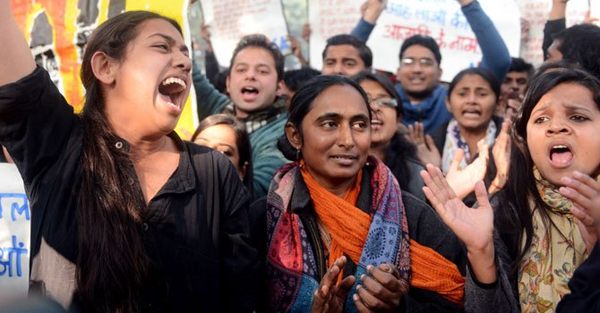
New Delhi, Jan 2: Lawyers at a Delhi court hearing the case of the fatal gang-rape which has shocked the nation said on Wednesday they would refuse to defend the men accused of taking part in the assault and murder.

Hearings are expected to begin on Thursday at the Saket district court in south New Delhi, where police will formally present a 1,000-page charge sheet against the six-person gang.

"We have decided that no lawyer will stand up to defend the rape accused as it would be immoral to defend the case," Sanjay Kumar, a lawyer and a member of the Saket district bar council, told AFP.

Kumar said the 2,500 advocates registered at the court have decided to "stay away" to ensure "speedy justice", meaning the government would have to appoint lawyers for the defendants.

Another lawyer at the court confirmed the boycott to AFP.

Five men are expected to face charges including rape, murder and kidnapping in the Saket court, with the prosecutor likely to seek the death sentence.

A sixth suspect is believed to be 17 years old, meaning he would be tried in a juveniles' court, but police are conducting bone tests to determine his age.

The brutality and horrific nature of the attack on a 23-year-old has led to protests in the capital and elsewhere over the widespread abuse of women and sex crime in India.

The rape victim died at the weekend after 13-day struggle to survive injuries so grievous that part of her intestines had to be removed.

She was repeatedly raped and violated with an iron bar on a bus on December 16 before being thrown from the moving vehicle at the end of a 40-minute ordeal.

In 2008, lawyers also refused to defend a gunman who took part in attacks on Mumbai which killed 166 people, leaving him with a government-appointed lawyer. He was executed in November last year.

Comments

Add new comment

  • Coastaldigest.com reserves the right to delete or block any comments.
  • Coastaldigset.com is not responsible for its readers’ comments.
  • Comments that are abusive, incendiary or irrelevant are strictly prohibited.
  • Please use a genuine email ID and provide your name to avoid reject.
Agencies
July 23,2020

Expressing concern over the ban imposed on TikTok by the government of India, Facebook CEO Mark Zuckerberg has reportedly called the development in the south Asian country “worrisome”.

TikTok was amongst the 59 Chinese apps that were banned in India but why it hogs the maximum limelight because TikTok had the second-largest user base in India with over 200 million users.

As per The Verge writer Casey Newton, Zuckerberg was worried about TikTok’s India ban. Although it soon cashed into the opportunity and released a TikTok clone “Reels”, the government’s reason behind banning the app in India wasn’t received well by Mark Zuckerberg. 

He had said that if India can ban a platform with over 200 million users in India without citing concrete reasons, it can also ban Facebook if something goes amiss on the security and privacy front.

Why Mark finds it particularly worrisome because Facebook is already involved in a lot tussle with the governments across the world involving national security concerns. 

“Facebook already faces fights around the world from governments on both the left and the right related to issues that fit under the broad umbrella of national security: election interference, influence campaigns, hate speech, and even just plain-old democratic speech. Zuckerberg knows that the leap from banning TikTok on national security grounds to banning Facebook on national security grounds is more of a short hop,” the report by Casey read.

Facebook till now has not faced any kind of issue in India but considering the debacle with the other governments, it is not entirely wrong to worry about its future in India if any national security issue arises. Back in 2016, Facebook’s Free Basics service, which means a free but restricted internet service, was banned in India by the telecom regulators. 

The TRAI had said that the Free Basic services were banned in India because it violated the principles of net neutrality. With Free Basics services, Facebook had planned to bring more unconnected users online. But since 2016, there has been no major tussle between the Indian government and Zuckerberg due to national security issues.

Comments

Add new comment

  • Coastaldigest.com reserves the right to delete or block any comments.
  • Coastaldigset.com is not responsible for its readers’ comments.
  • Comments that are abusive, incendiary or irrelevant are strictly prohibited.
  • Please use a genuine email ID and provide your name to avoid reject.
Agencies
June 14,2020

New Delhi, Jun 14: Petrol price on Sunday was hiked by a record 62 paise per litre and that of diesel by 64 paise as oil companies for the eighth day in a row adjusted retail rates in line with cost since ending an 82-day hiatus in rate revision.

Petrol price in Delhi was hiked to Rs 75.78 per litre from Rs 75.16 while diesel rates were increased to Rs 74.03 a litre from Rs 73.39, according to a price notification of state oil marketing companies.

Rates have been increased across the country and vary from state to state depending on the incidence of local sales tax or VAT.

The 62 paise a litre increase in petrol and 64 paise hike in diesel price is the highest surge in rates since the daily price revision was started in June 2017.

This is the eighth daily increase in rates in a row since oil companies on June 7 restarted revising prices in line with costs, after ending an 82-day hiatus.

In eight hikes, petrol price has gone up by Rs 4.52 per litre and diesel by Rs 4.64 -- a record increase in rates in any eight days since the daily price revision was introduced.

The freeze in rates was imposed in mid-March soon after the government hiked excise duty on petrol and diesel to shore up additional finances.

Oil PSUs Indian Oil Corp (IOC), Bharat Petroleum Corp Ltd (BPCL) and Hindustan Petroleum Corp Ltd (HPCL), instead of passing on the excise duty hikes to customers, adjusted them against the fall in the retail rates that was warranted because of international oil prices falling to two-decade lows.

The government had first raised excise duty on petrol and diesel by Rs 3 per litre each on March 14 and then again on May 5 by a record Rs 10 per litre in case of petrol and Rs 13 on diesel. The two hikes gave the government Rs 2 lakh crore in additional tax revenues.

State-owned fuel retailers IOC, BPCL and HPCL had frozen petrol and diesel prices since March 16, as if anticipating the government move and set off gains they accrued from continuing drop in international oil prices against the excise duty hike.

They, however, promptly passed the increase in local sales tax or VAT by state governments such as Rs 1.67 increase in VAT on petrol and Rs 7.10 in diesel by the Delhi government on May 4.

The total incidence of excise duty on petrol has risen to Rs 32.98 per litre and that on diesel to Rs 31.83. The excise tax on petrol was Rs 9.48 per litre when the Narendra Modi government took office in 2014 and that on diesel was Rs 3.56 a litre.

The government had between November 2014 and January 2016 raised excise duty on petrol and diesel on nine occasions to take away gains arising from plummeting global oil prices.

In all, duty on petrol rate was hiked by Rs 11.77 per litre and that on diesel by 13.47 a litre in those 15 months that helped government's excise mop up more than double to Rs 2,42,000 crore in 2016-17 from Rs 99,000 crore in 2014-15.

It cut excise duty by Rs 2 in October 2017 and by Rs 1.50 a year later. But it raised excise duty by Rs 2 per litre in July 2019.

It again raised excise duty on March 14 by Rs 3 per litre.

Comments

Add new comment

  • Coastaldigest.com reserves the right to delete or block any comments.
  • Coastaldigset.com is not responsible for its readers’ comments.
  • Comments that are abusive, incendiary or irrelevant are strictly prohibited.
  • Please use a genuine email ID and provide your name to avoid reject.
News Network
March 29,2020

New Delhi, Mar 29: Prime Minister Narendra Modi on Sunday said that people should not think of COVID-19 quarantine facilities as a prison and spoke with two survivors of the infection during his radio show 'Mann Ki Baat' to establish that it was curable.
The Prime Minister spoke to coronavirus survivors -- Ramagampa Teja and Ashok Kapoor - and urged them to share their success against the infection with people.
The Prime Minister asked people to listen to the survivors who had successfully defeated the coronavirus.
"I have spoken to a few people who were infected from the virus and speaking to such people. While I tried to boost their morale they also lifted my spirits when I talked to them," he said.
Speaking to the Prime Minister during the show, Ramagampa Teja, an IT professional, who tested positive for COVID-19 after returning from Dubai, said that he was frightened when he tested positive for the disease and could not believe that this has happened to him.
He said even his family was very stressed after finding out his COVID-19 positive status. "But their test results came negative, which I took as a great blessing. And since then, there were improvements every day," he said.
Teja was admitted to a government hospital in Hyderabad and was released after 14 days as he successfully overcame the infection. "The first few days were the hardest but the dedicated doctors and nurses at the hospital ensured that I recovered," he added.
He asked people not to be afraid of being quarantined. "People feel that going into quarantine means going to prison. They should know that the government quarantine is for them and their families. I want to emphasise that people must get tested and do not fear quarantine," he added.
The Prime Minister congratulated him and his family and asked him to share an audio clip of his experience. "I would like you to make an audio of your experiences and share it on social media so that it goes viral and removes fear from people's minds," the Prime Minister said.
The Prime Minister also spoke to another coronavirus survivor, Ashok Kapoor, six members of whose family in Agra were tested positive for the deadly virus.
On being asked by the Prime Minister whether they had feared for their lives, Kapoor said, "We were not scared as we received excellent cooperation from the doctors and support staff at Delhi's Safdarjung Hospital."
The six of them were shifted to Delhi and put under quarantine for 14 days where all of them successfully recovered from the infection.
The Prime Minister also commended the spirit of Ashok Kapoor and said: "Your experience came in handy for all. My best wishes to you and your family."
He also urged the Kapoor family to spread awareness regarding COVID-19 in the way they see fit. "Please spread awareness your way and you can feed whoever is hungry, look out for the poor and also spread awareness to people urging them to follow the rules," the Prime Minister said.
"If everyone follows the rules, the country will be saved," the Prime Minister said.
The Prime Minister also thanked the people involved in ensuring the continuous supply of goods and services in the country and advised them to "follow all the safety precautions, take care of themselves and their family members."
Earlier in his address, Modi had asked for the forgiveness of all countrymen, and especially the poor, for the nationwide lockdown in the country in the view of the novel coronavirus. He had then termed it a necessary measure needed to defeat the infection in India.

Comments

Add new comment

  • Coastaldigest.com reserves the right to delete or block any comments.
  • Coastaldigset.com is not responsible for its readers’ comments.
  • Comments that are abusive, incendiary or irrelevant are strictly prohibited.
  • Please use a genuine email ID and provide your name to avoid reject.