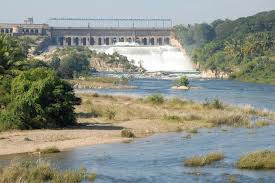
Cauvery notification gets Law Ministry nod

January 21, 2013

cauveryNew Delhi, Jan 21: The decks have been cleared for notifiying the Cauvery Water Dispute Tribunal (CWDT) final award, with the Union Law Ministry giving its approval.

“The Law Ministry has given its nod to notify the award by clearing the draft notification. Now, the Water Resources Ministry will decide whether to go ahead with issuing the notification or not,” sources in the government told Deccan Herald.

The Law Ministry also clarified that the Inter-State Water Disputes Act, 1956, will not prevent the Centre from notifying it despite the pending petitions in the Supreme Court.

Sources said though the Water Resources Ministry is ready to issue the final notification, it has sought the Law Ministry’s opinion  to avoid any legal complications.  The Water Resources Ministry also referred the matter to the prime minister as the issue involved inter-state dispute.

The prime minister, who is also the chairman of the Cauvery River Authority (CRA), is likely to suggest to the ministry whether it can go ahead with the notification by the end of this month.

When the Cauvery dispute came up at the recently held Congress Core Group meeting here, it was decided that the matter be left to the prime minister to take a final call on. Water Resources Minister Harish Rawat was learnt to have briefed the core group, which includes the prime minister and party chief Sonia Gandhi.

While, on the one hand, Karnataka has opposed the notification of the final award, Tamil Nadu, on the other , has been pressing for an early notification. Though the Centre had informed the Cauvery water-sharing states of Karnataka, Tamil Nadu and Kerala and the Union Territory of Puducherry that it would notify the award by December-end, it was delayed as the matter was referred to the Law Ministry.

In what was then described as a balancing act, the tribunal gave Tamil Nadu 419 tmc of water (as against the demand of 562 tmc), Karnataka 270 tmc (as against its demand of 465 tmc), Kerala 30 tmc, and Puducherry 7 tmc. It had reserved 10 tmc for environmental protection. The tribunal’s award will come into effect within 90 days of its notification by the Centre.

After the issuance of the notification, institutions like the CRA and the CMC?will cease to exist. New organisations like the Cauvery Management Board and the Cauvery Water Regulation Committee will be constituted which will have representatives from all the co-basin states, and experts in hydrology and agriculture.

They will be under the control of the Centre.

Comments

Add new comment

  • Coastaldigest.com reserves the right to delete or block any comments.
  • Coastaldigset.com is not responsible for its readers’ comments.
  • Comments that are abusive, incendiary or irrelevant are strictly prohibited.
  • Please use a genuine email ID and provide your name to avoid reject.
News Network
January 12,2020

New Delhi, Jan 12: As many as 109 children were sexually abused every day in India in 2018, according to the data by the National Crime Records Bureau, which showed a 22 per cent jump in such cases from the previous year.

According to the recently released NCRB data, 32,608 cases were reported in 2017 while 39,827 cases were reported in 2018 under the Protection of Children from Sexual Offences Act (POCSO).

POCSO Act, 2012 is a comprehensive law to provide for the protection of children from offences of sexual assault, sexual harassment and pornography. It requires special treatment of cases relating to child sexual abuse such as setting-up of special courts, special prosecutors, and support persons for child victims.

As many as 21,605 child rapes were recorded in 2018 which included 21,401 rapes of girls and 204 of boys, the data showed.

The highest number of child rapes were recorded in Maharashtra at 2,832 followed by Uttar Pradesh at 2023 and Tamil Nadu at 1457, the data showed.

Overall crimes against children has increased steeply over six times in the decade over 2008-2018, from 22,500 cases recorded in 2008 to 1,41,764 cases in 2018, according to the NCRB data from 2008 and 2018.

In 2017, 1,29,032 cases of crime against children were recorded.

Priti Mahara, Director of Policy Research and Advocacy at CRY – Child Rights and You (CRY) said, that while on the one hand, the increasing numbers of crimes against children are extremely alarming, it also suggests an increasing trend in reporting which is a positive sign as it reflects people's faith in the system.

"It also provides a direction in which government interventions must be made and evidence needs to be created. While some major efforts have been taken to ensure child protection, a lot more is needed to see expected results on the ground," Mahara said.

In percentage terms, major crime against children during 2018 were kidnapping and abduction which accounted for 44.2 per cent followed by cases under POCSO, which accounted for 34.7 per cent, the data showed.

A total of 67,134 children (19,784 male,47,191 female and 159 transgender) were reported missing in 2018. During the year 2018, a total of 71,176 children (22,239 male, 48,787 female and 150 transgender) were traced, the NCRB data said.

As many as 781 cases of use of child for pornography or storing child pornography material was also recorded in 2018, more than double that of  2017 when 331 such cases were recorded, the data showed.

The state-wise segregation of crimes against children reveals Uttar Pradesh, Madhya Pradesh, Maharashtra, Delhi and Bihar accounted for 51 per cent of all crimes in the country, the data said.

While Uttar Pradesh tops the list with 19,936 recorded crimes against children (14 per cent of total crimes), Madhya Pradesh and Maharashtra are the close second and third with 18,992 and 18,892 crimes registered respectively.

The report also showed that cases of sexual harassment in shelter homes against women and children reportedly increased by 30 per cent, from 544 cases recorded in 2017 to 707 cases in 2018.

Mahara suggested that financial investments must be adequately increased with a focus on prevention of crimes against children and the identification of vulnerable children and families.

"Strengthening community-level child protection system is also a key to prevention. While there is growing evidence of the precarious lives that children in India are leading, it is essential that this evidence is used to effectively inform policy and programme initiatives," she said.

As many as 501 incidences were also recorded under The Prohibition of Child Marriage Act, a 26 per cent jump from 2017 when 395 cases were reported under the Act.

Comments

Add new comment

  • Coastaldigest.com reserves the right to delete or block any comments.
  • Coastaldigset.com is not responsible for its readers’ comments.
  • Comments that are abusive, incendiary or irrelevant are strictly prohibited.
  • Please use a genuine email ID and provide your name to avoid reject.
Agencies
July 30,2020

New Delhi, Jul 30: India's gold demand in 2020 is expected to fall to the lowest level in 26 years with domestic bullion prices hitting a record high and as falling disposable incomes could curtail retail purchases, the World Gold Council (WGC) said on Thursday.

Lower demand by the world's second-biggest bullion consumer could limit a rally in global prices, which hit a record high earlier this month, although it could also reduce India's trade deficit and support the ailing rupee.

"Fast rising gold prices could act as headwinds," said Somasundaram PR, the managing director of WGC's Indian operations.

Local gold futures have jumped 35% so far this year after rising a quarter in 2019.

India's gold consumption in the first half of 2020 plunged 56% on-year to 165.6 tonnes. Meanwhile, the coronavirus-triggered lockdown also slashed demand by 70% in the June quarter to 63.7 tonnes, the lowest in more than a decade, the WGC said in a report published on Thursday.

Millions of Indians have lost their jobs or taken a pay cut after the country imposed a lockdown on its 1.3 billion people to curb the spread of the virus that has infected more than 1.5 million Indians.

Consumption is generally high during the June quarter due to weddings and key festivals such as Akshaya Tritiya, but lockdown restrictions kept shoppers indoors this year.

The weak demand in the first half could drag down India's gold consumption in 2020 to the lowest since 1994, when demand stood at 415 tonnes, Somasundaram said, adding that it is still difficult to provide an estimate for full-year demand as the coronavirus crisis is still unfolding.

"Indian demand has previously jumped as much as 300 tonnes in a quarter. Latent demand could come out in the second half," Somasundaram said.

Comments

Add new comment

  • Coastaldigest.com reserves the right to delete or block any comments.
  • Coastaldigset.com is not responsible for its readers’ comments.
  • Comments that are abusive, incendiary or irrelevant are strictly prohibited.
  • Please use a genuine email ID and provide your name to avoid reject.
Agencies
July 30,2020

New Delhi, Jul 30: Preparing for a long haul in the Eastern Ladakh sector in extreme winters, the Indian Army has an edge over the Chinese as it has deployed 35,000 troops there who have already done tenures in high altitude and cold conditions.

The Indian troops deployed there are mentally prepared for tackling the weather and terrain.
In contrast, the Chinese troops deployed along the Line of Actual Control (LAC) are not used to these conditions as they have been brought from mainland China and are not accustomed to high altitude extreme cold weather conditions.

"We are preparing to provide extreme cold weather portable cabins for around 35,000 troops that have been deployed in the Eastern Ladakh sector," government sources said.

"Our soldiers deployed there have already done a tenure or two in Siachen, Eastern Ladakh or Northeast and they are physically and mentally prepared for a longer deployment there," they said.

The Chinese soldiers deployed on the Indian front include mainly conscripts who join the PLA for a period of 2-3 years and then return to their normal lives, sources said.

Indian and Chinese troops are engaged in a standoff situation all along the LAC in Eastern Ladakh from sub-sector north with both sides having deployed around 40,000 troops against each other over there.

The two sides have disengaged at three friction points including Patrolling Point 14, PP-15 and PP-17 and PP-17A.

At PP-17 and 17A, the Chinese have now maintained a small element of close to 50 troops and the remaining elements have gone back into their permanent locations.

The sources said the Army is also not much bothered about the Chinese build-up along the LAC as it has got more than two additional divisions from outside Ladakh sector.

India Army has more troops than what the Chinese have brought there, they said.

For the winter deployment, the Army already has a sizeable stock of clothes and habitat for troops as the Indian army deploys troops at the world's highest battlefield Siachen glacier and is prepared.

For additional requirements, the force is in the process of placing orders for additional tents and shelters from indigenous as well as foreign vendors.

The time for summer stocking is on and we are going to get the additional cabins and tents by that time, the sources.

Months of June, July, and August are considered to be the best time for stocking winter rations and ammunition. The snowfall is expected to start soon in the Eastern Ladakh area where the temperature is already low.

Prime Minister Narendra Modi's government has given financial powers of Rs 500 crore per procurement to the defence forces to address any type of shortages of weapons, ammunition, and habitat.

Comments

Add new comment

  • Coastaldigest.com reserves the right to delete or block any comments.
  • Coastaldigset.com is not responsible for its readers’ comments.
  • Comments that are abusive, incendiary or irrelevant are strictly prohibited.
  • Please use a genuine email ID and provide your name to avoid reject.