



Chopper deal middleman was in Delhi to erase trail

February 25, 2013

Chopper_deal

New Delhi, Feb 25: About three months after the Italian prosecutors initiated a probe into the Rs 360-crore payoff in the VVIP helicopter deal in November 2011, Augustawestland key defence agent Guido Ralph Haschke came and stayed in India for a week without raising any eyebrows of the security agencies or the Centre.

Investigative agencies are now digging the immigration records to ascertain how many times Haschke and his associate Gerosa Carlo – both allegedly swung the deal in favour of Augustawestland – flew to India. Also under the scanner are their Indian contacts apart from the ones figured in Italian probe, including the Tyagi family and lawyer Gautam Khaitan.

Haschke had landed in Delhi and stayed in a prominent hotel from February 11 to 19, 2012, to cover up the paper trail as Borgogni Lorenzo, senior employee of Finmecanica that has stakes in Agustawestland, had spilled beans to Italian investigators during his questioning on November 15, 2011. Finmecanica CEO Giuseppe Orsi was recently arrested but charges have not been pressed against him.

Sources said the details of his lodging, food expenses, telephone calls made and received and visitors to the hotel are being scanned to find out the exact purpose of Haschke’s long visit at a time when the probe was on but not exposed by the Italian media.

The February 2011 visit was, perhaps, Haschke’s last landing in India as the Swiss businessman refused to come to fix an agenda for the board meeting of Chandigarh-based Aeromatrix – in which he along with Carlo Gerosa, Arihant Jain and Gautam Khaitan were partners but resigned after the expose took place – supposed to have taken place in June, 2012.

The agencies are sifting through the available records of communication between the Italians and Indian figures of the scam to identify leads to strengthen the investigation which is at a very preliminary stage. Sources said that since the Italian investigators were chasing him, Haschke had emailed to Gautam Khaitan asking for documents relating to Aeromatrix to convince prying eyes back home that his Indian deals were not hunky dory. He was also questioned by the Italians some time late last October.

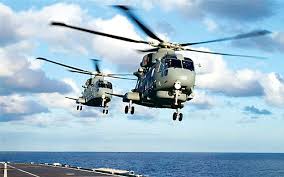
The Italian prosecution has got statements to reveal that Haschke and his partner Gerosa Carlo had dubiously managed to rig the procurement process through their defence establishment contacts and ensure that the contract for supply of 12 copters is bagged by Agustawestland, despite the fact that the machine they were offering did not suite the requirement of the Air Force.

Though an integrity pact was signed to bar middle men in the deal, the Italian military hardware manufacturer had employed, other than Haschke, English middleman Chirstian Michel.

A team of officials from the defence ministry and CBI had recently come from Italy without much vital information though the investigating agency is claiming that they have got some documents from the Italian prosecutors.

Comments

Add new comment

  • Coastaldigest.com reserves the right to delete or block any comments.
  • Coastaldigset.com is not responsible for its readers’ comments.
  • Comments that are abusive, incendiary or irrelevant are strictly prohibited.
  • Please use a genuine email ID and provide your name to avoid reject.
Agencies
March 12,2020

The Ministry of Health and Family Welfare has prepared a draft for guidelines for home quarantine, as well as for the use of masks by public, in view of coronavirus.

What to do in Home Quarantine?

The government says, for those taking refuge to home quarantine should stay in a well-ventilated single-room preferably with an attached or separate toilet. It adds that if another family member needs to stay in the same room, it's advisable to maintain a distance of at least 1 metre between the two.

The government advised, coronavirus patients to stay away from elderly people, pregnant women, children and persons with co-morbidities within the household as their immune system may be low. The health minister also suggested to restrict the patient's movement within the house. "Under no circumstances attend any social/religious gathering e.g. wedding, condolences, etc, said the guideline.

It also instructed the corona virus infected person to avoid sharing household items like dishes, drinking glasses, cups, eating utensils, towels, bedding, or other items with others at home. The guideline also demanded that even though home quarantine, the patient should wear a surgical mask at all times. "The mask should be changed every 6-8 hours and disposed off. Disposable masks are never to be reused, it added.

"Masks used by patients/ caregivers/ close contacts during home care should be disinfected using ordinary bleach solution (5 per cent) or sodium hypochlorite solution (1%) and then disposed of either by burning or deep burial," instructs the government.

Even for family members of a patient, the health ministry clearly instructs to use disposable gloves when cleaning the surfaces or handling soiled linen. No visitors, under any circumstances will be allowed, said the guideline.

"In case the person being quarantined becomes symptomatic, all his close contacts will be home quarantined (for 14 days) and followed up for an additional 14 days or till the report of such case turns out negative on lab testing," states the draft.

How to wear & dump masks?

There is a specific and elaborate do's and don'ts also released by the ministry. For those unsure in which mask to choose, it says, "Medical masks of different sizes and shapes are available in the market. The common ones are flat pleated masks of woven fabric which covers the nose and mouth and affixed behind the head with straps/ elastic fasteners. There are also conical or duck bill shaped masks with valves (or without valves) that fit in the contour of face over the nose and mouth, but are costlier."

However, the ministry warns, medical masks should not be used by healthy persons who are not having any symptoms "because it creates a false sense of security". Instead, it suggests to refrain from touching face, mouth, nose and eyes as well as washing hands regularly with soap for 20 seconds each time.

However, when a person develops a cough or fever, the suspected patient needs to switch to medical masks. "Use of medical three layer masks when ill, will prevent your infection from spreading to others. However you also need to wash your hands frequently to avoid spreading infection to others," read the guideline.

Even if one is not tested positive but showing symptoms, they are advised to wear masks while visiting a healthcare facility. "Close family contacts of such suspect/confirmed cases undergoing home care should also use Triple layer medical mask," it warns.

The ministry has also given point by point guideline on how to use a mask like to make sure that they are facing down while unfolding or for that matter to ensure there are no gaps on either side of the mask.

It even warns, "Fit flexible nose piece (a metallic strip that can easily be located) over nose-bridge" to ensure no one else are infected. The government also warns against simple dumping of the masks once used. Instead one should disinfect "using ordinary bleach solution (5 per cent) or sodium hypochlorite solution (1 per cent) and then disposed of either by burning or deep burial," says the Health Ministry.

COVID-19 emerged in early December 2019 in China's Wuhan province and has now spread to over 100 countries. As on March 9, 2020, India has reported 42 cases mostly among those who had travelled from affected countries.

However the government says, "It causes a minor illness in majority of patients with symptoms of fever and or cough. A small proportion of such persons may progress to severe disease with difficulty in breathing."

Comments

Add new comment

  • Coastaldigest.com reserves the right to delete or block any comments.
  • Coastaldigset.com is not responsible for its readers’ comments.
  • Comments that are abusive, incendiary or irrelevant are strictly prohibited.
  • Please use a genuine email ID and provide your name to avoid reject.
News Network
June 24,2020

New Delhi, Jun 24: Over 1,500 urban and multi-state cooperative banks will be brought under the supervisory power of the Reserve Bank of India (RBI), said Union Minister Prakash Javadekar on Wednesday.

"Government banks, including 1,482 urban cooperative banks and 58 multi-state cooperative banks, are now being brought under supervisory powers of Reserve Bank of India (RBI); RBI's powers as they apply to scheduled banks will apply for cooperative banks as well," Javadekar said at a press conference, through video conferencing.

"The decision to bring 1,540 cooperative banks under RBI's supervision will give an assurance to more than 8.6 crore depositors in these banks that their money amounting to Rs 4.84 lakh crore will stay safe," he added.

The Minister of Information and Broadcasting further said that the Union Cabinet has approved a scheme "for interest subvention of 2 per cent to Shishu loan category borrowers under Pradhan Mantri Mudra Yojana, outstanding as on March 31, 2020, for one year to eligible borrowers."

The Minister also said that the Union Cabinet has approved the declaration of Kushinagar Airport in Uttar Pradesh as an international airport.

Comments

Add new comment

  • Coastaldigest.com reserves the right to delete or block any comments.
  • Coastaldigset.com is not responsible for its readers’ comments.
  • Comments that are abusive, incendiary or irrelevant are strictly prohibited.
  • Please use a genuine email ID and provide your name to avoid reject.
News Network
June 23,2020

New Delhi, Jun 23: In an unexpected development, the pump price of diesel is all set to surpass the petrol price in the capital, making it the most expensive transport fuel for the first time in a long time.

Globally, diesel is priced slightly above petrol prices due to the very nature of the product that has a higher cost of production. But in India, due to the lopsided taxation structure, diesel attracts lesser of the tax between the two auto fuels keeping its prices lower than petrol for last several years.

Diesel is currently priced at Rs 79.40 a litre in the Capital, just 36 paise short of petrol price that is being retailed at Rs 79.76 a litre. Going by the trend of price movement in the two products for the last few days where diesel prices have consistently increased by 50-60 paise per litre while the daily increase in petrol prices have fallen to just 20 paise on Tuesday, it is set to surpass petrol prices in next few days.

"Diesel price movement is sharper in international market and if oil companies follow the global price trend, diesel prices will surpass that of petrol later this week. It will be after many years that this would happen and is expected to sustain for some time unless government changes the tax structure of the petroleum products again," said an oil sector expert from one of the big four audit and advisory firms asking not to be named.

Interestingly, even in India the base price of diesel is expensive than petrol. According to the Indian Oil Corporation (IOC), while the base price of petrol in Delhi currently comes to Rs 22.11 per litre, the same for diesel is higher at Rs 22.93 per litre (effective from June 16, 2020). This has been the case for a long time, but retail price of petrol can be higher than diesel due to central and state taxes.

What has now brought diesel prices to a whisker of petrol prices in the capital is the Delhi government's decision early May to increase the Value Added Tax on diesel from 16.75 per cent to 30 per cent and on petrol from 27 per cent to 30 per cent. This increased the retail price of diesel and petrol in Delhi by Rs 7.10 and Rs 1.67 a litre respectively. With Central taxes on the two products already reaching identical levels, the Delhi governments move hastened price parity between petrol and diesel.

Currently, the Central excise on petrol is Rs 32.98 a litre while that on diesel it is Rs 31.83 a litre. The VAT on petrol in Delhi is Rs 17.71 a litre and that on diesel is Rs 17.60 a litre.

While the movement of retail pricing is being seen with a sigh of relief by vehicle owners whose cars run on petrol, those buying the relatively expensive diesel cars are now repenting on their decision. The development is also being seen with caution by automobile companies who have spent millions to ramp up their facilities for diesel run vehicles. The expectation is that demand for such cars will now fall, causing more damage to companies where sales are already impacted due to persistent economic slowdown and now the spread of COVID-19 pandemic.

"The pricing development would push automobile companies to strategies being followed by companies in the western markets where diesel run cars are not sold on fuel pricing differential, but on overall make and quality that puts them ahead of petrol run cars," the expert quoted earlier.

Yes, but for commercial vehicle sector the rising price of diesel had not been welcomed. In fact, the commercial transport sector had time an again threatened strike against the move to raise fuel prices.

With petrol and diesel retail prices closing, the case for adultering fuel has also gone down much to the relief of vehicle owners.

Comments

Add new comment

  • Coastaldigest.com reserves the right to delete or block any comments.
  • Coastaldigset.com is not responsible for its readers’ comments.
  • Comments that are abusive, incendiary or irrelevant are strictly prohibited.
  • Please use a genuine email ID and provide your name to avoid reject.