



Land revenue bill gets governor's nod

July 9, 2013

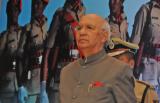
GovernorBangalore, Jul 9: Governor H?R?Bhardwaj has given his assent to a land revenue bill that proposes to regularise unauthorised houses built by the poor on government land in rural areas.

The controversial Karnataka Land Revenue (Amendment) Bill was first passed during the tenure of the Bharatiya Janata Party (BJP)?government by both houses of the state legislature in June last year, but was returned by the governor in September for reconsideration, stating that the legislation would not serve any public good or social cause and could lead to illegal grabbing of government land.

However, the government got the Bill passed once again during the Belgaum session of the legislature in December last year. The assent was given on Saturday,  sources said.

The governor had not given his assent to the bill for nearly a year.  The Congress, while in the Opposition, had strongly opposed the regularisation of illegalities on various grounds.

The amendment to the bill sought to substitute Section 94C of the Karnataka Land Revenue Act, 1964, paving the way for grant of government land occupied in an unauthorised manner by persons in rural areas who have built dwelling houses prior to January 1, 2012. Only BPL families who do not possess any other house were proposed to be eligible for the scheme.

A similar bill, again initiated by the BJP?government, this time to regularise unauthorised houses built by the poor on government  land in urban areas, was returned by the governor in March.

In a related development, the state government has entrusted a legal team to work on the regularisation of unauthorised construction and development like violation of by-laws or floor-area ratio in urban areas, popularly known as the Sakrama scheme, to prepare its provision so that its “people-friendly” and at the same time in accordance with the law.

Comments

Add new comment

  • Coastaldigest.com reserves the right to delete or block any comments.
  • Coastaldigset.com is not responsible for its readers’ comments.
  • Comments that are abusive, incendiary or irrelevant are strictly prohibited.
  • Please use a genuine email ID and provide your name to avoid reject.
News Network
May 9,2020

Lucknow, May 9: The first patient to receive plasma therapy as an experimental treatment for coronavirus infection in Uttar Pradesh died following a heart attack on Saturday.

The patient, a 58-year-old doctor, was admitted at the King George’s Medical University (KGMU) here.

The doctor, who was on ventilator since the last 14 days, died on Saturday evening following a heart attack, KGMU Vice-Chancellor M L B Bhatt said.

Since he had high blood pressure and diabetes, he was under the continuous observation of doctors in the isolation ward, Bhatt said.

“The patient was in a stable condition. His lungs had improved, but he later developed urinary tract infection. Two reports of his samples came out as negative (for COVID-19) today,” the vice-chancellor said.

“He, however, suffered a heart attack around 5 pm. Despite all efforts, he could not be saved,” he said.

The doctor from Orai in Uttar Pradesh was administered plasma therapy at the state-run KGMU on April 26. He was administered the plasma donated by a doctor from Canada who was the first COVID-19 patient admitted at the hospital and later recovered.

Tulika Chandra of Blood Transfusion Department, KGMU said, "When the patient was given plasma therapy, his condition was very bad. His lungs, however, improved. But as he was an old patient with diabetes, he was kept on the ventilator.”

Convalescent Plasma Therapy is an experimental procedure for treating COVID-19 patients. In this treatment, plasma, a blood component, from a cured patient is transfused to a critically ill coronavirus patient.

The blood of a person who has recovered from COVID-19 develops antibodies to fight the virus. This therapy uses the antibodies from the blood of a cured patient to treat another critical patient.

The Union health ministry, however, had advised against considering the therapy to be a regular treatment for coronavirus, adding it should be used for research and trial purposes till there is a piece of robust scientific evidence to support its efficacy.

Comments

Add new comment

  • Coastaldigest.com reserves the right to delete or block any comments.
  • Coastaldigset.com is not responsible for its readers’ comments.
  • Comments that are abusive, incendiary or irrelevant are strictly prohibited.
  • Please use a genuine email ID and provide your name to avoid reject.
News Network
May 29,2020

New Delhi, May 29: More than 38,000 doctors, including those retired from the Armed Forces Medical Services, have volunteered to help the government in its fight against COVID-19 pandemic, a senior official said on Friday.

On March 25, the government had made an appeal to doctors, including the retired ones, to come forward and join the efforts to fight the pandemic.

"38,162 volunteer doctors, including retired government, Armed Forces Medical Services, public sector undertaking or private doctors have signed up with the government to battle COVID-19 pandemic," the official said.

The official further said Niti Aayog has sent a list of names of these doctors to Ministry of Health and Family Welfare and National Disaster Management Authority (NDMA).

In a statement posted on Niti Aayog's website on March 25, the government had said those who wish to contribute to this noble mission may register themselves through a link provided on the Aayog's website.

"The Government of India requests for volunteer doctors who are fit and willing to be available for providing their services in the public health facilities and the training hospitals in the near future.

"We appeal to such doctors to come forward at this hour of need. You could also be a retired government, Armed Forces Medical Services, public sector undertaking or a private doctor," the statement had said.

It had noted that in case the outbreak leads to a high number of infected individuals, India's public health facilities will face tremendous load to take care of a large number of patients.

Many countries, including the US, Italy, the UK and Vietnam, had also urged retired health workers to come back to work amid the pandemic.

The number of COVID-19 cases in India has climbed to 1,65,799, making it the world's ninth worst-hit country by the coronavirus pandemic.

The Health Ministry on Friday said the death toll due to COVID-19 rose to 4,706 in the country.

Comments

Add new comment

  • Coastaldigest.com reserves the right to delete or block any comments.
  • Coastaldigset.com is not responsible for its readers’ comments.
  • Comments that are abusive, incendiary or irrelevant are strictly prohibited.
  • Please use a genuine email ID and provide your name to avoid reject.
News Network
March 27,2020

Mumbai, Mar 27: The Reserve Bank of India (RBI) on Friday lowered the key repo rate by 75 basis points to 4.4 per cent in a bid to arrest the economic slowdown amid coronavirus (COVID-19) outbreak.
The reverse repo rate now stands at 4 per cent, down by 90 basis points, said RBI Governor Shaktikanta Das adding this has been done to make it unattractive for banks to passively deposit funds with the central bank and instead lend it to the productive sectors.
The six-member monetary policy committee (MPC) met on March 24, 25 and 27 and voted 4:2 in favour of the repo rate reduction. The MPC also decided to continue with the accommodative stance as long as it is necessary to revive growth and mitigate the impact of COVID-19 on the economy while ensuring that inflation remains within the target.
"The need of the hour is to shield the economy from the pandemic," said Das. "We need to mitigate the impact of coronavirus, revive economic growth and provide financial stability."
Repo rate is the rate at which a country's central bank lends money to commercial banks, and the reverse repo rate is the rate at which it borrows from them.
The RBI Governor further said that the economic growth and inflation projection will be highly contingent depending on the duration, spread and intensity of the pandemic.
"Global economic activity has come to a near standstill as COVID-19 related lockdowns and social distancing are imposed across a widening swathe of affected countries. Expectations of a shallow recovery in 2020 from 2019's decade low in global growth have been dashed," said Das.
"The outlook is now heavily contingent upon the intensity, spread and duration of the pandemic. There is a rising probability that large parts of the global economy will slip into recession," he said.
However, the RBI has injected liquidity of Rs 2.8 lakh crore via various instruments equal to 1.4 per cent of GDP. "Along with today's measures, liquidity measures equal to 3.2 per cent of GDP. The RBI will take continuous measures to ensure liquidity in the system."
The RBI governor has said that all banking institutions can offer a three-month moratorium on all loans for a period of three months. The RBI has also allowed banks to restructure the working capital cycle for companies without worrying that these will have to be classified as a non-performing asset (NPA).
The three-month moratorium will permit banks to avoid a large onset of NPAs during the 21-day lockdown and keep their books healthy.
Das said banks and other financial institutions should do all they can to keep credit flowing to economic agents facing financial stress on account of the isolation that the virus has imposed.
"Market participants should work with regulators like the RBI and the Securities and Exchange Board of India (SEBI) to ensure the orderly functioning of markets in their role of price discovery and financial intermediation," he said.

Comments

Add new comment

  • Coastaldigest.com reserves the right to delete or block any comments.
  • Coastaldigset.com is not responsible for its readers’ comments.
  • Comments that are abusive, incendiary or irrelevant are strictly prohibited.
  • Please use a genuine email ID and provide your name to avoid reject.