



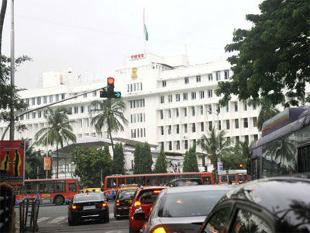
Personal details cannot be disclosed under RTI: Bombay HC

September 8, 2013

RTI_Bombay_HCMumbai, Sep 8: Under RTI, disclosure of personal information in respect of service record, income tax returns and assets of an individual is illegal unless it is necessary in larger public interest, the Bombay High Court has ruled.

Accordingly, Justice Vasanti Naik quashed an order of Nashik State Information Commissioner asking the information officer to supply information about personal assets of petitioner Subhash Khemnar to respondent Dilip Thorat.

"On hearing the petitioner and on perusal of the Act, it appears that the Chief Information Commissioner was not justified in directing Information Officer to supply personal information in respect of service record, income tax returns and assets of the petitioner unless he was satisfied that such disclosure was justified in larger public interest," said the judge in a recent order.

In the impugned order there is no finding with regard to the satisfaction of the Commissioner that the disclosure of the personal information in respect of the petitioner was justified in larger public interest, the judge noted.

Under section 8(1) J of the Act, there is no obligation on the Information Officer to give personal information, the disclosure of which has no relationship with any public activity or interest, or which would cause unwarranted invasion on the privacy of the individual unless the authority is satisfied that the disclosure of such information is justified in larger public interest, the Judge further said.

The petitioner had challenged the order passed by the Chief Information Officer on December 4 last year asking the information officer to supply personal information about him on a second appeal filed by the respondent.

Initially, the information officer did not supply the information and rejected the application filed by the respondent.

Thereafter he went in appeal before a higher authority but it was rejected. He then went in second appeal before the Chief Information Officer which was allowed. Being aggrieved, the petitioner moved the High Court.

According to the petitioner, the respondent was allegedly involved in extortion and the petitioner's brother-in-law had filed a complaint against the respondent for extortion. Also, the court had rejected the application filed by the respondent seeking anticipatory bail.

Comments

Add new comment

  • Coastaldigest.com reserves the right to delete or block any comments.
  • Coastaldigset.com is not responsible for its readers’ comments.
  • Comments that are abusive, incendiary or irrelevant are strictly prohibited.
  • Please use a genuine email ID and provide your name to avoid reject.
News Network
March 30,2020

New Delhi, Mar 30: The number of COVID-19 cases climbed to 1,071 in India on Monday, while the death toll rose to 29, according to the Union Health Ministry.

The number of active COVID-19 cases stood at 942, while 99 people were either cured or discharged and one had migrated, the ministry stated.

In its updated data at 10.30 am, it said two fresh deaths were reported from Maharashtra.

Thus, Maharashtra has reported the maximum number of eight COVID-19 deaths so far, followed by Gujarat (5), Karnataka (3), Madhya Pradesh (2), Delhi (2) and Jammu and Kashmir (2).

Kerala, Telangana, Tamil Nadu, Bihar, West Bengal, Punjab and Himachal Pradesh have reported a death each.

The total number of 1,071 cases includes 49 foreigners.

The highest number of confirmed cases of the pandemic has been reported from Kerala (194) so far, followed by Maharashtra at 193.

The number of cases has gone up to 80 in Karnataka, while Uttar Pradesh has reported 75 cases.

The number of cases has risen to 69 in Telangana, 58 in Gujarat and 57 in Rajasthan.

Delhi has reported 53 cases, while in Tamil Nadu, the number of positive cases is 50.

Punjab has reported 38 cases, while 33 COVID-19 cases have been detected each in Haryana and Madhya Pradesh.

There are 31 cases of the contagion in Jammu and Kashmir, followed by Andhra Pradesh (19), West Bengal (19) and Ladakh (13).

Bihar has 11 cases, while nine cases have been reported from the Andaman and Nicobar Islands. Chandigarh has eight cases, while Chhattisgarh and Uttarakhand have reported seven cases each.

Goa has reported five coronavirus cases, while Himachal Pradesh and Odisha have reported three cases each. Puducherry, Mizoram and Manipur have reported a case each, the Health Ministry said.

Comments

Add new comment

  • Coastaldigest.com reserves the right to delete or block any comments.
  • Coastaldigset.com is not responsible for its readers’ comments.
  • Comments that are abusive, incendiary or irrelevant are strictly prohibited.
  • Please use a genuine email ID and provide your name to avoid reject.
News Network
January 13,2020

Jan 13: India lost more than $1.33 billion to internet restrictions in 2019 as Prime Minister Narendra Modi’s government pushed ahead with his party’s Hindu nationalist agenda, raising tensions and sparking nationwide protests.

The worst shutdown has been in Kashmir, where after intermittent closures in the first half of the year, the internet has been cut off since Aug. 5 following the government’s decision to revoke the special autonomous status of the country’s only Muslim-majority state, a study said. The prologued closure was criticized by India’s highest court, which ruled Friday that the “limitless” internet shutdown enforced by the government for the last five months was illegal and asked that it be reviewed.

India imposed more internet restrictions than any other large democracy, according to the Cost of Internet Shutdowns 2019 report released by Top10VPN, a U.K.-based digital privacy and security research group. The South Asian nation recorded the third-highest losses after Iraq and Sudan, which lost $2.31 billion and $1.86 billion respectively to disruptions. Worldwide internet restrictions caused losses worth $8.05 billion, the report said.

The cost of internet blackouts was calculated using indicators from groups including the World Bank, International Telecommunication Union, and the Delhi-based Software Freedom Law Center. It includes social media shutdowns in its calculations.

India’s ministry of information and technology didn’t respond to an email seeking a response to the report’s findings.

‘Conservative Estimates’

Through 2019, India shut access to the internet for over 4,000 hours. The report added shutdowns in India were often narrowly targeted, down to the level of blocking city districts for a few hours to allow security forces to restore order. Many of these incidents were not included in the report.

“These are conservative estimates,” said Simon Migliano, head of research at U.K.-based Top10VPN. “Internet shutdowns are increasing and it shows a damaging trend.”

India’s other major internet disruptions coincided with two moves by the government that affect India’s Muslim minority. The first disruption took place in November in the states of Uttar Pradesh and Rajasthan after the Supreme Court handed a victory to Hindu groups over Muslim petitioners in a long-simmering dispute over a plot of land.

There were further disruptions in December when protests erupted against the introduction of a religion-based law that allows undocumented migrants of all faiths except Islam from neighbouring countries to seek Indian citizenship. The government enforced shutdowns across Uttar Pradesh and some Northeastern states in order to quell the protests, the report said.

Comments

Add new comment

  • Coastaldigest.com reserves the right to delete or block any comments.
  • Coastaldigset.com is not responsible for its readers’ comments.
  • Comments that are abusive, incendiary or irrelevant are strictly prohibited.
  • Please use a genuine email ID and provide your name to avoid reject.
Agencies
July 21,2020

The Retailers Association of India (RAI) has said that ad hoc lockdowns by state governments are impacting the businesses of already-stressed retailers, along with hurting the economic revival of the country.

In a statement, the body of the organised retail industry said that the long road to recovery for the Indian retail industry continues to meet stumbling blocks with numerous restrictions being imposed at the state and local levels.

"Total lockdowns in some places and limited operational hours and days in several others are creating setbacks for retailers as the already stressed retail businesses are getting further interrupted and in turn, dampening consumer sentiment," it said.

According to RAI, although the intentions are that of citizen safety and social distancing, the recent instances of local lockdowns and ad hoc restrictions being imposed in Uttar Pradesh, Maharashtra, Andhra Pradesh and Karnataka are having a distressing impact on retail businesses.

Retailers are already facing huge setbacks in terms of payment of wages and rentals due to very low sales of about 40 per cent as compared to last year, thanks to the extended lockdown, it said.

Contesting the restrictions on operating hours, Sandeep Kataria, CEO, Bata India said: "Restricted shopping time can lead to unnecessary overcrowding of stores, which is unfavourable towards the personal safety of both store staff and customers. Longer operational hours will support recovery for retailers as well as help adhering to social distancing norms."

Arvind Mediratta, MD and CEO, METRO Cash & Carry India said that these lockdowns will create severe inconvenience for all citizens as they also bar operations of food and grocery retail and wholesale stores.

Such hastily-implemented decisions by states undermine investor confidence and would come in the way of making the country "aatmanirbhar" or self-reliant, he said.

Voicing the concerns of retailers, the RAI has submitted representations to various state and local authorities that puts forth recommendations to get businesses and life of consumers on the track to recovery.

It has said that authorities should mandatorily allow essential shops including kiranas, general trade shops, supermarkets, hypermarkets and wholesalers to operate every day of the week until 9 p.m. to cater to the daily needs of the customers.

It has also sought ensuring uniform and regular opening of all categories of retail for full working hours while following stringent hygiene practices and adhering to social distancing norms. This will help avoid overcrowding outside stores as demand will get distributed over all days of the week, it said.

The industry body has also asked the local authorities to open malls in all states. Malls can ensure a safe shopping experience wherein safety measures are taken by both, the mall authorities and the retailers, it said.

Kumar Rajagopalan, CEO, RAI, said: "The need of the hour is concerted efforts by all stakeholders. While retailers are doing their bit by following stringent hygiene practices, the policymakers too need to support to ensure economic revival across the country. Consumption is important for the country and supports the business environment."

Comments

Add new comment

  • Coastaldigest.com reserves the right to delete or block any comments.
  • Coastaldigset.com is not responsible for its readers’ comments.
  • Comments that are abusive, incendiary or irrelevant are strictly prohibited.
  • Please use a genuine email ID and provide your name to avoid reject.