



Coalgate: Ex-top bureaucrats back Parakh's accusation on PM

October 17, 2013

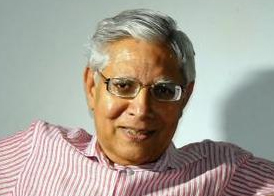
P_C_ParakhNew Delhi, Oct 17: Former top bureaucrats have come out in support of ex-Coal Secretary P C Parakh, who has been named by CBI in the coal blocks allocation scam, warning that harassment of honest officers will erode Government's credibility and stop senior officers from taking decisions.

"Parakh, as I have known him, is an honest, competent officer. While I do not wish to comment on the CBI investigation as such, as I do not have all the facts, I am at a loss to understand how an FIR has been filed only against him and no one in the PMO and no Minister," said E A S Sarma, former Coal Secretary.

If it is a case of conspiracy, all the conspirators should be taken into account. I hope there is no conspiracy!, said Sarma, a former IAS officer.

"I feel that investigations in such cases should be objective and uninfluenced by extraneous pressures. A clear distinction must be made between decisions taken in good faith and malafide decisions. It is unfortunate that dishonest Ministers, politicians and officers should be let off and honest officers harassed. It will only erode the credibility of the government which has already been on the decline in the recent times," he said.

Sarma said he has written to CVC on June 15 last year requesting it to initiate an investigation into the role of the PMO in the coalgate affair and three other scams.

"I reminded CVC at least two times after that. There has been no visible response from CVC on my letters," Sarma said.

Former Cabinet Secretary T S R Subramanian said such kind of action by CBI against Parakh will stop others from taking decisions.

"There are all kind of bureaucrats, good, bad, honest... There has to be a reasonable basis for any action by the agency," he said.

"According to the FIR, it was said Parakh met Kumar Mangalam Birla. As Cabinet Secretary, I used to meet ten bureaucrats, ten politicians and ten

businessmen daily. Should that mean that I be also made an accused?" he asked.

Parakh wanted the system to be changed for good, rued Subramanian. The former Cabinet Secretary also felt that there was an "ulterior motive" behind the move to name Parakh as an accused.

"If he has been made an accused, he could be crippled as a witness. There could be an ulterior motive," he said.

Former Central Vigilance Commissioner N Vittal accused CBI of not following its charter. "It is utterly unfair and incompetent on part of CBI (to name Parakh). They are not following their charter. I condemn CBI's action," he said.

"I have known Parakh. He is an honest person and has a good reputation," Vittal said.

The former CVC said going by CBI's logic as a minister in charge of coal ministry, Prime Minister should be held responsible for taking any decision on the matter.

Former IAS officer G Sundaram also condemned CBI's action. "I do not know him (Parakh). People who know him say he is an honest officer. But going by the charges, Prime Minister and senior officials in the PMO should also be named as the final decision was taken by them only," he said.

CBI has registered a case against Parakh and industrialist Kumar Mangalam Birla on charges of criminal conspiracy and corruption in connection with alleged irregularities in the allocation of two coal blocks in Odisha in 2005.

Parakh has dubbed as "baseless" allegations levelled against him by the CBI.

"There is absolutely nothing wrong with the decision. It was a very fair and correct decision that we took. I don't know why CBI thought that there is a conspiracy," Parakh has said.

"But, if there is a conspiracy, then there are different members in this conspiracy. There is K M Birla who made the representation, he is one conspirator. I, who examined the case and made a recommendation, I can be another conspirator and the Prime Minister, who as the Coal Minister, took the final decision, is the third conspirator.

"So, if the CBI thinks there is a conspiracy, why did they choose and select Mr Birla and me and not the PM. If conspiracy is there, then everyone is part of the conspiracy," he contended.

Comments

Add new comment

  • Coastaldigest.com reserves the right to delete or block any comments.
  • Coastaldigset.com is not responsible for its readers’ comments.
  • Comments that are abusive, incendiary or irrelevant are strictly prohibited.
  • Please use a genuine email ID and provide your name to avoid reject.
News Network
May 19,2020

New Delhi, May 19: In a fresh blow to saffronite journalist Arnab Goswami, the Supreme Court of India today rejected his plea seeking transfer of the investigation of a case, filed against him for defaming Congress interim president Sonia Gandhi, to the CBI. The court also refused to quash the FIRs filed against him.

Goswami, editor-in-chief of Republic TV, has been booked in connection with a TV show on the gathering of migrants outside Bandra railway station on April 14. This apart, multiple FIRs have been filed against him for his show on Palghar lynching. In that show, he had posed certain questions on the incident to Congress President Sonia Gandhi, following which Congress workers lodged complaints against him in various states.

Extending Goswami’s interim protection from arrest by three weeks, the Supreme Court said, “Right of a journalist under 19 1 (a) higher…Free citizens can’t exist if news media can’t speak.”

During the earlier hearing, Senior Advocate Harish Salve, appearing for Goswami, had urged the court to transfer the probe to an agency like CBI. He said the “nature of the” second FIR against Goswami over a show on the migrant gathering outside Bandra station on April 14 “shows that it’s arm-twisting tactic”. 

“They are trying to stifle an unpleasant voice. This is a political party targeting a journalist. All complainants are members of one political party. They have a problem with the government. They want to teach this journalist a lesson,” he added.

Objecting to Salve’s plea to transfer the case to the CBI, Maharashtra government counsel, Senior Advocate Kapil Sibal, had said, “CBI investigation will go into your hands”. 

Sibal denied that Goswami was being harassed and said he was only asked relevant questions. He said Goswami should “stop this communal violence and communal mongering”.

Comments

Add new comment

  • Coastaldigest.com reserves the right to delete or block any comments.
  • Coastaldigset.com is not responsible for its readers’ comments.
  • Comments that are abusive, incendiary or irrelevant are strictly prohibited.
  • Please use a genuine email ID and provide your name to avoid reject.
News Network
May 29,2020

New Delhi, May 29: In a powerful display of inter community solidarity, a team of Sikh volunteers visited Delhi's Jama Masjid and sanitized the 17th century monument.

As the national capital battled coronavirus, the historic Jama Masjid is closed for congregational prayers. However, the team of Sikh volunteers effectively sanitized the monument to ensure it is safe for the caretakers and visitors.

The volunteers affiliated with United Sikhs organization also met Naib Shahi Imam of Jama Masjid Syed Shaban Bukhari during the visit. The latter thanked the team for the humanitarian gesture and underlined the need for all sections of humanity to unite in the face of this crisis.

"The Sikh community has always displayed exemplary commitment to humanity and we are thankful to the United Sikhs' team for their initiative. This enormous crisis facing the human race can be fought off only if all communities, nations and people unite and fight it together. In recent weeks we have seen heart wrenching images of misery in the country as thousands of migrant workers return to their villages. At the same time we have also seen positive stories of different people uniting to help and feed them. We hope that together we will overcome this crisis," said Syed Shaban Bukhari, Naib Shahi Imam, Jama Masjid, Delhi.

Shaban Bukhari has also advised Muslims across the country to strictly avoid congregational prayers this Eid and pray at homes. He is young leader, who really believes in secularism. For him, humanity and kindness come first.

Comments

Add new comment

  • Coastaldigest.com reserves the right to delete or block any comments.
  • Coastaldigset.com is not responsible for its readers’ comments.
  • Comments that are abusive, incendiary or irrelevant are strictly prohibited.
  • Please use a genuine email ID and provide your name to avoid reject.
coastaldigest.com web desk
June 16,2020

New Delhi, Jun 16: Despite Prime Minister Narendra Modi led government’s attempt to downplay the border dispute with China, matters have heated up unprecedentedly along the Line of Actual Control (LAC)- the effective Sino-India border in Eastern Ladakh. 

The country has lost three precious lives – an army officer and two soldiers. The last time blood was spilled on the LAC, before the latest episode, was 45 years ago when the Chinese ambushed an Assam Rifles patrol in Tulung La.

India had lost four soldiers on October 20, 1975 in Tulung La, the last time bullets were fired on the India-China border though both the countries witnessed bitter stand-offs later at Sumdorong Chu valley in 1987, Depsang in 2013, Chumar in 2014 and Doklam in 2017.

Between 1962 and 1975, the biggest clash between India and China took place in Nathu La pass in 1967 when reports suggest that around 80 Indian soldiers were killed and many more Chinese personnel.

While three soldiers, including a Commanding Officer, were killed in the latest episode in Galwan Valley, the government describes it as a "violent clash" and does not mention opening fire.

New Delhi described the locality where the 1975 incident took place as "well within" its territory only to be rebuffed by Beijing as "sheer reversal of black and white and confusion of right and wrong".

The Ministry of External Affairs had then said that the Chinese had crossed the LAC and ambushed the soldiers while Beijing claimed the Indians entered their territory and did not return despite warnings.

The Indian government maintained that the ambush on the Assam Rifles' patrol in 1975 took place "500 metres south of Tulung" on the border between India and Tibet and "therefore in Indian territory". It said Chinese soldiers "penetrating" Indian territory implied a "change in China's position" on the border question but the Chinese denied this and blamed India for the incident.

The US diplomatic cables quoted an Indian military intelligence officer saying that the Chinese had erected stone walls on the Indian side of Tulung La and from these positions fired several hundred rounds at the Indian patrol.

"Four of the Indians had gone into a leading position while two (the ones who escaped) remained behind. The senior military intelligence officer emphasised that the soldiers on the Indian patrol were from the area and had patrolled that same region many times before," the cable said.

One of the US cables showed that former US Secretary of State and National Security Adviser Henry Kissinger sought details of the October 1975 clash "without approaching the host governments on actual location of October 20 incident". He also wanted to know what ground rules were followed regarding the proximity of LAC by border patrols.

A cable sent from the US mission in India on November 4, 1975 appeared to have doubts about the Chinese account saying it was "highly defensive".

"Given the unsettled situation on the sub-continent, particularly in Bangladesh, both Chinese and Indian authorities have authorised stepped up patrols along the disputed border. The clash may well have ensued when two such patrols unexpectedly encountered each other," it said.

Another cable from China on the same day quoted another October 1974 cable, which spoke about Chinese officials being concerned for long that "some hotheaded person on the PRC (People's Republic of China) might provoke an incident that could lead to renewed Sino-Indian hostilities. It went on to say that this clash suggested that "such concerns and apprehensions are not unwarranted".

According to the United States diplomatic cables, Chinese Foreign Ministry on November 3, 1975 disputed the statement of the MEA spokesperson, who said the incident took place inside Indian territory.

The Chinese had said "sheer reversal of black and white and confusion of right and wrong". In its version of the 1975 incident, they said Indian troops crossed the LAC at 1:30 PM at Tulung Pass on the Eastern Sector and "intruded" into their territory when personnel at the Civilian Checkpost at Chuna in Tibet warned them to withdraw.

Ignoring this, they claimed, Indian soldiers made "continual provocation and even opened fire at the Chinese civilian checkpost personnel, posing a grave threat to the life of the latter. The Chinese civilian checkpost personnel were obliged to fire back in self defence."

The Chinese Foreign Ministry spokesperson had also said they told the Indian side that they could collect the bodies "anytime" and on October 28, collected the bodies, weapons and ammunition and "signed a receipt".

The US cables from the then USSR suggested that the official media carried reports from Delhi on the October 1975 incident and they cited only Indian accounts of the incident "ridiculing alleged Chinese claims that the Indians crossed the line and opened fire first".

Comments

Add new comment

  • Coastaldigest.com reserves the right to delete or block any comments.
  • Coastaldigset.com is not responsible for its readers’ comments.
  • Comments that are abusive, incendiary or irrelevant are strictly prohibited.
  • Please use a genuine email ID and provide your name to avoid reject.