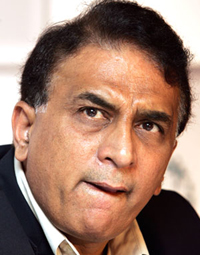
Some Indian players became casual after WC success: Gavaskar

December 15, 2012

gavaskarNew Delhi, December 15: Former India captain Sunil Gavaskar feels that some of the Indian players became very "casual" after their success in the 2011 World Cup which is "less than acceptable."

"After the success of 2011 World Cup, the attitude of some of the players became too casual. They started behaving as if the nation owes it to them for winning World Cup which is less than acceptable," Gavaskar told NDTV when asked about the reasons for India's consistent failures in the last 18 months.

The legendary opener didn't answer in a forthright manner whether the BCCI needs to do away with Duncan Fletcher who has seen through India's worst slump in Test cricket in recent years.

"I support Dhoni when he says that the coach can't get out there and score the runs. But yes, I would look if the attitude is too lacklustre or lackadaisical. In EPL or in La Liga, if a team continues to lose then the coach or the manager gets the boot," Gavaskar said.

Gavaskar agreed that Mahendra Singh Dhoni has been pro-active on field during the last two days.

"I think so. MSD knows that they have to be pro-active. I believe that things are changing but I hope it's not too late."

The veteran agreed that with consistent failures of Sachin Tendulkar and Virender Sehwag, India haven't been able to put up big scores.

Asked about the manner of Tendulkar's dismissal, Gavaskar retorted,"What about Sehwag's dismissal?"

The legend feels that Indians should learn from England's debutant Joe Root who showed enormous patience.

"Look at their newcomer. He formed parnerships with Prior and Swann. If you ask me, this is not a difficult wicket to bat on but certainly difficult to score. The ball is not doing anything out of the ordinary and you can stay on this track.

But since it's not coming onto the bat and boundaries are big, you have to score in one's and two's. The problem with India is not being able to put up too many partnerships."


Comments

Add new comment

  • Coastaldigest.com reserves the right to delete or block any comments.
  • Coastaldigset.com is not responsible for its readers’ comments.
  • Comments that are abusive, incendiary or irrelevant are strictly prohibited.
  • Please use a genuine email ID and provide your name to avoid reject.
News Network
January 27,2020

Hamilton, Jan 27: In awe of Jasprit Bumrah, New Zealand wicketkeeper Tim Seifert says the Indian speedster's subtle variations have been difficult to pick in the ongoing T20 series and his side needs to a learn a thing or two about adapting from the visitors.

India beat New Zealand by seven wickets in the second T20 International in Auckland on Sunday to grab a 2-0 lead in the five-match series.

Bumrah returned with figures of 1-21 from his four overs as Indian skipper Virat Kohli changed his bowling plans from the first game.

"Even in the first game, Bumrah bowled slower balls that were going wider. Normally, death bowlers get into straighter lines, plus yorkers and mix it with chest height. He kind of changes things a lot and is tougher to play," Seifert said.

"...the ball was holding a lot more which made it tougher. So sometimes as a batsman you have to move away from the stumps and see if they bowl straight. I was backing myself to do something different instead of just standing there at the wicket," said the stumper, who remained unbeaten on 33 off 26 balls.

"It was tricky and the ball was holding a little bit. When Kane (Williamson) got out in the over against Yuzvendra Chahal, we knew it was the over to push because they had Bumrah coming back," he added.

He said New Zealand batsmen need to take a cue from their Indian counterparts on how to adapt to different conditions quickly.

"...Indian batsmen showed how to get under the ball and time it. They showed it a couple of times that and on the slower wickets you just have to keep it like that. Once you lose your shape, you are not in position," he said.

"Try to get them (bowlers) off line or off balance, try to get into that position to hit good balls. That's T20 cricket as well. Sometimes it's going 100 per cent but some times you have to take a breath and re-assess. Indian batters did that well."

Seifert believes New Zealand bowlers did reasonably well in the two games but they have been outplayed by the Indian batsmen.

"To be honest, in the first game they were 110-1 and they had wickets in hand. We didn't bowl too badly in that first game. In the second game, we only got 130 and it is tough to bowl at Eden Park (with that total)," he said.

"170 was the target in mind but once you get 130 on the board, that was going to be very hard at Eden Park against a team that is very strong and playing really well. But our spinners were outstanding. Good balls have gone to boundary.

He said coming into the T20 series on the back of a lost Test rubber in Australia also didn't help New Zealand's cause in the first two games.

"Boys are coming off a Test series (in Australia) and a lot of them haven't played T20 cricket for a while," he said.

"But for some like me, I have had the Super Smash for the last two months, so I have played a lot of T20 cricket. They have two games under their belt now so hopefully they will have a better understanding."

Asked if New Zealand would want to play on India's strength of chasing, Seifert replied, "Even in ODI cricket, India have chased down big totals but I think on that wicket it was going to get slower and slower.

"But with that small target on Eden Park, something special has to happen with top six (for a collapse). One batsman got fifty and the other was batting very well. We needed top five-six in the first 10 overs," he said.

The Black Caps are still confident of bouncing back in the series.

The third T20 will be played here on Wednesday before back-to-back matches in Wellington and Mt Maunganui. Seifert said they would like to replicate the 2019 tour of India, where New Zealand came out 2-1 victorious in the three-match series.

"We have lost the first two games but we haven't played badly. We definitely haven't played our best though while India has played very well. If we lose the series on Wednesday, it is not the end of the world. But if we can turn things around, and win, we will take things from there," he said.

"We won the series 2-1 last time, so we have to treat it like a three match series again. But we have to treat it like the first two are must-win games."

"We are not playing our best at the moment. There are 20-odd games before the World Cup, and that tournament is the pinnacle, so we will get there (in preparation),” he signed off.


Comments

Add new comment

  • Coastaldigest.com reserves the right to delete or block any comments.
  • Coastaldigset.com is not responsible for its readers’ comments.
  • Comments that are abusive, incendiary or irrelevant are strictly prohibited.
  • Please use a genuine email ID and provide your name to avoid reject.
News Network
July 24,2020

Dubai, Jul 24: The eagerly-awaited Indian Premier League will start on September 19 in the United Arab Emirates (UAE) with the final slated on November 8, IPL Chairman Brijesh Patel told PTI on Friday.

While the event's Governing Council will meet next week to chalk out the final details and approve the schedule, it is understood that the BCCI has informally intimated the franchises about the plan.

"The GC will meet shortly but we have finalised the schedule. It will run from September 19 to November 8. We expect the government approval to come through. It is a full 51-day IPL," Patel confirmed the development after PTI reported the dates on Thursday.

The IPL has been made possible by the ICC's decision to postpone the October-November T20 World Cup in Australia owing to the COVID-19 pandemic due to which the host country expressed its inability to conduct the event.

Patel said that the Standard Operating Procedure to combat the COVID-19 threat is being prepared and the BCCI will formally write to the Emirates Cricket Board.

"We are making the SOP and it will be ready in a few days. To allow crowd or not depends on the UAE government. Anyway social distancing has to be maintained. We have left it for their government to decide on that. Will also be writing to the UAE board formally," Patel said.

There are three grounds available in the UAE -- Dubai International Stadium, Sheikh Zayed Stadium (Abu Dhabi) and the Sharjah ground.

It is learnt that the BCCI will be renting the grounds of the ICC Academy for training of the teams.

The ICC Academy has two full-sized cricket grounds along with 38 turf pitches, 6 indoor pitches, a 5700 square foot outdoor conditioning area along with physiotherapy and medicine centre.

As per the current health protocol in Dubai, there is no need to be in quarantine if people are carrying a negative COVID-19 test report, but if they are not, they will have to undergo a test.

While there was speculation that the IPL will start from September 26, the BCCI decided to advance it by a week in order to ensure that the Indian team's tour of Australia is not jeopardised.

"The Indian team will have a mandatory quarantine of 14 days as per the Australian government rules. A delay would have sent the plans haywire," a BCCI official said on conditions of anonymity.

"The best part is that 51 days is not at all a curtailed period and broadcasters will be happy with full seven-week window," he added.

While the original schedule had five double-headers, Patel said the new one will feature around 12 double-headers which means two matches each on both Saturdays and Sundays.

The Indians are set to play a four-match Test series against Australia starting December 3 in Brisbane after the IPL.

It is expected that with each and every team needing at least a month's time to train, the IPL franchises will be leaving base by August 20 which gives them exactly four weeks time to prepare.

The cash-rich event was originally scheduled to start at the end of March but the COVID-19 pandemic and the travel restrictions that were put in place to contain the virus, led to an indefinite postponement.

However, BCCI President Sourav Ganguly had always maintained that the event will be held some time this year.

Comments

Add new comment

  • Coastaldigest.com reserves the right to delete or block any comments.
  • Coastaldigset.com is not responsible for its readers’ comments.
  • Comments that are abusive, incendiary or irrelevant are strictly prohibited.
  • Please use a genuine email ID and provide your name to avoid reject.
News Network
February 11,2020

Dubai, Feb 11: Two Indian players-- Akash Singh and Ravi Bishnoi -- and three Bangladeshis have been charged by the International Cricket Council (ICC) for involvement in the quarrel just after the U-19 cricket World Cup summit clash in Potchefstroom, South Africa on Sunday.

Akash and Bishnoi and three Bangladeshi players -- Md. Towhid Hridoy, Shamim Hossain and Rakibul Hasan -- were found guilty of breaching the ICC Code of Conduct after a few players from both sides nearly came to blows after Bangladesh beat India by three wickets to win their maiden U-19 World Cup title.

"Five players have been found guilty of a Level 3 breach of the ICC Code of Conduct for Players and Support Personnel ... (they) were charged with violating Article 2.21 of the code, whilst Bishnoi received a further charge of breaching Article 2.5," the ICC said in a statement.

"All five players have accepted the sanctions proposed by ICC U-19 Cricket World Cup Match Referee Graeme Labrooy," it added.

A near brawl broke out after Bangladesh’s historic win over India in the final. The Bangladesh players were aggressive during the Indian innings with lead pacer Shoriful Islam frequently sledging the Indian batsmen.

As soon as the match ended, Bangladeshi players rushed into the playing area.

"India's Akash accepted the charge of breaching Article 2.21 and has received a sanction of eight suspension points, which equates to six demerit points, which will remain on his record for two years," the ICC said.

Compatriot Bishnoi accepted the charge of breaching Article 2.21 and has received a sanction of five suspension points, which equates to five demerit points.

"Bishnoi also accepted a level 1 charge of breaching Article 2.5 for a separate incident during the match, where he used language, actions or gestures which disparage or which could provoke an aggressive reaction from a batter following the dismissal of Avishek Das in the 23rd over," said the ICC.

"For this he received a further two demerit points meaning seven demerit points will remain on his record for the next two years."

Bangladesh's Towhid Hridoy accepted the charge of breaching Article 2.21 and has received a sanction of ten suspension points, which equates to six demerit points, which will remain on his record for two years.

Shamim Hossain accepted the charge of breaching Article 2.21 and has received a sanction of eight suspension points, which equates to six demerit points, which will remain on his record for two years.

Rakibul Hasan accepted the charge of breaching Article 2.21 and has received a sanction of four suspension points, which equates to five demerit points, which will remain on his record for two years.

All charges were levelled by on-field umpires Sam Nogajski and Adrian Holdstock, third umpire Ravindra Wimalasiri as well as fourth umpire Patrick Bongni Jele. Level 3 breaches carry a minimum penalty of four suspension points and a maximum penalty of 12 suspension points.

The suspension points will be applied to the forthcoming international matches the players are most likely to participate in at either senior or U-19 level. One suspension point equals a player being ineligible for one ODI or T20I, U-19 or A team international match.

Comments

Add new comment

  • Coastaldigest.com reserves the right to delete or block any comments.
  • Coastaldigset.com is not responsible for its readers’ comments.
  • Comments that are abusive, incendiary or irrelevant are strictly prohibited.
  • Please use a genuine email ID and provide your name to avoid reject.