Bring it 'in' to push India out

January 8, 2013

push_india

The seemingly straight ball makes an abrupt curve in the air. It curls in on the slender space between bat and pad. Don’t tell this to VVS Laxman. He’ll insist that the ball must be pasted to mid-wicket.

But don’t tell this to lesser mortals either. They’ll moan that the bend of the ball is too much to cope with. So what’s it about the incoming ball that has given India a torrid time in the ODIs against Pakistan? India lost half their side for less than 30 in Chennai. Junaid Khan got four of those wickets. All with in-dipping deliveries that swerved in the air and beat their forward prod.

Junaid revealed why Wasim Akram urged him to develop the skill. “It’s very natural for left-arm fast bowlers to slant it across the right-handers. Once a guy like Virender Sehwag gauges the length of the away-going deliveries, you can be murdered. When I did my homework, I found out that Sehwag has a problem with the ball that comes in,” he said.

Akram ought to know. As a commentator, he’s been following the Indian team closely. Don’t forget he’s involved with the Kolkata Knight Riders too. The conditions in Chennai were conducive for swing. But if sides lose five wickets for 30 on slightly green tops, will every game end in two sessions?

So how do quality batsmen counter inswing? To the end, Ricky Ponting lived with the flaw. He would go hard at the ball, making him susceptible to LBW early in the innings.

Sunil Gavaskar would play late; it allowed him to adjust to the deviations. A pointer for India, perhaps?

Sachin Tendulkar, occasionally, stands one foot outside the crease to smother the movement. Some prefer an open stance to have a better view of the ball.

In India’s context, it could be argued that they don’t quite get those pacy, full length deliveries at practice. As Sanjay Manjrekar pointed out, bowling ‘up and quick’ comes naturally to Pakistan as opposed to Indian fast bowlers who land it around the good length. Bhuvneshwar Kumar and Praveen Kumar are exceptions.

Aakash Chopra feels Indian batsmen aren’t in any sort of nick to play swing bowling, let alone the incoming ball. “With the kind of form they are in, feet not moving, they are bound to lose wickets,” he reasoned.

But he insists that India’s fallibility against the in-dipper is a touch exaggerated. “Indian batsmen are not bad against inswing. Barring Virender Sehwag, they are good on the on-side. VVS Laxman, Rahul Dravid and Sachin Tendulkar, all use their wrists,” he said.

Chopra points out that Junaid was tough to negotiate because he moved the ball both ways. “He wouldn’t have been that effective if he was taking everything away or just bringing them in. If you look at the way India play in Australia or England, they have been out to catches in the slips, not knowing where the off-stump is.”

Chopra doesn’t agree that India’s present lot isn’t exposed to quality swing in domestic cricket. He said, “What is happening in international cricket is not a true reflection of how things are a level below. If you look at the top 10 bowlers in Ranji Trophy over the last few years, seven of them would be pacers. It is just that they are not quick, and we get exposed to fast bowling when we go overseas. Having said that, Junaid has bowled at a decent pace and I’m quite impressed.”

Somewhere, an England team should be making notes.

Comments

Add new comment

  • Coastaldigest.com reserves the right to delete or block any comments.
  • Coastaldigset.com is not responsible for its readers’ comments.
  • Comments that are abusive, incendiary or irrelevant are strictly prohibited.
  • Please use a genuine email ID and provide your name to avoid reject.
Agencies
August 2,2020

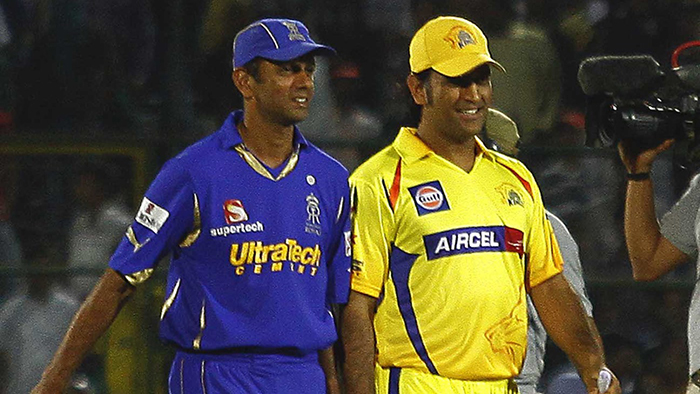
New Delhi, Aug 2: Batting great Rahul Dravid has attributed Chennai Super Kings' consistent run in the IPL to skipper Mahendra Singh Dhoni's instincts, game-smarts and the incredible amount of work that goes behind the scenes.

N Srinivasan, the former BCCI president and head of India Cements, which owns the CSK franchise, agreed that Dhoni is a man of instinct who doesn't believe in attending team meetings and going over data.

Both were speaking at a webinar organised by the Great Lakes Institute of Management.

"If you look at the success CSK has had, they've got really good access to data and they've got really good access to people behind the scenes and they've run cricket teams at the junior level," Dravid said at the webinar according to ESPNcricinfo.

The former India captain added, "They understand talent and they've obviously got a good scouting process in place. But, what they also have is a captain who really understands instincts.

"So, I mean, look, I know Dhoni quite well and I hope he hasn't changed, but I know Dhoni is probably not one to look at reams of data and statistics."

The Super Kings have won the lucrative tournament three times -- one less than Mumbai Indians -- and reached the knockouts in each of the 10 seasons they have been a part of.

Srinivasan also spoke about how Dhoni's instinct and judgement contributed to his team's success at a time when a lot of emphases is placed on data.

"We're awash with data just now. To give you an example, there are bowling coaches and in a T20 game, they play videos of every batsman whom they're going to come against and they see how he got out, what's his strength, what's his weakness etc.

"So, MS Dhoni doesn't attend this, he's a pure instinct man. The bowling coach, (head coach Stephen) Fleming will be there and everybody will be there, everyone is giving opinions, (but) he'll get up and go.

"In the context of instinct, he feels that okay he can assess a batsman or player on the field, that's his judgement. On the other hand, there is so much of data that is available to help a person also analyse. It's a very difficult line to draw (between data and instinct)."

Srinivasan also recalled how Dhoni once refused to take "one outstanding player" suggested by the franchise boss as that could have broken the team's cohesion.

"There was one outstanding player that we suggested to MS, he said: 'no sir, he will spoil the team'. The cohesion within the team is important and see in America, franchise-based sport has been there for such a long time," he said.

"In India, we're just starting and we're new to it. But we at India Cements have had a lot of experience running teams at junior levels."

Comments

Add new comment

  • Coastaldigest.com reserves the right to delete or block any comments.
  • Coastaldigset.com is not responsible for its readers’ comments.
  • Comments that are abusive, incendiary or irrelevant are strictly prohibited.
  • Please use a genuine email ID and provide your name to avoid reject.
News Network
February 11,2020

Dubai, Feb 11: Two Indian players-- Akash Singh and Ravi Bishnoi -- and three Bangladeshis have been charged by the International Cricket Council (ICC) for involvement in the quarrel just after the U-19 cricket World Cup summit clash in Potchefstroom, South Africa on Sunday.

Akash and Bishnoi and three Bangladeshi players -- Md. Towhid Hridoy, Shamim Hossain and Rakibul Hasan -- were found guilty of breaching the ICC Code of Conduct after a few players from both sides nearly came to blows after Bangladesh beat India by three wickets to win their maiden U-19 World Cup title.

"Five players have been found guilty of a Level 3 breach of the ICC Code of Conduct for Players and Support Personnel ... (they) were charged with violating Article 2.21 of the code, whilst Bishnoi received a further charge of breaching Article 2.5," the ICC said in a statement.

"All five players have accepted the sanctions proposed by ICC U-19 Cricket World Cup Match Referee Graeme Labrooy," it added.

A near brawl broke out after Bangladesh’s historic win over India in the final. The Bangladesh players were aggressive during the Indian innings with lead pacer Shoriful Islam frequently sledging the Indian batsmen.

As soon as the match ended, Bangladeshi players rushed into the playing area.

"India's Akash accepted the charge of breaching Article 2.21 and has received a sanction of eight suspension points, which equates to six demerit points, which will remain on his record for two years," the ICC said.

Compatriot Bishnoi accepted the charge of breaching Article 2.21 and has received a sanction of five suspension points, which equates to five demerit points.

"Bishnoi also accepted a level 1 charge of breaching Article 2.5 for a separate incident during the match, where he used language, actions or gestures which disparage or which could provoke an aggressive reaction from a batter following the dismissal of Avishek Das in the 23rd over," said the ICC.

"For this he received a further two demerit points meaning seven demerit points will remain on his record for the next two years."

Bangladesh's Towhid Hridoy accepted the charge of breaching Article 2.21 and has received a sanction of ten suspension points, which equates to six demerit points, which will remain on his record for two years.

Shamim Hossain accepted the charge of breaching Article 2.21 and has received a sanction of eight suspension points, which equates to six demerit points, which will remain on his record for two years.

Rakibul Hasan accepted the charge of breaching Article 2.21 and has received a sanction of four suspension points, which equates to five demerit points, which will remain on his record for two years.

All charges were levelled by on-field umpires Sam Nogajski and Adrian Holdstock, third umpire Ravindra Wimalasiri as well as fourth umpire Patrick Bongni Jele. Level 3 breaches carry a minimum penalty of four suspension points and a maximum penalty of 12 suspension points.

The suspension points will be applied to the forthcoming international matches the players are most likely to participate in at either senior or U-19 level. One suspension point equals a player being ineligible for one ODI or T20I, U-19 or A team international match.

Comments

Add new comment

  • Coastaldigest.com reserves the right to delete or block any comments.
  • Coastaldigset.com is not responsible for its readers’ comments.
  • Comments that are abusive, incendiary or irrelevant are strictly prohibited.
  • Please use a genuine email ID and provide your name to avoid reject.
Agencies
May 25,2020

Chandigarh, May 25: Legendary former hockey player Balbir Singh Senior died in a private hospital on Monday, his family said.

He was 96 years old. His condition was critical for nearly a fortnight.

He was undergoing treatment at Fortis Mohali and was in a "semi-comatose condition".

He was hospitalised on May 8 with high fever and breathing trouble. His COVID-19 test came negative.

Balbir was part of the Indian teams that won gold at the 1948 London Olympics, Helsinki 1952 and Melbourne 1956. His record for most individual goals scored in an Olympic men's hockey final remains unbeaten.

Balbir had set this record when he scored five goals in India's 6-1 win over Netherlands in the gold medal match of the 1952 Games.

He was the head coach of the Indian team for the 1975 men's World Cup, which India won and the 1971 men's World Cup, where India earned a bronze medal. He was also conferred with the prestigious Padma Shri in 1957.

Comments

Add new comment

  • Coastaldigest.com reserves the right to delete or block any comments.
  • Coastaldigset.com is not responsible for its readers’ comments.
  • Comments that are abusive, incendiary or irrelevant are strictly prohibited.
  • Please use a genuine email ID and provide your name to avoid reject.