



Our Moon is much older than thought: study

January 14, 2017

Los Angeles, Jan 14: The Moon is at least 4.51 billion years old - up to 140 million years older than previously thought, according to a new study of minerals called zircons brought back from the lunar body to the Earth by the Apollo 14 mission in 1971.
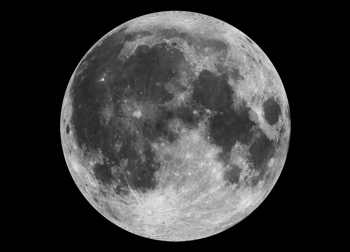
moonThe Moon's age has been a hotly debated topic, even though scientists have tried to settle the question over many years and using a wide range of scientific techniques.

"We have finally pinned down a minimum age for the Moon; it is time we knew its age and now we do," said Melanie Barboni, research geochemist at University of California, Los Angeles (UCLA) in the US.

The Moon was formed by a violent, head-on collision between the early Earth and a "planetary embryo" called Theia.

The new study would mean that Moon formed "only" about 60 million years after the birth of the solar system, providing critical information for astronomers and planetary scientists who seek to understand the early evolution of the Earth and our solar system, researchers said.

That has been a difficult task, Barboni said, because "whatever was there before the giant impact has been erased."

While scientists cannot know what occurred before the collision with Theia, these findings are important because they will help scientists continue to piece together major events that followed it.

It is usually difficult to determine the age of Moon rocks because most of them contain a patchwork of fragments of multiple other rocks. However, Barboni was able to analyse eight zircons in pristine condition.

She examined how the uranium they contained had decayed to lead and how the lutetium they contained had decayed to an element called hafnium.

The researchers analysed those elements together to determine the Moon's age.

"Zircons are nature's best clocks. They are the best mineral in preserving geological history and revealing where they originated," said Kevin McKeegan, a UCLA professor of geochemistry and cosmochemistry.

The Earth's collision with Theia created a liquefied Moon, which then solidified. Scientists believe most of the Moon's surface was covered with magma right after its formation.

The uranium–lead measurements reveal when the zircons first appeared in the Moon's initial magma ocean, which later cooled down and formed the Moon's mantle and crust; the lutetium–hafnium measurements reveal when its magma formed, which happened earlier.

Previous studies concluded the Moon's age based on Moon rocks that had been contaminated by multiple collisions. McKeegan said those rocks indicated the date of some other events, "but not the age of the Moon."

The study was published in the journal Science Advances.

Comments

Add new comment

  • Coastaldigest.com reserves the right to delete or block any comments.
  • Coastaldigset.com is not responsible for its readers’ comments.
  • Comments that are abusive, incendiary or irrelevant are strictly prohibited.
  • Please use a genuine email ID and provide your name to avoid reject.
Agencies
July 6,2020

The Covid-19 pandemic has made an unprecedented impact on the Indian businesses, particularly small and medium enterprises (SMEs) and startups. According to a joint survey by FICCI and Indian Angel Network (IAN), the pandemic has hit the businesses of around 70% startups.

With uncertainty in the business environment and an unexpected shift in priorities of the government as well as corporates, many startups are struggling to survive, it says.

In a nationwide survey on the 'Impact of Covid-19 on Indian Startups' involving 250 startups, 70% participants said their businesses had been impacted by Covid-19 and around 12% had shut operations.

The survey shows only 22% startups have cash reserves to meet the fixed cost expenses over the next 3-6 months, and 68% are reducing operational and administrative expenses.

Around 30% of the companies said they would retrench employees if the lockdown was extended too long. The 43% startups have already started 20-40% salary cuts over April-June.

Over 33% startups said investors had put the investment decision on hold and 10% said the deals had been scrapped. Only 8% startups had received funds as per the deals signed before Covid-19 outbreak, the survey revealed.

The reduced funding has forced startups to put a hold on business development and manufacturing activities, which has resulted in loss of projected orders.

The survey highlights the need of an urgent relief package for startups, including possible purchase orders from the government, tax relief and swifter tax refunds, and immediate fiscal support measures, including grants, soft loans and payroll grants.

Besides 250 startups, 61 incubators and investors also participated in the survey.

While 96% of investors accepted that their investments in startups had been impacted by Covid-19, 92% said their investments in startups would continue to be low over the next six months.

Around 59% investors said they would prefer to work with the existing portfolio firms in the coming months. Only 41% said they would consider new deals.

"A comparison of priority investment sectors before and during Covid-19 shows 35% investors are now looking at investments in healthcare startups, followed by EdTech, AI/Deep Tech, FinTech and Agri," said the survey.

Around 44% incubators surveyed said their day-to-day operations had been considerably hit by Covid-19. Most incubators are now supporting their portfolio firms by providing them virtual platforms to interact with mentors, investors and industries.

Dilip Chenoy, FICCI Secretary General, said, "The startup sector is stressed for survival at the moment. The investment sentiment is also subdued and is expected to remain so in the coming months. Lack of working capital and cash flows may lead to major layoffs over the next 3-6 months."

Indian startups needed an enabling ecosystem and flow of funds to continue operations, the survey said.

Padmaja Ruparel, President, Indian Angel Network & Co-Chair of FICCI Startup Committee, said, "In these uncertain times, as investors, we must play an important role to provide the Indian startups funding, mentoring and hand-holding support to stay afloat and come out at the other end of this crisis."

To that end, IAN recently announced a debt fund to help IAN portfolio companies raise working capital and ensure business continuity by partnering with debt providers.

This must be replicated on a wider scale, so a larger number of startups are provided the capital support to make it during these tough times, Ruparel said.

Comments

Add new comment

  • Coastaldigest.com reserves the right to delete or block any comments.
  • Coastaldigset.com is not responsible for its readers’ comments.
  • Comments that are abusive, incendiary or irrelevant are strictly prohibited.
  • Please use a genuine email ID and provide your name to avoid reject.
Agencies
July 2,2020

Leiden, Jul 2: Astronomers have discovered a luminous galaxy caught in the act of reionizing its surrounding gas only 800 million years after the Big Bang.

The research, led by Romain Meyer, PhD student at UCL in London, UK, has been presented at the virtual annual meeting of the European Astronomical Society (EAS).

Studying the first galaxies that formed 13 billion years ago is essential to understanding our cosmic origins. One of the current hot topics in extragalactic astronomy is 'cosmic reionization,' the process in which the intergalactic gas was ionized (atoms stripped of their electrons).

Cosmic reionization is similar to an unsolved murder: We have clear evidence for it, but who did it, how and when? We now have strong evidence that hydrogen reionization was completed about 13 billion years ago, in the first billion years of the universe, with bubbles of ionized gas slowly growing and overlapping.

The objects capable of creating such ionized hydrogen bubbles have however remained mysterious until now: the discovery of a luminous galaxy in which 60-100 percent of ionizing photons escape, is likely responsible for ionizing its local bubble. This suggests the case is closer to being solved.

The two main suspects for cosmic reionization are usually 1) a population of numerous faint galaxies leaking ~10 percent of their energetic photons, and 2) an 'oligarchy' of luminous galaxies with a much larger percentage (>50 percent) of photons escaping each galaxy.

In either case, these first galaxies were very different from those today: galaxies in the local universe are very inefficient leakers, with only <2-3 percent of ionizing photons escaping their host. To understand which galaxies governed cosmic reionization, astronomers must measure the so-called escape fractions of galaxies in the reionization era.

The detection of light from excited hydrogen atoms (the so-called Lyman-alpha line) can be used to infer the fraction of escaping photons. On the one hand, such detections are rare because reionization-era galaxies are surrounded by neutral gas which absorbs that signature hydrogen emission.

On the other hand, if this hydrogen signal is detected it represents a 'smoking gun' for a large ionized bubble, meaning we have caught a galaxy reionizing its surroundings. The size of the bubble and the galaxy's luminosity determines whether it is solely responsible for creating this ionized bubble or if unseen accomplices are necessary.

The discovery of a luminous galaxy 800 million years after the Big Bang supports the scenario where an 'oligarchy' of bright leakers emits most of the ionizing photons.

"It is the first time we can point to an object responsible for creating an ionized bubble, without the need for a contribution from unseen galaxies.

Additional observations with the upcoming James Webb Space Telescope will enable us to study further what is likely one of the best suspects for the unsolved case of cosmic reionization," said Meyer.

Comments

Add new comment

  • Coastaldigest.com reserves the right to delete or block any comments.
  • Coastaldigset.com is not responsible for its readers’ comments.
  • Comments that are abusive, incendiary or irrelevant are strictly prohibited.
  • Please use a genuine email ID and provide your name to avoid reject.
Agencies
January 7,2020

Washington, Jan 7: Facebook will ban deepfake videos ahead of the US elections but the new policy will still allow heavily edited clips so long as they are parody or satire, the social media giant said Tuesday.

Deepfake videos are hyper-realistic doctored clips made using artificial intelligence or programs that have been designed to accurately fake real human movements.

In a blog published following a Washington Post report, Facebook said it would begin removing clips that were edited--beyond for clarity and quality--in ways that "aren't apparent to an average person" and could mislead people.

Clips would be removed if they were "the product of artificial intelligence or machine learning that merges, replaces or superimposes content onto a video, making it appear to be authentic," the statement from Facebook vice-president Monika Bickert said.

However, the statement added: "This policy does not extend to content that is parody or satire, or video that has been edited solely to omit or change the order of words."

US media noted the new guidelines would not cover videos such as the 2019 viral clip -- which was not a deepfake -- of House Speaker Nancy Pelosi that appeared to show her slurring her words.

Facebook also gave no indication on the number of people assigned to identify and take down the offending videos, but said videos failing to meet its usual guidelines would be removed, and those flagged clips would be reviewed by teams of third-party fact-checkers -- among them AFP.

The news agency has been paid by the social media giant to fact-check posts across 30 countries and 10 languages as part of a program starting in December 2016, and including more than 60 organisations.

Content labeled "false" is not always removed from newsfeeds but is downgraded so fewer people see it -- alongside a warning explaining why the post is misleading.

Comments

Add new comment

  • Coastaldigest.com reserves the right to delete or block any comments.
  • Coastaldigset.com is not responsible for its readers’ comments.
  • Comments that are abusive, incendiary or irrelevant are strictly prohibited.
  • Please use a genuine email ID and provide your name to avoid reject.