



Over 2 lakh EVMs to be used in Rajasthan assembly polls: CEO

Agencies
July 17, 2018

Jaipur, Jul 17: Over two lakh electronic voting machines (EVMs) would be used in the upcoming Rajasthan assembly elections, said Chief Election Officer Ashwani Bhagat today.

The five-year-term of the state assembly is to end on January 20 next year and, accordingly, the state is expected to go to the polls by the year end.

The machines to be used in the upcoming election are secure and do not have any fault, said Bhagat, amid the ongoing technical examination of the readiness of the EVMs to be used in the state. 

The first-level examination of the EVMs was conducted by technical experts of Bharat Electronics Limited in presence of representatives of major political parties, he added. 

For the assembly elections, a total of 76,700 third generation EVMs, 64,000 control units and nearly 65,700 VVPAT (Voter Verifiable Paper Audit Trail) machines have been allotted, he said, adding the rest would be allocated soon.

The machines have been kept in warehouses by district election officers, said the chief election officer, adding that a team of 10 policemen secures the warehouses round the clock and only pass holders are allowed entry to them.

The Election Commission of India (ECI), the state election department and district election officers can see live recordings of the CCTV cameras installed at the warehouses as a surveillance measure.

Bhagat said the first-level technical examination for the EVMs was launched on June 18 at division levels in the state by twelve teams, comprising a total of 140 engineers and technical experts. The work has been completed in major districts, but was still pending in Swai Madhopur, Hanumangarh, Dausa, Jaisalmer, Jhalawar and Pratapgarh districts, he said.

Comments

Add new comment

  • Coastaldigest.com reserves the right to delete or block any comments.
  • Coastaldigset.com is not responsible for its readers’ comments.
  • Comments that are abusive, incendiary or irrelevant are strictly prohibited.
  • Please use a genuine email ID and provide your name to avoid reject.
News Network
May 29,2020

New Delhi, May 29: More than 38,000 doctors, including those retired from the Armed Forces Medical Services, have volunteered to help the government in its fight against COVID-19 pandemic, a senior official said on Friday.

On March 25, the government had made an appeal to doctors, including the retired ones, to come forward and join the efforts to fight the pandemic.

"38,162 volunteer doctors, including retired government, Armed Forces Medical Services, public sector undertaking or private doctors have signed up with the government to battle COVID-19 pandemic," the official said.

The official further said Niti Aayog has sent a list of names of these doctors to Ministry of Health and Family Welfare and National Disaster Management Authority (NDMA).

In a statement posted on Niti Aayog's website on March 25, the government had said those who wish to contribute to this noble mission may register themselves through a link provided on the Aayog's website.

"The Government of India requests for volunteer doctors who are fit and willing to be available for providing their services in the public health facilities and the training hospitals in the near future.

"We appeal to such doctors to come forward at this hour of need. You could also be a retired government, Armed Forces Medical Services, public sector undertaking or a private doctor," the statement had said.

It had noted that in case the outbreak leads to a high number of infected individuals, India's public health facilities will face tremendous load to take care of a large number of patients.

Many countries, including the US, Italy, the UK and Vietnam, had also urged retired health workers to come back to work amid the pandemic.

The number of COVID-19 cases in India has climbed to 1,65,799, making it the world's ninth worst-hit country by the coronavirus pandemic.

The Health Ministry on Friday said the death toll due to COVID-19 rose to 4,706 in the country.

Comments

Add new comment

  • Coastaldigest.com reserves the right to delete or block any comments.
  • Coastaldigset.com is not responsible for its readers’ comments.
  • Comments that are abusive, incendiary or irrelevant are strictly prohibited.
  • Please use a genuine email ID and provide your name to avoid reject.
Agencies
August 6,2020

The Indian Defence Ministry, which had in its document that China intruded into the Indian territory in eastern Ladakh in early May, on August 6 took down the page which it had uploaded on its website.

According to a report by news channel NDTV, the ministry, in its document, had said the Chinese aggression has been "increasing along the Line of Actual Control (LAC) and more particularly in Galwan valley since May 5."

"The Chinese side has transgressed in the areas of Kungrang Nala, Gogra and north bank of Pangong Tso Lake on May 17-18," the document, titled 'Chinese Aggression on LAC' stated.

The document revealed that "... a violent face-off incident took place between the two sides on June 15, resulting in casualties on both sides."

After the clash, a second corps commander level meeting took place on June 22 to discuss the modalities of de-escalation. "While engagement and dialogue at military and diplomatic level is continuing to arrive at mutually acceptable consensus, the present standoff is likely to be prolonged," it said.

A defence ministry spokesperson told the news channel that the document "did not go through him".

The opposition Congress, meanwhile, asked the government why the report was taken down with party leader Rahul Gandhi alleging that removal of the document from websites would not change facts.

"Forget standing up to China, India's PM lacks the courage even to name them. Denying China is in our territory and removing documents from websites won't change the facts," Gandhi tweeted.

Comments

Add new comment

  • Coastaldigest.com reserves the right to delete or block any comments.
  • Coastaldigset.com is not responsible for its readers’ comments.
  • Comments that are abusive, incendiary or irrelevant are strictly prohibited.
  • Please use a genuine email ID and provide your name to avoid reject.
Agencies
July 29,2020

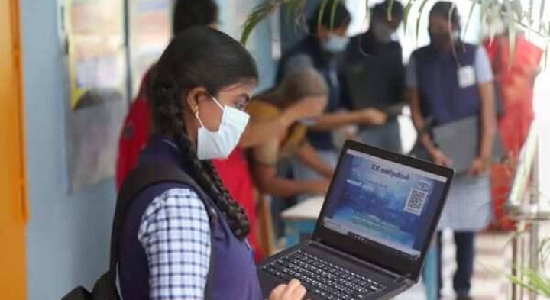
New Delhi, Jul 29: The new National Education Policy (NEP) approved by the Union Cabinet on Wednesday is set to usher in a slew of changes with the vision of creating an education system that contributes directly to transforming the country, providing high-quality education to all, and making India a global knowledge superpower.

The draft of the NEP by a panel headed by former Indian Space Research Organisation (ISRO) chief Kasturirangan and submitted to the Union Human Resource Development Minister Ramesh Pokhriyal when he took charge last year. The new NEP replaces the one formulated in 1986.

Some of the key highlights of the New Education Policy are:-

The policy aims to enable an individual to study one or more specialized areas of interest at a deep level, and also develop character, scientific temper, creativity, spirit of service, and 21st century capabilities across a range of disciplines including sciences, social sciences, arts, humanities, among others.

It identified the major problems facing the higher education system in the country and suggested changes such as moving towards multidisciplinary universities and colleges, with more institutions across India that offer medium of instruction in local/Indian languages, a more multidisciplinary undergraduate education, among others. 

The governance of such institutions by independent boards having academic and administrative autonomy has also been suggested.

Under the suggestions for institutional restructuring and consolidation, it has suggested that by 2040, all higher education institutions (HEIs) shall aim to become multidisciplinary institutions, each of which will aim to have 3,000 or more students, and by 2030 each or near every district in the country there will be at least one HEI.

The aim will be to increase the Gross Enrolment Ratio in HEIs including vocational education from 26.3 per cent (2018) to 50 per cent by 2035.

Single-stream HEIs will be phased out over time, and all will move towards becoming vibrant multidisciplinary institutions or parts of vibrant multidisciplinary HEI clusters.

It also pushes for more holistic and multidisciplinary education to be provided to the students.

Comments

Add new comment

  • Coastaldigest.com reserves the right to delete or block any comments.
  • Coastaldigset.com is not responsible for its readers’ comments.
  • Comments that are abusive, incendiary or irrelevant are strictly prohibited.
  • Please use a genuine email ID and provide your name to avoid reject.