Over 50,000 rescued as flood waters recede in Jammu and Kashmir

September 10, 2014

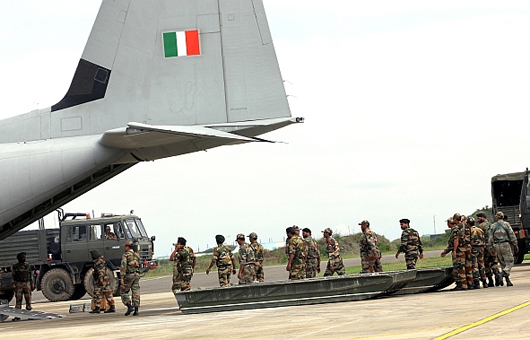
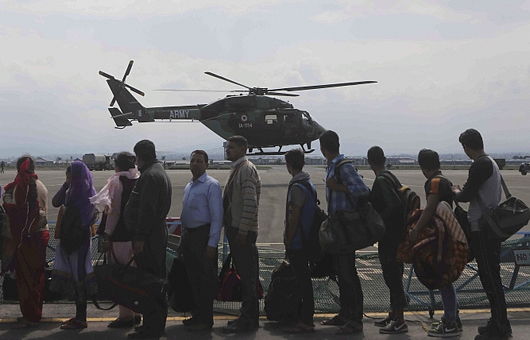
IAF Rescue

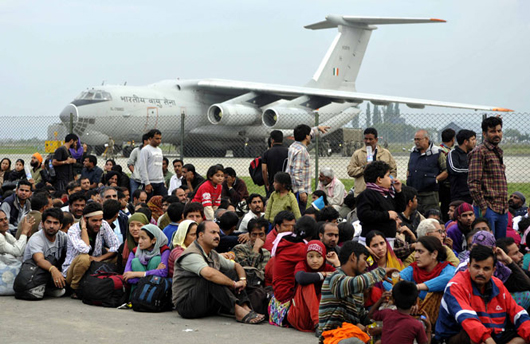
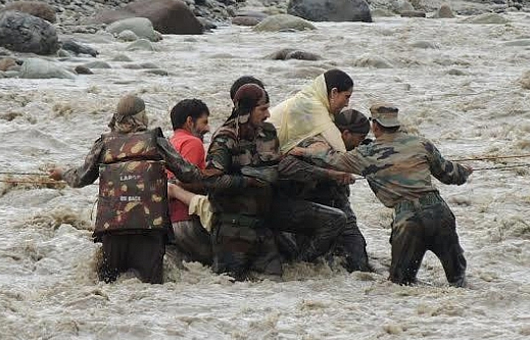
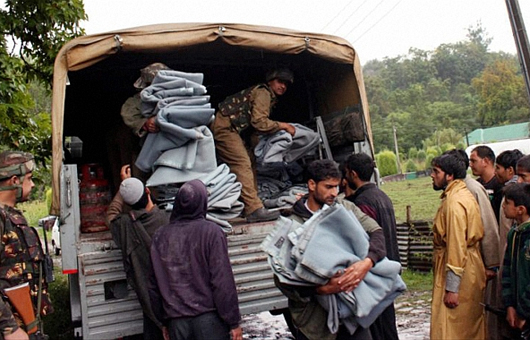
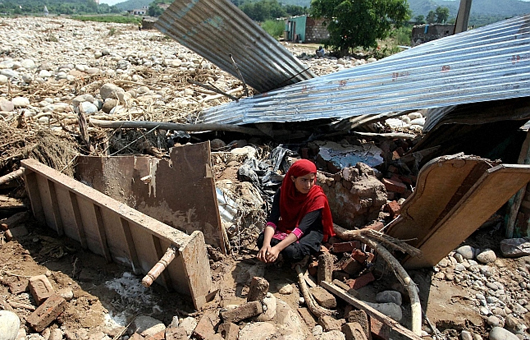
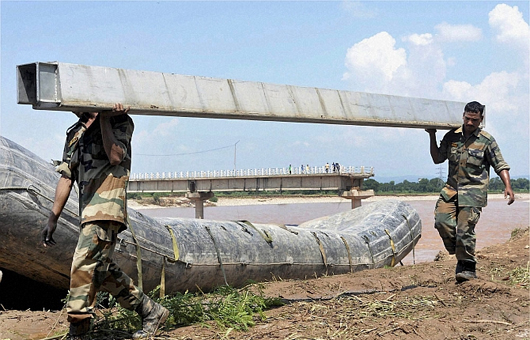
Srinagar, Sep 10: More than 50,000 people have been rescued so far, but hundreds are still trapped here as the flood waters receded Wednesday. Officials said 215 people have died in the Jammu and Kashmir floods.

"Unless the flood waters recede completely, and we are able to reach all the submerged areas, we cannot be sure about the exact toll in these floods," a top state official said.

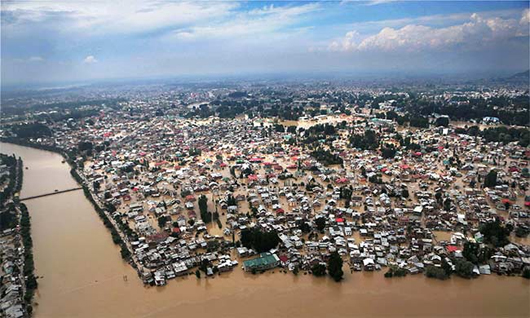
Many are trapped in the Srinagar city alone that submerged in flood waters during the intervening night of Saturday and Sunday.

Officials said 50,000 marooned people have been rescued so far in the state, but they also confirmed Wednesday that many more could still be trapped in submerged areas.

The water level of the river Jhelum continued to recede here and throughout the Kashmir Valley Wednesday.

A rescue operation is on since Sunday afternoon in over two dozen residential areas of the Srinagar city. All the rescued people recalled the horror.

They said the cries for help of many others in their areas had stopped, indicating they had either died or had resigned to their fate and knew the chances of their survival were bleak.

Areas like Rajbagh, Jwahar Nagar, Gogjibagh, Bemina, Mehjor Nagar, Karan Nagar and Qamarwari in the Srinagar city are still submerged in flood waters.

"Thirty one people are still missing in the landslide tragedy in which 40 people died in Panchauri area in the Udhampur district Tuesday," Deputy Inspector General of Police Garib Das told IANS Wednesday.

The Srinagar-Jammu highway continued to be closed on the seventh day Wednesday, but traffic on the over 440-km long Srinagar Leh highway was restored Tuesday. This road connects the Kashmir Valley with the Ladakh region.

An acute crisis of petrol and kerosene has hit the Valley. On Wednesday, all filing stations here said they had run out of fuel.

A fallout of the floods has been the breakdown of the communication systems here. The radio station and Doordarshan facility have been shut for the last four days.

All cell phone service providers, except Aircel, went on the blink, snapping connectivity. Many Kashmiris feel the state government has failed to reach out to the people.

All police stations were Tuesday directed to locate heads of various government departments for a meeting here Wednesday.

Kashmir floods2

Kashmir floods1

Kashmir floods3

Kashmir floods4

Kashmir floods5

Kashmir floods6

Kashmir floods7

Kashmir floods8

Comments

Add new comment

  • Coastaldigest.com reserves the right to delete or block any comments.
  • Coastaldigset.com is not responsible for its readers’ comments.
  • Comments that are abusive, incendiary or irrelevant are strictly prohibited.
  • Please use a genuine email ID and provide your name to avoid reject.
News Network
June 12,2020

Jun 12: There have been complaints of non-availability of beds or denial of treatment to coronavirus patients in the national capital despite nearly 70 per cent of beds in five designated hospitals run by the Delhi government lying vacant, with experts attributing it to people''s aversion towards state-run facilities.

As per the latest information shared on the Delhi Corona app on Thursday afternoon, more than 3,000 beds are lying vacant in these five dedicated COVID-19 hospitals that have a total capacity of 4,344 beds.

However, almost all beds at several big private hospitals are shown to be occupied.

Families of many COVID-19 patients, confirmed or suspected, have alleged in the past few weeks that they have been denied admission at many facilities or have not been able to get a bed for their kin.

Medical and public health experts feel it may be because of the image associated with government hospitals, related to infrastructure and hygiene conditions, and perhaps shortage of staff.

According to the latest data available on Delhi Corona app on Thursday afternoon, a total of 9,444 beds are available in private facilities and hospitals run by the central and Delhi governments. Out of these, 4,371 are vacant.

The app shows that beds are available at Delhi government-run hospitals dedicated for COVID-19 treatment such as LNJP Hospital (1,219), GTB Hospital (1,314), Rajiv Gandhi Super Speciality Hospital or RGSSH (242).

However, almost all beds at several big private hospitals are shown to be occupied.

At LNJP Hospital, there are a total of 2,000 beds, out of these 781 are occupied. GTB Hospital has total 1,500 beds, only 186 of which are occupied. Even at RGSSH, 258 of the 500 beds are occupied.

Beds are available at other dedicated COVID-19 facilities in the national capital too, according to the app. Deep Chand Bandhu Hospital has 94 unoccupied beds out of a total 176 and Satyawadi Raja Harishchandra Hospital has 145 vacant beds out of a total 168.

This makes a total of 4,344 COVID-19 beds at these five dedicated Delhi government hospitals, out of which 3,014 or 69.38 per cent are vacant.

A senior doctor at the RGSSH said, "We are only admitting very serious COVID-19 patients in the hospital. Those with mild symptoms, or asymptomatic ones, are either being home quarantined or being sent to COVID Care Centres. Our beds are on stand-by also to accommodate serious patients in case there is a sudden rush."

Delhi Heath Minster Satyendar Jain had recently said that some private hospitals could have been denying admission, but the Delhi government-run hospitals have not denied beds to any needy COVID-19 patient.

He had also said that main private hospitals are almost full to their capacity in terms of number of COVID-19 beds.

According to the app, at prominent private hospitals like Indraprastha Apollo, Max Hospital in Shalimar Bagh, Fortis Hospital in Shalimar Bagh, BL Kapur Hospital are fully occupied.

Max Hospital in Saket has a total of 200 beds for COVID-19 patients, and only one is vacant.

On June 9, the Delhi government had directed 22 private hospitals in the national capital to dedicate a total of 2,015 extra beds for treatment of coronavirus patients, revising its earlier allocation limit of 20 per cent.

Lawyer and public heath activist Ashok Agarwal said infrastructure and hygiene are two main factors, and people still want to "avoid government facilities".

"I know of cases, where people were willing to be on waiting list of private hospitals but did not go to a government hospital, even though beds were available," he said.

Even those who went to a government hospital for COVID-19 treatment, complained of "dirty toilets, and these being used by multiple patients", Agarwal said.

"Also, as the cases erupted successively over the months, many people got scared and were in two minds to go to a government hospital, as admitted patients were making allegations in videos and on social media about lack of proper services. Besides, there is shortage of medical staff at various facilities, and each patient needs to be attended to," he argued.

Delhi government hospitals and private facilities were directed to prominently display information about the availability of beds on a flex board at their main gates.

Delhi Lt Governor Anil Baijal on Wednesday ordered Delhi hospitals to display the availability of COVID and non-COVID beds, charges for rooms or beds along with contact details on a LED board outside the hospital.

Max Hospital sources said they were already displaying the status of beds on LED screens near their reception area even before the government order.

A spokesperson from Fortis Hospital said, "We are in the process of arranging to put up the displays as per the prescribed format."

Delhi recorded 1,501 fresh coronavirus cases on Wednesday, taking the COVID-19 tally in the city to over 32,000, and the death toll due to the disease mounted to 984, authorities said.


Comments

Add new comment

  • Coastaldigest.com reserves the right to delete or block any comments.
  • Coastaldigset.com is not responsible for its readers’ comments.
  • Comments that are abusive, incendiary or irrelevant are strictly prohibited.
  • Please use a genuine email ID and provide your name to avoid reject.
News Network
February 18,2020

New Delhi, Feb 18: Delhi Transport Minister Kailash Gahlot is the richest minister in the AAP government, according to a report released by the Association for Democratic Reforms (ADR) on Monday.

In a statement, the NGO said, Delhi Election Watch and ADR have analysed the self-sworn affidavits of all the seven-party leaders including Chief Minister Arvind Kejriwal.

According to the statement, the minister with the lowest declared total assets is Gopal Rai with assets worth Rs 90.01 lakh.

"The minister with the highest declared total assets is Kailash Gahlot from Najafgarh constituency with assets worth Rs 46.07 crore," it stated.

The report by ADR comes on the day Kejriwal and his six ministers took charge after the formation of the new AAP government.

Chief Minister Kejriwal and his cabinet colleagues took charge of their respective offices on Monday and asserted that they would work to fulfil the promises made in the "guarantee card", released during the poll campaign, including reduction in pollution and expansion of metro network.

Members of his Cabinet are -- Manish Sisodia, Satyendar Jain, Rajendra Pal Gautam, Imran Hussain, Gopal Rai and Kailash Gahlot.

Comments

Add new comment

  • Coastaldigest.com reserves the right to delete or block any comments.
  • Coastaldigset.com is not responsible for its readers’ comments.
  • Comments that are abusive, incendiary or irrelevant are strictly prohibited.
  • Please use a genuine email ID and provide your name to avoid reject.
Agencies
August 7,2020

Kottayam, Aug 7: A trial court in Kottayam on Friday granted bail to Bishop Franco Mulakkal, accused of raping a nun in Kerala, with stringent conditions and directed him to be present on the dates of hearing of the case.

The Additional Sessions Court had cancelled the bail granted to the Bishop on July 13 for failing to appear for the trial and issued a Non Bailable Warrant against him.

Mulakkal was present in the Court on Friday when it considered the matter.

Granting bail, the court directed him not to leave the state till the chargesheet is read out to him on August 13 and to be present in court on the dates of hearing of the case.

The Court also directed him to offer fresh sureties and bail bonds.

On July 13, Mulakkal’s counsel had informed the court that his client could not appear as he had been in self quarantine due to his primary contact with a COVID-19 infected person.

The next day, the former Jalandhar Bishop had tested positive for coronavirus.

The prosecution informed the Court that Mulakkal had not produced the COVID negative certificate, to which the Court observed that the state Health Department can take necessary action on this issue.

The Supreme Court on Wednesday had directed Mulakkal to face trial as it dismissed his plea seeking discharge in the rape case lodged against him by the nun belonging to a congregation under Jalandhar diocese, saying there was no merit in his petition.

A bench of Chief Justice S A Bobde, A S Bopanna and V Ramasubramanian had told the counsel for Bishop that the court is not saying anything on merit, but is dismissing the plea on the issue of discharge from the case.

Mulakkal, in his plea had challenged the July 7 Kerala High Court order, dismissing his discharge plea in the rape case filed by the nun.

The High Court had asked the deposed Bishop of Jalandhar diocese to stand for trial in the rape case, which was registered on the basis of a complaint filed by the nun.

The senior priest of the Roman Catholic Church had filed the revision petition following the dismissal of his discharge plea by a trial court in March this year.

The rape case against the Bishop was registered by police in Kottayam district.

In her complaint to the police in June, 2018, the nun had alleged that she was subjected to sexual abuse by the bishop during the period between 2014 and 2016.

The bishop, who was arrested by the Special Investigation team, which probed the case, charged him with wrongful confinement, rape, unnatural sex and criminal intimidation.

Comments

Add new comment

  • Coastaldigest.com reserves the right to delete or block any comments.
  • Coastaldigset.com is not responsible for its readers’ comments.
  • Comments that are abusive, incendiary or irrelevant are strictly prohibited.
  • Please use a genuine email ID and provide your name to avoid reject.