


Pakistan imitates India, calls up Xi Jinping as chief guest at military parade

February 3, 2015

Islamabad: Feb 3: Chinese President Xi Jinping is expected to be the chief guest at an annual military parade that Pakistan will hold after seven years on its national day, March 23, officials said.
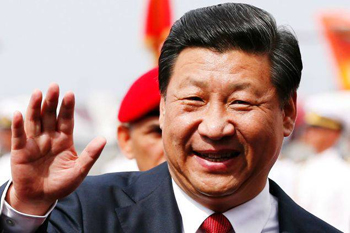
Xi Jinping

A security official said the venue of the parade has not been decided yet, but it is expected to be held near Islamabad.

The joint military parade of the three branches of the armed forces - that was discontinued due to the deteriorating law and order situation in the country - was once the centerpiece of Pakistan Day celebrations, featuring a display of military hardware and culture.

The last military parade was held on March 23, 2008, when General Pervez Musharraf was the president.

The announcement that Pakistan will resume the parade comes days after US President Barack Obama was chief guest at India's Republic Day parade.

Mr Obama's visit was seen as the forging of a new alliance in the Asia-Pacific region aimed at China, and Beijng was irked. This week, India's foreign minister Sushma Swaraj is visiting China in what is being seen as an attempt to soothe the neighbour's nerves.

Prime Minister Narendra Modi will visit before he completes a year in office, the foreign ministry said on Monday.

Ms Swaraj called on Xi Jinping on Monday and the latter expressed confidence in China's relationship with India. "I have full confidence in India-China relations and I believe that new progress will be achieved in growing this bilateral relationship in this new year," Xi told Swaraj.

Xi said since his visit to India in September last year, relations between the two countries have entered into a new stage of growth.

"The positive side of India-China relations has been growing and momentum of our cooperation has been strengthening and solid steps are being taken to implement agreements reached between Prime Minister Modi and I," he said as he welcomed the Ms Swaraj.

In New Delhi, Prime Minister Narendra Modi said India and China are bound by an "unbreakable bond."

"In this century, once again we have to give something to the world, say something. For this, it is important that we look at each other, know and understand (each other)," he said in a video message to the "Visit India Year 2015" event being held in Beijing.

Comments

Add new comment

  • Coastaldigest.com reserves the right to delete or block any comments.
  • Coastaldigset.com is not responsible for its readers’ comments.
  • Comments that are abusive, incendiary or irrelevant are strictly prohibited.
  • Please use a genuine email ID and provide your name to avoid reject.
News Network
April 27,2020

London, Apr 27: British Prime Minister Boris Johnson returns to work on Monday more than three weeks after being hospitalised for the coronavirus and spending three days in intensive care.

Johnson, one of the highest-profile people to have contracted the virus, returned to 10 Downing Street on Sunday evening and will chair a meeting on Monday morning of the coronavirus "war cabinet", his colleagues confirmed.

Dominic Raab, the foreign secretary who has deputised in Johnson's absence, told the BBC on Sunday that his return would be a "boost for the government and a boost for the country".

Raab also claimed the prime minister was "raring to go".

Johnson, 55, was admitted to hospital on April 5 suffering from "persistent symptoms" of the deadly disease.

His condition worsened and he later admitted after being put in intensive care that "things could have gone either way".

He was discharged on April 12 and has been recuperating at his official residence, west of London.

In a video message after leaving hospital, Johnson thanked "Jenny from New Zealand and Luis from Portugal" for helping him recover.

On medical advice, he has not been doing official government work during his convalescence but has spoken to Queen Elizabeth and US President Donald Trump on the phone.

The British leader was diagnosed with the virus late last month but initially stayed at Downing Street and was filmed taking part in a round of applause for health workers in the days before he went to hospital.

Comments

Add new comment

  • Coastaldigest.com reserves the right to delete or block any comments.
  • Coastaldigset.com is not responsible for its readers’ comments.
  • Comments that are abusive, incendiary or irrelevant are strictly prohibited.
  • Please use a genuine email ID and provide your name to avoid reject.
Agencies
February 29,2020

Doha, Feb 29: The United States signed a landmark deal with the Taliban on Saturday, laying out a timetable for a full troop withdrawal from Afghanistan within 14 months as it seeks an exit from its longest-ever war.

President Donald Trump urged the Afghan people to embrace the chance for a new future, saying the deal held out the possibility of ending the 18-year conflict.

"If the Taliban and the government of Afghanistan live up to these commitments, we will have a powerful path forward to end the war in Afghanistan and bring our troops home," he said on the eve of the event in Doha.

Secretary of State Mike Pompeo arrived in the Qatari capital to witness the signing of the accord, while Defence Secretary Mark Esper was in Kabul for a separate joint declaration with the Afghan government.

The agreement is expected to lead to a dialogue between the Kabul government and the Taliban that, if successful, could ultimately see the Afghan war wind down.

But the position of the Afghan government, which has been excluded from direct US-Taliban talks, remains unclear and the country is gripped by a fresh political crisis amid contested election results.

The United States and its allies will withdraw all their forces from Afghanistan within 14 months if the Taliban abide by the Doha agreement, Washington and Kabul said in a joint statement.

After an initial reduction of troops to 8,600 within 135 days of Saturday's signing, the US and its partners "will complete the withdrawal of their remaining forces from Afghanistan within 14 months... and will withdraw all their forces from remaining bases", the declaration stated.

The Doha accord was drafted over a tempestuous year of dialogue marked by the abrupt cancellation of the effort by Trump in September.

The signing comes after a week-long, partial truce that has mostly held across Afghanistan, aimed at building confidence between the warring parties and showing the Taliban can control their forces.

NATO Secretary General Jens Stoltenberg heralded the agreement as a "first step to lasting peace".

"The way to peace is long and hard. We have to be prepared for setbacks, spoilers, there is no easy way to peace but this is an important first step," the Norwegian former prime minister told reporters in Kabul.

Since the US-led invasion that ousted the Taliban after the September 11, 2001 attacks, America has spent more than $1 trillion in fighting and rebuilding in Afghanistan.

About 2,400 US soldiers have been killed, along with unknown tens of thousands of Afghan troops, Taliban fighters and Afghan civilians.

The insurgents said they had halted all hostilities Saturday in honour of the agreement.

"Since the deal is being signed today, and our people are happy and celebrating it, we have halted all our military operations across the country," Taliban spokesman Zabihullah Mujahid told AFP.

Close to 30 nations were represented at Saturday's signing in the Qatari capital.

While Kabul will not be represented at the Doha ceremony, set for 1245 GMT, it will send a six-person taskforce to the Qatari capital to make initial contact with the Taliban political office, established in 2013.

Any insurgent pledge to guarantee Afghanistan is never again used by jihadist movements such as Al-Qaeda and the Islamic State group to plot attacks abroad will be key to the deal's viability.

The Taliban's sheltering of Al-Qaeda was the main reason for the US invasion following the 9/11 attacks.

The group, which had risen to power in the 1990s in the chaos of civil war, suffered a swift defeat at the hands of the US and its allies. They retreated before re-emerging to lead a deadly insurgency against the new government in Kabul.

After the NATO combat mission ended in December 2014, the bulk of Western forces withdrew from the country, leaving it in an increasingly precarious position.

While Afghans are eager to see an end to the violence, experts say any prospective peace will depend on the outcome of talks between the Taliban and the Kabul government.

But with President Ashraf Ghani and rival Abdullah Abdullah at loggerheads over contested election results, few expect the pair to present a united front, unlike the Taliban, who would then be in a position to take the upper hand in negotiations.

Comments

Add new comment

  • Coastaldigest.com reserves the right to delete or block any comments.
  • Coastaldigset.com is not responsible for its readers’ comments.
  • Comments that are abusive, incendiary or irrelevant are strictly prohibited.
  • Please use a genuine email ID and provide your name to avoid reject.
News Network
June 13,2020

Jun 13: Requiring the wearing of masks to prevent the spread of the novel coronavirus in areas at the epicenter of the global pandemic may have prevented tens of thousands of infections, a new study suggests.

Mask-wearing is even more important for preventing the virus' spread and the sometimes deadly COVID-19 illness it causes than social distancing and stay-at-home orders, researchers said, in the study published in PNAS: The Proceedings of the National Academy of Sciences of the USA.

Infection trends shifted dramatically when mask-wearing rules were implemented on April 6 in northern Italy and April 17 in New York City - at the time among the hardest hit areas of the world by the health crisis - the study found.

"This protective measure alone significantly reduced the number of infections, that is, by over 78,000 in Italy from April 6 to May 9 and over 66,000 in New York City from April 17 to May 9," researchers calculated.

When mask-wearing went into effect in New York, the daily new infection rate fell by about 3% per day, researchers said. In the rest of the country, daily new infections continued to increase.

Direct contact precautions - social distancing, quarantine and isolation, and hand sanitizing - were all in place before mask-wearing rules went into effect in Italy and New York City. But they only help minimize virus transmission by direct contact, while face covering helps prevent airborne transmission, the researchers say.

"The unique function of face covering to block atomization and inhalation of virus-bearing aerosols accounts for the significantly reduced infections," they said. That would indicate "that airborne transmission of COVID-19 represents the dominant route for infection."

The U.S. Center for Disease Control and Prevention on Friday urged organizers of large gatherings that involve "shouting, chanting or singing to strongly encourage the use of cloth face coverings to lower the risk of spreading the coronavirus."

Comments

Add new comment

  • Coastaldigest.com reserves the right to delete or block any comments.
  • Coastaldigset.com is not responsible for its readers’ comments.
  • Comments that are abusive, incendiary or irrelevant are strictly prohibited.
  • Please use a genuine email ID and provide your name to avoid reject.