


Pakistan pioneers hail reverse swing as 'art' not 'cheating'

Agencies
March 31, 2018

Karachi, Mar 31: Pakistan's masters of reverse-swinging a cricket ball have unanimously defended it as an "art" which can be achieved without the tampering that ended in shameful bans for three Australian players.

Steve Smith had to step down as Australia captain and David Warner as vice-captain after they orchestrated ball-tampering through batsman Cameron Bancroft in the Cape Town Test against South Africa last week.

Bancroft was found to have used a piece of sandpaper in an attempt to alter the condition of the ball while on the field to create swing for Australia's bowlers and deceive the South African batsmen.

Cricket Australia came down hard, handing a one-year ban each to Smith and Warner and nine months to Bancroft for sullying the country's sporting image.

In Pakistan, an internet meme swept social media appearing to show legendary pacemen Imran Khan, Wasim Akram and Waqar Younis smiling over the incident -- with a caption that accused the Australians of being "amateurs" in their efforts to create a reverse swing.

Former Pakistan fast bowler Sarfraz Nawaz --- widely regarded as a pioneer of reverse swing -- refused to accept the implication that the skill requires ball-tampering.

"This is ridiculous to say reverse swing is cheating," Sarfraz said. "You can achieve reverse swing without tampering with the ball.

"There is a conventional swing which is done with the new ball and then there is reverse swing which is achieved with an old ball and it has been proved in laboratories that reverse swing is a scientific phenomenon."

Sarfraz took 177 wickets in 55 Tests, including an amazing nine for 86 against Australia at Melbourne in 1979 that included a spell of seven wickets for a mere one run in 33 balls

'It was and will remain an art'

"When I passed the art to Imran Khan he developed it and then taught Wasim Akram and Waqar Younis, and in those times everyone called it cheating but when the Englishmen started to reverse swing it became an art," said Sarfraz.

"It was and will remain an art, but resorting to tampering is cheating and that was what Australians did to beat South Africa and were deservedly punished.

"Conventional swing is simple -- if the seam is angled toward the slip fielders it will swing away from the right-handed batsman, and if the seam is angled towards the leg side it will swing into the batsman," explained Sarfraz. "Reverse swing is totally opposite."

Sarfraz passed the art to Imran, who achieved more success than his master but also confessed to ball-tampering by using a bottle top to roughen one side of the ball.

Asked in a 1994 television interview whether he would have got 362 Test wickets had he not tampered with the ball, Imran replied: "Yes, it's a misconception that whoever scratches the ball can get wickets.

"The whole Sussex team knew I could reverse swing and I would swing at one end while other bowlers could not swing it," said Imran, who played for the English county.

'Sultan of Swing'

Imran passed the torch to Wasim and Waqar -- regarded as one of international cricket's most destructive new-ball pairings.

The two ripped through England's batsmen on Pakistan's 1992 tour but were also alleged by British media to have tampered with the ball. Wasim excelled for English county Lancashire for a decade while Waqar starred for Glamorgan and Surrey.

"Those allegations were hurtful," recalled Waqar. "Of course, the reverse swing can be achieved without cheating. Nowadays most of the bowlers do that and get wickets and help their teams win."

While Wasim -- nicknamed the "Sultan of Swing" -- was never caught tampering, Waqar was slapped with a one-match suspension and fined 50 percent of his match fee in a tri-series in Sri Lanka in 2000.

Waqar suggested only one brand of cricket ball should be used in international cricket, saying it would lead to a fairer contest.

"Why do we use a different brand of balls in different countries?" Waqar asked. "In my opinion, the Duke ball is the best and the SG comes close to it. They are the best balls for swing so in order to have uniformity and better swing, these balls should be used everywhere.

"This will help bowlers and this will also produce better batsmen. We should solve the problem and not indulge in the blame game."

Comments

Add new comment

  • Coastaldigest.com reserves the right to delete or block any comments.
  • Coastaldigset.com is not responsible for its readers’ comments.
  • Comments that are abusive, incendiary or irrelevant are strictly prohibited.
  • Please use a genuine email ID and provide your name to avoid reject.
News Network
March 10,2020

New Delhi, Mar 10: Six-time world champion M C Mary Kom (51kg) and world number one Amit Panghal (52kg) were among three Indian boxers who secured Olympic berths by advancing to semifinals of the Asian Qualifiers here on Monday, taking the total number of the country's Tokyo-bound pugilists to eight.

Second-seeded Mary Kom notched up a comfortable 5-0 win over Philippines' Irish Magno in her quarterfinal bout for a ticket to her second Olympic Games. She won a bronze in the 2012 London Olympics when women's boxing was first introduced at the showpiece.

The 37-year-old will square off against China's Yuan Chang in the semifinals. Chang is a former Youth Olympics champion.

Earlier, world silver-medallist and top seed Panghal edged out familiar foe Carlo Paalam of Philippines in a 4-1 split verdict to be assured of his maiden Olympic appearance and a medal at the qualifiers.

In the last Indian bout of the day, world bronze-medallist Simranjit Kaur (60kg) upstaged second seed Namuun Monkhor of Mongolia 5-0 to secure her first Olympic place.

With this, the number of Indian boxers securing Olympic berths went up to eight after Satish Kumar (+91kg), Pooja Rani (75kg), Vikas Krishan (69kg), Lovlina Borgohain (69kg) and Ashish Kumar (75kg) advanced to the semifinals on Sunday.

"I dedicate my Olympic quota to my uncle Raj Narayan, it's his birthday and he is someone who gives me a lot of courage," said Panghal after his bout.

World bronze-winner and Commonwealth Games silver-medallist Manish Kaushik, however, lost 2-3 to third seed Chinzorig Baatarsukh of Mongolia after an intense battle but is not out of contention for an Olympic berth just yet.

Kaushik has to win the box-off between losing quarterfinalists as the top six boxers will claim Tokyo tickets in the 63kg category. He will face Australia's Commonwealth Games champion Harrison Garside in the box-off. The two clashed in the CWG final in 2018 with Garside ending up on the winning side.

Panghal started India's winning run on Monday by managing to pull off a close win.

The 23-year-old, who is the reigning Asian Games and Asian Championships gold-medallist, had earlier beaten Paalam in the semifinals of the 2018 Asian Games and the quarterfinals of 2019 world championships, which were also split decisions.

"I followed the instructions given by my coaches. I ensured that he didn't get on top of me. I think I was pretty consistent in all three rounds," Panghal said.

Next up for Panghal is China's Jianguan Hu, who stunned world bronze-medallist and fourth seed Kazakh Saken Bibossinov 5-0.

"I have beaten him in the Asian Championships and I know how to get the better of him," Panghal said of his next opponent.

The Haryana lad didn't exactly look at his best during the bout but his trademark counter-attacking game fetched him the desired result against a rival, who is challenging him more with every fresh encounter.

Mary Kom, on the other hand, put out a near-perfect performance against the very spirited Magno. The Manipuri dictated the pace of the bout, drawing from her huge reservoir of experience to put Magno on the backfoot with a very effective counter-attacking strategy.

Simranjjit, also an Asian silver-medallist, will face third seed Shih-Yi Wu of Taiwan in the semifinals after a fine performance against Monkhor. Simranjit's right hand connected accurately all through.

Kaushik, who was up against an Asian Games silver-medallist, started well but lost steam in the face of relentless body shots by Baatarsukh, a two-time podium finisher at the Asian Championships.

Baatarsukh had lost to Kaushik in the second round of the world championships last year and he exacted revenge with an aggressive takedown of the Indian, especially in the final three minutes.

However, former junior world champion Sakshi Chaudhary (57kg) failed to secure an Olympic berth after going down to Korea's Im Aeji in the quarterfinals.

The 19-year-old Chaudhary lost 0-5 to Im, who is also a former world youth champion. Only the semifinalists are entitled to an Olympic berth in the women's 57kg category of the ongoing event.

Her next shot at Tokyo qualification would be the world qualifiers in May, provided she is selected for it.

Comments

Add new comment

  • Coastaldigest.com reserves the right to delete or block any comments.
  • Coastaldigset.com is not responsible for its readers’ comments.
  • Comments that are abusive, incendiary or irrelevant are strictly prohibited.
  • Please use a genuine email ID and provide your name to avoid reject.
News Network
June 25,2020

New Delhi, Jun 25: India spinner Ravichandran Ashwin on Thursday called the 1983 World Cup win as the 'landscape' changing moment for the game of cricket in the country.

Today, India is celebrating the completion of the 37 years of the maiden World Cup triumph under the leadership of Kapil Dev.

"Today 37 years ago, changed the cricketing landscape in India. Thank you @therealkapildev and team for making the game a career for many of us today. Deeply indebted," Ashwin tweeted.

In 1983, in the finals between India and West Indies, the latter won the toss and opted to bowl first.

The Kapil Dev-led side managed to score just 183 runs as Andy Roberts took three wickets while Malcolm Marshall, Michael Holding, and Larry Gomes picked up two wickets each.

Defending 183, India did a good job of keeping a check on the Windies run flow, reducing the side to 57/3.

Soon after, the team from the Caribbean was reduced to 76/6 and India was the favourites from there on to win the title.

Mohinder Amarnath took the final wicket of Michael Holding to give India their first-ever World Cup title win.

In the finals, West Indies was bowled out for 140, and as a result, India won the match by 43 runs.

Kapil Dev lifting the trophy at the balcony of Lord's Cricket Ground still remains an image to savour for all the Indian fans.

In the finals, Mohinder Amarnath was chosen as the Man of the Match as he scored 26 runs with the bat and also picked up three wickets with the ball.

India has been the regular participant in the World Cup from its beginning to the latest edition. The first edition was held in 1975 and from there on, it has taken place after a span of every four years.

West Indies won the first two World Cup titles (1975, 1979) and was the runner-up in 1983. India has won the title two times, in 1983 and in 2011.

MS Dhoni captained the 2011 team to win their second title after 28 years. Australia has won the tournament five times (1987, 1999, 2003, 2007, and 2015).

Comments

Add new comment

  • Coastaldigest.com reserves the right to delete or block any comments.
  • Coastaldigset.com is not responsible for its readers’ comments.
  • Comments that are abusive, incendiary or irrelevant are strictly prohibited.
  • Please use a genuine email ID and provide your name to avoid reject.
coastaldigest.com web desk
August 3,2020

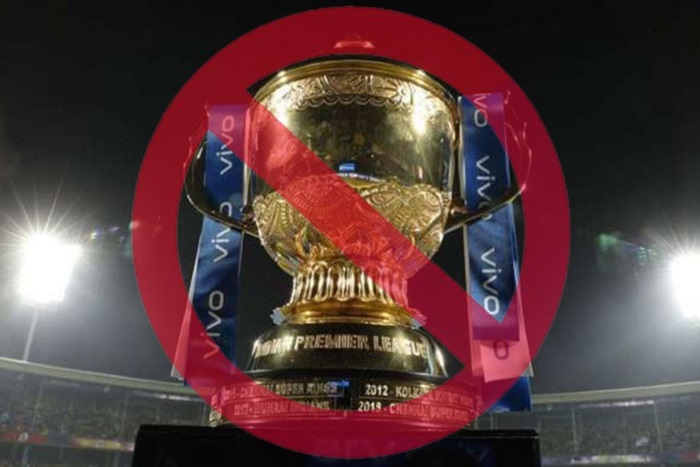
The Board of Control for Cricket in India (BCCI) will not end its partnership with Chinese companies. Vivo, the Chinese smartphone maker, is the main sponsor of the new IPL season as well. Apart from Vivo, PayTM and Dream 11 will also be at the helm of the 13th edition of the IPL. The IPL governing council meeting on Sunday decided to retain the old sponsors.

As soon as the IPL GC announced the decision of retaining the sponsors, a huge number of fans took to Twitter to slam the board for the same. #BoycottIPL started trending as the users urged others to boycott the tournament for the Chinese connection.

Earlier, the demand for exclusion of Chinese companies from the IPL was strong in the wake of the India-China border dispute. But the BCCI cannot abruptly end its collaboration with them. Because of the signed contract itself. And in this age of declining economy, it is difficult to find new sponsors quickly.

The current BCCI contract with Vivo is for five years. Vivo has invested Rs 2,199 crore to become the main sponsor of the IPL. The contract was signed in 2017. However, the BCCI’s move is paving the way for new discussions as calls are mounting across the country to boycott Chinese companies.

The BCCI announced other important decisions besides retaining sponsors. The IPL will be held from September 19 to November 10. The Indian government has given permission to the BCCI to hold the IPL in the UAE. With this, all obstacles in the way of organizing the tournament were removed.

The IPL matches will be played at 7.30 pm Indian time (6 pm UAE time). Most matches are about one match a day. There are a total of ten ‘double headers’ (two matches a day) in the tournament. Franchisees are allowed to appoint as many replacements as they want in the new season in view of the new health situation. At the same time, the maximum number of players a franchise can accommodate is 24. The BCCI is also planning to host a women’s IPL tournament.

Comments

Add new comment

  • Coastaldigest.com reserves the right to delete or block any comments.
  • Coastaldigset.com is not responsible for its readers’ comments.
  • Comments that are abusive, incendiary or irrelevant are strictly prohibited.
  • Please use a genuine email ID and provide your name to avoid reject.