Pakistani girls allegedly killed for dancing reported alive

June 19, 2012

Pak_girl_Alive

Islamabad, June 19: Five Pakistani girls who were reportedly killed on the orders of a tribal council for dancing and clapping with two young men in the northwest tribal region are still alive, a minister has said.

The controversy emerged after a video surfaced showing the five girls dancing at a private gathering in Beech Bela village of Kohistan in Khyber Pakhtunkhwa province.

"Ample evidence, collected by a fact-finding mission of the provincial government, is available, on the basis of which it has been established that all the five girls are alive and safe," provincial Minister for Information Mian Iftikhar Hussain was quoted as saying by Dawn News.

He said the evidence established that neither any jirga (tribal assembly) had taken place nor a religious decree issued by any cleric to kill the girls.

Hussain said the team comprising an additional sessions judge appointed by the Supreme Court and MP Bushra Gohar visited Beech Bela over the weekend to find out the whereabouts of the girls.

The team met four of the girls - Sareen Jan, Begum Jan, Aamna and Shaheen - and interviewed them.

The fifth girl, Bazgha, could not be reached but the team spoke with her parents, he said.

"All those present on the occasion gave evidence in front of the official team that all the five girls were alive and safe," Mr Hussain said.

Such misleading information about the killing defamed the province, Pakhtun culture and the traditional institution of the jirga, he said.

He said the provincial government would take legal action against the people responsible for spreading rumours about the murder.


Comments

Add new comment

  • Coastaldigest.com reserves the right to delete or block any comments.
  • Coastaldigset.com is not responsible for its readers’ comments.
  • Comments that are abusive, incendiary or irrelevant are strictly prohibited.
  • Please use a genuine email ID and provide your name to avoid reject.
Agencies
July 2,2020

Ramallah, Jul 2: Several world countries renew a call for Israel to halt contentious plans to annex parts of the occupied Palestinian territory after the regime delayed the implementation of the land garb bid in the face of a series of stumbling blocks, including internal rifts, global criticisms and the US’s failure to give Tel Aviv the go-ahead for the move.

Israel's ruling coalition, led by Prime Minister Benjamin Netanyahu, had announced July 1 as the date to begin moving forward with the plan to impose Tel Aviv’s “sovereignty” over about a third of the West Bank, including settlements and the fertile Jordan Valley.

Without clarifications, the regime, however, failed to launch the scheme on the set date amid widening differences between Netanyahu and his coalition partner, minister of military affairs Benny Gantz.

Meanwhile, there are signs that the administration of US President Donald Trump, a staunch Israel supporter, has cooled its backing for the Israeli move amid what is believed to be troubles at home and fears that it might hurt the president’s chances of re-election besides international pressure.

On Wednesday, Netanyahu's office said in a statement that he would continue to discuss a possible West bank annexation with the US administration.

“In the coming days there will be additional discussions,” the statement said.

Labor, Social Affairs and Social Services Minister Ofir Akunis said the Israel would annex portions of the West Bank in July but only after the US president issued a declaration on the matter.

The annexation “will only happen after a declaration by Trump,” he told Israeli Army Radio.

Trump had already given Tel Aviv the green light for the land grab in his self-proclaimed “deal of the century,” which was unveiled in January with the aim of re-drawing the Middle East map.

However, the Trump administration has so far refrained from offering official support for the annexation sought by Netanyahu and his right-wing allies.

Unlike the US, several countries, including some of Israel’s allies, have expressed their opposition to Israel’s planned push to consolidate its occupation of Palestine.

Germany passes anti-annexation resolution

On Wednesday, the German parliament approved a resolution calling on the government to dissuade Israel from annexing the West Bank.

The motion, which was brought in the German legislature by the three parties in Chancellor Angela Merkel's coalition, was approved without opposing votes. 

Berlin should use its “special relations and contacts [with Tel Aviv] to express to the Israeli government our concerns and our urgent demand to refrain from an annexation of parts of the West Bank and from the continued expansion of settlements, both of which contradict international law,” read the resolution.

Speaking at the parliamentary debate before the vote, German Foreign Minister Heiko Maas said, “We reject unilateral changes of borders, and we won’t recognize them.”

He also stressed that peace “cannot be achieved through unilateral steps but only through serious negotiations.”

France warns of consequences

Similarly, French Foreign Minister, Jean-Yves Le Drian warned that any Israeli annexation would be a violation of international law and would bring about consequences.

“Annexation of Palestinian territories, whatever the perimeters, would seriously throw into question the parameters to resolve the conflict,” he told a parliamentary hearing. 

The top diplomat added, “An annexation decision could not be left without consequences and we are examining different options at a national level and also in coordination with our main European partners.”

Australia raises concerns

Additionally, Australian Foreign Minister Marise Payne voiced worries about the Israeli scheme, saying she had directly expressed this view to Israeli Foreign Minister Gabi Ashkenazi.

“We are following with concern possible moves towards the unilateral annexation or change in status of territory on the West Bank,” she said in a statement.

“The focus needs to be on a return to direct and genuine negotiations between Israel and the Palestinians for a durable and resilient peace arrangement, as soon as possible,” Payne added.

Vatican summons US, Israeli envoys

Meanwhile, the Vatican announced on Wednesday that it had summoned the American and Israeli ambassadors to protest Israel’s annexation bid.

In separate meetings, Vatican Secretary of State Cardinal Pietro Parolin told Israeli Ambassador Oren David and US Ambassador Callista Gingrich of concerns “regarding possible unilateral actions that may further jeopardize the search for peace between Israelis and Palestinians, as well as the delicate situation in the Middle East,”

“As already declared … the Holy See reiterates that ... Israel and the State of Palestine have the right to exist and to live in peace and security, within internationally recognized borders,” the Vatican said in a statement.

“It thus appeals to the parties to do everything possible to reopen the process of direct negotiation, on the basis of the relevant Resolutions of the United Nations,” it added.

Amnesty urges firm action

Amnesty International called on the international community to take firm action against Israel’s annexation plan and its “law of the jungle” mentality.

“Members of the international community must enforce international law and restate that annexation of any part of the occupied West Bank is null and void,” said Saleh Higazi, deputy regional director for Amnesty Middle East and North Africa.

“They must also work to immediately stop the construction or expansion of illegal Israeli settlements and related infrastructure in the Occupied Palestinian Territories as a first step towards removing Israeli civilians living in such settlements,” he added.

Palestinians mark ‘Day of Rage'

Also on Wednesday, Palestinians held “Day of Rage” rallies both in the West Bank and the Gaza Strip against the Israeli expansionism.

In Gaza city, several thousand protesters gathered, some brandishing Palestinian national flags and placards condemning Trump.

Some demonstrators carried signs in English reading, “We Can’t Breathe Since 1948” and “Palestinian Lives Matter,” in reference to the American Black Lives Matter movement.

“The occupation has killed us and killed our children and deprived us of a good life. May God grant the Resistance victory,” a protester told the al-Aqsa TV.

“The resistance must be revived,” Gaza protester Rafeeq Inaiah told media persons. “Israel is afraid of force.”

Similar demonstrations also took place in the West Bank cities of Ramallah and Jericho.

Comments

Add new comment

  • Coastaldigest.com reserves the right to delete or block any comments.
  • Coastaldigset.com is not responsible for its readers’ comments.
  • Comments that are abusive, incendiary or irrelevant are strictly prohibited.
  • Please use a genuine email ID and provide your name to avoid reject.
Agencies
May 23,2020

Washington, May 23: President Donald Trump has labeled churches and other houses of worship as “essential" and called on governors nationwide to let them reopen this weekend even though some areas remain under coronavirus lockdown.

The president threatened Friday to “override” governors who defy him, but it was unclear what authority he has to do so.

“Governors need to do the right thing and allow these very important essential places of faith to open right now — for this weekend," Trump said at a hastily arranged press conference at the White House. Asked what authority Trump might have to supersede governors, White House press secretary Kayleigh McEnany said she wouldn't answer a theoretical question.

Trump has been pushing for the country to reopen as he tries to reverse an economic free fall playing out months before he faces reelection. White evangelical Christians have been among the president's most loyal supporters, and the White House has been careful to attend to their concerns throughout the crisis.

Following Trump's announcement, the Centers for Disease Control and Prevention released new guidelines for communities of faith on how to safely reopen, including recommendations to limit the size of gatherings and consider holding services outdoors or in large, well-ventilated areas.

Public health agencies have generally advised people to avoid gatherings of more than 10 people and encouraged Americans to remain 6 feet (1.8 meters) away from others when possible. Some parts of the country remain under some version of remain-at-home orders.

In-person religious services have been vectors for transmission of the virus. A person who attended a Mother's Day service at a church in Northern California that defied the governor's closure orders later tested positive, exposing more than 180 churchgoers. And a choir practice at a church in Washington state was labeled by the CDC as an early “superspreading" event.

But Trump on Friday stressed the importance of churches in many communities and said he was “identifying houses of worship — churches, synagogues and mosques — as essential places that provide essential services.”

“Some governors have deemed liquor stores and abortion clinics as essential” but not churches, he said. “It's not right. So I'm correcting this injustice and calling houses of worship essential." “These are places that hold our society together and keep our people united,” he added.

Dr. Deborah Birx, coordinator of the White House coronavirus task force, said faith leaders should be in touch with local health departments and can take steps to mitigate risks, including making sure those who are at high risk of severe complications remain protected.

“There's a way for us to work together to have social distancing and safety for people so we decrease the amount of exposure that anyone would have to an asymptomatic," she said.

A person familiar with the White House's thinking who spoke on condition of anonymity to discuss internal deliberations said Trump had called the news conference, which had not been on his public schedule, because he wanted to be the face of church reopenings, knowing how well it would play with his political base.

Churches around the country have filed legal challenges opposing virus closures.

In Minnesota, after Democratic Gov. Tim Walz this week declined to lift restrictions on churches, Roman Catholic and some Lutheran leaders said they would defy his ban and resume worship services. They called the restrictions unconstitutional and unfair since restaurants, malls and bars were allowed limited reopening.

Some hailed the president's move, including Kelly Shackelford, president of the conservative First Liberty Institute.

“The discrimination that has been occurring against churches and houses of worship has been shocking," he said in a statement. "Americans are going to malls and restaurants. They need to be able to go to their houses of worship.” But Rabbi Jack Moline, president of Interfaith Alliance, said it was “completely irresponsible” for Trump to call for a mass reopening of houses of worship.

“Faith is essential and community is necessary; however, neither requires endangering the people who seek to participate in them,” he said.

“The virus does not discriminate between types of gatherings, and neither should the president." Rhode Island Gov. Gina Raimondo, a Democrat, made clear that churches and other houses of worship will not resume in-person services in her state until at least next weekend and said she was skeptical Trump had the authority to impose such a requirement.

“It's reckless to force them to reopen this weekend. They're not ready,” she said. “We've got a good plan. I'm going to stick with it.” New Hampshire Gov. Chris Sununu, a Republican, said he would review the federal guidance, while maintaining a decision rests with him.

"Obviously we'd love to get to the point where we can get those open, but we'll look at the guidance documents and try to make some decisions rather quickly, depending on what it might say,” he said. “It's the governor's decision, of course.”

The CDC more than a month ago sent the Trump administration documents the agency had drafted outlining specific steps various kinds of organizations, including houses of worship, could follow as they worked to reopen safely.

But the White House dragged its feet, concerned that the recommendations were too specific and could give the impression the administration was interfering in church operations.

The guidance posted Friday contains most of the same advice as the draft guidance. It calls for the use of face coverings and recommends keeping worshippers 6 feet from one another and cutting down on singing, which can spread aerosolized drops that carry the virus.

Comments

Add new comment

  • Coastaldigest.com reserves the right to delete or block any comments.
  • Coastaldigset.com is not responsible for its readers’ comments.
  • Comments that are abusive, incendiary or irrelevant are strictly prohibited.
  • Please use a genuine email ID and provide your name to avoid reject.
Agencies
July 28,2020

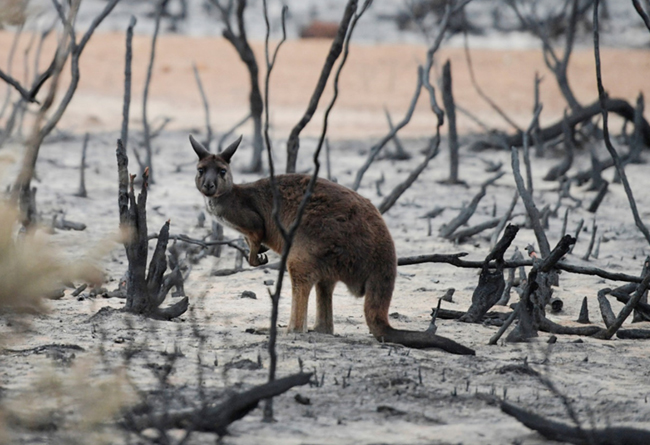
Sydney, Jul 28: Nearly 3 billion koalas, kangaroos and other native Australian animals were killed or displaced by bushfires in 2019 and 2020, a study by the World Wide Fund for Nature (WWF) said on Tuesday, triple the group's earlier estimates.

Some 143 million mammals, 2.46 billion reptiles, 180 million birds and 51 million frogs were impacted by the country's worst bushfires in decades, the WWF said.

When the fires were still blazing, the WWF estimated the number of affected animals at 1.25 billion. The fires destroyed more than 11 million hectares (37 million acres) across the Australian southeast, equal to about half the area of the United Kingdom.

"This ranks as one of the worst wildlife disasters in modern history," said WWF-Australia Chief Executive Officer Dermot O'Gorman in a statement.

The project leader Lily Van Eeden, from the University of Sydney, said the research was the first continent-wide analysis of animals impacted by the bushfires, and "other nations can build upon this research to improve understanding of bushfire impacts everywhere".

The total number included animals which were displaced because of destroyed habitats and now faced lack of food and shelter or the prospect of moving to habitat that was already occupied.

The main reason for raising the number of animal casualties was that researchers had now assessed the total affected area, rather than focusing on the most affected states, they said.

After years of drought made the Australian bush unusually dry, the country battled one of its worst bushfire seasons ever from September 2019 to March 2020, resulting in 34 human deaths and nearly 3,000 homes lost.

Comments

Add new comment

  • Coastaldigest.com reserves the right to delete or block any comments.
  • Coastaldigset.com is not responsible for its readers’ comments.
  • Comments that are abusive, incendiary or irrelevant are strictly prohibited.
  • Please use a genuine email ID and provide your name to avoid reject.