



In PM's Meet With Japan's Shinzo Abe Today, Regional Security On Agenda

Agencies
October 28, 2018

Tokyo, Oct 28: Prime Minister Narendra Modi on Saturday said his meeting with Japanese counterpart Shinzo Abe will add new vigour to the strong friendship between the two countries as he arrived in Tokyo to attend the 13th India-Japan annual summit.

The two-day summit beginning today will seek to review the progress in ties and deepen strategic dimension of the bilateral relationship.

"PM Narendra Modi arrives in Tokyo to a warm welcome for his 5th Annual Summit with Abe Shinzo. Japan is one of the few countries that India has this mechanism of annual summits, reflecting the extraordinary depth of our engagement," External Affairs Ministry Spokesperson Raveesh Kumar tweeted.

"Landed in Tokyo. I am confident this visit will add new vigour to the strong friendship between India and Japan," PM Modi said in a tweet.

In a statement on Friday, before leaving for Japan, PM Modi described India and Japan as a "winning combination" and said the island nation was New Delhi's most trusted partner in its economic and technological modernisation.

PM Modi said it will be his 12th meeting with Mr Abe since he first visited Japan as prime minister in September 2014.

During the summit, PM Modi will engage with Abe on a range of issues including defence and regional security.

Mr Abe will host PM Modi at his holiday home in the picturesque Yamanashi prefecture for a private dinner today following which both the leaders will travel to Tokyo by train.

Yamanashi, around 110 km from Tokyo, is surrounded by several mountains including Mount Fuji - the country's tallest peak at around 3,776 metres.

On Sunday afternoon, Prime Minister Modi will join his Japanese counterpart for an informal lunch at a hotel. The two leaders will then visit a company which is a leading manufacturer of factory automation.

 Besides bilateral issues, the two leaders are expected to deliberate on a range of regional and global issues including the situation in the Indo-Pacific region.

It is said the prime minister's visit will reaffirm the traditional bonds of friendship between the two countries and strengthen their multi-faceted cooperation in diverse fields.

India is also hoping to have some kind of synergy or integration between PM Modi's Ayushman Bharat scheme, which is the largest medicare programme of its kind globally, and the Japanese programme which is called Asia Health and Wellbeing Initiative.

Prime Minister in his statement said projects such as Mumbai-Ahmedabad High Speed Rail and Dedicated Freight Corridors reflected the high level and "strength of our economic engagement".

"Japan is also at the forefront of engaging in our national initiatives, such as 'Make in India', 'Skill India', 'Digital India', 'Start Up India'... Japanese investors have faith in India's economic future, which is marked with myriad opportunities," PM Modi said.

PM Modi will also address the Indian community function in Tokyo and will attend a series of business events and address the business forum.

Comments

justman
 - 
Sunday, 28 Oct 2018

Thirgla maga thirgla.

Kuda vante dina uppunu.


Bokka, Gujaratla ijji, delhi la ijji.


R 9r m dk

Add new comment

  • Coastaldigest.com reserves the right to delete or block any comments.
  • Coastaldigset.com is not responsible for its readers’ comments.
  • Comments that are abusive, incendiary or irrelevant are strictly prohibited.
  • Please use a genuine email ID and provide your name to avoid reject.
coastaldigest.com web desk
June 16,2020

New Delhi, Jun 16: Despite Prime Minister Narendra Modi led government’s attempt to downplay the border dispute with China, matters have heated up unprecedentedly along the Line of Actual Control (LAC)- the effective Sino-India border in Eastern Ladakh. 

The country has lost three precious lives – an army officer and two soldiers. The last time blood was spilled on the LAC, before the latest episode, was 45 years ago when the Chinese ambushed an Assam Rifles patrol in Tulung La.

India had lost four soldiers on October 20, 1975 in Tulung La, the last time bullets were fired on the India-China border though both the countries witnessed bitter stand-offs later at Sumdorong Chu valley in 1987, Depsang in 2013, Chumar in 2014 and Doklam in 2017.

Between 1962 and 1975, the biggest clash between India and China took place in Nathu La pass in 1967 when reports suggest that around 80 Indian soldiers were killed and many more Chinese personnel.

While three soldiers, including a Commanding Officer, were killed in the latest episode in Galwan Valley, the government describes it as a "violent clash" and does not mention opening fire.

New Delhi described the locality where the 1975 incident took place as "well within" its territory only to be rebuffed by Beijing as "sheer reversal of black and white and confusion of right and wrong".

The Ministry of External Affairs had then said that the Chinese had crossed the LAC and ambushed the soldiers while Beijing claimed the Indians entered their territory and did not return despite warnings.

The Indian government maintained that the ambush on the Assam Rifles' patrol in 1975 took place "500 metres south of Tulung" on the border between India and Tibet and "therefore in Indian territory". It said Chinese soldiers "penetrating" Indian territory implied a "change in China's position" on the border question but the Chinese denied this and blamed India for the incident.

The US diplomatic cables quoted an Indian military intelligence officer saying that the Chinese had erected stone walls on the Indian side of Tulung La and from these positions fired several hundred rounds at the Indian patrol.

"Four of the Indians had gone into a leading position while two (the ones who escaped) remained behind. The senior military intelligence officer emphasised that the soldiers on the Indian patrol were from the area and had patrolled that same region many times before," the cable said.

One of the US cables showed that former US Secretary of State and National Security Adviser Henry Kissinger sought details of the October 1975 clash "without approaching the host governments on actual location of October 20 incident". He also wanted to know what ground rules were followed regarding the proximity of LAC by border patrols.

A cable sent from the US mission in India on November 4, 1975 appeared to have doubts about the Chinese account saying it was "highly defensive".

"Given the unsettled situation on the sub-continent, particularly in Bangladesh, both Chinese and Indian authorities have authorised stepped up patrols along the disputed border. The clash may well have ensued when two such patrols unexpectedly encountered each other," it said.

Another cable from China on the same day quoted another October 1974 cable, which spoke about Chinese officials being concerned for long that "some hotheaded person on the PRC (People's Republic of China) might provoke an incident that could lead to renewed Sino-Indian hostilities. It went on to say that this clash suggested that "such concerns and apprehensions are not unwarranted".

According to the United States diplomatic cables, Chinese Foreign Ministry on November 3, 1975 disputed the statement of the MEA spokesperson, who said the incident took place inside Indian territory.

The Chinese had said "sheer reversal of black and white and confusion of right and wrong". In its version of the 1975 incident, they said Indian troops crossed the LAC at 1:30 PM at Tulung Pass on the Eastern Sector and "intruded" into their territory when personnel at the Civilian Checkpost at Chuna in Tibet warned them to withdraw.

Ignoring this, they claimed, Indian soldiers made "continual provocation and even opened fire at the Chinese civilian checkpost personnel, posing a grave threat to the life of the latter. The Chinese civilian checkpost personnel were obliged to fire back in self defence."

The Chinese Foreign Ministry spokesperson had also said they told the Indian side that they could collect the bodies "anytime" and on October 28, collected the bodies, weapons and ammunition and "signed a receipt".

The US cables from the then USSR suggested that the official media carried reports from Delhi on the October 1975 incident and they cited only Indian accounts of the incident "ridiculing alleged Chinese claims that the Indians crossed the line and opened fire first".

Comments

Add new comment

  • Coastaldigest.com reserves the right to delete or block any comments.
  • Coastaldigset.com is not responsible for its readers’ comments.
  • Comments that are abusive, incendiary or irrelevant are strictly prohibited.
  • Please use a genuine email ID and provide your name to avoid reject.
News Network
May 27,2020

New Delhi, May 27: With 6,387 new coronavirus cases in the last 24 hours, India's count of COVID-19 rose to 1,51,767 on Wednesday, said the Union Ministry of Health and Family Welfare.

170 people have also died in the last 24 hours due to the infection.

Currently, there are 83,004 active cases while 64,425 COVID-19 positive patients have been cured/discharged and one has migrated. So far, a total of 4,337 deaths have taken place across the country.

Among all states, Maharashtra has the highest number of COVID-19 cases with 54,758. Tamil Nadu has 17,728 cases with Gujarat at 14,821 cases. The national capital has 14,465 reported cases of coronavirus.

Comments

Add new comment

  • Coastaldigest.com reserves the right to delete or block any comments.
  • Coastaldigset.com is not responsible for its readers’ comments.
  • Comments that are abusive, incendiary or irrelevant are strictly prohibited.
  • Please use a genuine email ID and provide your name to avoid reject.
Agencies
July 30,2020

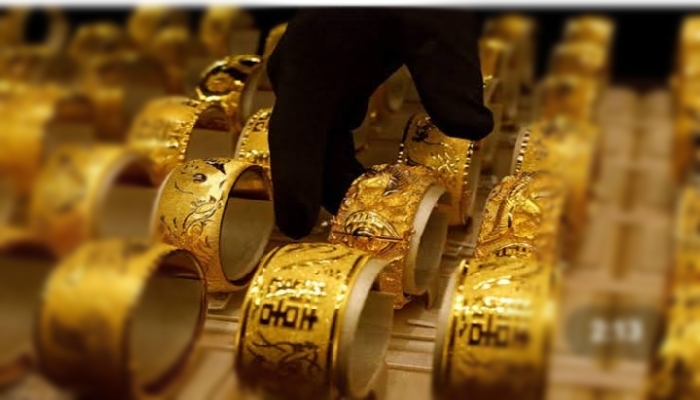
New Delhi, Jul 30: India's gold demand in 2020 is expected to fall to the lowest level in 26 years with domestic bullion prices hitting a record high and as falling disposable incomes could curtail retail purchases, the World Gold Council (WGC) said on Thursday.

Lower demand by the world's second-biggest bullion consumer could limit a rally in global prices, which hit a record high earlier this month, although it could also reduce India's trade deficit and support the ailing rupee.

"Fast rising gold prices could act as headwinds," said Somasundaram PR, the managing director of WGC's Indian operations.

Local gold futures have jumped 35% so far this year after rising a quarter in 2019.

India's gold consumption in the first half of 2020 plunged 56% on-year to 165.6 tonnes. Meanwhile, the coronavirus-triggered lockdown also slashed demand by 70% in the June quarter to 63.7 tonnes, the lowest in more than a decade, the WGC said in a report published on Thursday.

Millions of Indians have lost their jobs or taken a pay cut after the country imposed a lockdown on its 1.3 billion people to curb the spread of the virus that has infected more than 1.5 million Indians.

Consumption is generally high during the June quarter due to weddings and key festivals such as Akshaya Tritiya, but lockdown restrictions kept shoppers indoors this year.

The weak demand in the first half could drag down India's gold consumption in 2020 to the lowest since 1994, when demand stood at 415 tonnes, Somasundaram said, adding that it is still difficult to provide an estimate for full-year demand as the coronavirus crisis is still unfolding.

"Indian demand has previously jumped as much as 300 tonnes in a quarter. Latent demand could come out in the second half," Somasundaram said.

Comments

Add new comment

  • Coastaldigest.com reserves the right to delete or block any comments.
  • Coastaldigset.com is not responsible for its readers’ comments.
  • Comments that are abusive, incendiary or irrelevant are strictly prohibited.
  • Please use a genuine email ID and provide your name to avoid reject.