



Pokemon Go's health benefits moderate, short-lived: study

December 14, 2016

Boston, Dec 14: The health benefits of playing the popular augmented reality game Pokemon GO are moderate and wear off after just six weeks, according to a new Harvard study.
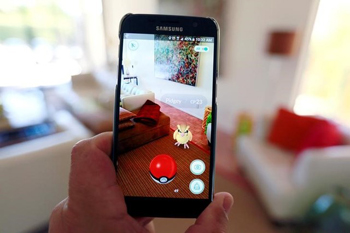
PokemonGo2Pokemon Go improves physical activity among adults who use the game, but the effect is moderate and not sustained over time, researchers said.

Results show that the daily average steps during the first week of installation increased by 955 additional steps - equivalent to half of the World Health Organisation's (WHO) recommendation for physical activity per week.

The following weeks saw a gradual reduction in the number of steps, and this effect was lost after six weeks of game playing.

Pokemon GO is an augmented reality game that projects graphics onto the real world using smartphones, and has been downloaded over 500 million times since its launch in July this year.

It has been suggested that the game can increase physical activity and promote public health, because it incentivises walking. However, these claims are based on anecdotal evidence.

So researchers from Harvard University, co-led by Katherine Howe, Christian Suharlim and Peter Ueda, set out to determine whether playing the game had any effect on physical activity among young adults in the US.

They conducted an online survey of 1,182 participants, aged 18-35, who used smartphones, during August 2016.

In total, 560 (47.4 per cent) of the participants reported playing Pokemon GO at "trainer level" of five or more, which is reached after walking for around two hours.

Data was analysed from automatically recorded step count from the participants' phones and used to estimate the change in daily steps after installation of the game.

The findings show the daily average steps during the first week of installation increased by 955 additional steps.

Assuming steps of 0.8 metre at a pace of four kilometres per hour, the change would translate into 11 minutes of additional walking daily - around half of the WHO's recommendation of 150 or more minutes weekly.

However, the number of steps gradually decreased over the following five weeks, and by the sixth week the number had returned to pre-installation levels.

The results remained the same even after accounting for a number of factors that may have influenced the findings, such as age, sex, race, weight status, and walkability of the area of residence.

"Our results indicate that the health impact of Pokemon GO might be moderate. Even if smaller amounts of physical activity might also be important for health outcomes, the increase in steps from Pokemon GO, as with many physical activity interventions, was not sustained over time," researchers said.

The study was published in The BMJ.

Comments

Add new comment

  • Coastaldigest.com reserves the right to delete or block any comments.
  • Coastaldigset.com is not responsible for its readers’ comments.
  • Comments that are abusive, incendiary or irrelevant are strictly prohibited.
  • Please use a genuine email ID and provide your name to avoid reject.
Agencies
March 15,2020

Should you let your babies "cry it out" or rush to their side? Researchers have found that leaving an infant to 'cry it out' from birth up to 18 months does not adversely affect their behaviour development or attachment.

The study, published in the Journal of Child Psychology and Psychiatry, found that an infant's development and attachment to their parents is not affected by being left to "cry it out" and can actually decrease the amount of crying and duration.

"Only two previous studies nearly 50 or 20 years ago had investigated whether letting babies 'cry it out' affects babies' development. Our study documents contemporary parenting in the UK and the different approaches to crying used," said the study's researcher Ayten Bilgin from the University of Warwick in the UK.

For the study, the researchers followed 178 infants and their mums over 18 months and repeatedly assessed whether parents intervened immediately when a baby cried or let the baby let it cry out a few times or often.

They found that it made little difference to the baby’s development by 18 months.

The use of parent’s leaving their baby to ‘cry it out’ was assessed via maternal report at term, 3, 6 and 18 months and cry duration at term, 3 and 18 months.

Duration and frequency of fussing and crying was assessed at the same ages with the Crying Pattern Questionnaire.

According to the researchers, how sensitive the mother is in interaction with their baby was video-recorded and rated at 3 and 18 months of age.

Attachment was assessed at 18 months using a gold standard experimental procedure, the strange situation test, which assesses how securely an infant is attached to the major caregiver during separation and reunion episodes.

Behavioural development was assessed by direct observation in play with the mother and during assessment by a psychologist and a parent-report questionnaire at 18 months.

Researchers found that whether contemporary parents respond immediately or leave their infant to cry it out a few times to often makes no difference on the short - or longer term relationship with the mother or the infants behaviour.

This study shows that 2/3 of mum's parent intuitively and learn from their infant, meaning they intervene when they were just born immediately, but as they get older the mother waits a bit to see whether the baby can calm themselves, so babies learn self-regulation.

Comments

Add new comment

  • Coastaldigest.com reserves the right to delete or block any comments.
  • Coastaldigset.com is not responsible for its readers’ comments.
  • Comments that are abusive, incendiary or irrelevant are strictly prohibited.
  • Please use a genuine email ID and provide your name to avoid reject.
Agencies
April 21,2020

The Lockdown is not a cure but a critical strategy to prevent the geographical spread of COVID-19.

While pandemics at this level involves actual life threatening situations for individual's or significant others in one's immediate circle, it envisages a marked disruption in routine life. Even after the pandemic has been contained and will come to pass; it's aftermath will leave a trailblazer which demands planning and implementation of a post pandemic reconstruction of society with potentially traumatic experiences varying in intensity, multiplicity and duration.

Degree of Trauma

It would do well for each one of us to realise that the pandemic is "potentially traumatic", since not everyone will experience COVID -19 as a traumatic event in their lives. Yet, there will be those who may develop post pandemic stress reactions, depression and related dysfunction and pathological reactions while still other exhibit healthy reactions to the same set of circumstances.

"Psychological reactions to the pandemic can be distilled into four distinct prototypical patterns, namely, Resilience, Recovery, Chronic and Delayed patterns which may vary in intensity, multiplicity, and duration. Resilient individual have an ability to bounce back from adversity and experience modest or little disruption in normal functioning and are able to maintain a relatively stable, healthy levels of psychological functioning even after enduring the pandemic. Recovery pattern is characterised by relatively rapid reduction in symptoms and return to normal functioning whereas chronic pattern is characterised by symptoms and dysfunction of a long duration," says Pune-based military psychologist Lt Col Dr Samir Rawat.

Challenges at the Individual and Community Levels

From a psychological perspective, post pandemic reconstruction would entail catering to the problems, concerns and needs of those adversely impacted by the COVID -19 with stress symptoms typically characterised by individual's experiencing an overwhelming trauma of the pandemic (for example, recurring nightmares/ breaking into a cold sweat, flashback of stressful events, increasing irritability, low frustration tolerance or emotional numbing).

It could also manifest in depressive symptoms which may result in lack of interest or diminished pleasure in activities and things which you earlier liked to do, feelings of worthlessness or even survivor guilt in case of a loss of a loved one due to COVID-19, fleeting thoughts of death and suicidal ideation. Physical symptoms, on the other hand could be a decrease in appetite, weight and sleep problems, inability to focus and lack of concentration.

Undoubtedly, the pandemic will cause a financial loss of varying magnitude to many, especially the marginalised and economically disadvantaged strata of daily wage earners; it will also lead to loss of jobs (already beginning to show), homelessness, occupational difficulties and new challenges in interpersonal relations at work and on the home front, besides physical health problems and psychological barriers with new norms of accepted social behaviour (social distancing, handshakes, an obsession for cleanliness to name a few).

Emotional battles

Many factors may influence whether individuals come out stronger and more resilient or surrender to the pandemic. Emotion Regulation is one such long term critical factor that can play an important role in contributing to varying degrees of adaptation with negative or positive outcomes. While we know that primary emotions are fear, anger, disgust, joy, anticipation, acceptance, sadness and surprise, other basic emotions include wonder, love, desire, joy, hatred, sadness, attachment, disgust, rage and even expectancy .

To be able to regulate these emotions and avoid negativity , especially on social media platforms is likely to increase efforts in emotion regulation which involves initiating, increasing or maintaining an emotional response.

This means by regulating or on the other hand by stopping, decreasing or avoiding an emotional response, that is, by down-regulating, depending on the individual's objectives and goals or his /her ability to regulate emotions in the valued and given direction.

"One of the best ways to regulate emotions is through cognitive restructuring wherein we change the way we think; after all it is not the event but the interpretation of the event which is perceived as stressful and finding meaning promotes resilience and reduces risk and vulnerability to stress," advises Dr Rawat.

Adding, "Clearly, we need to have a psychological plan to prevent, mitigate and minimise negative outcomes by post pandemic reconstruction of society at an individual and community level all over the country; this has to be integrated by all leaders across verticals in diverse domains."

Comments

Add new comment

  • Coastaldigest.com reserves the right to delete or block any comments.
  • Coastaldigset.com is not responsible for its readers’ comments.
  • Comments that are abusive, incendiary or irrelevant are strictly prohibited.
  • Please use a genuine email ID and provide your name to avoid reject.
Agencies
July 15,2020

The first COVID-19 vaccine tested in the US revved up people's immune systems just the way scientists had hoped, researchers reported Tuesday -- as the shots are poised to begin key final testing.

No matter how you slice this, this is good news, Dr. Anthony Fauci, the U.S. government's top infectious disease expert, told The Associated Press.

The experimental vaccine, developed by Fauci's colleagues at the National Institutes of Health and Moderna Inc., will start its most important step around July 27: A 30,000-person study to prove if the shots really are strong enough to protect against the coronavirus.

But Tuesday, researchers reported anxiously awaited findings from the first 45 volunteers who rolled up their sleeves back in March. Sure enough, the vaccine provided a hoped-for immune boost.

Those early volunteers developed what are called neutralizing antibodies in their bloodstream -- molecules key to blocking infection -- at levels comparable to those found in people who survived COVID-19, the research team reported in the New England Journal of Medicine.

This is an essential building block that is needed to move forward with the trials that could actually determine whether the vaccine does protect against infection, said Dr. Lisa Jackson of the Kaiser Permanente Washington Research Institute in Seattle, who led the study.

There's no guarantee but the government hopes to have results around the end of the year -- record-setting speed for developing a vaccine.

The vaccine requires two doses, a month apart.

There were no serious side effects. But more than half the study participants reported flu-like reactions to the shots that aren't uncommon with other vaccines -- fatigue, headache, chills, fever and pain at the injection site. For three participants given the highest dose, those reactions were more severe; that dose isn't being pursued.

Some of those reactions are similar to coronavirus symptoms but they're temporary, lasting about a day and occur right after vaccination, researchers noted.

Small price to pay for protection against COVID, said Dr. William Schaffner of Vanderbilt University Medical Center, a vaccine expert who wasn't involved with the study.

He called the early results a good first step, and is optimistic that final testing could deliver answers about whether it's really safe and effective by the beginning of next year.

It would be wonderful. But that assumes everything's working right on schedule, Schaffner cautioned.

Moderna's share price jumped nearly 15 percent in trading after US markets closed. Shares of the company, based in Cambridge, Massachusetts, have nearly quadrupled this year.

Tuesday's results only included younger adults. The first-step testing later was expanded to include dozens of older adults, the age group most at risk from COVID-19.

Those results aren't public yet but regulators are evaluating them. Fauci said final testing will include older adults, as well as people with chronic health conditions that make them more vulnerable to the virus and Black and Latino populations likewise affected.

Nearly two dozen possible COVID-19 vaccines are in various stages of testing around the world. Candidates from China and Britain's Oxford University also are entering final testing stages.

The 30,000-person study will mark the world's largest study of a potential COVID-19 vaccine so far. And the NIH-developed shot isn't the only one set for such massive U.S. testing, crucial to spot rare side effects. The government plans similar large studies of the Oxford candidate and another by Johnson & Johnson; separately, Pfizer Inc. is planning its own huge study.

Already, people can start signing up to volunteer for the different studies.

People think this is a race for one winner. Me, I'm cheering every one of them on, said Fauci, who directs NIH's National Institute of Allergy and Infectious Diseases.

We need multiple vaccines. We need vaccines for the world, not only for our own country. Around the world, governments are investing in stockpiles of hundreds of millions of doses of the different candidates, in hopes of speedily starting inoculations if any are proven to work.

Comments

Add new comment

  • Coastaldigest.com reserves the right to delete or block any comments.
  • Coastaldigset.com is not responsible for its readers’ comments.
  • Comments that are abusive, incendiary or irrelevant are strictly prohibited.
  • Please use a genuine email ID and provide your name to avoid reject.