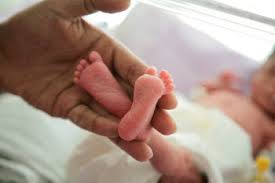
Poor diet before pregnancy could lead to preterm birth

May 25, 2014

Washington, May 25: A new study has revealed that there is a 50 % chance that women might have preterm birth if they don't eat healthy before pregnancy. This the first study of its kind that focuses on assessing women's diet prior to conception and its involvement with the outcomes at birth.

Preterm birthThe results stated that women who ate protein rich foods including lean meats, fish, chicken, fruit, whole grains and vegetables, had considerably lower risk of preterm birth than compared to women who mainly consumed discretionary foods, such as takeaway, potato chips, or foods high in saturated fat and sugar.

Dr Jessica Grieger, Posdoctoral Research Fellow with the Robinson Research Institute said that preterm birth occurs in approximately one in 10 pregnancies globally and it is a leading cause of infant disease and death so it is important to understand and improve the conditions. She further suggested that diet is an important risk factor that can be modified so it is important to consume a healthy diet before as well as during the pregnancy for best results.

The study is published in The Journal of Nutrition.

Comments

Add new comment

  • Coastaldigest.com reserves the right to delete or block any comments.
  • Coastaldigset.com is not responsible for its readers’ comments.
  • Comments that are abusive, incendiary or irrelevant are strictly prohibited.
  • Please use a genuine email ID and provide your name to avoid reject.
Agencies
July 8,2020

Probiotics that broaden the mix of helpful bacteria in the gut may help to ease depression, say researchers.

Foods that broaden the profile of helpful bacteria in the gut are collectively known as probiotics. These "good bacteria" can be taken as supplements, or found naturally in yoghurts or fermented foods.

For the findings, the research team from the University of Brighton in the UK searched for relevant studies published in English between 2003 and 2019, which looked at the potential therapeutic contribution of pre-and probiotics in adults with depression and/or anxiety disorders.

Out of an initial haul of 71 studies, just seven met all the criteria for inclusion. All 7 investigated at least one probiotic strain; four looked at the effect of combinations of multiple strains.In all, 12 probiotic strains featured in the selected studies, primarily Lactobacillus acidophilus, Lactobacillus casei, and Bifidobacterium bifidium.

One study looked at combined pre-probiotic treatment, while one looked at prebiotic therapy by itself. The studies varied considerably in their design, methods used, and clinical considerations, but all of them concluded that probiotic supplements either alone or in combination with prebiotics may be linked to measurable reductions in depression.

And every study showed a significant fall or improvement in anxiety symptoms and clinically relevant changes in biochemical measures of anxiety or depression with probiotic or combined pre-probiotic use.

Of the 12 different probiotics investigated, 11 were potentially useful, the findings showed.'Probiotics may help reduce the production of inflammatory chemicals, such as cytokines, as is the case in inflammatory bowel disease, the researchers suggested.

"They may help direct the action of tryptophan, a chemical thought to be important in the gut-brain axis in psychiatric disorders," they added.

In this way, with a better understanding of the mechanisms, probiotics may prove to be a useful tool across a wide range of conditions," the authors wrote.

Comments

Add new comment

  • Coastaldigest.com reserves the right to delete or block any comments.
  • Coastaldigset.com is not responsible for its readers’ comments.
  • Comments that are abusive, incendiary or irrelevant are strictly prohibited.
  • Please use a genuine email ID and provide your name to avoid reject.
News Network
February 12,2020

Washington, Feb 12: People who are optimistic may contribute to the health of their partners, staving off the risk factors leading to Alzheimer's disease, dementia and cognitive decline as they grow old together, according to a study.

The research, published in the Journal of Personality, followed nearly 4,500 heterosexual couples from the US Health and Retirement Study for up to eight years.

The researchers found a potential link between being married to an optimistic person and preventing the onset of cognitive decline, due to a healthier environment at home.

"We spend a lot of time with our partners.They might encourage us to exercise, eat healthier or remind us to take our medicine," said William Chopik, an assistant professor at the Michigan State University in the US.

"When your partner is optimistic and healthy, it can translate to similar outcomes in your own life. You actually do experience a rosier future by living longer and staving off cognitive illnesses," Chopik said.

An optimistic partner may encourage eating healthy foods, or working out together to develop healthier lifestyles, the researchers said.

For example, if a person quits smoking or starts exercising, their partner is close to following suit, they said.

"We found that when you look at the risk factors for what predicts things like Alzheimer's disease or dementia, a lot of them are things like living a healthy lifestyle," Chopik said.

"Maintaining a healthy weight and physical activity are large predictors.There are some physiological markers as well. It looks like people who are married to optimists tend to score better on all of those metrics," he said.

The researchers said there is a sense where optimists lead by example, and their partners follow their lead.

They also suggest that when couples recall shared experiences together, richer details from the memories emerge.

Chopik noted while there is a heritable component to optimism, there is some evidence to suggest that it's a trainable quality.

"There are studies that show people have the power to change their personalities, as long as they engage in things that make them change," Chopik said.

"Part of it is wanting to change. There are also intervention programs that suggest you can build up optimism," he added.

Comments

Add new comment

  • Coastaldigest.com reserves the right to delete or block any comments.
  • Coastaldigset.com is not responsible for its readers’ comments.
  • Comments that are abusive, incendiary or irrelevant are strictly prohibited.
  • Please use a genuine email ID and provide your name to avoid reject.
News Network
June 20,2020

Washington, Jun 20: Pregnant and postpartum women are usually at a high risk of depression and anxiety - one in seven women struggle with symptoms in the perinatal period and the coronavirus pandemic is exacerbating those struggles according to a recent study.

The study was published in Frontiers in Global Women's Health, which found that the likelihood of maternal depression and anxiety has substantially increased during the health crisis.

"The social and physical isolation measures that are critically needed to reduce the spread of the virus are taking a toll on the physical and mental health of many of us," said Dr. Margie Davenport of the University of Alberta, Canada, who co-authored the study.

For new moms, those stresses come with side effects.

"We know that experiencing depression and anxiety during pregnancy and the postpartum period can have detrimental effects on the mental and physical health of both mother and baby that can persist for years," said Davenport.

Such effects can include premature delivery, reduced mother-infant bonding, and developmental delays in infants.

The study surveyed 900 women - 520 of whom were pregnant and 380 of whom had given birth in the past year - and asked about their depression and anxiety symptoms before and during the pandemic.

Before the pandemic began, 29 percent of those women experienced moderate to high anxiety symptoms, and 15 percent experienced depressive symptoms. During the pandemic, those numbers increased - 72 percent experienced anxiety and 41percent experienced depression.

Because lockdown measures have affected daily routines and access to gyms, researchers also asked women whether their exercise habits had changed. Of the women surveyed, 64 percent reduced their physical activity since the pandemic began, while 15 percent increased and 21 percent experienced no change.

Exercise is a known way to ease depression symptoms, so limited physical activity may result in an uptick in depressive symptoms. Indeed, the study found that women who engaged in at least 150 minutes of moderate physical activity a week had significantly lower symptoms of depression and anxiety.

The findings are somewhat limited given the fact that researchers could not survey women before the pandemic began (since they could not know a pandemic would occur). The women surveyed could only offer their pre-pandemic symptoms in hindsight.

Also, while the researchers asked women about their symptoms using validated measures, only mental health care professionals can validly diagnose an individual with depression or anxiety.

The study was specifically interested in the impact of COVID-19 on new moms, but Davenport says maternal mental health is a critical issue no matter the time.

"Even when we are not in a global pandemic, many pregnant and postpartum women frequently feel isolated whether due to being hospitalized, not having family or friends around or other reasons," she said.

"It is critical to increase awareness of the impact of social (and physical) isolation on the mental health of pregnant and postpartum women," Davenport added.

Increased awareness makes diagnosis and treatment - the ultimate goal - more likely.

Comments

Add new comment

  • Coastaldigest.com reserves the right to delete or block any comments.
  • Coastaldigset.com is not responsible for its readers’ comments.
  • Comments that are abusive, incendiary or irrelevant are strictly prohibited.
  • Please use a genuine email ID and provide your name to avoid reject.