



Poultry demand dips in Karnataka as people wary of bird flu

May 10, 2016

Bengaluru, May 10: The demand for poultry dropped slightly in Bengaluru on Monday, a day after thousands of chickens died of bird flu (H5N1) in Bidar district. Chicken eaters are taking precaution and asking sellers where the birds have been sourced from.
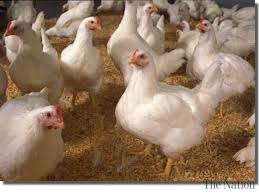
poulM Sheikh, who runs a poultry shop, said people had become cautious, though there was no drastic drop in sales. “People are enquiring about bird flu but we have few answers,” he said.

Nadir A, who works in a chicken store, said there was a slight decline in sales. “The sales are low in summer, but today was unusual,” he said but claimed that he wasn't aware of bird flu. Bhuvan, a resident, said he would better take precaution. “Even the last time when there was bird flu, I was cautious,” he said.

Doctors and poultry sellers, however, say there is no need to panic. H N Nagabhushan, general secretary, Karnataka Poultry Farmers' and Breeders' Association, said the current bird flu was noticed only in a layer poultry (egg production) farm in Humnabad taluk, Bidar, where poultry population was low. According to him, the government has started culling the birds and around 1.5 lakh chickens in one-kilometre radius of the farm would be culled.

Restrictions have been put on the movement of poultry, eggs and other input from the affected areas. Hence, there is no need to panic as the disease is localised, Nagabhushan said, adding that it was “perfectly safe” to consume chicken and egg across Karnataka.

Chickens sold in Bengaluru are sourced from Mysuru and bred on the outskirts of the city. They are not brought from other parts of Karnataka, he said. Poultry farmers have been advised to take appropriate bio-security measures and approach the Animal Husbandry Department for any assistance, he added.

Dr Mahesh P S, director of Central Poultry Development Organisation, said that whenever bird flu was reported, the chickens were being culled as per the standard procedure.

According to him, Indians were less likely to contract the H5N1 virus because of their distinct cooking culture. The virus dies at temperature above 60 degrees Celsius. Since the Indian food is cooked at a higher temperature and is even boiled, the virus likely dies down, he said. Outside of India, chicken and egg are eaten raw or half-cooked, increasing the chances of the virus spread, he added.

Comments

Swathi
 - 
Tuesday, 10 May 2016

in our place we eat chicken eveyday, no matter what will be.

Add new comment

  • Coastaldigest.com reserves the right to delete or block any comments.
  • Coastaldigset.com is not responsible for its readers’ comments.
  • Comments that are abusive, incendiary or irrelevant are strictly prohibited.
  • Please use a genuine email ID and provide your name to avoid reject.
coastaldigest.com news network
July 18,2020

Udupi, Jul 18: Noted multi-lingual scholar Dr Uliyar Padmanabha Upadhyaya passed away last night at a private hospital in Manipal. The 88-year-old was survived by a son and a daughter.

His wife Susheela Uadhyaya, who was also a multi-lingual scholar, had passed away in January 2014 at the age of 77. The duo had compiled the six-volume Tulu Lexicon. Its first volume was published in 1988 and the last volume in 1997.

Son of Sitaram Upadhyaya, who was a scholar in the court of the Raja of Travancore, Dr Padmanabha was born on April 10, 1932 at Uliyar in Majur Village near Kaup in Udupi district. 

The Upadhyaya couple had conducted serious research work in linguistics and folk culture and produced a number of books-some of them jointly, some individually and some in collaboration with others. 

Dr Padmanabha had acquired three Master of Arts degrees in Sanskrit, Kannada and Linguistics from Madras, Kerala and Pune Universities, Vidwan in Hindi and PhD in Linguistics from the Pune University for his thesis titled “A Comparative Study of Kannada Dialects”.

He was a visiting Professor at the Universities of London and Paris. He knew Hindi, Kannada, Tulu, Malayalam, Tamil, English, French and Olof, the language of Senegal in Africa.

His works include Nanjanagudu Kannada (Vokkaliga Dialect), Coorg Kannada, Kuruba - A Dravidian Language, Kannada - A Phonetic Language, Malayalam Language and Literature (with Ms. Susheela), Effect of Bilingualism on Bidar Kannada, Coimbatore Tamil, Kannada as Spoken by Different Population Groups in Mysore City, Dravidian and Negro African: Ethno Linguistic Study (with Ms. Susheela), Conversational Kannada, Coastal Karnataka and Bhuta Worship: Aspects of a Ritualistic Theatre (with Ms. Susheela).

Also Read: Eminent linguist Dr Susheela P Upadhyaya no more

Comments

Add new comment

  • Coastaldigest.com reserves the right to delete or block any comments.
  • Coastaldigset.com is not responsible for its readers’ comments.
  • Comments that are abusive, incendiary or irrelevant are strictly prohibited.
  • Please use a genuine email ID and provide your name to avoid reject.
News Network
January 4,2020

Madikeri, Jan 4: Two girls were seriously injured after a wild elephant attacked them on their way back to home near Injilagere here, Forest officials said on Saturday.

The officials said that Nityashree of class four, along with her younger sister Yuvashree of class two, were on their way back home from Government Primary School. The students are the daughters of Mani, resident of School estate line house in Puliyeri village.

Comments

Add new comment

  • Coastaldigest.com reserves the right to delete or block any comments.
  • Coastaldigset.com is not responsible for its readers’ comments.
  • Comments that are abusive, incendiary or irrelevant are strictly prohibited.
  • Please use a genuine email ID and provide your name to avoid reject.
News Network
April 16,2020

Mangaluru, Apr 16: An old refrigerator has been turned into a "disinfection chamber" by researchers who are striving to come up with solutions to tackle the spread of coronavirus.

Dr Arun M Isloor, head of Chemistry Department, National Institute of Technology Karnataka (NITK), Surathkal, along with research scholar Syed Ibrahim has come up with the device which can disinfect items kept inside it.

"We have named this as ZERO-COV," Dr Isloor said.

He says the device ensures 99.9 per cent destruction of microorganisms present on the surface of items.

"We can keep items like vegetables, currency notes, books or envelopes inside the chamber. Switching on the chamber for 15 minutes ensures 99.9 per cent destruction of microorganisms present in the surface of the items," Dr Isloor added.

Comments

Add new comment

  • Coastaldigest.com reserves the right to delete or block any comments.
  • Coastaldigset.com is not responsible for its readers’ comments.
  • Comments that are abusive, incendiary or irrelevant are strictly prohibited.
  • Please use a genuine email ID and provide your name to avoid reject.