Price checks stepped up to protect consumers

April 13, 2012

price_checks


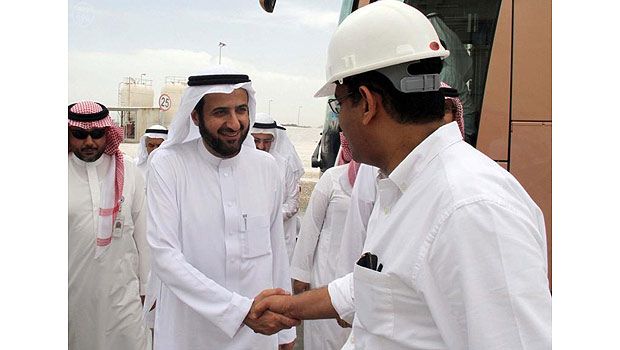
Madinah, April 13: The Ministry of Commerce and Industry has formulated a plan to check any rises in commodity prices and is closely monitoring the markets to end any monopoly of goods, Minister Tawfiq Al-Rabiah has said.


Al-Rabiah, who is also the chairman of the board of directors of the Saudi Industrial Property Authority (Modon), made the remarks following a tour of the industrial city in Madinah.


ring to ensure sufficient supply of goods so as to close the door for any price rise and to prevent monopoly of commodity trade," he said.


Al-Rabiah said the sufficient supplies of commodities in the market would keep prices low, prevent monopoly, and end unfair competition among traders.


"There is continuous cooperation between the ministry and the Customs Department as well as the Consumer Protection Society to keep prices at a reasonable level that will not harm either the merchant or the consumer," he said.


He said the top priority for the ministry was the protection of consumers and added that in case of manufacturing defects, the ministry would address the manufacturers about it.


Al-Rabiah said the industrial city in Madinah was a promising city that would attract industries and provide more jobs to Saudi nationals.


He said the ministry had a plan to expand the city and provide enough spaces for factories in collaboration with the Madinah municipality.


He said by the end of the year the basic infrastructure of the city would be completed, including the provision of enough quantities of water, sewage projects and others costing between SR80 million and SR90 million.


He described the city as one oft the fastest growing industrial cities in the Kingdom and said so far it had projects worth about SR170 million.


Comments

Add new comment

  • Coastaldigest.com reserves the right to delete or block any comments.
  • Coastaldigset.com is not responsible for its readers’ comments.
  • Comments that are abusive, incendiary or irrelevant are strictly prohibited.
  • Please use a genuine email ID and provide your name to avoid reject.
News Network
May 11,2020

May 11: Saudi Arabia will triple its value-added tax rate and suspend a cost of living allowance for state workers, it said on Monday, seeking to shield finances hit by low oil prices and a slump in demand for its lifeline export worsened by the new coronavirus.

Historic oil output cuts agreed by Riyadh and other major producers have given only limited support to prices after they sank on oversupply caused by a war for petroleum market share between the kingdom and its fellow oil titan Russia.

Saudi Arabia, the world's largest oil exporter, is also being hit hard by measures to fight the new coronavirus, which are likely to curb the pace and scale of economic reforms launched by Crown Prince Mohammed bin Salman.

"The cost of living allowance will be suspended as of June 1, and the value added tax will be increased to 15% from 5% as of July 1," Finance Minister Mohammed al-Jadaan said in a statement reported by the state news agency. "These measures are painful but necessary to maintain financial and economic stability over the medium to long term...and to overcome the unprecedented coronavirus crisis with the least damage possible."

The austerity measures come after the kingdom posted a $9 billion budget deficit in the first quarter.

The minister said non-oil revenues were affected by the suspension and decline in economic activity, while spending had risen due to unplanned strains on the healthcare sector and the initiatives taken to support the economy.

"All these challenges have cut state revenues, pressured public finances to a level that is hard to deal with going forward without affecting the overall economy in the medium to long term, which requires more spending cuts and measures to support non-oil revenues stability," he added.

The government has cancelled and put on hold some operating and capital expenditures for some government agencies, and cut allocations for some reform initiatives and projects worth a total 100 billion riyals ($26.6 billion), the statement said.

Central bank foreign reserves fell in March at their fastest rate in at least 20 years and to their lowest since 2011, while oil revenues in the first three months of the year fell 24% from a year earlier to $34 billion, pulling total revenues down 22%.

"The reforms are positive from a fiscal side as greater adjustment is essential. However, the tripling of VAT is unlikely to help that much in 2020 revenue wise with the expected fall in consumption," said Monica Malik, chief economist at Abu Dhabi Commercial Bank.

She said she kept unchanged her deficit forecast of 16.3% of GDP for this year, which already factors in a greater than previously announced spending cut.

About 1.5 million Saudis are employed in the government sector, according to official figures released in December.

In 2018, Saudi Arabia's King Salman ordered a monthly payment of 1,000 riyals ($267) to every state employee to compensate them for the rising living costs after the government hiked domestic gas prices and introduced value-added tax.

DIFFICULT TIMES

A committee has been formed to study all financial benefits paid to public sector employees and contractors, and will submit recommendations within 30 days, the statement said.

In late 2015, when oil prices fell from record highs, the kingdom slashed lavish bonuses, overtime payments and other benefits once considered routine perks in the public sector.

In a country without elections and with political legitimacy resting partly on distribution of oil revenue, the ability of citizens to adapt to such reforms is crucial for stability.

"Tripling the VAT will test the limits of the balance between revenues and consumption as the economy dives into a deep recession. The move will impact consumption and could also lower the expected revenues," said John Sfakianakis, a Gulf expert at the University of Cambridge.

"These are pro-austerity and pro-revenue moves rather than pro-growth ones," he said.

Hasnain Malik, head of equity strategy at Tellimer, said the VAT rise could bring about $24-$26.5 billion in additional non-oil fiscal revenue. The rise would hit consumer spending further but was a needed step towards fiscal sustainability, he said.


Comments

Add new comment

  • Coastaldigest.com reserves the right to delete or block any comments.
  • Coastaldigset.com is not responsible for its readers’ comments.
  • Comments that are abusive, incendiary or irrelevant are strictly prohibited.
  • Please use a genuine email ID and provide your name to avoid reject.
News Network
March 11,2020

Riyadh, Mar 11: Energy titan Saudi Aramco said Tuesday it will boost crude oil supplies to 12.3 million barrels per day in April, flooding markets as it escalates a price war with Russia.

Riyadh had already slashed its price for April delivery after Russia refused its proposal that producer alliance OPEC+ orchestrate a co-ordinated cut of 1.5 million barrels per day.

The production cut had been mooted to shore up global oil prices, which have gone into meltdown as the deadly new coronavirus casts a pall over the world economy, but now price cuts and rising output indicate an unravelling of OPEC+ co-operation.

"Saudi Aramco announces that it will provide its customers with 12.3 million barrels per day of crude oil in April," the company said in a statement to the Saudi stock exchange.

Saudi Arabia, the world's biggest crude exporter has been pumping some 9.8 million bpd so its announcement on Tuesday means it will be adding at least 2.5 million bpd from April.

"The Company has agreed with its customers to provide them with such volumes starting 1 April 2020. The Company expects that this will have a positive, long-term financial effect," the statement said.

Saudi Arabia says it has an output capacity of 12 million bpd but it is not known for how long it can sustain such levels.

The kingdom also has millions of barrels of crude stored in strategic reserves to be used when needed and is expected to use it to provide the extra supply to the global market.

"Production above 12 million bpd shows the Saudis have something to prove," director of Britain-based RS Energy Bill Farren-Price said.

"This is a grab for market share. The taps are open and the prices have been cut sharply," Farren-Price told AFP.

In a quick response, Russian Energy Minister Alexander Novak said Moscow could boost production in the short term "by 200,00-300,000 bpd, with a potential of 500,000 bpd in the near future".

But he stressed that Moscow was in favour of extending a December agreement that had seen OPEC and Russia agree to cut production by 500,000 barrels per day in 2020, lowering output from October 2018 levels by 1.7 million barrels per day.

The events of recent days have signalled a disintegration of collaboration between OPEC and Russia.

Russia is a non-OPEC member and the world's second-biggest oil producer, but Moscow and other non-members have in recent years co-operated with the oil cartel in an arrangement known as OPEC+.

The Saudi price cuts over the weekend, which were the first salvo in the price war, sent oil prices crashing -- registering the single biggest one-day loss in three decades on Monday.

Saudi Arabia draws around 70 per cent of its revenues from oil, and the revenues are key to ambitious reform programmes launched by Crown Prince Mohammed bin Salman.

Comments

Add new comment

  • Coastaldigest.com reserves the right to delete or block any comments.
  • Coastaldigset.com is not responsible for its readers’ comments.
  • Comments that are abusive, incendiary or irrelevant are strictly prohibited.
  • Please use a genuine email ID and provide your name to avoid reject.
Agencies
June 22,2020

Riyadh, Jun 22: The Ministry of Municipal and Rural Affairs (MMRA) in Saudi Arabia has announced the continuation of the ban on providing Shisha (hubble-bubble), and the closure of children's play areas in restaurants as a precautionary measure for protecting the health of citizens and residents from the novel coronavirus COVID-19 infection.

The new stage, in which the Kingdom is beginning to coexist with the virus, focuses on the concept of "social distancing" that has emerged since the start of the coronavirus crisis throughout the world,

It stipulates leaving at least 2 meters between one person and the other in public places to prevent the transmission of infection, in addition to covering the mouth and nose by wearing a facemask.

It also specifies complying with the preventive protocols in workplaces, stores, shops, mosques and tourist attractions, with human gatherings not to exceed 50 people, as a maximum.

Comments

Add new comment

  • Coastaldigest.com reserves the right to delete or block any comments.
  • Coastaldigset.com is not responsible for its readers’ comments.
  • Comments that are abusive, incendiary or irrelevant are strictly prohibited.
  • Please use a genuine email ID and provide your name to avoid reject.