


Rajapaksa sworn in as Sri Lanka's President

News Network
November 18, 2019

Colombo, Nov 18: Gotabaya Rajapaksa was on Monday sworn in as Sri Lanka's seventh President at an ancient Buddhist temple, a venue chosen to reflect the massive mandate he got from the Sinhalese majority, as he vowed to protect all communities while giving foremost priority to Buddhism.

The swearing-in ceremony took place at the Ruwanweli Seya, a stupa and a hemispherical structure containing relics and considered sacred to Buddhists all over the world, in the ancient north central town of Anuradhapura, around 200 kms from the national capital Colombo.

Rajapaksa is the first president to be sworn in outside Colombo.

Clad in immaculate white, Rajapaksa, 70, signed the official document in the presence of Chief Justice Jayantha Jayasuriya at the auspicious time of 11:49 am after being administered the oath by the president's secretary Udaya R Seneviratne.

In a short speech, he thanked the powerful Buddhist clergy in the country for backing his presidential bid.

He also thanked the Sinhala-majority people for electing him.

“I knew I would win the presidency with support coming only from the Sinhala majority. I told the minorities to join me. I did not receive their support. But I will make sure that I will be president for everyone,” he said.

Rajapaksa said he would protect all communities while giving foremost position to Buddhism.

His selection of the venue, the Ruwanwelisaya stupa and a hemispherical structure containing relics, is one of the eight most prominent Buddhist shrines and in line with the massive mandate he won form the island's Buddhist majority.

The stupa which is considered sacred to Buddhists all over the world was built by King Dutugemunu in the 140 B.C., who reigned over the country after defeating Tamil King Elara.

Rajapaksa was credited for ending the military campaign of the Liberation Tigers of Tamil Eelam (LTTE) who ran a 30-year war to create a separate Tamil homeland in the north and east of the island.

Rajapaksa is the younger brother of the former President Mahinda Rajapaksa who was a special guest at the ceremony.

Later today, he is expected to appoint Mahinda the new prime minister.

He was a colonel in the Sri Lankan Army before leaving it to migrate to the US in 1992. He was until then in the battlefield against the LTTE in the north.

Rajapaksa returned to Sri Lanka when older brother Mahinda was named the presidential candidate in 2005. With his brother's victory he was appointed to the powerful position of Secretary to the Defense Ministry.

His sharp leadership skills and incise decision makings were largely responsible for ending the LTTE's armed campaign. In 2006, he survived an assassination attempt carried out by the LTTE with minor injuries.

Rajapaksa is also the first civil servant to become president, only the first sibling of a president to win presidency, the first president in the history to be inducted in office without even spending a day as a parliamentarian.

Analysts said his large mandate on Saturday with over 1.3 million votes reflected the public confidence in his strong leadership and his ability for precise decision making.

Comments

Add new comment

  • Coastaldigest.com reserves the right to delete or block any comments.
  • Coastaldigset.com is not responsible for its readers’ comments.
  • Comments that are abusive, incendiary or irrelevant are strictly prohibited.
  • Please use a genuine email ID and provide your name to avoid reject.
Agencies
February 25,2020

Washington, Feb 25: Democratic presidential front-runner Senator Bernie Sanders on Monday slammed President Donald Trump for selling weapons to India, saying that the US should instead partner with New Delhi to fight climate change to save the planet.

Sanders, who has won the Nevada and New Hampshire primaries and tied in Iowa, made the comments after Trump, who is on a two-day visit to India, on Monday announced that the US will sign defence trade deals worth USD 3 billion with India.

In an address at a massive "Namaste Trump" rally at Motera stadium in Ahmedabad, Trump announced that deals to sell state-of-the-art military helicopters and other equipment worth over USD 3 billion will be sealed with India on Tuesday.

“Instead of selling USD 3 billion in weapons to enrich Raytheon, Boeing and Lockheed, the United States should be partnering with India to fight climate change,” Sanders said in a tweet, the first by a Democratic presidential candidate on Trump's India visit.

“We can work together to cut air pollution, create good renewable energy jobs, and save our planet,” he said.

However, a former White House official defended the US' decision to sell arms and weapons to India.

“I'm proud of my service in the White House, in which we poured enormous energy into deepening climate and green tech cooperation w/ India... and also advancing security cooperation and defense sales. I'd like to think both can be part of a strong, values-based partnership,” Joshua White said.

According to the US State Department, India plays a vital role in the US vision for a free and open Indo-Pacific.

In 2016, the US designated India as a Major Defence Partner. Commensurate with this designation, India in 2018 was granted Strategic Trade Authorization tier 1 status, which allows New Delhi to receive license-free access to a wide range of military and dual-use technologies that are regulated by the Department of Commerce.

Bilateral defence trade with India in a little over a decade has increased from near zero in 2008 to USD20 billion.

Among some of the key foreign military sales notified to Congress include MH-60R Seahawk helicopters (USD2.6 billion), Apache helicopters (USD2.3 billion), P-8I maritime patrol aircraft (USD3 billion), and M777 howitzers (USD737 million).

India was the first non-treaty partner to be offered a Missile Technology Control Regime Category-1 Unmanned Aerial System – the Sea Guardian UAS manufactured by General Atomics.

The State Department is also advocating for the Lockheed Martin F-21 and Boeing F/A-18 – two state of the art fighter aircraft that India is currently evaluating.

These platforms provide critical opportunities to enhance India's military capabilities and protect shared security interests in the Indo-Pacific region, it argued.

The top categories of DCS to India include aircraft, electronics and gas turbine engines.

Comments

Add new comment

  • Coastaldigest.com reserves the right to delete or block any comments.
  • Coastaldigset.com is not responsible for its readers’ comments.
  • Comments that are abusive, incendiary or irrelevant are strictly prohibited.
  • Please use a genuine email ID and provide your name to avoid reject.
News Network
July 4,2020

New Delhi, July 4: India on Friday reported its highest single-day spike of COVID-19 cases with 22,771 cases reported in the last 24 hours, said the Union Ministry of Health and Family Welfare.

With these new cases, India's coronavirus cases tally has gone up to 6,48,315, out of which there are 2,35,433 active cases in the country and 3,94,227 cases have been cured/discharged or migrated.

As many as 442 deaths due to COVID-19 have been reported in the last 24 hours taking the number of patients succumbing to the deadly virus across the country to 18,655.

As per the Union Health Ministry, Maharashtra -- the worst affected state due to COVID-19 -- has a total of 1,92,990 cases which is inclusive of 8,376 deaths. Meanwhile, Tamil Nadu, the second worst-affected state, has a total of 1,02,721 cases and 1,385 fatalities. Delhi's tally of coronavirus cases stands at 94,695 which is inclusive of 2923 deaths due to the virus.

The Centre said that the recovery rate has further improved to 60.80 per cent. The recoveries/deaths ratio is 95.48 per cent : 4.52 per cent.

The Indian Council of Medical Research, earlier on Saturday, said that the total number of samples tested up to July 3 is 95,40,132, out of which 2,42,383 samples were tested yesterday.

Comments

Add new comment

  • Coastaldigest.com reserves the right to delete or block any comments.
  • Coastaldigset.com is not responsible for its readers’ comments.
  • Comments that are abusive, incendiary or irrelevant are strictly prohibited.
  • Please use a genuine email ID and provide your name to avoid reject.
News Network
July 27,2020

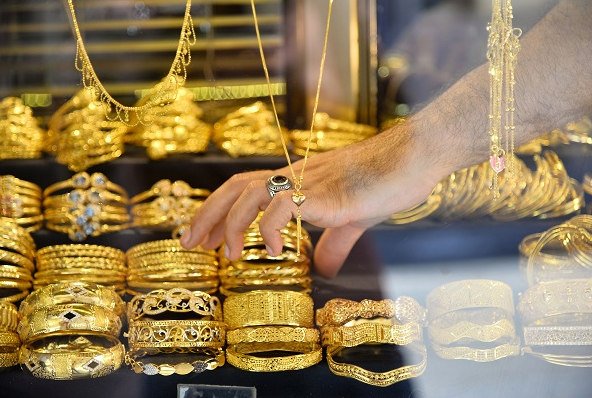
Tokyo, Jul 27: Gold hit an all-time high on Monday as tit-for-tat consulate closures in China and the United States rattled investors, boosting the allure of safe-haven assets, although sentiment was mixed with tech gains supporting some Asian stocks.

MSCI's ex-Japan Asia-Pacific index rose 1.3 percent as Taiwan's TSMC, Asia's third-largest company by market capitalisation, rose almost 10 percent.

The chipmaker's gains boosted other tech stocks in the region and came after rival Intel signalled it may give up manufacturing its own components due to delays in new 7-nanometer chip technology.

Also soothing sentiment, Chinese shares eked out gains after big falls late last week, with CSI300 index rising 0.5 percent.

S&P500 futures were last up 0.4 percent in choppy trade while Japan's Nikkei fell 0.5 percent, resuming trade after a long weekend and catching up with falls in global shares late last week.

Global shares had lost steam last week after Washington ordered China's consulate in Houston to close, prompting Beijing to react in kind by closing the US consulate in Chengdu.

US Secretary of State Mike Pompeo took fresh aim at China last week, saying Washington and its allies must use "more creative and assertive ways" to press the Chinese Communist Party to change its ways.

"US President (Donald) Trump used to say China's President Xi Jinping is a great leader. But now Pompeo's wording is becoming so aggressive that markets are starting to worry about further escalation," said Norihiro Fujito, chief investment strategist at Mitsubishi Securities.

Gold rose 1.0 percent to a record high of $1,920.9 per ounce, surpassing a peak touched in September 2011, as Sino-US tensions boosted the allure of safe-haven assets, especially those not tied to any specific country.

The yellow metal is also helped by aggressive monetary easing adopted by many central banks around the world since the pandemic plunged the global economy into a recession.

Some investors fret such an unprecedented level of money-printing could eventually lead to inflation.

MORE STIMULUS

Hopes of a quick US economic recovery are fading as coronavirus infections showed few signs of slowing.

That means the economy could capitulate without fresh support from the government, with some of earlier steps such as enhanced jobless benefits due to expire this month.

Investors hope US Congress will agree on a deal before its summer recess but there are some sticking points including the size of the stimulus and enhanced unemployment benefits.

US Treasury Secretary Steve Mnuchin said the package will contain extended unemployment benefits with 70 percent "wage replacement".

Democrats, who control the House of Representatives, want enhanced benefits of $600 per week to be extended and look to much bigger stimulus compared with the Republicans' $1 trillion plan.

Investors are looking to corporate earnings from around the world for hints on the pace of recovery in the global economy.

"It looks like rising coronavirus cases are starting to slow down recovery in many countries," said Masahiro Ichikawa, senior strategist at Sumitomo Mitsui DS Asset Management.

Concerns about the US economic outlook started to weigh on the dollar, reversing its inverse correlation with the economic well-being over the past few months.

The dollar index dropped 0.3 percent to its lowest level in nearly two years.

The euro gained 0.3 percent to $1.1693, hitting a 22-month high of $1.16590 as sentiment on the common currency improved after European leaders reached a deal on a recovery fund in a major step towards more fiscal co-operation.

Against the yen, the dollar slipped 0.5 percent to 105.605 yen, a four-month low while the British pound hit a 4 1/2-month high of $1.2832.

Oil prices dipped on worries about the worsening Sino-US relations.

Brent futures fell 0.46 percent to $43.14 per barrel while US crude futures lost 0.44 percent to $41.11.

Comments

Add new comment

  • Coastaldigest.com reserves the right to delete or block any comments.
  • Coastaldigset.com is not responsible for its readers’ comments.
  • Comments that are abusive, incendiary or irrelevant are strictly prohibited.
  • Please use a genuine email ID and provide your name to avoid reject.