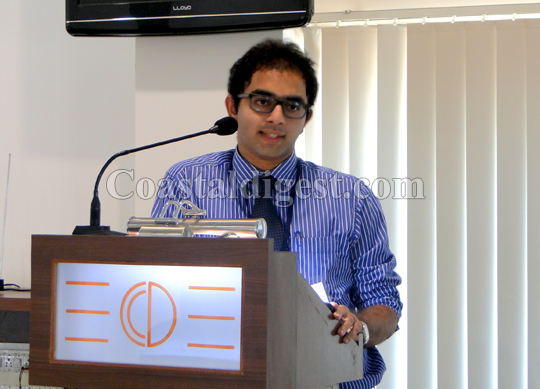
Remove mandatory retirement' age for medical teachers: Dr Edmond Fernandes

[email protected] (CD Network)
June 10, 2016

Mangaluru, Jun 10: Dr Edmond Fernandes, CEO, Center for Health and Development [CHD-India] has written to Bhanu Pratap Sharma, Secretary, Health and Family Welfare, Government of India urging to remove mandatory retirement' age for medical teachers in private and Government medical colleges and Universities.

edmond

Considering the acute shortage of doctors in the country, which is way below the WHO recommended doctor patient ratio, he said the senior doctors will be instrumental to guide quality control needed by accreditation councils like NAAC, NABH and improve the overall development of health sector and human resources etc.

In the letter, Dr Edmond mentioned that employment should be seen as a human right which ensures independence, social security and promotes a sense of dignity and self-worth.

Setting a time-line for retirement at 70 is obsolete and unfair. The medical teachers post 70 should not aspire for posts of Heading departments and moving as examiners to other institutes, that should be clearly declared of in an undertaking and they should be assigned other development roles, he wrote.

He pointed out that a few medical teachers have dual MD degrees and a few might have Dual PHD's and it is important to cultivate these teachers without letting them go. If the mental faculty of the teacher is sound with physical movement at ease, there should be no retirement as such. Ontario Human Rights Commission, advocated and came up with the enlightened decision to remove mandatory retirement on 12th December, 2006, many other countries have followed suit. He has appealed to the Secretary to table this for immediate solution.

The letter has been copied to Dr Jayshree Mehta, President, Medical Council of India and Dr Shalini Rajneesh, Principal Secretary, Health and Family Welfare, Government of Karnataka.

Comments

Althaf
 - 
Friday, 10 Jun 2016

good job, u may get help from UT Khader.

Add new comment

  • Coastaldigest.com reserves the right to delete or block any comments.
  • Coastaldigset.com is not responsible for its readers’ comments.
  • Comments that are abusive, incendiary or irrelevant are strictly prohibited.
  • Please use a genuine email ID and provide your name to avoid reject.
News Network
June 4,2020

Bengaluru, Jun 4: All shops, offices, malls, commercial establishments and others in Karnataka must not allow Covid-stamped people to enter their premises before the completion of the prescribed quarantine time, said a top official on Wednesday.

"They should not allow those with quarantine stamp to enter before the end of their quarantine period or till they get current Covid negative test report," ordered Chief Secretary T.M. Vijay Bhaskar.

Bhaskar has also issued the order to all religious places, hotels and others to first check for quarantine stamp on all their customers or visitors before they enter the premises.

"All shops, commercial establishments, offices, factories, malls, religious places, hotels and etc.. are required to check for quarantine stamp on all their customers or visitors before they enter the premises," he said.

In the event of a violation, Bhaskar said the police should be informed at 100.

He issued the same order to the general public and resident welfare associations asking them to be vigilant.

"General public and resident welfare associations are advised to report any violation of the quarantine in their neighbourhood to the police at telephone number 100," said the chief secretary.

The orders came under the head aRole of general public, resident welfare associations and commercial establishments''.

General public, commercial establishments and resident welfare associations have been empowered to report quarantine violations at a time when many activities are set to reopen from June 8 as part of Unlock - 1, after more than two months of lockdown.

Comments

Add new comment

  • Coastaldigest.com reserves the right to delete or block any comments.
  • Coastaldigset.com is not responsible for its readers’ comments.
  • Comments that are abusive, incendiary or irrelevant are strictly prohibited.
  • Please use a genuine email ID and provide your name to avoid reject.
Agencies
May 8,2020

Washington D.C., May 8: The prime time for brain development in a child's life is the first year, where the infant spends most of the time asleep. It is the time when neural connections form and sensory memories are encoded.

However, when sleep is disrupted, as occurs more often among children with autism, brain development may be affected, too.

New research led by the University of Washington finds that sleep problems in a baby's first 12 months may not only precede an autism diagnosis but also may be associated with altered growth trajectory in a key part of the brain, the hippocampus.

The study, which was published in the American Journal of Psychiatry, researchers report that in a sample of more than 400 taken of 6- to 12-month-old infants, those who were later diagnosed with autism were more likely to have had difficulty falling asleep.

It also states that this sleep difficulty was associated with altered growth trajectories in the hippocampus.

"The hippocampus is critical for learning and memory, and changes in the size of the hippocampus have been associated with poor sleep in adults and older children.

As many as 80 per cent of the children with autism spectrum disorder have sleep problems," said Annette Estes, director of the UW Autism Center and senior author of the study.

"In our clinical experience, parents have a lot of concerns about their children's sleep, and in our work on early autism intervention, we observed that sleep problems were holding children and families back," added Estes, who is also a UW professor of speech and hearing sciences.

"It could be that altered sleep is part-and-parcel of autism for some children. One clue is that behavioural interventions to improve sleep don't work for all children with autism, even when their parents are doing everything just right. This suggests that there may be a biological component to sleep problems for some children with autism," said Estes.

To consider links among sleep, brain development, and autism, researchers at the IBIS Network looked at MRI scans of 432 infants, surveyed parents about sleep patterns, and measured cognitive functioning using a standardized assessment.

At the outset of the study, infants were classified according to their risk for developing autism: Those who were at higher risk of developing autism -- about two-thirds of the study sample -- had an older sibling who had already been diagnosed.

Infant siblings of children with autism have a 20 per cent chance of developing autism spectrum disorder -- a much higher risk than children in the general population.

In the current study, 127 of the 432 infants were identified as "low risk" at the time the MRI scans were taken because they had no family history of autism.

They later evaluated all the participants at 24 months of age to determine whether they had developed autism. Of the roughly 300 children originally considered "high familial risk," 71 were diagnosed with autism spectrum disorder at that age.

Problems with sleep were more common among the infants later diagnosed with an autism spectrum disorder, as were larger hippocampi. No other subcortical brain structures were affected, including the amygdala, which is responsible for certain emotions and aspects of memory, or the thalamus, a signal transmitter from the spinal cord to the cerebral cortex.

The authors note that while parents reported more sleep difficulties among infants who developed autism compared to those who did not, the differences were very subtle and only observed when looking at group averages across hundreds of infants.

Sleep patterns in the first years of life change rapidly as infants transition from sleeping around the clock to a more adult-like sleep/wake cycle. Until further research is completed, Estes said, it is not possible to interpret challenges with sleep as an early sign of increased risk for autism.


Comments

Add new comment

  • Coastaldigest.com reserves the right to delete or block any comments.
  • Coastaldigset.com is not responsible for its readers’ comments.
  • Comments that are abusive, incendiary or irrelevant are strictly prohibited.
  • Please use a genuine email ID and provide your name to avoid reject.
News Networks
March 7,2020

Bengaluru, Mar 7: Karnataka Chief Minister BS Yediyurappa on Friday said that the Upper Krishna Project (UKP) will be completed within the next three years.

Speaking in the Assembly, the Chief Minister said: "After discussing with the officials of the finance department, we have decided to allocate Rs 10,000 crore funds for the third phase of UKP. This project will be completed within a span of three years."

Yediyurappa also said that the government will hold talks for additional funds from the Central government.

The leader of Opposition, Siddaramaiah, interrupted and said that the CM has announced this just to gain the confidence of MLAs from north Karnataka.

"The government could have announced it in the budget itself or else the Chief Minister could have announced it at the time of discussion on the budget. Where are the funds with the government to complete the project? CM has announced this just to gain the confidence of MLAs who hail from north Karnataka," said Siddaramaiah.

Deputy Chief Minister Govinda Karajol while speaking to the media welcomed the Chief Minister's statement and said that the earlier government didn't allocate a single penny in the last seven years he added.

Comments

Add new comment

  • Coastaldigest.com reserves the right to delete or block any comments.
  • Coastaldigset.com is not responsible for its readers’ comments.
  • Comments that are abusive, incendiary or irrelevant are strictly prohibited.
  • Please use a genuine email ID and provide your name to avoid reject.