


Republican-led Senate takes first step to repeal 'Obamacare'

January 12, 2017

Washington, Jan 12: The United States Senate, on early Thursday, passed a measure to take the first step forward to dismantle President Barack Obama's health care law, responding to pressure to move quickly, even as Republicans and President-elect Trump grapple with what to replace it with.
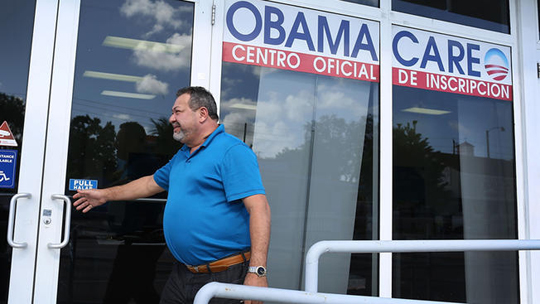
Obamacare

The nearly party line 51-48 vote came on a non-binding Republican backed budget measure that eases the way for action on subsequent repeal legislation as soon as next month.

“We must act quickly to bring relief to the American people,” said Senate Majority Leader Mitch McConnell, R-Ky.

The House is slated to vote on the measure on Friday, though some Republicans there have misgivings about setting the repeal effort in motion without a better idea of the replacement plan.

Trump oozed confidence at a news conference on Tuesday, promising that his incoming administration would soon reveal a plan to both repeal ‘Obamacare' and replace it with legislation to “get health care taken care of in this country.”

“We're going to do repeal and replace, very complicated stuff,” Mr. Trump told reporters, adding that both elements would pass virtually at the same time. That promise, however, will be almost impossible to achieve in the complicated web of Congress, where Republican leaders must navigate complex Senate rules, united Democratic opposition and substantive policy disagreements among Republicans.

Passage of Thursday's measure would permit follow-up legislation to escape the threat of a filibuster by Senate Democrats. Republicans are not close to agreement among themselves on what any “Obamacare” replacement would look like, however.

Republicans plan to get legislation voiding Obama's law and replacing parts of it to Trump by the end of February, House Majority Leader Kevin McCarthy, R-Calif., said Wednesday on “The Hugh Hewitt Show,” a conservative radio programme. Other Republicans have said they expect the process to take longer.

The 2010 law extended health insurance to some 20 million Americans, prevented insurers from denying coverage for pre-existing conditions and steered billions of dollars to states for the Medicaid health program for the poor. Republicans fought the effort tooth and nail and voter opposition to Obamacare helped carry the party to impressive wins in 2010, 2014, and last year.

Thursday's Senate procedural vote will set up special budget rules that will allow the repeal vote to take place with a simple majority in the 100-member Senate, instead of the 60 votes required to move most legislation.

That means Republicans, who control 52 seats, can push through repeal legislation without Democratic cooperation. They're also discussing whether there are some elements of a replacement bill that could get through at the same time with a simple majority. But for many elements of a new health care law, Republicans are likely to need 60 votes and Democratic support, and at this point the two parties aren't even talking.

Increasing numbers of Republicans have expressed anxiety over obliterating the law without a replacement to show voters.

Sen. Susan Collins, R-Maine, said she wants to at least see “a detailed framework” of an alternative health care plan before voting on repeal. She said Republicans would risk “people falling through the cracks or causing turmoil in insurance markets” if lawmakers voided Mr. Obama's statute without a replacement in hand.

Ms. Collins was among a handful of Republicans to occasionally break ranks to support some Democratic messaging amendments aimed at supporting such things as rural hospitals and a mandate to cover patients with pre-existing medical conditions. They were all shot down by majority Republicans anyway.

Many members of the conservative House Freedom Caucus were insisting on first learning details about what a substitute would look like or putting some elements of the replacement measure in the repeal bill.

“We need to be voting for a replacement plan at the same time that we vote for repeal,” said Rep. Mark Meadows, R-N.C., an influential conservative.

Some Republican senators have discussed a phase-in of three years or longer to give lawmakers more time to replace Mr. Obama's overhaul and make sure people now covered by that law can adjust to a new program.

Some more moderate House Republicans were unhappy, too, including Rep. Tom MacArthur, R—N.J., a leader of GOP centrists in the House Tuesday Group. He said he would oppose the budget because there was too little information about the replacement, including whether people receiving expanded Medicaid coverage or health care subsidies under the existing law would be protected.

“We're loading a gun here,” MacArthur said. “I want to know where it's pointed before we start the process.”

Comments

Add new comment

  • Coastaldigest.com reserves the right to delete or block any comments.
  • Coastaldigset.com is not responsible for its readers’ comments.
  • Comments that are abusive, incendiary or irrelevant are strictly prohibited.
  • Please use a genuine email ID and provide your name to avoid reject.
News Network
July 23,2020

Minneapolis, Jul 23: The former Minneapolis police officer charged with murder in the death of George Floyd was charged Wednesday with multiple felony counts of tax evasion.

Derek Chauvin and his wife, Kellie May Chauvin, were each charged in Washington County with six counts of filing false or fraudulent tax returns for the tax years 2014 through 2019 and three counts of failing to file tax returns for 2016, 2017 and 2018.

Floyd, a Black man who was handcuffed, died May 25 after Chauvin, who is white, pressed his knee against Floyd's neck for nearly eight minutes as Floyd pleaded for air.

Chauvin is charged with second-degree murder, third-degree murder and manslaughter. He and three other officers who were at the scene were fired.

Chauvin is in custody on the charges in the Floyd case. Kellie Chauvin, who filed for divorce after Floyd's death, is not in custody.

Online court records didn't list attorneys for either in the tax evasion case, and calls to Kellie Chauvin did not go through.

Washington County Attorney Pete Orput said the investigation into the Chauvins was started in June by the Minnesota Department of Revenue and Oakdale Police Department.

Authorities allege in the criminal complaints that the Chauvins failed to file income tax returns and pay state income taxes, and that they underreported and underpaid taxes on income they earned from various jobs each year.

The complaints allege that they also failed to pay proper sales tax on a $100,000 BMW purchased in Minnesota in 2018.

Prosecutors say the Chauvins bought the car in Minnetonka but registered it in Florida, where they paid lower sales taxes.

Comments

Add new comment

  • Coastaldigest.com reserves the right to delete or block any comments.
  • Coastaldigset.com is not responsible for its readers’ comments.
  • Comments that are abusive, incendiary or irrelevant are strictly prohibited.
  • Please use a genuine email ID and provide your name to avoid reject.
News Network
July 20,2020

Islamabad, Jul 20: Six advisors of Pakistan Prime Minister Imran Khan posses dual citizenships and several of top 20 aides have admitted of owning movable and immovable assets worth millions of dollars abroad.

The list was published on the official website of Pakistan government's cabinet division.
All the dual nationals were working as special assistants to the prime minister (SAPM). 

These people include SAPM on Overseas Pakistanis Syed Zulfiqar Abbas Bukhari (UK), SAPM on Power Division Shahzad Qasim (US), SAPM on Petroleum Nadeem Babar (US), SAPM on Political Affairs Shahbaz Gill (US), SAPM on Parliamentary Coordination Nadeem Afzal Gondal (Canada) and SAPM on Digital Pakistan Tania Aidrus (Canadian citizenship by birth).

According to Gulf News report, the wealthiest SAPM is Power Division and Mineral Resources Assistant Shahzad Syed Qasim who has assets worth over Rs 4 billion followed by SAPM on Petroleum Nadeem Babar with assets worth Rs 2.75 billion. Meanwhile, Adviser for Overseas Pakistanis Syed Zulfiqar Abbas Bukhari's net assets is estimated over Rs 2 billion.

Giving further details of the wealthiest SAPM, the official website stated that the PM's aide on Power Division and Coordination of Marketing and Development of Mineral Resources owns assets in Pakistan, UAE and US. His three properties in UAE include two villas in Jumeirah Golf Estates and Sienna Lakes, Jumeirah Golf Estates and an apartment at Park Towers, DIFC - all worth Dh20,688,000. He has three cars in the UAE worth Dh400,000 and in the US, he has property worth US$865,000 while he has Rs 4 billion in various local and foreign bank accounts and retirement funds including $2.1 million in US.

Meanwhile, Nadeem Babbar, who is Special Assistant on Petroleum Division, owns assets worth over Rs 2.7 billion, including several properties in Pakistan and abroad and stakes in more than 30 local and foreign companies.

The Gulf News further reported that in the list Dr Moeed Yusuf's, Special Assistant to the Prime Minister on National Security Division and Strategic Policy Planning, the name was also included but was later withdrawn as it was clarified that he had the US residency and only holds the citizenship of Pakistan as per the affidavit submitted to the government. "I have not returned to the US since I took up my current responsibility, have no employment or income in the US nor do I have any millions worth properties abroad" Dr Yusuf was quoted as saying.

The latest list on PM Imran Khan's advisors possessing dual nationalities has sparked strong criticisms by the Opposition leaders.

Comments

Add new comment

  • Coastaldigest.com reserves the right to delete or block any comments.
  • Coastaldigset.com is not responsible for its readers’ comments.
  • Comments that are abusive, incendiary or irrelevant are strictly prohibited.
  • Please use a genuine email ID and provide your name to avoid reject.
News Network
February 28,2020

Washington, Feb 28: US intelligence agencies are monitoring the global spread of coronavirus and the ability of governments to respond, sources familiar with the matter said on Thursday, warning that there were concerns about how India would cope with a widespread outbreak.

While there are only a few known cases in India, one source said the country's available countermeasures and the potential for the virus to spread given India's dense population was a focus of serious concern.

US intelligence agencies are also focusing on Iran, where the country's deputy health minister has fallen ill during a worsening outbreak.

US Secretary of State Mike Pompeo said on Tuesday the United States was "deeply concerned" Tehran may have covered up details about the spread of coronavirus. A US government source said Iran's response was considered ineffective because the government only has minimal capabilities to respond to the outbreak.

Another source said US agencies were also concerned about the weak ability of governments in some developing countries to respond to an outbreak.

The US House of Representatives Intelligence Committee has received a briefing on the virus from the spy agencies. "The Committee has received a briefing from the IC (intelligence community) on coronavirus, and continues to receive updates on the outbreak on a daily basis," an official of the House Intelligence Committee told Reuters.

"Addressing the threat has both national security and economic dimensions, requiring a concerted government-wide effort and the IC is playing an important role in monitoring the spread of the outbreak, and the worldwide response," the official added.

A source familiar with the activities of the Senate Intelligence Committee, led by Republican Senator Richard Burr and Democratic Senator Mark Warner, said the panel was receiving daily updates. The role of US intelligence agencies in responding to the coronavirus epidemic at this point principally involves monitoring the spread of the illness around the world and assessing the responses of governments.

They are working closely with health agencies, such as the US Center for Disease Control, in sharing information they collect and targeting further intelligence gathering.

One source said US agencies would use a wide range of intelligence tools, ranging from undercover informants to electronic eavesdropping tools, to track the virus' impact.

Comments

Add new comment

  • Coastaldigest.com reserves the right to delete or block any comments.
  • Coastaldigset.com is not responsible for its readers’ comments.
  • Comments that are abusive, incendiary or irrelevant are strictly prohibited.
  • Please use a genuine email ID and provide your name to avoid reject.