Requested PM Modi to release US order of hydroxychloroquine stockpile, says Trump

April 5, 2020

Washington, Apr 5: US President Donald Trump on Saturday said that he has requested Prime Minister Narendra Modi to supply Hydroxychloroquine tablets that can be used to treat COVID-19 patients.

"After call today with Indian Prime Minister Narendra Modi, India is giving serious consideration to releasing the hold it put on a US order for hydroxychloroquine," Trump announced at the White House Coronavirus task force briefing that he requested PM Narendra Modi for more Hydroxychloroquine tablets.

President Trump did not shy away from saying he too will take a tablet of hydroxychloroquine after announcing that he has requested Prime Minister during his telephonic conversation earlier today to lift a hold on the US order of the medicine.

"I may take it too, will have to talk to my doctors," he added.

"India makes a lot of it. They need a lot too for their billion-plus people. 

The hydroxychloroquine, the anti-malaria drug will be released through the Strategic National Stockpile for treatment," he said.

"I said I would appreciate if they would release the amounts that we ordered" of hydroxychloroquine, he said.

The Indian government has put on hold the export of anti-malarial drug hydroxychloroquine and its formulations.

Prime Minister Narendra Modi said on Twitter, "Had an extensive telephone conversation with President @realDonaldTrump. 

We had a good discussion, and agreed to deploy the full strength of the India-US partnership to fight COVID-19."

Prime Minister conveyed deep condolences for the loss of lives in the United States and his prayers for the early recovery of those still suffering from the disease.

As on Sunday, the United States has at least 301,902 cases of coronavirus according to Johns Hopkins University's tally. 

At least 8,175 people have died in the US from coronavirus.

There was a steep rise in the number of cases in the last 24 hours. At least 23,949 new cases were reported, and at least 1,023 new deaths in the US have been reported in the last 24 hours.

US Secretary of State Michael Pompeo had discussions with External Affairs Minister S Jaishankar about the importance of continued close cooperation between the United States and India to combat coronavirus by strengthening global pharmaceutical supply chains.

Comments

Add new comment

  • Coastaldigest.com reserves the right to delete or block any comments.
  • Coastaldigset.com is not responsible for its readers’ comments.
  • Comments that are abusive, incendiary or irrelevant are strictly prohibited.
  • Please use a genuine email ID and provide your name to avoid reject.
Agencies
July 29,2020

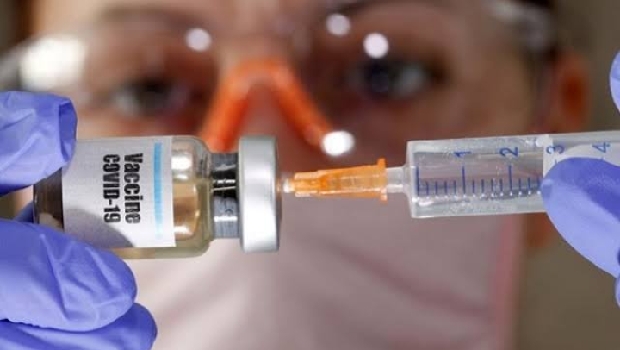
If everything goes as Russia’s expectation, it will be world’s first country to approve a coronavirus vaccine for widespread in the second week of August despite safety and efficacy concerns, according to a report. The adenoviral vector-based vaccine developed by Russian military and government researchers is currently in phase 2 trials.

According to a report from CNN, Russian officials are hoping to get approval for the COVID-19 vaccine developed by the Moscow-based Gamaleya Institute on Agust 10 or even before that. The officials told the outlet that the vaccine will be approved for public use with frontline healthcare workers receiving it first.

“It’s a Sputnik moment,” said Kirill Dmitriev, head of Russia’s sovereign wealth fund, which is financing Russian vaccine research, referring to the successful 1957 launch of the world’s first satellite by the Soviet Union, according to CNN.

“Americans were surprised when they heard Sputnik’s beeping. It’s the same with this vaccine. Russia will have got there first,” he was quoted as saying.

However, Russia is yet to release the scientific data on its coronavirus vaccine trials, hence, questions remain about the safety and efficacy of the vaccine, said the report. The vaccine is in the second phase of testing with developers planning to launch the phase 3 trials sometime after August 3.

Earlier, Interfax reported, citing Health Minister Mikhail Murashko, that the vaccine will be widely used in parallel with phase 3 trials. He said the country plans to vaccinate medics who are at high-risk for COVID-19 next month before clinical trials are completed.

Murashko added that individuals at higher risk of getting infected with the coronavirus such as older people or those with health conditions will also be prioritised for the vaccine, although he did not estimate or reveal when that would happen. The minister added 800 people will be recruited for the phase 3 trials.

Meanwhile, health officials were more cautious considering the fact that human testing of the vaccine is incomplete, and the state registration is expected to begin after August 3, reported The Moscow Times.

On Monday, Moderna and Pfizer announced the commencement of the final phase 3 trials of their candidate vaccines against the SARS-CoV-2 virus, which has so far claimed at least 654,477 lives and infected 16,514,500 people worldwide. 

Researchers will recruit up to 30,000 volunteers in separate trials both backed by the US government. India's first indigenous coronavirus vaccine, COVAXIN, is undergoing phase 1 human clinical trials across the country. More than 150 COVID-19 vaccines are being developed all over the world with at least six candidates already in late-stage clinical trials.

Comments

Add new comment

  • Coastaldigest.com reserves the right to delete or block any comments.
  • Coastaldigset.com is not responsible for its readers’ comments.
  • Comments that are abusive, incendiary or irrelevant are strictly prohibited.
  • Please use a genuine email ID and provide your name to avoid reject.
News Network
February 26,2020

Feb 26: Looking out over the world’s largest cricket stadium, the seats jammed with more than 100,000 people, India’s prime minister heaped praise on his American visitor.

“The leadership of President Trump has served humanity,” Prime Minister Narendra Modi said Monday, highlighting Trump’s fight against terrorism and calling his 36-hour visit to India a watershed in India-U.S. relations.

The crowds cheered. Trump beamed.

“The ties between India and the U.S. are no longer just any other partnership,” Modi said. “It is a far greater and closer relationship.”

India, it seems, loves Donald Trump. It seemed obvious from the thousands who turned out to wave as his motorcade snaked through the city of Ahmedabad, and from the tens of thousands who filled the city’s new stadium. It seemed obvious from the hug that Modi gave Trump after he descended from Air Force One, and from the hundreds of billboards proclaiming Trump’s visit.

But it’s not so simple.

Because while Trump is genuinely popular in India, his clamorous and carefully choreographed welcome was also about Asian geopolitics, China’s growing power and a masterful Indian politician who gave his American visitor exactly what he wanted.

Modi “is doing this not necessarily because he loves Trump,” said Tanvi Madan, the director of the India Project at the Brookings Institution in Washington, D.C. “It’s very much about Trump as the leader of the U.S. and recognizing what it is that Trump himself likes.”

Trump likes crowds — big crowds — and the foot soldiers of India’s political parties have long known how to corral enough people to make any politician look popular. In a city like Ahmedabad, the capital of Modi’s home state of Gujarat and the center of his power base, it wouldn’t take much effort to fill a cavernous sports stadium. It was more surprising that a handful of seats remained empty, and that some in the stands had left even before Trump had finished his speech.

For India, good relations with the U.S. are deeply important: They signal that India is a serious global player, an issue that has long been important to New Delhi, and help cement an alliance that both nations see as a counterweight to China’s rise.

“For both countries, their biggest rival is China,” said John Echeverri-Gent, a professor at the University of Virginia whose research often focuses on India. “China is rapidly expanding its presence in the Indian Ocean, which India has long considered its backyard and its exclusive realm for security concerns.”

“It’s very clearly a major concern for both India and the United States,” he said.

Trump isn’t the first U.S. president that Modi has courted. In 2015, then-President Barack Obama was the first American chief guest at India’s Republic Day parade, a powerful symbolic gesture. Obama also got a Modi hug, and the media in both countries were soon writing about the two leaders’ “bromance.”

Trump is popular in India, even if some of that is simply because he’s the U.S. president. A 2019 Pew Research Center poll showed that 56% of Indians had confidence in Trump’s abilities in world affairs, one of only a handful of countries where he has that level of approval. But Obama was also popular: Before he left office, he had 58% approval in world affairs among Indians.

The Pew poll also indicated that Trump’s support was higher among supporters of Modi’s Hindu nationalist party.

That’s not surprising. Both men have fired up their nationalist bases with anti-Muslim rhetoric and government policies, from Trump’s travel bans to Modi’s crackdown in Kashmir, India’s only Muslim-majority state.

And Trump’s Indian support is far from universal. Protests against his trip roiled cities from New Delhi to Hyderabad to the far northeastern city of Gauhati, although those demonstrations were mostly overshadowed by protests over a new Indian citizenship law that Modi backs.

Modi, who is widely popular in India, has faced weeks of protests over the law, which provides fast track naturalization for some foreign-born religious minorities — but not Muslims. While Trump talked about ties with India on Tuesday, Hindus and Muslims fought in violent clashes that left at least 10 people dead over two days.

In some ways, Modi and Trump are powerful echoes of each other.

They have overlapping political styles. Both are populists who see themselves as brash, rule-breaking outsiders who disdain their countries’ traditional elites. Both are seen by their critics as having authoritarian leanings. Both surround themselves with officials who rarely question their decisions.

But are they friends?

Trump says yes. “Really, we feel very strongly about each other,” he said at a New Delhi press briefing.

But many observers aren’t so sure.

“The question is how much of this is real chemistry, as opposed to what I’d call planned chemistry” orchestrated for diplomatic reasons, said Madan. “It’s so hard to know if you’re not in the room.”

Certainly, Modi understands America’s importance to India. While the two countries continue to bicker about trade issues, the prime minister organized a welcome that impressed even India’s news media, which have watched countless choreographed mass political rallies.

“There is no other country for whose leader India would hold such an event, and for which an Indian prime minister would lavish such rhetoric,” the Hindustan Times said in an editorial.

“The spectacle and the sound were worth a thousand agreements.”

Comments

Add new comment

  • Coastaldigest.com reserves the right to delete or block any comments.
  • Coastaldigset.com is not responsible for its readers’ comments.
  • Comments that are abusive, incendiary or irrelevant are strictly prohibited.
  • Please use a genuine email ID and provide your name to avoid reject.
News Network
May 6,2020

Singapore, May 6: Oil prices slipped back Wednesday after two days of gains, although Brent crude remained above $30 a barrel, as renewed US-China tensions offset optimism about the easing of coronavirus lockdowns.

Brent, the international benchmark, fell 1.1 per cent to $30.63 a barrel in early Asian trade. On Tuesday, the contract surged 14 per cent and rose above $30 for the first time since mid-April.

US marker West Texas Intermediate slipped 1.9 per cent and was changing hands for $24.13 a barrel.

Oil markets have been battered as the virus strangled demand due to business closures and travel restrictions, with US crude falling into negative territory last month for the first time.

They started rallying strongly this week as countries from Europe to Asia ease curbs and economies start shuddering back to life.

But gains were capped Wednesday as dealers follow a brewing US-China row after Donald Trump hit out at Beijing over its handling of the outbreak, saying it began in a Wuhan lab, but so far offering no evidence.

"Traders are incredibly cautious this morning, weighing all the possible China responses," said Stephen Innes, chief global market strategist at AxiCorp.

"And the one that would hurt the most would be for China to reduce imports of US oil."

This week's rally was in part driven by a deal agreed between top producers to reduce output by almost 10 million barrels a day, which came into effect on May 1.

There have also been signs that the massive oversupply in the market is starting to ease as demand slowly comes back.

Energy data provider Genscape said earlier this week that stockpiles at the main US oil depot in Cushing, Oklahoma had increased by only 1.8 million barrels last week following weeks of major rises.

Comments

Add new comment

  • Coastaldigest.com reserves the right to delete or block any comments.
  • Coastaldigset.com is not responsible for its readers’ comments.
  • Comments that are abusive, incendiary or irrelevant are strictly prohibited.
  • Please use a genuine email ID and provide your name to avoid reject.