



Rice Bucket Challenge: Water-starved South Asia fills buckets with rice, not ice

August 27, 2014

Kathmandu, Aug 27: Water-starved South Asian nations have devised their own answer to the Ice Bucket Challenge taking the social media world by storm, instead filling buckets with rice and other supplies for the needy.
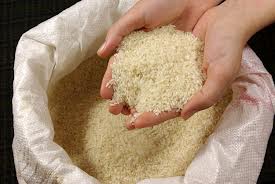
Rice Bucket ChallengeSince June, thousands of people worldwide have doused themselves with a bucket of icy water, then posted a video recording of the stunt online and challenged others to do the same or pledge a donation.

The "Ice Bucket Challenge" aims to raise awareness about ALS, a condition of the nervous system also known as Lou Gehrig's disease.

However, in Nepal, a #FillTheBucket challenge has been launched asking people to load up plastic buckets with food and medical supplies to help families displaced by deadly flooding and landslides this month in the Himalayan nation.

"We received about 25 buckets today and a local school is bringing 100 tomorrow," said Sunny Manandhar, whose Kathmandu clothing store Curves is serving as a collection centre.

At least 250 people have died and over 14,000 families have been displaced in Nepal after torrential monsoon rains triggered landslides and flooding, devastating entire villages and leaving thousands homeless.

Contributor Binayak Basnyat, 24, told AFP that although "the ALS challenge is viral worldwide...this makes more sense for Nepal".

The original social media campaign has attracted criticism in the region over water wastage.Sri Lankan politician Malsha Kumaratunga staged an ice bucket event to raise money for a local animal welfare trust but saw her donation declined.

"Wasting water like this in a tropical country is an insult to thousands who are suffering because of the drought," said former foreign minister and opposition spokesman Mangala Samaraweera, referring to the parched southern regions of the island nation.

Comments

Add new comment

  • Coastaldigest.com reserves the right to delete or block any comments.
  • Coastaldigset.com is not responsible for its readers’ comments.
  • Comments that are abusive, incendiary or irrelevant are strictly prohibited.
  • Please use a genuine email ID and provide your name to avoid reject.
News Network
January 24,2020

Davos, Jan 24: Pakistan Prime Minister Imran Khan claimed that he met with a “brick wall” when he approached Indian Prime Minister Narendra Modi with a peace proposal, soon after assuming office.

In an interview to Foreign Policy magazine on the sidelines of WEF 2020 here, Khan also said he told Modi that Pakistan will act firmly if it was given evidence of any involvement in the Pulwama terror attack, but India instead “bombed” Pakistan.

Tensions have escalated between the two countries, following India withdrawing the special status of Jammu and Kashmir in August 2019. Even since, Khan has been trying to seek global intervention to de-escalate the tensions between the two countries.

On Thursday, India's External Affairs Ministry spokesperson Raveesh Kumar categorically ruled out any third party role on the Kashmir issue, asserting that any issue between the two countries should be resolved bilaterally.

In the interview, Khan said that he is a firm believer that military means are not a solution to ending conflicts. “After assuming office, I immediately reached out to Prime Minister Modi. I was amazed by the reaction I got, which was quite weird.

The subcontinent hosts the greatest number of poor people in the world, and the best way to fight poverty is to have a trading relationship between the two countries rather than spending money on arms. This is what I said to the Indian Prime Minister. But I was met by brick wall,” Khan said.

Khan took charge as Prime Minister in August 2018. Referring to the suicide attack in Pulwama, Khan said he immediately told Modi ,“if you can give us any actionable intelligence (that Pakistanis were involved), we will act on it. But rather than do so, they bombed us.”

Noting that the both countries are not close to conflict right now, Khan said that it is important that the UN and the US act.

When asked about US President Donald Trump’s close relationship with Modi, Khan said the relationship is understandable because India is a huge market. “My concern is not about the US-India relationship. My concern is the direction in which India is going,” Khan said.

Khan also sought to compare the events in India to what happened in Nazi Germany.

“Between 1930 and 1934, Germany went from a liberal democracy to a fascist, totalitarian, racist state. If you look at what is happening in India under the BJP in the last five years, look where it's heading, you'll see the danger. And you're talking about a huge country of 1.3 billion people that is nuclear-armed,” he said.

Comments

Add new comment

  • Coastaldigest.com reserves the right to delete or block any comments.
  • Coastaldigset.com is not responsible for its readers’ comments.
  • Comments that are abusive, incendiary or irrelevant are strictly prohibited.
  • Please use a genuine email ID and provide your name to avoid reject.
News Network
July 3,2020

Jul 3: China under President Xi Jinping has stepped up its "aggressive" foreign policy toward India and "resisted" efforts to clarify the Line of Actual Control that prevented a lasting peace from being realised, according to a report released by a US Congress appointed commission.

The armies of India and China have been locked in a bitter standoff at multiple locations in eastern Ladakh for the last seven weeks, and the tension escalated after 20 Indian soldiers were killed in a violent clash in the Galwan Valley on June 15.

“Under General Secretary of the Chinese Communist Party (CCP) Xi Jinping, Beijing has stepped up its aggressive foreign policy toward New Delhi. Since 2013, China has engaged in five major altercations with India along the Line of Actual Control (LAC),” said a brief issued by US-China Economic and Security Review Commission.

"Beijing and New Delhi have signed a series of agreements and committed to confidence-building measures to stabilise their border, but China has resisted efforts to clarify the LAC, preventing a lasting peace from being realised,” said the report and was prepared at the request of the Commission to support its deliberations.

Authored by Will Green, a Policy Analyst on the Security and Foreign Affairs Team at the Commission, the report says that the Chinese government is particularly fearful of India’s growing relationship with the United States and its allies and partners.

“The latest border clash is part of a broader pattern in which Beijing seeks to warn New Delhi against aligning with Washington,” it said.

After Xi assumed power in 2012, there was a significant increase in clashes, despite the fact that he met Prime Minister Narendra Modi several times and Beijing and New Delhi have agreed to a series of confidence-building mechanisms designed to mitigate tensions.

Prior to 2013, the last major border clash was in 1987. The 1950s and 1960s were a particularly tense period, culminating in 1962 with a war that left thousands of soldiers dead on both sides, according to the records of China's People's Liberation Army, the report said.

“The 2020 skirmish is in line with Beijing’s increasingly assertive foreign policy. The clash came as Beijing was aggressively pressing its other expansive sovereignty claims in the Indo-Pacific region, such as over Taiwan and in the South and East China seas,” it said.

China is engaged in hotly contested territorial disputes in both the South China Sea and the East China Sea. Beijing has built up and militarised many of the islands and reefs it controls in the region. Both areas are stated to be rich in minerals, oil and other natural resources and are vital to global trade.

China claims almost all of the South China Sea. Vietnam, the Philippines, Malaysia, Brunei and Taiwan have counter claims over the area.

Several weeks before the clash in the Galwan Valley, Chinese Defence Minister Wei Fenghe called on Beijing to “use fighting to promote stability” as the country’s external security environment worsened, a potential indication of China’s intent to proactively initiate military tensions with its neighbours to project an image of strength, the report said.

Comments

Add new comment

  • Coastaldigest.com reserves the right to delete or block any comments.
  • Coastaldigset.com is not responsible for its readers’ comments.
  • Comments that are abusive, incendiary or irrelevant are strictly prohibited.
  • Please use a genuine email ID and provide your name to avoid reject.
News Network
April 26,2020

Seoul, Apr 26: A train presumed to belong to North Korean's Kim Jong-un has been spotted at a station in the state's eastern coastal town of Wonsan amid speculation about the leader's health, a US monitor said on Sunday, citing commercial satellite imagery on the region, Yonhap news agency reported.

According to 38 North-- a website devoted to analysis about North Korea, the imagery showed a train "probably belonging to Kim Jong Un parked at the Leadership Railway Station servicing his Wonsan compound since at least April 21."

"The approximately 250-metre long train, although partially covered by the station's roof, can be seen at a railway station reserved for use by the Kim family. It was not present on April 15 but was present on both April 21 and 23," it said.

"The train's presence does not prove the whereabouts of the North Korean leader or indicate anything about his health, but it does lend weight to reports that Kim is staying at an elite area on the country's eastern coast," it added.

The report came as rumours about his health have spread as Kim apparently skipped an important annual visit to the Kumsusan Palace of the Sun on the occasion of the April 15 birthday of late state founder and his grandfather, Kim Il-sung.

CNN intensified the speculation by reporting earlier last week that the United States is looking into intelligence that Kim is "in grave danger" after surgery.

Seoul officials have disputed recent media reports about Kim, saying there have been no unusual signs from the North. Some said that Kim is presumed to be staying in Wonsan for unspecified reasons.

Washington has also dismissed the reports, with US President Donald Trump calling such reports "incorrect" in a press briefing late last week.

On Saturday, other media reports stated that China has dispatched a team of medical doctors and officials to North Korea "to advise on" Kim, citing multiple unnamed people familiar with the situation.

North Korea's state media, however, has not made any mention of Kim's public activity for two weeks since he was last seen in April 11 presiding over a major party meeting, though it has reported on his handling of routine state affairs, such as sending diplomatic letters.
But not all speculation has proven to be false.

When he was absent from public for about a month in 2014, speculation arose about his health and a political crisis in the secretive state. He later reemerged with a cane and a limp reportedly after having a cyst removed from his ankle.

The 36-year-old leader is known to have various health problems apparently caused by obesity and heavy smoking. He took office as leader of the communist state after his father, Kim Jong-il, died of a heart attack in late 2011.

Comments

Add new comment

  • Coastaldigest.com reserves the right to delete or block any comments.
  • Coastaldigset.com is not responsible for its readers’ comments.
  • Comments that are abusive, incendiary or irrelevant are strictly prohibited.
  • Please use a genuine email ID and provide your name to avoid reject.