



Rice crops that can help farmers save money, cut pollution

July 30, 2016

Toronto, Jul 30: Researchers have identified "superstar" varieties of rice that can reduce fertiliser loss and cut down on environmental pollution.

The study looked at 19 varieties of rice to identify which ones were more efficient at using nitrogen.
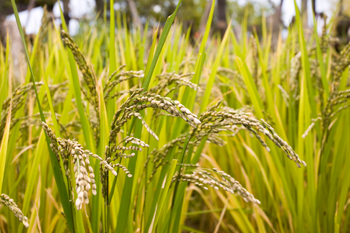
crops"We have this bucolic idea of agriculture - animals grazing or vast fields of majestic crops - but the global reality is it is one of the biggest drivers of environmental pollution and climate change," said Herbert Kronzucker from University of Toronto in Canada.

Nitrogen, when applied as fertiliser, is taken up inefficiently by most crops. In tropical rice fields, as much as 50 to 70 per cent can be lost, researchers said.

The problem is that nitrogen negatively impacts water quality by contaminating nearby watersheds or leaching into ground water. It is also a significant source of gases such as ammonia and nitrogen oxide, which are not only harmful to aquatic life but also a significant source of greenhouse gas emissions, they said.

While nitrogen is one of three main nutrients required for crops to grow, it also costs the most to produce, said Kronzucker.

"Anything we can do to reduce demand for nitrogen, both environmentally and for farmers in the developing world struggling to pay for it, is a significant contribution," he said.

The study for the first time identifies a novel class of chemicals produced and released by the roots of rice crops that directly influence the metabolism of soil microbes.

Researchers found that key microbial reactions that lead to an inefficiency in nitrogen capture can be significantly reduced in certain varieties of rice plants through the action of those specific chemicals released from root cells.

One of the main reasons crops waste so much fertiliser is that they were bred that way. In the past fertilisers were relatively inexpensive to produce because fossil fuels were abundant and cheap, researchers said.

As a result, plant geneticists bred crops that responded to high fertiliser use regardless of how efficient they were at using nitrogen, they said.

"These inefficiencies used to be of little interest, but now, with fluctuating fuel prices and growing concerns over climate change, it is a much bigger issue," said Kronzucker.

Researchers focused on rice varieties that met important criteria in the Philippines.They concentrated only on Japonica (the rice used in sushi) and Indica, the world's most popular rice type commonly grown in China, India and Southeast Asia.

The varieties also had to be currently grown by farmers, have a high yield potential, be disease and pest-resistant, grow to the right size and have strong enough roots to withstand monsoon-force winds.

"There is no reason a crop cannot result in less pollution while also saving farmers money; the two are not incompatible," said Kronzucker.

Comments

Add new comment

  • Coastaldigest.com reserves the right to delete or block any comments.
  • Coastaldigset.com is not responsible for its readers’ comments.
  • Comments that are abusive, incendiary or irrelevant are strictly prohibited.
  • Please use a genuine email ID and provide your name to avoid reject.
News Network
June 18,2020

Beijing, Jun 18:  Besides washing hands and wearing masks, it is also important to close the toilet lid before flushing to contain the spread of COVID-19, as per a new study.

According to a new study cited by The Washington Post, scientists who simulated toilet water and airflows, have found that flushing a toilet can generate a plume of virus-containing aerosol particles that is widespread and can linger in the air long enough to be inhaled by others. The novel coronavirus has been found in the faeces of COVID-19 patients, but it remains unknown whether such clouds could contain enough virus to infect a person.

"Flushing will lift the virus up from the toilet bowl," co-author Ji-Xiang Wang, who researches fluids at Yangzhou University in Yangzhou, China, said in an email. Wang stressed that bathroom users "need to close the lid first and then trigger the flushing process" and wash hands properly if the closure is not possible. As one flushes the toilet with the lids open, bits of faecal matter swish around so violently that they can be propelled into the air, become aerosolised and then settle on the surroundings.

Experts call it the "toilet plume".Age-old studies have been made to understand the potential for airborne transmission of infectious disease via sewage, and the toilet plume's role. Scientists who have seeded toilet bowls with bacteria and viruses have found contamination of seats, flush handles, bathroom floors and nearby surfaces. This is one reason we are told to wash our hands after visiting the toilet. Public bathrooms are well known to contribute to the spread of viruses that transmit via ingestion, such as the noroviruses that haunt cruise ships. However, their role in the transmission of respiratory viruses has not been established, said Charles P Gerba, a microbiologist at the University of Arizona."The risk is not zero, but how great a risk it is, we do not know. The big unknown is how much virus is infectious in the toilet when you flush it ... and how much virus does it take to cause an infection," said Gerba, who has studied the intersection of toilets and infectious disease for 45 years.

A study published in March in the journal Gastroenterology found significant amounts of coronavirus in the stool of patients and determined that viral RNA lasted in faeces even after the virus cleared from the patients` respiratory tracts. While another study in the journal Lancet found coronavirus in faeces up to a month after the illness had passed.

Scientists around the world are now studying sewage to track the spread of the virus. According to the researchers, the presence of the virus in excrement and the gastrointestinal tract raises the prospect of transmission via toilets, because many COVID-19 patients experience diarrhoea or vomiting.

A study of air samples in two hospitals in Wuhan, China found that although coronavirus aerosols in isolation wards and ventilated patient rooms were very low, "it was higher in the toilet areas used by the patients".The Centers for Disease Control and Prevention (CDC) says it remains "unclear whether the virus found in faeces may be capable of causing COVID-19," and "there has not been any confirmed report of the virus spreading from faeces to a person".For now, the CDC characterises the risk as low based on observations from previous outbreaks of other coronaviruses such as severe acute respiratory syndrome (SARS) and the Middle East respiratory syndrome (MERS). Wang decided to use computer models to simulate toilet plumes while isolating at home, as per Chinese government orders and thinking about how a fluids researcher "could contribute to the global fight against the virus".

Published in the journal Physics of Fluids, the study found that flushing of both single-inlet toilets, which push water into the bowl from one port, and annular-inlet toilets, which pour water into the bowl from the rim's surrounding edge with even greater energy, results in "massive upward transport of virus".

Particles can reach heights of more than three feet and float in the air for more than a minute, it found. The paper recommends not just lid-closing and hand-washing, it urges manufacturers to produce toilets that close and self-clean automatically. It also suggests that toilet-users should wipe down the seat. Gerba, however, said seats should not be a major concern.

Research has found that public and household toilet seats are typically the cleanest surfaces in restrooms, he said, probably because so many people already wipe them off before using them. Also, he said of SARS-CoV-2, the virus that causes COVID-19, "I don't think it's butt-borne, so I don`t think you have to worry."Gerba, who has been studying coronavirus transmission for two decades to investigate the role of a toilet flushing in a SARS outbreak stresses "flush and run" when using a public toilet without a lid. Gerba also said that people should wash hands well post-flushing and use hand sanitiser after leaving the restroom. "Choose well-ventilated bathrooms if possible and do not hang around the restroom in any case," added Gerba.

Comments

Add new comment

  • Coastaldigest.com reserves the right to delete or block any comments.
  • Coastaldigset.com is not responsible for its readers’ comments.
  • Comments that are abusive, incendiary or irrelevant are strictly prohibited.
  • Please use a genuine email ID and provide your name to avoid reject.
Agencies
January 22,2020

New Delhi, Jan 22: "Don't get into a trap. Your security is in your hands," the Border Security Force (BSF) has said issuing its social media rules for its officers and men. It has directed them not to use 42 mobile applications and show caution while using Facebook, Twitter and WhatsApp.

"Be cautious while using social media," said the BSF in a circular issued recently.

"Before using WhatsApp, Facebook, Twitter and other social media platforms, one needs to keep in mind that you are border guarding force and Central Civil Services (Conduct) Rules rule duly are applicable," it said.

It further pointed out that by commenting/writing about or forwarding unverified reports and rumours one violates laws of land.

"Several times unverified reports would be presented in way that they are absolutely true and start believing it. Seeing such post always use your commonsense and never get into the trap (sic.)," it state adding that the anti-national elements uses social media to propagate their agenda to cause unrest in India.

A picture clicked by Border Security Force personnel and posted on a social media platform remains there for always. Therefore, one should use officially approved pictures about any incident or untoward incidents related to Border Security Force, stated the circular. It pointed that unauthorised persons should not engage into taking pictures of the incidents.

It also highlighted how through social media, a few BSF personnel have fallen into trap of espionage racket carried out by enemy countries.

"Our security and respect is in our hands. Always think twice whether you are doing correct by accepting friendship requests from unknown persons, especially women and girls," it cautioned the troopers and officers.

It also highlighted that while going on leave and joining back the force, always follow the rules and regulations laid out for safety and security. "This is for your own safety," it stressed in the end.

The BSF has also issued a list of 42 mobile applications that needs to be completely avoided by serving BSF officers and jawans.

They are MI store, Weibo, Wechat, Shareit, Truecaller, UC News, UC Browser, Beautyplus, NewsDog, Viva Video - QU video Inc, Parallel Space, Apus Browser, Perfect Corp, Virus Cleaner - HI Security Lab, CM browser, MI Community, DU recorder, Vault Hide - No mobile Security, Youcam Makeup, Cachecleaner DU Apps Studio, DU battery saver, DU privacy, 360 security, DU Browser,Clean master - Cheeta Mobile, Baidu Translate, Wonder Camera - Bindu Inc, ES Ifle Explorer, Photo Wonder, QQ international , QQ music, QQ Mail, AA player, QQ News Feed, Wesync, QQ security Center, Selfie City, Mail Master, Mi Video Call -Xaomi and QQ launcher.

Comments

Add new comment

  • Coastaldigest.com reserves the right to delete or block any comments.
  • Coastaldigset.com is not responsible for its readers’ comments.
  • Comments that are abusive, incendiary or irrelevant are strictly prohibited.
  • Please use a genuine email ID and provide your name to avoid reject.
Agencies
July 4,2020

Twitter has joined efforts to do away with racially loaded terms such as master, slave and blacklist from its coding language in the wake of the death of African-American George Floyd and ensuing Black Lives Matter protests.

The project started even before the current movement for racial justice escalated following the death of 46-year-old George Floyd in police custody in May.

The use of terms such as "master" and "slave" in programming language originated decades ago. While "master" is used to refer to the primary version of a code, "slave" refers to the replicas. Similarly, the term "Blacklist" is used to refer to items which are meant to be automatically denied.

The efforts to change these terms in favour of more inclusive language at Twitter were initiated by Regynald Augustin and Kevin Oliver and the microblogging platform is now backing their efforts.

"Inclusive language plays a critical role in fostering an environment where everyone belongs. At Twitter, the language we have been using in our code does not reflect our values as a company or represent the people we serve. We want to change that. #WordsMatter," Twitter's engineering team said in a post on Thursday.

As per the recommendations from the team, the term "whitelist" could be replaced by "allowlist" and "blacklist" by "denylist".

Similarly, "master/slave" could be replaced by "leader/follower", "primary/replica" or "primary/standby".

Twitter, however, is not the first to start a project to bring inclusivity in programming language.

According to a report in CNET, the team behind the Drupal online publishing software started using "primary/replica" in place of "master/slave" as early as in 2014.

The use of the terms "master/slave" was also dropped by developers of the Python programming language in 2018.

Now similar efforts are underway at Microsoft's Github and LinkedIn divisions as well, said the report.

Comments

Add new comment

  • Coastaldigest.com reserves the right to delete or block any comments.
  • Coastaldigset.com is not responsible for its readers’ comments.
  • Comments that are abusive, incendiary or irrelevant are strictly prohibited.
  • Please use a genuine email ID and provide your name to avoid reject.