


Rio Olympics: Carnival After Hangover as 2016 Games Get Under Way

August 5, 2016

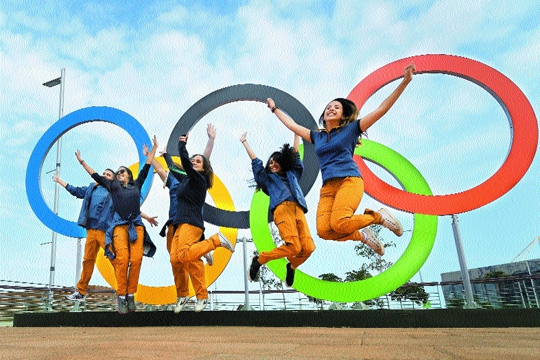
Rio de Janeiro, Aug 5: The most crisis-ridden Olympic Games in history opens on Friday with Rio organisers hoping to draw a line under a turbulent seven-year build-up to the greatest sporting show on Earth.
Rio

Football legend Pele is tipped to ignite the Olympic flame at Rio's iconic Maracana Stadium in Friday's opening ceremony, as the four-yearly celebration of sporting endeavour arrives in South America for the first time.

Olympic chiefs will hope the ceremony marks the start of a 17-day carnival of sport, a feast of drama framed by a Rio backdrop of breathtaking natural beauty.

Jamaican sprint king Usain Bolt will compete under the gaze of the Christ the Redeemer statue, sailors will duel in the shadow of Sugarloaf Mountain while the golden sands of Copacabana will host the spiritual homecoming of the beach volleyball tournament.

Yet the sporting spectacle comes after a frequently chaotic build-up which at times has threatened to leave the city nursing a nasty hangover before the party even starts.

When Rio successfully won the race for the Games in 2009, the 2016 Olympics looked set to be the crowning glory of a dynamic, newly-confident Brazil.

But a brutal recession, double-digit unemployment, fears about the mosquito-borne Zika virus, embarrassing infrastructure stumbles and a political crisis that led to the impeachment of President Dilma Rousseff have all but extinguished the euphoria that greeted the vote victory.

More than one million tickets, or 20 percent of the total, including for coveted events such as the men's 100-metres final, remained unsold as of Wednesday.

'The country is very sad'

"In a way the Olympics is good for Brazil to help us develop, but the country is very sad, full of violence and unemployment," Carlos Roberto, 56, a dockyard worker said.

"You go into a hospital and can't find a doctor or medicines."

"It will bring some happiness, yes it will," added pharmacist Edna Carla Assis, 31. "But nothing more."

Several ambitious plans to transform Rio have long since been abandoned, including a pledge to clean up the city's filthy Guanabara Bay.

That failure means athletes in Olympic sailing and windsurfing events will be forced to compete in a toxic soup of raw sewage from half of the city's population.

The Zika virus -- which can cause serious birth defects if pregnant mothers are infected -- has prompted all of the world's top four golfers to withdraw from the games.

Brazilian officials insist that the threat of infection is near zero in what is one of the coolest times of the year.

A vast security blanket of 85,000 military personnel and police -- twice the number on duty at the 2012 London Games -- will be draped over the city to ward off the threat of terror attacks.

Not even the beefed-up security, however, is likely to offer total protection against Rio's long-running problems with high crime.

Danish, Chinese and Australian delegations have already reported thefts from team members since arriving in Brazil, while in May members of Spain's sailing team were mugged at gunpoint.

While Rio has had its hands full scrambling to manage the grim litany of problems, the Olympic movement has been battling to cope with the Russian doping scandal.

A devastating report by a World Anti-Doping Agency (WADA) investigative panel issued last November detailed a state-supporting doping program that harked back to the worst steroid scandals of the Cold War-era.

The International Association of Athletics Federations (IAAF) subsequently banned Russian track and field athletes from all international competition for six months.

The IAAF later extended that suspension to cover the Olympics after ruling that Russia had not taken sufficient steps to overhaul its anti-doping regime.

More damning revelations erupted last month with the release of a WADA report by Canadian lawyer Richard McLaren which documented the full scale of Russian cheating, including an elaborate scheme to cover-up positive drug tests at the 2014 Winter Olympics and 2013 World Athletics Championships.

Bolt, Phelps return

The fallout from the drugs scandal should give way to several compelling sporting storylines once the action gets under way.

Once again, Jamaican superstar Bolt could electrify his sport when he attempts to defend his 100m, 200m and 4x100m relay crowns in the blue riband track and field event.

All eyes will turn to the Olympic swimming pool in the opening week when US star Michael Phelps returns for his swansong.

The most decorated Olympian in history -- 22 medals, 18 golds -- has returned from retirement for one last crack at glory at the age of 31.

Gymnastics meanwhile could see the coronation of a new darling with America's teenage star Simone Biles while football superstar Neymar bids to inspire Brazil to a first ever Olympic gold medal.

New sports making their debut in Rio will include seven-a-side rugby and golf.

As always, however, while millionaire globally renowned stars like Bolt, Phelps and Neymar chase gold, it is the lesser known athletes who will relish their moment in the spotlight.

The 10 athletes who comprise the first ever Olympic Refugee team are among the hundreds of inspiring human stories to be found in Rio.

They include Yusra Mardini, an 18-year-old from Syria who less than a year ago was forced to swim for her life during a perilous journey across the Mediterranean as she fled her war-torn homeland.

Another refugee athlete, judoka Yolande Mabika, said simply: "This is not just a struggle for sport -- it's a struggle for life."

Comments

Add new comment

  • Coastaldigest.com reserves the right to delete or block any comments.
  • Coastaldigset.com is not responsible for its readers’ comments.
  • Comments that are abusive, incendiary or irrelevant are strictly prohibited.
  • Please use a genuine email ID and provide your name to avoid reject.
Agencies
January 14,2020

Comments

Add new comment

  • Coastaldigest.com reserves the right to delete or block any comments.
  • Coastaldigset.com is not responsible for its readers’ comments.
  • Comments that are abusive, incendiary or irrelevant are strictly prohibited.
  • Please use a genuine email ID and provide your name to avoid reject.
News Network
July 21,2020

Jul 21: The tickets sold for the now-postponed ICC T20 World Cup will remain valid if Australia hosts the edition in 2021 instead of India.

In case the event is shifted to 2022, all ticket-holders will be entitled to a full refund, the ICC stated on its website on Monday night after postponing the mega-event this year due to the Covid-19 pandemic.

The tournament was to be held in October-November but will now be conducted later because of the pandemic.

The ICC has not yet announced which country will host which edition as there are operational issues that both the Indian and Australian cricket Boards need to sort out.

The world body had opened ticket booking through its ticketing partners and a significant number was already sold.

"Ticket holders are welcome to retain their tickets, noting, if Australia hosts in 2021, tickets will remain valid for fans who have already bought and will be automatically updated to reflect the new dates.

"If Australia hosts in 2022, for tickets already bought a full refund will be processed automatically," ICC stated in a series of FAQs.

Fans can retain their tickets until a date is confirmed for the event.

Refund requests can be made until December 15 and they will be processed within 30 days after an online submission.

The hospitality package will also remain valid for the 2021 fixtures.

Comments

Add new comment

  • Coastaldigest.com reserves the right to delete or block any comments.
  • Coastaldigset.com is not responsible for its readers’ comments.
  • Comments that are abusive, incendiary or irrelevant are strictly prohibited.
  • Please use a genuine email ID and provide your name to avoid reject.
News Network
May 30,2020

St John's, May 30: The Cricket West Indies (CWI) on Saturday announced a temporary 50 per cent reduction in salaries and cricket funding across the entire regional cricket system, effective from the start of July due to the ongoing coronavirus pandemic which resulted in the suspension of all the cricketing activities across the globe since March.

"This decision has been necessary in the face of debilitating economic challenges which have resulted from the impact of the COVID-19 pandemic. With no international cricket currently being played anywhere in the world, and with great uncertainty of when regular cricket activity will resume, CWI - like many other international sporting organisations worldwide - is facing a significant loss of income, whilst also being uncertain of the long-term impact of the crisis on our operations," the CWI said in a statement.

During Thursday's teleconference, CWI's Board of Directors received recommendations from the Financial Strategy Advisory Committee (FSAC). The FSAC was formed in April by CWI president Ricky Skerritt, to make recommendations on how CWI could best manage its resources in order to continue its core business over the next few months in view of the changing and uncertain economic environment created by the global pandemic COVID-19. These recommended measures followed close consultation with all stakeholders.

"Cricket is the beating heart of our region for many individuals, communities, and economies. This pandemic is hurting every West Indian and this decision to cut staff and player incomes has been a very difficult one to make; one that will impact so many members of the cricketing family around the Caribbean," Skerritt said.

"This business continuity plan, unfortunately, requires all stakeholders to make a huge sacrifice, but I am confident that it won't be long before CWI will be in a position to ensure that the sport we love can restart and be enjoyed once again by the thousands of cricket fans across the region and diaspora," he added.

CWI has kept staff, players, umpires and coaches on full-pay since the outbreak of COVID-19 and have tried our best to avoid any cuts for as long as possible. CWI hopes that these temporary measures will only be in place for not more than three to six months. These measures will also include a 50 per cent reduction in funding for Territorial Boards, Territorial Board Franchises and WIPA, as well as a 50 per cent cut in all retainers and allowances for Directors and Executive management.

Earlier in the day, CWI gave its approval for a 'bio-secure' Test tour to England.

West Indies were first slated to play three Tests against England in June, but the original starting date of the series was pushed due to the coronavirus pandemic. The England and Wales Cricket Board (ECB) is looking to go ahead with the series against West Indies in July and then the Three Lions will play three Tests against Pakistan.

Comments

Add new comment

  • Coastaldigest.com reserves the right to delete or block any comments.
  • Coastaldigset.com is not responsible for its readers’ comments.
  • Comments that are abusive, incendiary or irrelevant are strictly prohibited.
  • Please use a genuine email ID and provide your name to avoid reject.