


Rio Olympics: Carnival After Hangover as 2016 Games Get Under Way

August 5, 2016

Rio de Janeiro, Aug 5: The most crisis-ridden Olympic Games in history opens on Friday with Rio organisers hoping to draw a line under a turbulent seven-year build-up to the greatest sporting show on Earth.
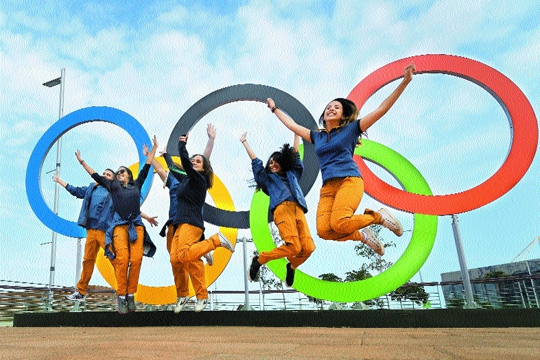
Rio

Football legend Pele is tipped to ignite the Olympic flame at Rio's iconic Maracana Stadium in Friday's opening ceremony, as the four-yearly celebration of sporting endeavour arrives in South America for the first time.

Olympic chiefs will hope the ceremony marks the start of a 17-day carnival of sport, a feast of drama framed by a Rio backdrop of breathtaking natural beauty.

Jamaican sprint king Usain Bolt will compete under the gaze of the Christ the Redeemer statue, sailors will duel in the shadow of Sugarloaf Mountain while the golden sands of Copacabana will host the spiritual homecoming of the beach volleyball tournament.

Yet the sporting spectacle comes after a frequently chaotic build-up which at times has threatened to leave the city nursing a nasty hangover before the party even starts.

When Rio successfully won the race for the Games in 2009, the 2016 Olympics looked set to be the crowning glory of a dynamic, newly-confident Brazil.

But a brutal recession, double-digit unemployment, fears about the mosquito-borne Zika virus, embarrassing infrastructure stumbles and a political crisis that led to the impeachment of President Dilma Rousseff have all but extinguished the euphoria that greeted the vote victory.

More than one million tickets, or 20 percent of the total, including for coveted events such as the men's 100-metres final, remained unsold as of Wednesday.

'The country is very sad'

"In a way the Olympics is good for Brazil to help us develop, but the country is very sad, full of violence and unemployment," Carlos Roberto, 56, a dockyard worker said.

"You go into a hospital and can't find a doctor or medicines."

"It will bring some happiness, yes it will," added pharmacist Edna Carla Assis, 31. "But nothing more."

Several ambitious plans to transform Rio have long since been abandoned, including a pledge to clean up the city's filthy Guanabara Bay.

That failure means athletes in Olympic sailing and windsurfing events will be forced to compete in a toxic soup of raw sewage from half of the city's population.

The Zika virus -- which can cause serious birth defects if pregnant mothers are infected -- has prompted all of the world's top four golfers to withdraw from the games.

Brazilian officials insist that the threat of infection is near zero in what is one of the coolest times of the year.

A vast security blanket of 85,000 military personnel and police -- twice the number on duty at the 2012 London Games -- will be draped over the city to ward off the threat of terror attacks.

Not even the beefed-up security, however, is likely to offer total protection against Rio's long-running problems with high crime.

Danish, Chinese and Australian delegations have already reported thefts from team members since arriving in Brazil, while in May members of Spain's sailing team were mugged at gunpoint.

While Rio has had its hands full scrambling to manage the grim litany of problems, the Olympic movement has been battling to cope with the Russian doping scandal.

A devastating report by a World Anti-Doping Agency (WADA) investigative panel issued last November detailed a state-supporting doping program that harked back to the worst steroid scandals of the Cold War-era.

The International Association of Athletics Federations (IAAF) subsequently banned Russian track and field athletes from all international competition for six months.

The IAAF later extended that suspension to cover the Olympics after ruling that Russia had not taken sufficient steps to overhaul its anti-doping regime.

More damning revelations erupted last month with the release of a WADA report by Canadian lawyer Richard McLaren which documented the full scale of Russian cheating, including an elaborate scheme to cover-up positive drug tests at the 2014 Winter Olympics and 2013 World Athletics Championships.

Bolt, Phelps return

The fallout from the drugs scandal should give way to several compelling sporting storylines once the action gets under way.

Once again, Jamaican superstar Bolt could electrify his sport when he attempts to defend his 100m, 200m and 4x100m relay crowns in the blue riband track and field event.

All eyes will turn to the Olympic swimming pool in the opening week when US star Michael Phelps returns for his swansong.

The most decorated Olympian in history -- 22 medals, 18 golds -- has returned from retirement for one last crack at glory at the age of 31.

Gymnastics meanwhile could see the coronation of a new darling with America's teenage star Simone Biles while football superstar Neymar bids to inspire Brazil to a first ever Olympic gold medal.

New sports making their debut in Rio will include seven-a-side rugby and golf.

As always, however, while millionaire globally renowned stars like Bolt, Phelps and Neymar chase gold, it is the lesser known athletes who will relish their moment in the spotlight.

The 10 athletes who comprise the first ever Olympic Refugee team are among the hundreds of inspiring human stories to be found in Rio.

They include Yusra Mardini, an 18-year-old from Syria who less than a year ago was forced to swim for her life during a perilous journey across the Mediterranean as she fled her war-torn homeland.

Another refugee athlete, judoka Yolande Mabika, said simply: "This is not just a struggle for sport -- it's a struggle for life."

Comments

Add new comment

  • Coastaldigest.com reserves the right to delete or block any comments.
  • Coastaldigset.com is not responsible for its readers’ comments.
  • Comments that are abusive, incendiary or irrelevant are strictly prohibited.
  • Please use a genuine email ID and provide your name to avoid reject.
News Network
July 20,2020

The International Cricket Council (ICC) today confirmed the ICC Men’s T20 World Cup in Australia 2020 has been postponed due to the ongoing COVID-19 pandemic

At today’s meeting of the IBC Board (the commercial subsidiary of the ICC), windows for the next three ICC men’s events were also agreed to bring clarity to the calendar and give the sport the best possible opportunity over the next three years to recover from the disruption caused by COVID-19.

The windows for the Men’s events are:

1. ICC Men’s T20 World Cup 2021 will be held October – November 2021 with the final on 14 November 2021

2. ICC Men’s T20 World Cup 2022 will be held October – November 2022 with the final on 13 November 2022

3. ICC Men’s Cricket World Cup 2023 will be held in India October – November 2023 with the final on 26 November 2023

The IBC Board agreed to continue to monitor the rapidly changing situation and assess all the information available in order to make a considered decision on future hosts to ensure the sport is able to stage safe and successful global events in 2021 and 2022.

The IBC Board will also continue to evaluate the situation in relation to being able to stage the ICC Women’s Cricket World Cup 2021 in New Zealand in February next year. In the meantime, planning for this event continues as scheduled.

The Board will also continue to evaluate the situation in relation to being able to stage the ICC Women’s Cricket World Cup 2021.

ICC Chief Executive Manu Sawhney said: “We have undertaken a comprehensive and complex contingency planning exercise and through this process, our number one priority has been to protect the health and safety of everyone involved in the sport.

“The decision to postpone the ICC Men’s T20 World Cup was taken after careful consideration of all of the options available to us and gives us the best possible opportunity of delivering two safe and successful T20 World Cups for fans around the world.

“Our Members now have the clarity they need around event windows to enable them to reschedule lost bilateral and domestic cricket. Moving the Men’s Cricket World Cup to a later window is a critical element of this and gives us a better chance of maintaining the integrity of the qualification process. This additional time will be used to reschedule games that might be lost because of the pandemic ensuring qualification can be decided on the field of play.

“Throughout this process we have worked closely with our key stakeholders including governments, Members, broadcasters, partners and medical experts to enable us to reach a collective decision for the good of the game and our fans. I would like to thank everyone involved for their commitment to a safe return to cricket.”

Comments

Add new comment

  • Coastaldigest.com reserves the right to delete or block any comments.
  • Coastaldigset.com is not responsible for its readers’ comments.
  • Comments that are abusive, incendiary or irrelevant are strictly prohibited.
  • Please use a genuine email ID and provide your name to avoid reject.
Agencies
February 13,2020

New Delhi, Feb 13: Sanjiv Chawla, a key accused in the match-fixing scandal involving former South African cricket team captain Hansie Cronje in 2000, was extradited from the UK on Thursday, Delhi Police said.

The 50-year-old British national, accompanied by a crime branch team from London, reached IGI Airport this morning, a senior officer said.

He is likely to be taken to the crime branch office for questioning, he added.

Comments

Add new comment

  • Coastaldigest.com reserves the right to delete or block any comments.
  • Coastaldigset.com is not responsible for its readers’ comments.
  • Comments that are abusive, incendiary or irrelevant are strictly prohibited.
  • Please use a genuine email ID and provide your name to avoid reject.
News Network
April 12,2020

New Delhi, Apr 12: As devotees across the world celebrate Easter today, former Sri Lanka skipper and current Marylebone Cricket Club (MCC) president Kumar Sangakkara on Sunday condoled the demise of people who lost their lives during last year's Easter Sunday bombings in Sri Lanka and said someone must seek answers to the questions which still remain unresolved.

"A year on we all share the pain of the families grieving lives lost, we stand with you and for you. We remember. So many questions still unanswered, but answer them someone must," Sangakkara tweeted.

On April 21, 2019, multiple blasts ripped through Sri Lanka when the Christian community was celebrating Easter Sunday.
The explosions rattled churches and high-end hotels across the country, killing 258 people and injuring over 500.

A local terror group called National Thowheeth Jama'ath had claimed responsibility for the devastating attacks.

The island nation was put under a state of emergency for a period of four months from April to August.

The Sri Lankan police had then said that 293 suspects were arrested in connection with the Easter Sunday bombings in the island country in April.

This year, most of the devotees would be offering the prayers from their homes as mass gatherings have been suspended in most countries due to the ongoing coronavirus pandemic.

Easter marks the resurrection of Jesus Christ following his crucifixion on Good Friday. It also marks the culmination of Lent, a 40-day period of fasting and penance.

Comments

Add new comment

  • Coastaldigest.com reserves the right to delete or block any comments.
  • Coastaldigset.com is not responsible for its readers’ comments.
  • Comments that are abusive, incendiary or irrelevant are strictly prohibited.
  • Please use a genuine email ID and provide your name to avoid reject.