


Romania overtakes India as UK's biggest migrant population

December 1, 2016

London, Dec 1: Immigration into the UK from within the European Union (EU) has officially overtaken the rest of the world, with Romania replacing India at the top of the table in official figures released today.londonersstreet
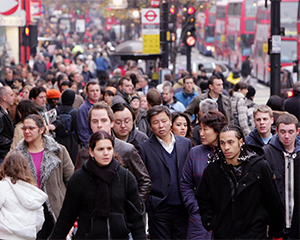
Romanians accounted for 10 per cent of all immigration in 2015 with 54,000 people coming to live in Britain – more than any other nationality, according to the Office of National Statistics (ONS).

China contributed 44,000 immigrants, followed by Poland with 38,000 tally, and India was third with 36,000.

"Immigration levels are now among the highest estimates recorded – the inflow of EU citizens is also at historically high levels and similar to the inflow of non-EU citizens," said Nicola White, ONS head of international migration statistics.

"These long-term immigration figures run up to the end of June, so it is too early to say what effect, if any, the EU referendum has had on long-term international migration," she said.

Immigration was one of the key issues that is believed to have swung the vote in favour of an exit from the EU in the June 23rd referendum.

Annual net migration to Britain in the 12 months to June 2016, or before the Brexit referendum, continued at a record level of 335,000.

This remains far from the UK government's target to reduce net migration levels to the "tens of thousands".

However, Downing Street insisted Prime Minister Theresa May remains committed to that target.

"She remains absolutely committed to bringing net immigration down to sustainable levels, which means tens of thousands, but we have made clear it will take time," a spokesperson said.

UK Immigration Minister Robert Goodwill hinted at further tightening of immigration measures for non-EU nationals, which will include India, as their hands remain tied on internal European migration until the EU's freedom of movement rules can be addressed once official Brexit negotiations kick off.

"We continue to reform non-EU immigration routes to ensure we attract the best and brightest, who benefit and contribute to this country. But there is more to do as we build an immigration system that delivers the control we need," Goodwill said.

This year's migration was largely fuelled by the highest- ever influx of EU nationals in the 12 months before June's referendum.

Europeans came to Britain for work, from countries like Austria, Belgium, Denmark, Finland, France, Germany, Greece, Italy, Luxembourg, Netherlands, Portugal, the Republic of Ireland, Spain and Sweden.

The overall 650,000 level of immigration for the year until June 2016 was made up of 284,000 EU citizens coming to live and work in Britain, 289,000 coming from outside Europe and 77,000 Britons returning to live in the UK.

Comments

Add new comment

  • Coastaldigest.com reserves the right to delete or block any comments.
  • Coastaldigset.com is not responsible for its readers’ comments.
  • Comments that are abusive, incendiary or irrelevant are strictly prohibited.
  • Please use a genuine email ID and provide your name to avoid reject.
News Network
April 12,2020

Washington, Apr 12: The US has overtaken Italy as the country with the highest number of deaths due to COVID-19 pandemic with the fatalities crossing 20,000, according to Johns Hopkins University data, as the novel coronavirus continues to wreak havoc across the globe.

The deadly coronavirus, that originated in China in December last year, has so far killed more than one lakh people across the globe. The United States on Saturday became the country with the highest number of deaths at 20,597, surpassing Italy's 19,468 fatalities.

More than 5.3 lakh Americans have tested positive for coronavirus, which is about the same for the next four countries put together: Spain (163,027), Italy (152,271), Germany (125,452) and France (93,790). In terms of fatalities, the US and Italy are followed by Spain (16,606), France (13832) and United Kingdom (9,875), the varsity data showed.

New York City, the financial capital of the world, has emerged as the epicenter of coronavirus in the world. A city of 8.3 million, which is one of the most densely populated cities in the US, by Saturday night had as many as 8,627 deaths and more than 180,000 people had tested positive for COVID-19.

President Donald Trump has declared a national emergency and all the 50 States have been notified with major disaster declaration. More than 95 per cent of the country's 330 million population are under stay-at-home order. Trump has deployed more than 50,000 personnel from the armed forces in fight against COVID-19.

After an initial two-week social mitigation measures, that includes social distancing, the measures have been extended till April 30. Initially, members of the White House Task Force on Coronavirus had projected between one and two lakhs deaths. Now, they have dropped the projection to 60,000 deaths, mainly due to the successful implementation of these measures.

"The people of our country have gone through a lot. But we did it the right way. And we look like we'll be coming in on the very, very low side, really below the lowest, the lowest side of the curve of death," Trump told Fox News on Saturday night.

Trump asserted that situation was improving in places like New York, where there is a drop in new patients. Responding to a question, he said he wanted the country to open up as soon as possible.

However, he has not taken a decision so far, even as some media reports said that he the President was looking for early May.

"I think it's going to be the toughest decision that I've ever made. I really, hopefully that I ever will have to make. But it's certainly the toughest decision that I've ever made. I hope that I'm going to make the right decision," Trump said, adding that he will be making a decision reasonably soon.

"We're setting up a council now of some of the most distinguished leaders in virtually every field including politics and business and medical. We'll be making that decision fairly soon," Trump said.

Meanwhile, The New York Times reported that its investigations have revealed that the president was warned about a potential pandemic but that internal divisions, lack of planning and his faith in his own instincts led to a halting response.

According to The Washington Post, coronavirus is killing about one in 10 hospitalised middle-aged patients and four in 10 older than 85 in the United States. It is particularly lethal to men even when taking into account common chronic diseases that exacerbate risk.

Globally, the novel coronavirus has killed 108,862 people and infected over 1.7 million people globally. The US has the highest number of infections at 529,887, according to Johns Hopkins University data.

Comments

Add new comment

  • Coastaldigest.com reserves the right to delete or block any comments.
  • Coastaldigset.com is not responsible for its readers’ comments.
  • Comments that are abusive, incendiary or irrelevant are strictly prohibited.
  • Please use a genuine email ID and provide your name to avoid reject.
News Network
May 30,2020

May 30: Warning of the tightrope walk ahead as governments battle the coronavirus crisis, Nobel laureate Peter Charles Doherty has expressed concern about densely populated countries such as India relaxing lockdown norms while also describing a complete shutdown as “an economic and social impossibility”.

The Australian immunologist, who cautioned that the number of COVID-19 cases will rise in the coming days, said the earliest time frame for an effective vaccine “going into large numbers of people” is nine to 12 months.

"If all goes well with testing, we could know if some of the candidate vaccines are both safe and effective as early as September/October. Then, rolling a vaccine out will depend on the type of product and how quickly it can be made, put in vials and so forth," Doherty told PTI in an email interview from Melbourne.

The novel coronavirus, he added, does not change fast like influenza and, from what is known so far, “the same vaccine should work everywhere”.

Doherty, who is with the Department of Microbiology and Immunology at the Doherty Institute, University of Melbourne, won the Nobel Prize for Medicine in 1996 for his discovery of how the body’s immune system distinguishes virus-infected cells from normal ones.

Discussing the lockdown, he said, "If it was purely a matter of hard science, everywhere should stay locked down. But that’s pretty much an economic and social impossibility.”

The expectation, he said, is the numbers will rise and limiting spread will depend on people acting responsibly and the capacity for rapid response and extensive contact testing.

“And in a densely populated country like India I think that it will be very difficult," the scientist said.

Several countries, including India, began relaxing lockdown norms in mid-May despite the WHO’s warning about a second wave. India’s lockdown began on March 25 and has since been extended. The fourth phase ends on Sunday.

Asked whether there are any alternatives to a lockdown, the 79-year-old said, "There is no other option other than closing borders. South Korea, for example, conducted massive, intensive testing and contact tracing in a wealthy country with a very disciplined population. Otherwise, not till we have effective vaccines."

He added that he personally doesn’t see the point of closing borders for people coming in if there’s already a high incidence of disease in the community, “unless it’s to avoid the need to care for them and use scarce hospital beds".

According to Doherty, the coronavirus "is a new virus which has come straight out of nature".

“It (the virus) has moved so rapidly across the world because of people travelling on international planes as well as tourist ships," he added.

The immunologist also warned against the use of hydroxychloroquine to treat COVID-19, and said current and planned trials of the anti-malaria drug should be stopped.

“My understanding is that the use of the drug in severe disease is definitely contra-indicated, but it’s not yet clear whether, if taken under medical supervision, it could have some useful effect if taken early on, or as a preventive. Those trials just haven’t been done properly," Doherty noted.

The Indian Council of Medical Research (ICMR) has backed the use of hydroxychloroquine as a preventive against COVID-19 even after the WHO suspended clinical trials of the drug citing safety concerns.

Asked whether plasma therapy can be an effective treatment for COVID-19, Doherty said, "We lack good properly controlled trials but, especially if the plasma has been tested for antibody levels and there’s evidence of good activity, it could be helpful. If I had the disease and was offered plasma therapy I would certainly accept, but I would not take hydroxychloroquine."

Doherty is also very optimistic about herd immunity developing against the SARS-CoV-2 infection.

"We think that (herd immunity) will cut in and have an obvious effect when, say, 60 per cent of people have been infected. Best hope is to boost herd immunity with a vaccine," he stated.

Herd immunity is a form of indirect protection from infectious disease that occurs when a large percentage of a population has become immune to an infection, whether through vaccination or previous infections.

The number of COVID-19 cases have crossed 5.9 million and the fatalities 3,65,000, according to the Johns Hopkins University on Saturday. 

In India, the death toll has risen to 4,971 and the number of cases to 1,73,763, according to the Union Health Ministry on Saturday.

Several states, including Bihar, Uttar Pradesh, Madhya Pradesh, Jharkhand and Chhattisgarh, have reported a rise in number since lockdown norms were relaxed in early May and migrant workers reached home.

In Uttar Pradesh, for instance, the number of infections rose from around 3,000 on May 4 to 6,532 on May 26. Similarly, Bihar’s numbers increased from around 500 to over 2,700 in the period.

Comments

Add new comment

  • Coastaldigest.com reserves the right to delete or block any comments.
  • Coastaldigset.com is not responsible for its readers’ comments.
  • Comments that are abusive, incendiary or irrelevant are strictly prohibited.
  • Please use a genuine email ID and provide your name to avoid reject.
Agencies
March 1,2020

Washington, Mar 1: The US Federal Communications Commission (FCC) has proposed a fine of over $200 million for all major US mobile carriers for selling the location data of customers to some agencies.

The Federal Communications Commission today proposed fines against the nation's four largest wireless carriers for apparently selling access to their customers' location information without taking reasonable measures to protect against unauthorised access to that information. As a result, T-Mobile faces a proposed fine of more than $91 million, AT&T faces a proposed fine of more than $57 million, Verizon faces a proposed fine of more than $48 million, and Sprint faces a proposed fine of more than $12 million, the FCC said in a statement on Friday.

The Enforcement Bureau of FCC opened this investigation after reports surfaced that a Missouri Sheriff, Cory Hutcheson, used a "location-finding service" operated by Securus, a provider of communications services to correctional facilities, to access the location information of the wireless carriers' customers without their consent between 2014 and 2017.

"American consumers take their wireless phones with them wherever they go. And information about a wireless customer's location is highly personal and sensitive. The FCC has long had clear rules on the books requiring all phone companies to protect their customers' personal information. And since 2007, these companies have been on notice that they must take reasonable precautions to safeguard this data and that the FCC will take strong enforcement action if they don't. Today, we do just that," said FCC Chairman Ajit Pai.

"This FCC will not tolerate phone companies putting Americans' privacy at risk."

The FCC also admonished these carriers for apparently disclosing their customers' location information, without their authorisation, to a third party

The four major US carriers mentioned sold access to their customers' location information to "aggregators," who then resold access to such information to third-party location-based service providers (like Securus).

Although their exact practices varied, each carrier relied heavily on contract-based assurances that the location-based services providers (acting on the carriers' behalf) would obtain consent from the wireless carrier's customer before accessing that customer's location information.

Comments

Add new comment

  • Coastaldigest.com reserves the right to delete or block any comments.
  • Coastaldigset.com is not responsible for its readers’ comments.
  • Comments that are abusive, incendiary or irrelevant are strictly prohibited.
  • Please use a genuine email ID and provide your name to avoid reject.