



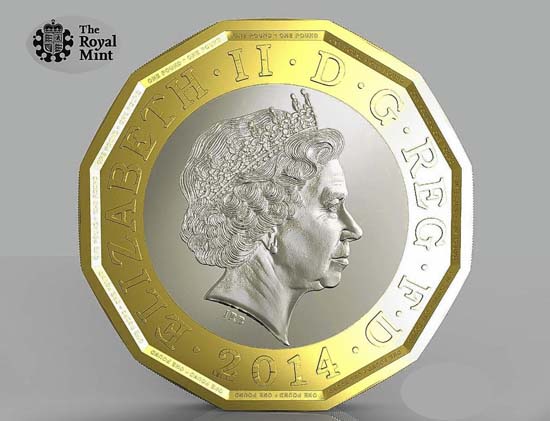
Royal Mint to cast coins from bullion from India

April 7, 2014

Britain_Royal_mintLondon, Apr 7: Britain's Royal Mint has started minting coins from Indian bullion cargo recovered from a British ship more than 70 years after it was sunk by a German U-boat.

The British ship with a cargo of 2,800 bars of silver bullion was on its way to London from Kolkata in 1941 when the ship, SS Gairsoppa, was torpedoed by a German submarine off the Irish coast.

The ship spent 70 years lost beneath the waves before being found in 2011, about 460km off the Irish coast, at a depth of three miles, half a mile deeper than the Titanic.

The deepest rescue operation in maritime history was carried out by a US company and the silver bullion was recovered from the seabed.

A portion of it was passed to the Royal Mint which began striking the coins on Friday, edged with the name SS Gairsoppa.

According to a recent report in The Telegraph, Shane Bissett, the Royal Mint's director of bullion and commemorative coin, said: "This incredible story marks yet another exciting moment in the Royal Mint's fascinating 1,000-year history.

"The traditional Britannia coin design, Philip Nathan's elegant portrayal of a windswept Britannia looking out to sea, is the perfect image for the coins struck from SS Gairsoppa's long-lost cargo.

"We are so pleased to be able to bring these coins to the market at long last, albeit more than 70 years later than expected."

According to the report, in December 1940 the Royal Mint was running dangerously low in stocks of silver due to the onset of war and called in emergency supplies from India.

The SS Gairsoppa sailed from Calcutta carrying the silver under the protection of a naval convoy.

But after battling a heavy storm it began running short of coal off the coast of Southern Ireland and was forced to break free and head for the safety of Galway Harbour.

The slow merchant ship was spotted by a German U-boat patrolling the British waters and was torpedoed at 12.08am on February 17, 1941. It sank within 20 minutes.

Three lifeboats were launched but only Second Officer Richard Ayres made it to land and survived to tell the tale.

His lifeboat started with 31 men but after spending 13 deadly days he was the only sailor to make it to dry land alive.

He was awarded an MBE in recognition of his heroic efforts to keep fellow survivors alive, as well as a War Medal for bravery at sea, and amazingly returned to sea nine months later.

Comments

Add new comment

  • Coastaldigest.com reserves the right to delete or block any comments.
  • Coastaldigset.com is not responsible for its readers’ comments.
  • Comments that are abusive, incendiary or irrelevant are strictly prohibited.
  • Please use a genuine email ID and provide your name to avoid reject.
News Network
February 21,2020

London, Feb 21: Scientists have discovered a new species of land snail, and have named it Craspedotropis Greta Thunberg in honour of the Swedish activist Greta Thunberg for her efforts to raise awareness about climate change.

According to the study, published in the Biodiversity Data Journal, the newly discovered species belongs to the so-called caenogastropods -- a group of land snails known to be sensitive to drought, temperature extremes, and forest degradation.

The scientists, including evolutionary ecologist Menno Schilthuizen from Naturalis Biodiversity Center in the Netherlands, said the snails were found very close to the research field station at Kuala Belalong Field Studies Centre in Brunei.

They added that the snails were discovered at the foot of a steep hill-slope, next to a river bank, foraging at night on the green leaves of understorey plants.

The effort aided by amateur scientist J.P. Lim, who found the first individual of the snail said, "Naming this snail after Greta Thunberg is our way of acknowledging that her generation will be responsible for fixing problems that they did not create."

"And it's a promise that people from all generations will join her to help," Lim said.

The researchers said they approached Thunberg who said that she would be "delighted" to have this species named after her.

The study work including, fieldwork, morphological study, and classification of identified specimen was carried out in a field centre with basic equipment and no internet access, the scientists said.

According to the study, the work was done by untrained ‘citizen scientists’ guided by experts, on a 10-day taxon expedition.

"While we are aware that this way of working has its limitations in terms of the quality of the output (for example, we were unable to perform dissections or to do extensive literature searches), the benefits include rapid species discovery and on-site processing of materials," the researchers wrote in the study.

Comments

Add new comment

  • Coastaldigest.com reserves the right to delete or block any comments.
  • Coastaldigset.com is not responsible for its readers’ comments.
  • Comments that are abusive, incendiary or irrelevant are strictly prohibited.
  • Please use a genuine email ID and provide your name to avoid reject.
Agencies
May 31,2020

Cape Canaveral, May 31: SpaceX, the private rocket company of billionaire entrepreneur Elon Musk, launched two Americans into orbit from Florida on Saturday in a landmark mission marking the first spaceflight of NASA astronauts from U.S. soil in nine years.

A SpaceX Falcon 9 rocket lifted off from the Kennedy Space Center at 3:22 p.m. EDT (19:22 GMT), launching Doug Hurley and Bob Behnken on a 19-hour ride aboard the company’s newly designed Crew Dragon capsule bound for the International Space Station.

Just before liftoff, Hurley said, “SpaceX, we’re go for launch. Let’s light this candle,” paraphrasing the famous comment uttered on the launch pad in 1961 by Alan Shepard, the first American flown into space.

Minutes after launch, the first-stage booster rocket of the Falcon 9 separated from the upper second-stage rocket and flew itself back to Earth to descend safely onto a landing platform floating in the Atlantic.

High above the Earth, the Crew Dragon jettisoned moments later from the second-stage rocket, sending the capsule on its way to the space station.

The exhilarating spectacle of the rocket soaring flawlessly into the heavens came as a welcome triumph for a nation gripped by racially-charged civil unrest as well as ongoing fear and economic upheaval from the coronavirus pandemic.

The Falcon 9 took off from the same launch pad used by NASA’s final space shuttle flight, piloted by Hurley, in 2011. Since then, NASA astronauts have had to hitch rides into orbit aboard Russia’s Soyuz spacecraft.

“It’s incredible, the power, the technology,” said U.S. President Donald Trump, who was at Kennedy Space Center at Cape Canaveral in Florida for the launch. “That was a beautiful sight to see.”

The mission’s first launch attempt on Wednesday was called off with less than 17 minutes remaining on the countdown clock. Weather again threatened Saturday’s launch, but cleared in time to proceed with the mission.

SPACEFLIGHT MILESTONES

NASA chief Jim Bridenstine has said resuming launches of American astronauts on American-made rockets from U.S. soil is the space agency’s top priority.

“I’m breathing a sigh of relief, but I will also tell you I’m not gonna celebrate until Bob and Doug are home safely.” Bridenstine said.

For Musk, the launch represents another milestone for the reusable rockets his company pioneered to make spaceflight less costly and more frequent. And it marks the first time commercially developed space vehicles - owned and operated by a private entity rather than NASA - have carried Americans into orbit.

The last time NASA launched astronauts into space aboard a brand new vehicle was 40 years ago at the start of the space shuttle program.

Musk, the South African-born high-tech entrepreneur who made his fortune in Silicon Valley, is also chief executive of electric carmaker and battery manufacturer Tesla Inc. He founded Hawthorne, California-based SpaceX, formally known as Space Exploration Technologies, in 2002.

Hurley, 53, and Behnken, 49, NASA employees under contract to fly with SpaceX, are expected to remain at the space station for several weeks, assisting a short-handed crew aboard the orbital laboratory.

Boeing Co, producing its own launch system in competition with SpaceX, is expected to fly its CST-100 Starliner vehicle with astronauts aboard for the first time next year. NASA has awarded nearly $8 billion combined to SpaceX and Boeing for development of their rival rockets.

Trump also hailed the launch as a major advance toward the goal of eventually sending humans to Mars.

He was joined at the viewing by Musk, as well as Vice President Mike Pence, Commerce Secretary Wilbur Ross, Education Secretary Betsy DeVos, Florida congressman Matt Gaetz and Senator Rick Scott.

Earlier on Saturday, the crew bid goodbye to their families. Prior to climbing into a specially designed Tesla automobile for the ride to the launch site, Behnken told his young son, “Be good for mom. Make her life easy.”

During the drive, Behnken and Hurley passed former astronaut Garrett Reisman who held a sign saying, “Take me with you.”

Comments

Add new comment

  • Coastaldigest.com reserves the right to delete or block any comments.
  • Coastaldigset.com is not responsible for its readers’ comments.
  • Comments that are abusive, incendiary or irrelevant are strictly prohibited.
  • Please use a genuine email ID and provide your name to avoid reject.
Agencies
July 4,2020

The Mars Colour Camera (MCC) onboard ISRO's Mars Orbiter Mission has captured the image of Phobos, the closest and biggest moon of Mars.

The image was taken on July 1 when MOM was about 7,200 km from Mars and 4,200 km from Phobos.

"Spatial resolution of the image is 210 m.

This is a composite image generated from 6 MCC frames and has been color corrected," ISRO said in an update along with the image.

Phobos is largely believed to be made up of carbonaceous chondrites.

According to ISRO, "the violent phase that Phobos has encountered is seen in the large section gouged out from a past collision (Stickney crater) and bouncing ejecta."

"Stickney, the largest crater on Phobos along with the other craters (Shklovsky, Roche & Grildrig) are also seen in this image," it said.

The mission also known as Mangalyaan was initially meant to last six months, but subsequently ISRO had said it had enough fuel for it to last "many years."

The country had on September 24, 2014 successfully placed the Mars Orbiter Mission spacecraft in orbit around the red planet, in its very first attempt, thus breaking into an elite club.

ISRO had launched the spacecraft on its nine-month- long odyssey on a homegrown PSLV rocket from Sriharikota in Andhra Pradesh on November 5, 2013.

It had escaped the earth's gravitational field on December 1, 2013.

The Rs 450-crore MOM mission aims at studying the Martian surface and mineral composition as well as scan its atmosphere for methane (an indicator of life on Mars).

The Mars Orbiter has five scientific instruments - Lyman Alpha Photometer (LAP), Methane Sensor for Mars (MSM), Mars Exospheric Neutral Composition Analyser (MENCA), Mars Colour Camera (MCC) and Thermal Infrared Imaging Spectrometer

Comments

Add new comment

  • Coastaldigest.com reserves the right to delete or block any comments.
  • Coastaldigset.com is not responsible for its readers’ comments.
  • Comments that are abusive, incendiary or irrelevant are strictly prohibited.
  • Please use a genuine email ID and provide your name to avoid reject.