Saudi Arabia: All embassy jobs to be Saudized

October 11, 2014

Saudized embassy

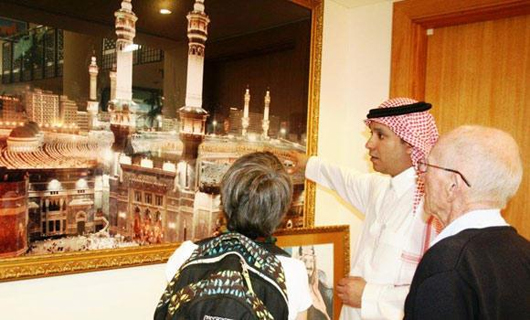
Jeddah, Oct 11: The Ministry of Foreign Affairs plans to Saudize all contract jobs at embassies abroad, including allocating a third of all positions for women.

Deputy Foreign Minister Prince Khaled bin Saud said the plan would ensure 100 percent Saudization in Arab countries and 75 percent in missions in non-Arab countries.

He said the ministry is “closer than ever to achieving these numbers,” and that it had previously not “employed non-Saudi citizens in official positions, be they diplomatic or administrative.”

Regarding the complications faced by Saudis at visa departments in some countries, he said: “The ministry always aims through its diplomatic channels to resolve such issues, and has succeeded in doing so in numerous locations. But in cases where diplomatic attempts are not successful, the ministry immediately works to protect and ensure that the rights of its citizens are met.”

Prince Khaled said lawyers have been working on 13,364 cases involving Saudi citizens abroad over the past three years. So far, more than 11,360 cases have been resolved, which works out to 85 percent of the total, he said.

He said the ministry was working to ensure gender equality in the diplomatic corps. “The ministry does not distinguish between men and women in the Foreign Ministry. Women are given the same career options and are able to reach high positions like their male counterparts. In this regard, and as per the directives of the minister, we aim to allocate one third of all positions for women.”

“The ministry is working as per the directives of Custodian of the Two Holy Mosques King Abdullah to serve citizens and help them overcome obstacles.”

“As per the directives of Foreign Minister Prince Saud Al-Faisal, the ministry is also continuously working to rectify the incorrect image of the Kingdom abroad.” He said this responsibility also lies with other government agencies, which requires greater communication between stakeholders.

Comments

Add new comment

  • Coastaldigest.com reserves the right to delete or block any comments.
  • Coastaldigset.com is not responsible for its readers’ comments.
  • Comments that are abusive, incendiary or irrelevant are strictly prohibited.
  • Please use a genuine email ID and provide your name to avoid reject.
News Network
May 7,2020

Dubai, May 7: As India begins the world’s largest evacuation mission by repatriating its overseas citizens stranded due to COVID-19, as many as 354 of them from the UAE will fly into their home country in the first two flights to Kerala today.

An Air India Express flight, which is scheduled to take off from Abu Dhabi to Kochi at 4.15 pm is the first flight, which will be followed by a Dubai-Kozhikode flight of the same airline at 5.10pm. The Indian missions in the UAE finalised the list of passengers, who were chosen based on the compelling reasons they submitted while registering their names.

Selection criteria

These include pregnant women and their accompanying family members in some instances, people with medical emergencies, workers and housemaids in distress, families with cancelled visas, bereaved family members who couldn’t attend funerals back home, a few students and stranded visitors and tourists including two brothers who got stranded in Dubai International Airport for 50 days, the missions said.

Short-listing the first passengers from among a database of more than 200,000 applicants, who include around 6,500 pregnant women, has been a mammoth task which posed several challenges for the missions, Neeraj Agrawal, Consul Press, Information and Culture at the Indian Consulate in Dubai told Gulf News.

He said the consulate set up an operations room in a tie-up with community volunteers from Kerala Muslim Cultural Centre, Indian Association Ajman, AKCAF Task Force, the BAPS Mandir, Indian People’s Forum, and Tamil Ladies’ Sangam.

 “We are trying to accommodate as many deserving people as possible. We expect the understanding of the people. It has been very difficult to sort out everyone’s urgency.”

“We cannot do a lottery system in this and we had to make sub- categories to ensure there is a mix of people with different types of urgencies.”

“Though we want to give priority to pregnant women, it is practically not possible and not good for the health and safety of the applicants to allot a lot of them on the same flight.”

He said 11 pregnant women have been issued tickets on the Dubai-Kozhikode flight.

“That is the threshold we can allow on a flight.”

Volunteer support

The consul appreciated the support of the volunteers in finalising the flight manifest.

“But our response ratio was very less. Many people whose names came up on top of the list were not willing to go on the first flights.”

Due to various constraints like this and sometimes the details of accompanying persons not readily being available, he said the mission was not able to quickly reach out to who might be really in need.

“However, we have given due consideration to people who got in touch with us with their emergency needs. At the time of issuing tickets, we had about 20 such cases.”

He said the Consul General of India in Dubai Vipul led the entire operation and Pankaj Bodkhe, consul, education, was in charge of the Dubai flight.

A big challenge

“It has been a big challenge. Our only concern is that despite our best efforts, sometimes people with more compelling reasons might have got left out on the first flights because of the volume of people who have reached out to us.”

Since there is a chance that some passengers with tickets might not be allowed to fly if they fail the medical screening including blood tests to check antibodies for COVID-19, he said some applicants in the waiting list have been asked to be on standby at the airport.

People with emergencies wishing to fly to other destinations also could not be included, he pointed out.

“We had to ask them to wait. We are unable to send them to other destinations. We can see their desperation. We feel sorry and desperate.”

He said the government is trying to add more flights to un-chartered destinations and a new flight from Dubai to Kannur has been added on May 12.

Passengers of today’s flights have been urged to reach the airport four to five hours prior to departure to facilitate the medical screening.


Comments

Add new comment

  • Coastaldigest.com reserves the right to delete or block any comments.
  • Coastaldigset.com is not responsible for its readers’ comments.
  • Comments that are abusive, incendiary or irrelevant are strictly prohibited.
  • Please use a genuine email ID and provide your name to avoid reject.
Agencies
August 2,2020

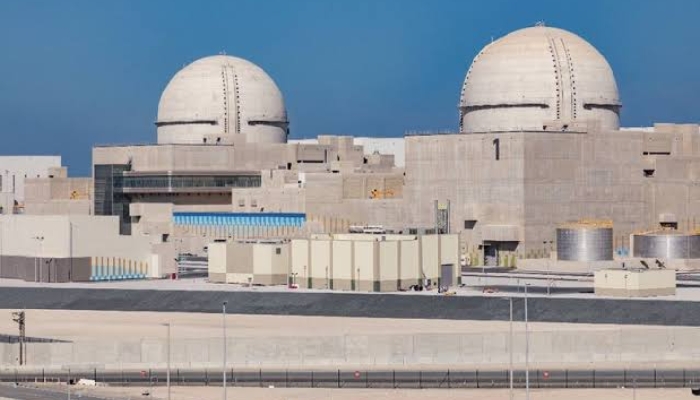
Dubai, Aug 2: The United Arab Emirates (UAE) announced on Saturday that it has started operations in the first of four reactors at the Barakah nuclear power station - the first nuclear power plant in the Arab world.

Emirates Nuclear Energy Corporation (ENEC), which is building and operating the plant with Korea Electric Power Corporation (KEPCO) said in a press release that its subsidiary Nawah Energy Company "has successfully started up Unit 1 of the Barakah Nuclear Energy Plant, located in the Al Dhafrah Region of Abu Dhabi".

That signals that Unit 1, which had fuel rods loaded in March, has achieved "criticality" - a sustained fission chain reaction.

"The start-up of Unit 1 marks the first time that the reactor safely produces heat, which is used to create steam, turning a turbine to generate electricity," said ENEC.

Barakah, which was originally scheduled to open in 2017, has been dogged by delays and is billions of dollars over budget. It has also raised myriad concerns among nuclear energy veterans who are concerned about the potential risks Barakah could visit upon the Arabian Peninsula, from an environmental catastrophe to a nuclear arms race.

Paul Dorfman, an honorary senior research fellow at the Energy Institute, University College London and founder and chair of the Nuclear Consulting Group, has criticised the Barakah reactors' "cheap and cheerful" design that he says cuts corners on safety.

Dorfman authored a report (PDF) last year detailing key safety features Barakah's reactors lack, such as a "core catcher" to literally stop the core of a reactor from breaching the containment building in the event of a meltdown. The reactors are also missing so-called Generation III Defence-In-Depth reinforcements to the containment building to shield against a radiological release resulting from a missile or fighter jet attack.

Both of these engineering features are standard on new reactors built in Europe, says Dorfman.

There have been at least 13 aerial attacks on nuclear facilities in the Middle East - more than any other region on earth.

The vulnerability of critical infrastructure in the Arabian Peninsula was further laid bare last year after Saudi Arabia's oil facilities at Abqaiq and Khurais were attacked by 18 drones and seven cruise missiles - an assault that temporarily knocked out more than half of the kingdom's oil production.

On Saturday, Dorfman reiterated his concern that there is no regional protocol in place to determine liability should an accident or incident at Barakah result in radioactive contamination spreading from the UAE to its neighbours. 

"Given Barakah has started up, because of all the well-rehearsed nuclear safety and security problems, it may be critically important that the Gulf states collectively evolve a Nuclear Accident Liability Convention, so that if anything does go wrong, victim states may have some sort of redress," Dorfman told Al Jazeera. 

The UAE has substantial oil and gas reserves, but it has made huge investments in developing alternative energy sources, including nuclear and solar.

Experts though have questioned why the UAE - which is bathed in sunlight and wind - has pushed ahead with nuclear energy - a far more expensive and riskier option than renewable energy sources.

When the UAE first announced Barakah in 2009, nuclear power was cheaper than solar and wind. But by 2012 - when the Emirates started breaking ground to build the reactors - solar and wind costs had plummeted dramatically.

Between 2009 and 2019, utility-scale average solar photovoltaic costs fell 89 percent and wind fell 43 percent, while nuclear jumped 26 percent, according to an analysis by the financial advisory and asset manager Lazard.

There are also concerns about the potential for Barakah to foment nuclear proliferation in the Middle East - a region rife with geopolitical fault lines and well-documented history of nuclear secrecy.

The UAE has sought to distance itself from the region's bad behaviour by agreeing not to enrich its own uranium or reprocess spent fuel. It has also signed up to the United Nation's nuclear watchdog's Additional Protocol, significantly enhancing inspection capabilities, and secured a 123 Agreement with the United States that allows bilateral civilian nuclear cooperation.

Comments

Add new comment

  • Coastaldigest.com reserves the right to delete or block any comments.
  • Coastaldigset.com is not responsible for its readers’ comments.
  • Comments that are abusive, incendiary or irrelevant are strictly prohibited.
  • Please use a genuine email ID and provide your name to avoid reject.
News Network
April 26,2020

Dubai, Apr 26: The Central Bank of the UAE (CBUAE) has instructed financial institutions in the country to search and freeze all bank accounts of Indian billionaire BR Shetty and his family along with those of companies where he has a stake.

The apex bank has also blacklisted several firms associated with Shetty along with their entire senior management.

In an advisory issued last week, CBUAE cited decisions of the Federal Attorney General and asked financial institutions to search and freeze any bank accounts, deposits or investments in the name of Shetty or his family members.

Financial institutions have been directed to stop transfers from these accounts and deny access to deposit boxes.

Currently in India and facing a string of charges, Shetty is the founder of NMC Health.

The heathcare provider was placed into administration by a UK court recently following an application by the Abu Dhabi Commercial Bank (ADCB) which alone has an exposure of $981 million (Dh3.6 billion).

Overall, UAE banks have a combined exposure of more than Dh8bn to NMC which owes money to Oman-based banks and financial institutions as well.

Probing credit facilities
The Central Bank has sought information about credit facilites extended to the Shettys along with details of their safe deposit boxes and the financial transfers they have made till date.

A similar advisory has been issued for NMC Healthcare and NMC Holding, based on the decision of the Head of Plenary Fund Prosecution.

The Central Bank has also blacklisted several companies associated with Shetty. Key staff members of these firms have been similarly blacklisted.

Comments

Angry Indian
 - 
Monday, 27 Apr 2020

when you make money with good country you should not make doka to that country, first of all we indian have bad name in GCC now this will make more dought on indian hindus..


after BJP come to power in india,our country is acting like maron, this will only end with final WAR.

Add new comment

  • Coastaldigest.com reserves the right to delete or block any comments.
  • Coastaldigset.com is not responsible for its readers’ comments.
  • Comments that are abusive, incendiary or irrelevant are strictly prohibited.
  • Please use a genuine email ID and provide your name to avoid reject.