


Saudi Arabia among top 3 safest places in world

September 5, 2016

Jeddah, Sep 5: Saudi Arabia has been ranked among the top three safest places in the world, thanks to fewer natural disasters and constant efforts by the government in terms of health, security and infrastructure.
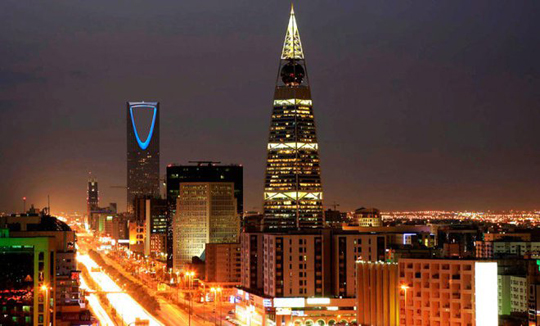
jeddah

The Institute for Environment and Human Security at the UN University has, in its recent report, placed the Kingdom as the third most safe and secure country after Malta and Qatar.

The US ranked 116th, while the most dangerous countries in the world included Vanuatu and Tonga, the Philippines, Guatemala and Bangladesh.

According to the American news site, TakePart, natural disasters like fires, tsunamis and earthquakes reduce the proportion of people living in security and safety.

Researchers at the Institute for Environment and Human Security at the University of the UN recently issued a study analyzing such disasters in 171 countries and the risks they pose.

The study’s project manager, Peter Myuk, said the survey took into account all issues concerning the environment and natural and human aspects, as well as the infrastructure in many countries, the ability to provide security for citizens, and ability to deliver aid quickly in the event of certain disasters.

According to the results of the study, Vanuatu, Tonga, the Philippines, Guatemala and Bangladesh ranked as the five most dangerous countries to live in.

Thirteen countries, out of 15, with low safety levels are located on the African continent, and this can be attributed to the low development levels.

Vanuatu and Tonga specifically suffer from frequent earthquakes and volcanoes, decreasing their safety levels.

Richer countries ranked higher on the list, due to good infrastructure, larger food assistance and the development of telecommunication, electricity, sewage, water and other services that people need.

Australia has been ranked 121st on the list because it suffers from flooding throughout the year; equally low ranked is Japan, which suffers from natural disasters but addresses the challenges with modern building techniques.

The study also revealed that countries such as Liberia (56th), Zambia (66th) and Central Africa (71st) suffer mostly from lack of health and medical resources, as well as medical evacuation and ambulance services.

Many countries also suffer from poor roads, making it difficult for emergency teams to deliver aid during natural disasters.

Based on the findings, researchers concluded that although countries “cannot control the size and strength of natural disasters, as well as the wars that are currently taking place in a number of countries, governments can do more to reduce the danger to humans by providing capabilities that would limit the number of victims.”

Saudi Arabia among top 3 safest places in world
Jeddah, Sep 5: Saudi Arabia has been ranked among the top three safest places in the world, thanks to fewer natural disasters and constant efforts by the government in terms of health, security and infrastructure.

The Institute for Environment and Human Security at the UN University has, in its recent report, placed the Kingdom as the third most safe and secure country after Malta and Qatar.

The US ranked 116th, while the most dangerous countries in the world included Vanuatu and Tonga, the Philippines, Guatemala and Bangladesh.

According to the American news site, TakePart, natural disasters like fires, tsunamis and earthquakes reduce the proportion of people living in security and safety.

Researchers at the Institute for Environment and Human Security at the University of the UN recently issued a study analyzing such disasters in 171 countries and the risks they pose.

The study’s project manager, Peter Myuk, said the survey took into account all issues concerning the environment and natural and human aspects, as well as the infrastructure in many countries, the ability to provide security for citizens, and ability to deliver aid quickly in the event of certain disasters.

According to the results of the study, Vanuatu, Tonga, the Philippines, Guatemala and Bangladesh ranked as the five most dangerous countries to live in.

Thirteen countries, out of 15, with low safety levels are located on the African continent, and this can be attributed to the low development levels.

Vanuatu and Tonga specifically suffer from frequent earthquakes and volcanoes, decreasing their safety levels.

Richer countries ranked higher on the list, due to good infrastructure, larger food assistance and the development of telecommunication, electricity, sewage, water and other services that people need.

Australia has been ranked 121st on the list because it suffers from flooding throughout the year; equally low ranked is Japan, which suffers from natural disasters but addresses the challenges with modern building techniques.

The study also revealed that countries such as Liberia (56th), Zambia (66th) and Central Africa (71st) suffer mostly from lack of health and medical resources, as well as medical evacuation and ambulance services.

Many countries also suffer from poor roads, making it difficult for emergency teams to deliver aid during natural disasters.

Based on the findings, researchers concluded that although countries “cannot control the size and strength of natural disasters, as well as the wars that are currently taking place in a number of countries, governments can do more to reduce the danger to humans by providing capabilities that would limit the number of victims.”

Comments

Add new comment

  • Coastaldigest.com reserves the right to delete or block any comments.
  • Coastaldigset.com is not responsible for its readers’ comments.
  • Comments that are abusive, incendiary or irrelevant are strictly prohibited.
  • Please use a genuine email ID and provide your name to avoid reject.
Gulf News
April 12,2020

Dubai, Apr 12: Saudi Arabia reported 429 new cases of coronavirus, bringing the total number of infections in the country to 4462, the Ministry of Health announced on Sunday.

The ministry also confirmed 7 deaths bringing the total number of deaths in the kingdom to 59.

According to the ministry of health the number of recoveries are 41 cases, making total of recoveries 761.

Ministry also said that 40,000 have been quarantined since the beginning of the epidemic, and only 7,000 remain in quarantine, including those who recently returned from abroad.

Extension of curfew

Early on Sunday, King Salman approved the extension of curfew until further notice due to current rates of coronavirus spread, the official news agency SPA announced.

Earlier last week, Saudi Arabia imposed a 24-hour curfew and lockdown on the cities of Riyadh, Tabuk, Dammam, Dhahran and Hofuf and throughout the governorates of Jeddah, Taif, Qatif and Khobar.

Authorities had already sealed off the holy cities of Makkah and Medina along with Riyadh and Jeddah, barring people from entering and exiting as well as prohibiting movement between all provinces.

Total lockdown on Medina neighbourhoods

The Ministry of Interior also announced a total lockdown on five neighbourhoods in Medina on thursday until further notice. The neighborhoods include Al Sherbat; Bani Dhafar; Qurban, Al Jumuah; and parts of Al Iskan district and Bani Khudrah. No one is allowed to enter or exit these areas.

An official source from the ministry highlighted that the Ministry of Labor and Social Development will provide residents of these neighbourhoods with food baskets and will follow up on their needs while the ministry of health will provide them with necessary medications.

Saudi Arabia, which has reported the highest number of infections in the Gulf, is making every possible effort to limit the spread of the disease at home.

Comments

Add new comment

  • Coastaldigest.com reserves the right to delete or block any comments.
  • Coastaldigset.com is not responsible for its readers’ comments.
  • Comments that are abusive, incendiary or irrelevant are strictly prohibited.
  • Please use a genuine email ID and provide your name to avoid reject.
Agencies
January 4,2020

Dubai, Jan 4: Three UAE airlines have made it to lists of the safest carriers in 2020, reinforcing the value these companies provide passengers in the increasingly competitive aviation scene.

Abu Dhabi's Etihad Airways and Dubai's Emirates are in the list of the top 20 safest airlines, while Sharjah-based Air Arabia is in the list of the top 10 low-cost carriers, safety and product rating website AirlineRatings.com reported on Thursday.

It named Qantas as the safest airline for 2020 out of the 405 carriers it monitors.

The top 20, in order, are Qantas, Air New Zealand, EVA Air, Etihad Airways, Singapore Airlines, Emirates, Alaska Airlines, Qatar Airways, Cathay Pacific Airways, Virgin Australia, Hawaiian Airlines, Virgin Atlantic Airlines, TAP Portugal, SAS, Royal Jordanian, Swiss, Finnair, Lufthansa, Aer Lingus and KLM.

"These airlines are clear standouts in the airline industry and are at the forefront of safety," said AirlineRatings.com editor-in-chief Geoffrey Thomas.

"For instance, Australia's Qantas has been recognised by the British Advertising Standards Association in a test case in 2008 as the world's most experienced airline."

"Qantas has been the lead airline in virtually every major operational safety advancement over the past 60 years and has not had a fatality in the pure-jet era," said Thomas.

AirlineRatings.com editors also identified their top 10 safest low-cost airlines; they are, in alphabetical order, Air Arabia, Flybe, Frontier, HK Express, IndiGo, Jetblue, Volaris, Vueling, Westjet and Wizz.

Saj Ahmad, chief analyst at StrategicAero Research in London, says that it isn't a surprise that UAE carriers are on those lists.

"UAE airlines almost always feature in the top rankings for safety because they value the equipment that they fly their passengers on each and every day," he told Khaleej Times on Thursday.

"All airlines do; but for the UAE, where airlines have expanded rapidly in the last couple of decades, it's an amazing feat that they rank so highly while inducting so many new aeroplanes."

There's little benefit to adding luxurious cabins if maintenance, security and safety protocols as well as routine engineering schedules are not adhered to, he stressed.

"And with the UAE itself sporting MRO activities as well as through companies like Strata, which supply components to Airbus and Boeing directly, airlines here have harnessed that tech-change to ensure that their fleets have the highest redundancy and safety checks at every possible chance," Ahmad added. "That translates into passenger confidence - and we can see the brand and loyalty strength across Emirates, flydubai, Air Arabia and Etihad; it's no surprise that each year, they all fly more and more passengers across their network."

In making its selections, AirlineRatings.com editors and its industry advisors take into account numerous critical factors that include: Audits from aviation's governing bodies and lead associations, government audits, airline's crash and serious incident record, fleet age, financial position and pilot training and culture.

"All airlines have incidents every day and many are aircraft or engine manufacture issues instead of airline operational problems. And it is the way the flight crew handles incidents that determines a good airline from an unsafe one. So just lumping all incidents together is very misleading," said Thomas.

Comments

Add new comment

  • Coastaldigest.com reserves the right to delete or block any comments.
  • Coastaldigset.com is not responsible for its readers’ comments.
  • Comments that are abusive, incendiary or irrelevant are strictly prohibited.
  • Please use a genuine email ID and provide your name to avoid reject.
News Network
June 17,2020

Abu Dhabi, Jun 17: The Ministry of Education (MoE) has allowed students still enrolled in universities overseas to obtain exceptions to attendance policies at their respective academic institutions in light of the Covid-19 pandemic.

In a statement, the ministry said that the move stems from its keenness to ensure the continuity of education for those students and to maintain effective channels of communication with them.

Students' applications for exceptions to academic attendance in universities due to Covid-19 should be submitted following the end of the academic year, and not after the academic semester, via the following email: [email protected].

In their email, students have to explain the reasons for the required exceptions and should include an official message from the university concerned.

Scholarship approval issued by the Ministry of Education for studying abroad should also be attached.

The student's score reports for the academic years spent in the host countries and the duration of each academic year should also be attached, in addition to an entry and exit report of the student from the Federal Authority for Identity and Citizenship.

Comments

Add new comment

  • Coastaldigest.com reserves the right to delete or block any comments.
  • Coastaldigset.com is not responsible for its readers’ comments.
  • Comments that are abusive, incendiary or irrelevant are strictly prohibited.
  • Please use a genuine email ID and provide your name to avoid reject.