


Saudi Arabia appoints new finance minister

November 1, 2016

Jeddah, Nov 1: Saudi Arabia has appointed Capital Market Authority Chairman Mohammed Al-Jadaan as its new finance minister by royal decree, replacing Ibrahim Al-Assaf, who had held the post since 1996.
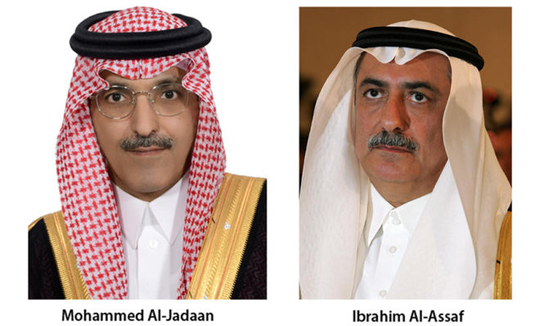
fm

Al-Assaf, 67, had been the last veteran member of Cabinet to remain in a key post through a series of government reshuffles after Custodian of the Two Holy Mosques King Salman assumed power last year, including one in May that replaced the long-standing oil minister.

He has been made minister of state and will remain a member of the Council of Ministers, as the Saudi Cabinet is known, according to the royal decree.

The Finance Ministry is a key position in the Kingdom and the change is likely intended to support a wide-ranging economic reform plan to steward the Kingdom through an era of low oil prices.

As the CMA’s chairman, Al-Jadaan had overseen the loosening of regulatory requirements as Saudi Arabia opened its stock exchange to foreign investors over the last year.

Before his appointment as the CMA’s chairman of the board on Jan. 29, 2015, Al-Jadaan was one of the founding partners of the Al-Jadaan and Partners Law Firm and was listed in Chambers and Partners 2004-2014 as a leading lawyer in corporate/commercial and the banking/finance practice areas in Saudi Arabia.

Al-Jadaan has extensive experience in advising on all aspects of capital market, structuring, documenting and negotiating complex international project financings and providing counsel on corporate and commercial matters, including equity and debt public offering, mergers and acquisitions, joint ventures and shareholder agreements and matters pertaining to Islamic law and Islamic finance.

Al-Jadaan has also represented corporate and commercial clients before a number of key courts and judicial committees in Saudi Arabia.

He was also a special adviser to the board of directors at Morgan Stanley Saudi Arabia.
Al-Assaf, will remain a Cabinet member, received a bachelor of arts degree in economic and political science from King Saud University, Riyadh, in 1971.

He later obtained a master of arts degree in economics from the University of Denver in 1976 and a PhD in economics from Colorado State University in 1982.

Al-Assaf initially pursued a teaching career, becoming a teaching assistant and then visiting lecturer at King Abdulaziz Military Academy from 1971 to 1983.

He was appointed an assistant professor and head of the Department of Administrative Services in 1982, and served until 1986.

During that period, he also served as economic adviser to the Saudi Fund for Development.

After leaving academia, Al-Assaf moved to Washington, DC where he represented Saudi Arabia at the International Monetary Fund (IMF) and the World Bank.

In 1986, he was appointed alternate executive director at the IMF for Saudi Arabia.

He left in 1989 to take up the executive directorship for Saudi Arabia at the World Bank.

Upon his return to Saudi Arabia in 1995, he served briefly as vice governor of the Saudi Arabian Monetary Agency.

He left to join the Council of Ministers as minister of state in October 1995.

In January 1996, he was appointed minister of finance and national economy, a position that was renamed minister of finance in 2003.

He replaced Abdul Aziz Abdullah Al-Khuwaiter as finance minister.

In addition to being finance minister, Ibrahim is a member of the board of directors of Saudi Aramco (since 1996), chairman of the Saudi Fund for Development and member of the Public Investment Fund board.

Monday’s decree also appointed new chiefs for the Public Transport Commission and the Saline Water Conversion Corporation.

It transferred responsibility for consumer protection from the Ministry for Commerce and Investment to Health Minister Tawfiq Al-Rabiah.

Al-Assaf last week said Saudi Arabia’s financial position remains strong despite sinking oil prices, although there is “some pressure” on bank liquidity.

“We have been able to maintain a good position in public finances,” Al-Assaf said.

Comments

Add new comment

  • Coastaldigest.com reserves the right to delete or block any comments.
  • Coastaldigset.com is not responsible for its readers’ comments.
  • Comments that are abusive, incendiary or irrelevant are strictly prohibited.
  • Please use a genuine email ID and provide your name to avoid reject.
Agencies
May 26,2020

Riyadh, May 26: The authorities in Saudi Arabia have decided to ease some restrictions put in place over coronavirus fears, allowing movement and resumption of some economic and commercial activities, Saudi Press Agency reported early Tuesday citing an official source at the Interior Ministry.

The move also allows restarting of domestic flights, opening of mosques, restaurants and cafes and work attendance, however, the temporary suspension of Umrah pilgrimage remains in force.

The easing of restrictions will be carried out in a phased manner, with the first phase beginning on Thursday (May 28) and ending on May 30.

In the first phase, the movement within and between all regions of the Kingdom in private cars will be allowed from 6 a.m. to 3 p.m. except in Makkah. Economic and commercial activities will resume in retail and wholesale shops and malls but beauty salons, barber shops, sports clubs, health clubs, entertainment centers and cinemas will continue to remain shut due to social distancing concerns.

In the second phase, which begins on May 31 and ends on June 20, the movement is allowed from 6 a.m. and 8 p.m. in all areas of the Kingdom, except in Makkah. All congregational prayers, including Friday prayers, will resume in all mosques across the Kingdom except in Makkah.

The suspension of workplace attendance will end, allowing all employees in ministries, government entities and private sector companies to return to working from their offices provided that they follow strict precautionary guidelines.

The suspension on travel between regions in the Kingdom using various transport methods will no longer be in place. Airlines will be allowed to operate domestic flights if they adhere to precautionary measures set by the civil aviation authority and the Ministry of Health. The suspension of international flights, will, however, continue until further notice.

Restaurants and cafes serving food and beverages can reopen, however, beauty salons, barber shops, sports clubs, health clubs, entertainment centers and cinemas will be barred from reopening in the second phase. The ban on social gatherings of more than fifty people, such as weddings and funerals will also continue to remain in force.

In the third phase commencing on June 21, the Kingdom will return to "normal" conditions as it was before the coronavirus lockdown measures were implemented.

Meanwhile in Makkah, the first phase measures will be implemented between May 31 to June 20 and the second phase will begin on May 21. Friday prayers and all congregational prayers will continue to be held in the Grand Mosque, only to be attended by Imams and the employees.

Comments

Mohammed Sarfraz
 - 
Tuesday, 26 May 2020

I think second phase is May 31 to June 20. Must be a typo. 

Add new comment

  • Coastaldigest.com reserves the right to delete or block any comments.
  • Coastaldigset.com is not responsible for its readers’ comments.
  • Comments that are abusive, incendiary or irrelevant are strictly prohibited.
  • Please use a genuine email ID and provide your name to avoid reject.
Arab News
March 9,2020

Dubai, Mar 9: The eyes of the world will be on the oil markets when the big trading hubs in Europe and North America open following the end of the deal between Saudi Arabia and Russia that has helped to sustain crude at relatively high levels for the past three years.

There were big falls on Friday when ministers from the Organization of the Petroleum Exporting Countries (OPEC) failed to get a deal with non-OPEC members — the so-called OPEC+ — to extend output agreements. Brent oil was down nearly 10 percent at $45.27 going into the western weekend.

Saudi Aramco took immediate action to cut prices after the OPEC+ collapse, offering big discounts for crude deliveries from next month, when the current output restrictions end.

According to a notification sent to customers by Saudi Aramco, seen by Arab News, the Kingdom’s oil giant will cut between $4 and $8 per barrel, with the biggest discounts being offered to buyers in northwest Europe and the US.

Roger Diwan, an oil analyst at consultancy IHS Market, said: “We are likely to see the lowest oil prices of the past 20 years in the next quarter.”

West Texas Intermediate, the US oil benchmark, fell to $28.27 in November 2001.

The move raises the possibility of a “crude war” between the three biggest oil blocs — the US, Russia and the Arabian Gulf. Some analysts believe the American shale industry is more vulnerable to low prices than either the Russians or the Saudis.

Robin Mills, head of the Qamar consultancy, told Arab News: “I don’t think this was premeditated but Saudi Arabia has clearly swung quickly into action to put the Russians under pressure. But the Russians, with low debt and a flexible exchange rate, can cope with a few months of low prices.”

The boom in US shale has made the country the biggest oil producer in the world, but with high financing costs. Lower global prices would put a lot of shale companies out of business.

On the other hand, American motorists, and President Donald Trump, would be pleased to see lower fuel prices in an election year.

In Moscow, one prominent financier with ties to the Kingdom played down the long-term significance of the Vienna fallout.

Kirill Dmitriev, chief executive of the Russian Direct Investment Fund, told Arab News: “Saudi Arabia is our strategic partner, and cooperation between our two countries will continue in all areas. We will also continue to work within the framework of the Russia-Saudi Economic Council.”

One Russian official, who asked not to be named, added: “There is a good relationship between Alexander Novak, Russian energy minister, and his Saudi counterpart Prince Abdul Aziz bin Salman, and I am sure they will continue talking to each other less formally.”

Comments

Add new comment

  • Coastaldigest.com reserves the right to delete or block any comments.
  • Coastaldigset.com is not responsible for its readers’ comments.
  • Comments that are abusive, incendiary or irrelevant are strictly prohibited.
  • Please use a genuine email ID and provide your name to avoid reject.
News Network
April 11,2020

Dubai, Apr 11: The UAE has conducted over 49,000 Covid-19 tests among UAE citizens and residents, it was revealed on Friday, using state-of-the-art technology in line with the 's plans to intensify virus screening in order to bring the disease under control.

The accelerated investigative measures helped detect 370 new coronavirus cases among various nationalities, all of whom are in a stable condition and receiving the necessary care.

This took the total number of infections in the country to 3,360, according to a MoHaP statement.

The Ministry also revealed the death of two patients suffering from Covid-19. Both of the deceased were Asian nationals and had pre-existing chronic illnesses. The total number of deaths has now reached 16.

The Ministry expressed its sincere condolences to the families of the deceased and wished a speedy recovery to all patients, calling on the public to cooperate with health authorities and comply with all precautionary measures, particularly social distancing protocols, to ensure the safety and protection of the public.

The Ministry also announced the full recovery of 150 new cases after receiving the necessary treatment, taking to 418 the total of those now recovered from the virus in the UAE.

Comments

Add new comment

  • Coastaldigest.com reserves the right to delete or block any comments.
  • Coastaldigset.com is not responsible for its readers’ comments.
  • Comments that are abusive, incendiary or irrelevant are strictly prohibited.
  • Please use a genuine email ID and provide your name to avoid reject.