


Saudi Arabia: New e-payment system to cut costs, cash smuggling

December 31, 2014

Jeddah, Dec 31: Major modifications will be made to the Saudi Payment Network System (SPAN) in 2015 to increase efficiency and reduce costs for banks, merchants and consumers, and counter the smuggling of cash. It would eventually also allow for withdrawals at point-of-sale (POS) terminals, and getting money from ATMs without cards.
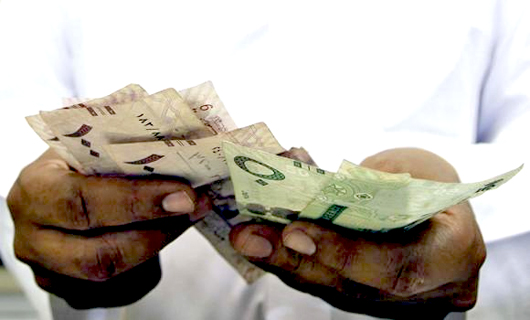
e-payment

The new system, to be renamed Mada, will connect ATMs and POS terminals throughout the country to a central payment switch that in turn re-routes the financial transactions between banks of merchants and customers.

The Saudi Arabian Monetary Agency is now testing the system. Sources indicate that it would create changes in consumer culture, including serving as an incentive to save by reducing the usage of cash, and encouraging greater spending via bank cards.

The new system will include additional services for customers, which will be implemented gradually over the coming years. These include the possibility of withdrawing from ATMs without a card, obtaining prepaid cards loaded with amounts as per clients’ request, facilitating electronic payments for purchasing tickets, and cash-back options from tellers and shops to reduce pressure on ATMs.

The system will also permit the transfer of funds to customers outside the Kingdom who carry the same type of cards, without the deduction of transfer fees. It will also allow transfers to accounts at other banks, and better verification of the income of businesses to impose fees or taxes more systematically.

Sources indicate the system will help reduce costs on banks and shops, given the significant amount of electronic trading, as well as facilitate buying, selling, and transfer of funds within and outside the Kingdom. There will be no limits on the number of times ATM cards can be used, and no usage, annual, or balance inquiry fees.

Comments

Add new comment

  • Coastaldigest.com reserves the right to delete or block any comments.
  • Coastaldigset.com is not responsible for its readers’ comments.
  • Comments that are abusive, incendiary or irrelevant are strictly prohibited.
  • Please use a genuine email ID and provide your name to avoid reject.
Agencies
July 31,2020

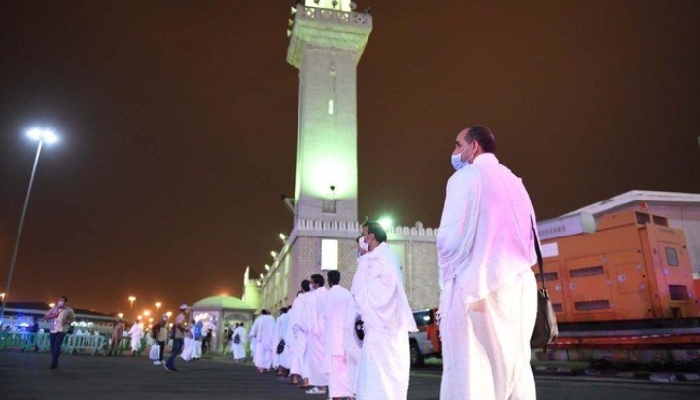
Jeddah, Jul 31: Hajj 2020 pilgrims arrived in Muzdalifah Thursday night to rest after spending the day in Arafat.

Earlier, the pilgrims scaled Mount Arafat to pray and repent, as a highly unusual Hajj approached its climax. They listened to a sermon delivered by Sheikh Abdullah Al-Manea and prayed Dhuhr and Asr prayers together at the Al-Namirah Mosque in Arafat.

This year’s pilgrimage is the smallest in modern times, after the number of participants was greatly restricted to prevent the spread of the coronavirus. 

Tight security was in place around the foot of the rocky hill outside Makkah, also known as Jabal Al-Rahma or Mount of Mercy, in preparation for the high point of the annual ritual.

Video footage shown on state television showed the pilgrims setting off on their climb to the summit. They wore face masks and observed strict social-distancing rules imposed by Saudi authorities.As sprinklers sprayed water on them to provide relief from the summer desert heat, the pilgrims raised their palms as they climbed the slopes of the hill — the site of Prophet Muhammad’s last sermon. When they reached the top they recited holy verses and prayed for forgiveness for their sins.

Earlier, the pilgrims were taken in buses from Mina to Mount Arafat. Strict precautionary measures were in place, with each group accompanied by security teams, ambulances and civil defense vehicles. 

When they arrived, their temperatures were checked before they entered Namirah Mosque to hear a sermon that was translated into 10 languages.

“The camps were set up for pilgrims in Arafat early on,” said Minister of Hajj and Umrah Muhammad Salih Bentin. The sermon at Namirah Mosque was delivered by Sheikh Abdullah Al-Manea, who led the pilgrims in noon and afternoon prayers.

“During Hajj this year, we reiterate that it is essential for pilgrims, as well as everyone assisting them, to adhere to the precautionary regulations that have been implemented,” Al-Manea, a member of the Council of Senior Scholars, said during his sermon. “This is to be done for their own safety.

“Precautions have been put in place to protect lives against the damage that the pandemic can cause, and also to actualize Islam’s teachings pertaining to safeguarding human life by Allah’s permission.”

The stay in Arafat is described as the pinnacle of Hajj and Muslims around the world reflect the actions of pilgrims by asking for forgiveness and praying for their deepest desires.
Pilgrims left Arafat in coaches for Muzdalifah after sunset and will pray the Maghrib and Isha prayers there.

After sunset prayers, the pilgrims made their way down Mount Arafat to Muzdalifah, where they will spend the night before the final Hajj ritual, the symbolic stoning of the devil. 

This year, each pilgrim received sanitized pebbles in advance of the event on Friday, which is the first day of Eid Al-Adha.
This year the Kingdom faced the unprecedented challenge of ensuring pilgrims attending Hajj were protected as much as possible from the risks of the coronavirus.

They will then sleep, pray the Fajr prayer there tomorrow and then leave for Mina.

Comments

Add new comment

  • Coastaldigest.com reserves the right to delete or block any comments.
  • Coastaldigset.com is not responsible for its readers’ comments.
  • Comments that are abusive, incendiary or irrelevant are strictly prohibited.
  • Please use a genuine email ID and provide your name to avoid reject.
News Network
May 13,2020

Riyadh, May 13: Saudi Arabia’s cabinet on Tuesday urged oil-producing nations not only to adhere to agreed cuts to production, but further reduce output to help restore balance in global oil markets, state news agency SPA reported.

In issuing the call to OPEC+, which includes members of the Organization of the Petroleum Exporting Countries plus Russia and other nations, ministers said the Kingdom is committed to supporting the stability of global oil markets.

After the meeting, acting Minister of Media Majed Al-Qasabi said that in addition to its commitment to the OPEC+ agreement, the Kingdom will voluntarily reduce output by an additional 1 million barrels a day in June. It will also try to implement additional cuts this month, with the consent of its customers, he added.

The cabinet said the Saudi initiatives aim to encourage other countries, whether they have signed up to the OPEC+ agreement or not, to adhere to its reduced rates and to cut output even further to help stabilize global oil markets.

During the cabinet meeting, which was conducted using video conferencing, King Salman also briefed ministers on his recent telephone conversation with US President Donald Trump. He said they affirmed the historical and strategic relationship between the two countries and their commitment to the continuation of joint efforts to enhance security and stability in the region.

Ministers were then updated on the latest developments in the corona virus crisis, including the steps being taken locally and internationally to control it and safeguard public health, the number of cases in the Kingdom and the care being provided to those who are infected. They also reviewed details of the active screening and testing programs in all parts of the country, which have helped to keep the number of deaths relatively low compared to global rates.

The cabinet praised the efforts being made by government officials to combat the pandemic, and stressed that citizens and expatriates must abide by the precautionary and preventive measures introduced to prevent the spread of the virus.

Ministers described the decision by Saudi Arabia to host the Pledging Event for the Humanitarian Crisis in Yemen 2020 on June 2 as an extension of the Kingdom’s humanitarian and development contribution, which reflects its pioneering role in supporting its neighbor.

The cabinet also welcomed the formation of the new government in Iraq and reiterated Saudi Arabia’s support for the nation and its readiness to work with the new administration to strengthen relations and enhance security and stability in the region.

Comments

Add new comment

  • Coastaldigest.com reserves the right to delete or block any comments.
  • Coastaldigset.com is not responsible for its readers’ comments.
  • Comments that are abusive, incendiary or irrelevant are strictly prohibited.
  • Please use a genuine email ID and provide your name to avoid reject.
Agencies
May 7,2020

Dubai, May 7: Indians in the UAE have voiced scepticism about a "massive" operation announced by New Delhi to bring home some of the hundreds of thousands of nationals stranded by coronavirus restrictions.

"It is just propaganda," said Ishan, an Indian expatriate in Dubai, one of seven emirates in the UAE and long a magnet for foreign workers.

He was reacting to his government's announcement this week that it would deploy passenger jets and naval ships to bring home citizens stuck in a host of countries.

India's consulate in Dubai said it received about 200,000 requests from nationals seeking repatriation -- mostly workers who have lost their jobs in the pandemic.

One vessel was heading to the UAE, India's government said, while two flights were scheduled to depart the UAE for India on Thursday.

But the plans drew scorn from Ishan, who was a manager at a luxury services company before he was made redundant last month.

"It's like throwing a dog a bone," the 35-year-old complained on Wednesday, dismissing the Indian government's efforts as a drop in the ocean.

"Let's say they repatriate 400 people on the first day, and about 5,000 people in 10 days, what difference has it made?"

India banned all incoming commercial flights in late March as it imposed one of the world's strictest lockdowns to tackle the spread of coronavirus.

The UAE is home to a 3.3-million-strong Indian community, who make up around 30 per cent of the Gulf state's population.

To the anger of some Indian expatriates, the evacuees will have to pay for their passage home and spend two weeks in quarantine on arrival.

"We are upset over the failure of our government," Ishan said. "What about the people with no money? How are you helping them?"

The Indian consulate could not be reached for comment.

Ibrahim Khalil, head of the Kerala Muslim Cultural Center in Dubai, said the consulate had asked him to select 100 Indian nationals for repatriation.

"We are planning to pay for the tickets of those who cannot afford it," he said, adding that the elderly, pregnant and those suffering from illnesses were a priority.

But one Indian woman, eight months pregnant in the neighbouring emirate of Sharjah, was not one of the lucky ones chosen to go back home in one of Thursday's planned departures.

"We called them but nobody would pick up," the 26-year-old, who requested anonymity, told AFP.

She arrived in the UAE a few months ago to visit her husband, who lives in a shared apartment with another family to save money.

"We have no insurance here and the medical expenses are too costly," said the woman, who was anxious to leave to give birth at home.

"I just hope that I am chosen to go back to India. I don't know why I haven't been considered."

Comments

Add new comment

  • Coastaldigest.com reserves the right to delete or block any comments.
  • Coastaldigset.com is not responsible for its readers’ comments.
  • Comments that are abusive, incendiary or irrelevant are strictly prohibited.
  • Please use a genuine email ID and provide your name to avoid reject.