Saudi Arabia ranked best Arab country for corporate headquarters

September 27, 2016

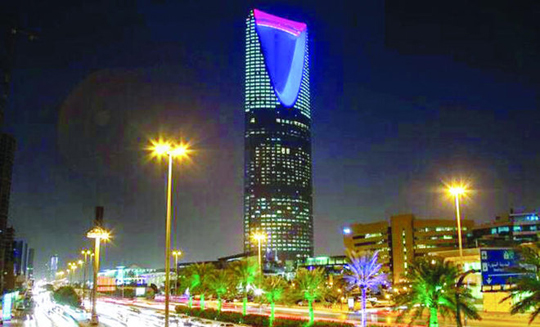
Jeddah, Sep 27: Saudi Arabia ranks first among Arab countries in terms of conditions for setting up corporate headquarters and at 23rd worldwide, according to rankings made by US News & World Report.

Saudi

The ranking is based on feedback from more than 4,000 businessmen who are also decision-makers; it does not rank countries only for their tax percentage on corporations, but also looked at the key elements that attract corporate executives, and employees and their families, such as workplace environment and lifestyle of the countries ranked.

According to US News, the businesspersons gave their feedback on “nine equally weighted country attributes: Connected to the rest of the world, corrupt-free, economically stable, educated population, favorable tax environment, is a place I would live, safe, well-developed infrastructure and well-developed legal framework.”

Arab countries occupied only six spots on the list.

Saudi Arabia is followed by Morocco on 40th place, Jordan at 43rd, Tunisia 50th, Egypt 51st and Algeria 59th.

Worldwide, Canada came first, followed, in order, by Australia, Sweden, Germany, Luxembourg, United Kingdom, Netherlands, New Zealand, Denmark and the US, which ranked 10th.

Colombia and Iran came at the bottom, mainly due to corruption and political instability.

Comments

Add new comment

  • Coastaldigest.com reserves the right to delete or block any comments.
  • Coastaldigset.com is not responsible for its readers’ comments.
  • Comments that are abusive, incendiary or irrelevant are strictly prohibited.
  • Please use a genuine email ID and provide your name to avoid reject.
News Network
May 7,2020

Dubai, May 7: Saudi Arabia will emerge as the victor of the oil price war that sent global crude markets into a spin last month, according to two experts in the energy industry.

Jason Bordoff, professor and founding director of the Center for Global Energy policy at New York’s Columbia University, said: “While 2020 will be remembered as a year of carnage for oil nations, at least one will most likely emerge from the pandemic stronger, both economically and geopolitically: Saudi Arabia.”

Writing in the American publication Foreign Policy, Bordoff said that the Kingdom’s finances can weather the storm from lower oil prices as a result of the drastically reduced demand for oil in economies under pandemic lockdowns, and that it will end up with higher oil revenues and a bigger share of the global market once it stabilizes.

Bordoff’s view was reinforced by Sir Mark Moody-Stuart, former chairman of Royal Dutch Shell and one of the longest-standing directors of Saudi Aramco. In an interview with the Gulf Intelligence energy consultancy, he said that low-cost oil producers such as Saudi Arabia would emerge from the pandemic with increased market share.

“Oil is the only commodity where the lowest-cost producers have contained their production and allowed high-cost producers to benefit. When demand recovers this year or next, we will emerge from it with the lowest-cost producers having increased their market share,” Moody-Stuart said.

Bordfoff said that it would take years for the high-cost American shale industry to recover to pre-pandemic levels of output. “Depending on how long oil demand remains depressed, US oil production is projected to decline from its pre-coronavirus peak of around 13 million barrels per day.

“Shale's heady growth in recent years (with production growing by about 1 million to 1.5 million barrels per day each year) also reflected irrational exuberance in financial markets. Many US companies struggling with uneconomical production only managed to stay afloat with infusions of cheap debt. One quarter of US shale oil production may have been uneconomic even before prices crashed,” he said.

Moody-Stuart said that recent statements about cuts to the Saudi Arabian budget as a result of falling oil revenues were “an important step to wean the population of the Kingdom off an entitlement feeling. It means that everybody is joining in it.”

The former Shell boss said that other big oil companies would follow Shell’s recent decision to cut its dividend for the first time in more than 70 years. But he added that Aramco would stick by its commitment to pay $75 billion of dividends this year.

“When a company looks at its forecasts it looks ahead for one year, so for this year it (the dividend) is fine,” he said.

Bordoff added that Saudi Arabia’s action in cutting oil production in response to the pandemic would improve its global position.

“Saudi Arabia has improved its standing in Washington. Following intense pressure from the White House and powerful senators, the Kingdom’s willingness to oblige by cutting production will reverse some of the damage done when it was blamed for the oil crash after it surged production in March,” he said.

“Only a few weeks ago, the outlook for Saudi Arabia seemed bleak. But looking out a few years, it’s difficult to see the Kingdom in anything other than a strengthened position,” Bordoff said.

Comments

Add new comment

  • Coastaldigest.com reserves the right to delete or block any comments.
  • Coastaldigset.com is not responsible for its readers’ comments.
  • Comments that are abusive, incendiary or irrelevant are strictly prohibited.
  • Please use a genuine email ID and provide your name to avoid reject.
Agencies
July 31,2020

Mount Arafat, July 30: Muslim pilgrims converged Thursday on Saudi Arabia's Mount Arafat for the climax of this year's hajj, the smallest in modern times and a sharp contrast to the massive crowds of previous years.

A tight security cordon has been erected all around the foot of the rocky hill outside Mecca, also known as Jabal al-Rahma or Mount of Mercy.

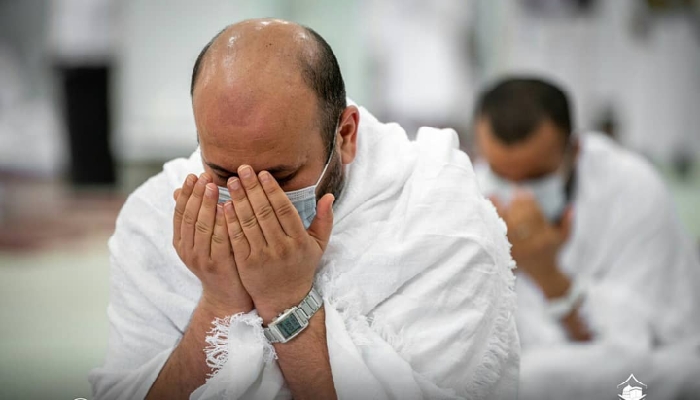
Pilgrims, donning masks and observing social distancing, were brought in buses from neighbouring Mina, state television showed, as Saudi authorities impose measures to prevent a coronavirus outbreak.

They were subject to temperature checks and attended a sermon -- which state media said was translated into 10 languages -- before they set off on the climb to the summit for hours of Koran recitals and prayers to atone for their sins.

The scene was strikingly different to last year's ritual when a sea of pilgrims ascended Mount Arafat, marshalled by tens of thousands of stewards in a bid to prevent any crushes.

After sunset prayers, pilgrims will make their way down Mount Arafat to Muzdalifah, another holy site where they will sleep under the stars to prepare for the final stage of hajj, the symbolic "stoning of the devil".

It takes place on Friday and also marks the beginning of Eid al-Adha, the festival of sacrifice.

The hajj, one of the five pillars of Islam and a must for able-bodied Muslims at least once in their lifetime, is usually one of the world's largest religious gatherings.

But only up to 10,000 people already residing in the kingdom will participate in this year's ritual, compared with 2019's gathering of some 2.5 million from around the world.

"You are not our guests but those of God, the custodian of the two holy mosques (Saudi Arabia's King Salman) and the nation," Hajj Minister Mohammad Benten said in a video released by the media ministry on Wednesday.

Security cordon

A security cordon has been thrown around the holy sites to prevent any security breaches, an interior ministry spokesman said.

Riyadh faced strong criticism in 2015 when some 2,300 worshippers were killed in the deadliest stampede in the gathering's history.

But this year, those risks are greatly reduced by the much smaller crowd.

The pilgrims have all been tested for the virus, and foreign journalists were barred from this year's hajj, usually a huge global media event.

As part of the rites completed over five days in the holy city of Mecca and its surroundings, the pilgrims converged on Mount Arafat after spending the night in Mina.

A district of Mecca, Mina sits in a narrow valley surrounded by rocky mountains, and is transformed each year into a vast encampment for pilgrims.

They began the hajj on Wednesday with their first "tawaf", the circumambulation of the Kaaba, a large structure in Mecca’s Grand Mosque towards which Muslims around the world pray.

The Kaaba is draped in a black cloth embroidered in gold with Koranic verses and known as the kiswa, which is changed each year during the pilgrimage.

Pilgrims were brought inside the mosque in small batches, walking along paths marked on the floor, in sharp contrast to the normal sea of humanity that swirls around the Kaaba during hajj.

Comments

Add new comment

  • Coastaldigest.com reserves the right to delete or block any comments.
  • Coastaldigset.com is not responsible for its readers’ comments.
  • Comments that are abusive, incendiary or irrelevant are strictly prohibited.
  • Please use a genuine email ID and provide your name to avoid reject.
News Network
January 6,2020

Riyadh, Jan 6: Saudi Arabia was not consulted by its ally Washington over a US drone strike that killed a top Iranian general, an official said Sunday, as the kingdom sought to defuse soaring regional tensions.

Saudi Arabia is vulnerable to possible Iranian reprisals after Tehran vowed "revenge" following the strike on Friday that killed powerful commander Qasem Soleimani in Baghdad.

"The kingdom of Saudi Arabia was not consulted regarding the US strike," a Saudi official told AFP, requesting anonymity.

"In light of the rapid developments, the kingdom stresses the importance of exercising restraint to guard against all acts that may lead to escalation, with severe consequences," the official added.

Saudi Arabia's foreign ministry made a similar call for restraint at the weekend and King Salman emphasised the need for measures to defuse tensions in a phone call on Saturday with Iraqi President Barham Saleh.

In a separate phone call with Iraq's Prime Minister Adel Abdel Mahdi, Saudi Crown Prince Mohammed bin Salman stressed "the need to make efforts to calm the situation and de-escalate tensions", the official Saudi Press Agency reported.

The crown prince has instructed Prince Khalid bin Salman, his younger brother and deputy defence minister, to travel to Washington and London in the next few days to urge restraint, the pan-Arab Asharq al-Awsat newspaper reported.

Prince Khalid will meet White House and US defence officials, the paper said, citing unnamed sources.

The killing of Soleimani, seen as the second most powerful man in Iran, is the most dramatic escalation yet in spiralling tensions between Washington and Tehran and has prompted fears of a major conflagration in the Middle East.

US President Donald Trump, who ordered the drone strike, has warned that Washington will hit Iran "very fast and very hard" if the Islamic republic attacks American personnel or assets.

The American embassy in Riyadh on Sunday warned its citizens living close to military bases and oil and gas installations in the kingdom of a "heightened risk of missile and drone attacks".

A string of attacks blamed on Iran has caused anxiety in recent months, as Riyadh and Washington deliberated over how to react.

In particular, devastating strikes against Saudi oil installations last September led Riyadh and Abu Dhabi to adopt a more conciliatory approach aimed at avoiding confrontation with Tehran.

Analysts warn that pro-Iran groups have the capacity to carry out attacks on US bases in Gulf states as well as against shipping in the Strait of Hormuz -- the strategic waterway that Tehran could close at will.

"Expect Iranian reprisals (directly or through partner groups in Iraq, Lebanon or elsewhere) to target US partners in the region including Saudi Arabia," said Thomas Juneau, an assistant professor at the University of Ottawa.

"Given the climate in the US, where support for Saudi in the media and Congress is at an all time low, it will be difficult for Trump to commit significant resources to come to its aid."

Yemen's pro-Iran Huthi rebels, locked in a five-year conflict with a Saudi-led military coalition, have also called for swift reprisals for Soleimani's killing.

"The aggression... will not go without a response," said Huthi political council member Mohammed Al-Bukhaiti.

"How the response is going to be, when and where will be determined by Iraq and Iran, and we will stand with them as a hub for the resistance."

It was unclear if the Huthi warning was directed in part at Saudi Arabia, which has stepped up efforts to end Yemen's conflict amid a lull in Huthi attacks on the kingdom.

Saudi Arabian military commanders recently met with counterparts from "friendly countries" to formulate a new strategy to tackle the Yemeni rebels, particularly those "opposing" a political solution, according to Asharq al-Awsat.

Riyadh has said it will host a separate meeting of foreign ministers of Arab and African coastal states on Monday.


Comments

Add new comment

  • Coastaldigest.com reserves the right to delete or block any comments.
  • Coastaldigset.com is not responsible for its readers’ comments.
  • Comments that are abusive, incendiary or irrelevant are strictly prohibited.
  • Please use a genuine email ID and provide your name to avoid reject.