



Saudi Arabia ready to send troops to Syria

Arab News
April 18, 2018

Riyadh, Apr 18: Saudi Arabia is ready, willing and able to deploy troops in support of any US-led effort to stabilize Syria, Foreign Minister Adel Al-Jubeir reaffirmed on Tuesday.

“We are in discussions with the US, and have been since the beginning of the Syrian crisis, about sending forces into Syria,” Al-Jubeir said.

The Wall Street Journal reported on Monday that US President Donald Trump’s administration was seeking to assemble an Arab force, including troops from Saudi Arabia and the UAE, to help restore stability in Syria.

Saudi Arabia’s offer of help was “not new,” Al-Jubeir said at a press conference in Riyadh with UN secretary-general Antonio Guterres. “We made a proposal to the Obama administration that if the US were to send forces ... then Saudi Arabia would consider along with other countries sending forces as part of this contingent.”

Riyadh has suggested that it could help counter-terrorism operations in some other theaters of conflict as part of a wider Muslim alliance. For example, a Saudi-backed Islamic military coalition will provide logistical, intelligence and training to a new West African counter-terrorism force, Al-Jubeir said in December.

Guterres told Arab News there was no military solution to the Syrian conflict. “It is crucial that Syrians find a solution, free of foreign domination,” he said.

On the issue of Palestine, Guterres said there should be a strong mutual commitment to a two-state solution. “There is no Plan B. We need to make sure that Palestinians have that right as well as the Israelis, and the two must live in stability.”

Commenting on the Yemen situation, Al-Jubeir said: “A political solution in Yemen is up to Houthis who have turned Yemen into a base for Iran. This is not a war desired by the Kingdom, but it was imposed on it. The only solution in Yemen is a political one. The reason for not reaching a resolution is the stubbornness of the Houthis because of Iran’s support.

“The Houthis have launched 119 Iranian missiles toward Saudi Arabia. The Houthis are using young children on their missions, laying siege to villages and not allowing aid to come in. They sell this aid to finance their war. Everything they are doing is terrorism.”

Meanwhile international investigators finally entered the Damascus suburb of Douma on Tuesday after days of delay and warnings by Western powers that crucial evidence related to a chemical gas attack had probably been removed.

More than 40 people died in the attack on April 7, and Western powers have blamed the Assad regime. In response, the US, France and Britain launched missile strikes on Saturday targeting the regime’s chemical weapons facilities.

The regime “would try its best to destroy any evidence that might show its involvement in the attack,” Yahya Al-Aridi, spokesman for the Syrian opposition, told Arab News.

“Immediately after the attack, we saw on television Russian soldiers and officers visiting the site. I don’t think the Russians would be happy if any evidence were found, especially when they called it fabrication in the UN Security Council. So they have a fundamental interest in destroying any sort of evidence.”

Missile strikes against the sources of the chemical weapons were not enough, he said. “Syrians are being killed not only by chemical weapons. They are being killed by phosphoric bombs, by rockets and airstrikes, and by displacement.”

The world seemed reluctant to call the regime a pariah and an outlaw, and finish the job, Al-Aridi said. “They are also denying the Syrian people any means to defend themselves.”

Comments

Add new comment

  • Coastaldigest.com reserves the right to delete or block any comments.
  • Coastaldigset.com is not responsible for its readers’ comments.
  • Comments that are abusive, incendiary or irrelevant are strictly prohibited.
  • Please use a genuine email ID and provide your name to avoid reject.
News Network
May 21,2020

Dubai, May 21: Around 10,000 Iranian health workers have been infected with the new coronavirus, the semi-official ILNA news agency quoted a deputy health minister as saying on Thursday.

Health services are stretched thin in Iran, the Middle East country hardest hit by the respiratory pandemic, with 7,249 deaths and a total of 129,341 infections. The Health Ministry said in April that over 100 health workers had died of COVID-19.

No more details on infections among health workers were immediately available.

Earlier on Thursday, Health Minister Saeed Namaki appealed to Iranians to avoid travelling during the Eid al-Fitr religious holiday later this month to avoid the risk of a new surge of coronavirus infections, state TV reported.

Iranians often travel to different cities around the country to mark the end of the Muslim holy fasting month of Ramadan, something Namaki said could lead to a disregard of social distancing rules and a fresh outbreak of COVID-19.

"I am urging you not to travel during the Eid. Definitely, such trips mean new cases of infection...People should not travel to and from those high-risk red areas," Namaki was quoted by state television as saying.

"Some 90% of the population in many areas has not yet contracted the disease. In the case of a new outbreak, it will be very difficult for me and my colleagues to control it."

A report by parliament's research centre suggested that the actual tally of infections and deaths in Iran might be almost twice that announced by the health ministry.

However, worried that measures to limit public activities could wreck an economy which has already been battered by U.S. sanctions, the government has been easing most restrictions on normal life in late April.

Infected cases have been on a rising trajectory for the past two weeks. However, President Hassan Rouhani said on Wednesday that Iran was close to curbing the outbreak.

Comments

Add new comment

  • Coastaldigest.com reserves the right to delete or block any comments.
  • Coastaldigset.com is not responsible for its readers’ comments.
  • Comments that are abusive, incendiary or irrelevant are strictly prohibited.
  • Please use a genuine email ID and provide your name to avoid reject.
Agencies
July 31,2020

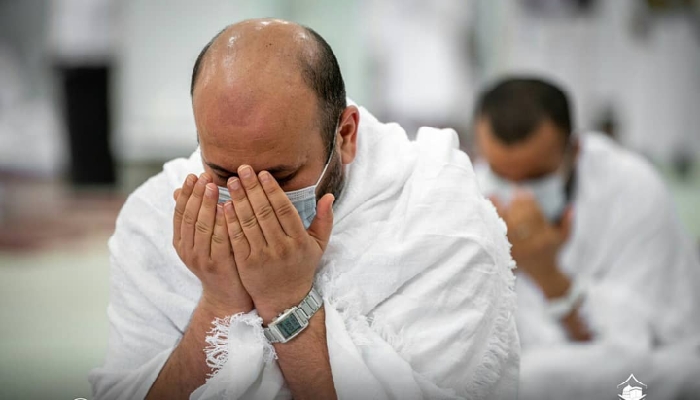
Mount Arafat, July 30: Muslim pilgrims converged Thursday on Saudi Arabia's Mount Arafat for the climax of this year's hajj, the smallest in modern times and a sharp contrast to the massive crowds of previous years.

A tight security cordon has been erected all around the foot of the rocky hill outside Mecca, also known as Jabal al-Rahma or Mount of Mercy.

Pilgrims, donning masks and observing social distancing, were brought in buses from neighbouring Mina, state television showed, as Saudi authorities impose measures to prevent a coronavirus outbreak.

They were subject to temperature checks and attended a sermon -- which state media said was translated into 10 languages -- before they set off on the climb to the summit for hours of Koran recitals and prayers to atone for their sins.

The scene was strikingly different to last year's ritual when a sea of pilgrims ascended Mount Arafat, marshalled by tens of thousands of stewards in a bid to prevent any crushes.

After sunset prayers, pilgrims will make their way down Mount Arafat to Muzdalifah, another holy site where they will sleep under the stars to prepare for the final stage of hajj, the symbolic "stoning of the devil".

It takes place on Friday and also marks the beginning of Eid al-Adha, the festival of sacrifice.

The hajj, one of the five pillars of Islam and a must for able-bodied Muslims at least once in their lifetime, is usually one of the world's largest religious gatherings.

But only up to 10,000 people already residing in the kingdom will participate in this year's ritual, compared with 2019's gathering of some 2.5 million from around the world.

"You are not our guests but those of God, the custodian of the two holy mosques (Saudi Arabia's King Salman) and the nation," Hajj Minister Mohammad Benten said in a video released by the media ministry on Wednesday.

Security cordon

A security cordon has been thrown around the holy sites to prevent any security breaches, an interior ministry spokesman said.

Riyadh faced strong criticism in 2015 when some 2,300 worshippers were killed in the deadliest stampede in the gathering's history.

But this year, those risks are greatly reduced by the much smaller crowd.

The pilgrims have all been tested for the virus, and foreign journalists were barred from this year's hajj, usually a huge global media event.

As part of the rites completed over five days in the holy city of Mecca and its surroundings, the pilgrims converged on Mount Arafat after spending the night in Mina.

A district of Mecca, Mina sits in a narrow valley surrounded by rocky mountains, and is transformed each year into a vast encampment for pilgrims.

They began the hajj on Wednesday with their first "tawaf", the circumambulation of the Kaaba, a large structure in Mecca’s Grand Mosque towards which Muslims around the world pray.

The Kaaba is draped in a black cloth embroidered in gold with Koranic verses and known as the kiswa, which is changed each year during the pilgrimage.

Pilgrims were brought inside the mosque in small batches, walking along paths marked on the floor, in sharp contrast to the normal sea of humanity that swirls around the Kaaba during hajj.

Comments

Add new comment

  • Coastaldigest.com reserves the right to delete or block any comments.
  • Coastaldigset.com is not responsible for its readers’ comments.
  • Comments that are abusive, incendiary or irrelevant are strictly prohibited.
  • Please use a genuine email ID and provide your name to avoid reject.
KT
May 18,2020

May 18: As the UAE authorities have asked all residents to avoid gatherings, it is clear that - for the first time - it's going to be a #StayHome Eid. But experts say that although it will be different, the celebration will be just as meaningful.

It is important to remember that the Eid prayer can be performed at home either individually or with family members under the sane roof, said Dr Mohammed Eyada Ayoub Alkobaisi, a Grand Mufti with the Islamic Affairs and Charitable Activities Department in Dubai.

Dr Alkobaisi said this prayer is a highly recommended Sunnah or practice urged by the Prophet Muhammad (Peace be upon him).

"Eid Prayer must be performed openly, unless we are prevented for an acceptable reason, such as fear for self, wellbeing, property, etc." Under the current circumstances, prayers can be offered from home, he said.

But what the faithful will likely miss is listening to the khutbah or the sermon of Eid with a crowd. The sight of people pouring out into the streets and coming together for prayer and worship would not be unfolding this time.

Dr Sheikh Mohamed Ashmawy, an Islamic researcher, said that in this time of Covid, doing away with several Eid traditions would be necessary for everyone's safety.

"The ban is is line with the ongoing preventive measures to curb the spread of Covid-19," he said.

However, it doesn't mean people can't celebrate and exchange heartfelt greetings, he added.

"We can greet each other remotely on the phone or via social media networks."

Islamic researcher Sheikh Mohamed Wasfi said audio-visual smart apps have made communication much easier, even bringing people closer than before.

"Of course, families and friends wish to hug, shake hands and see each other personally, but this will be a big risk these days," he said.

Sheikh Asadullah Del Mohamed, an imam, reminded that banquets, parties and visits are discouraged to avoid crowds and gathering.

Recently, 30 people from two families tested positive for the virus after breaking social distancing rules and holding a gathering.

Faithful's sentiments

Ibrahim Abdelkader, an Egyptian auditor, said that while it would be sad to spend Eid Al Fitr at home, he understood that it is for everyone's safety.

"Better to stay home than be sorry," said Ahmad Jamil, a Syrian resident.

Rashid Saeed, an Emirati national, said people are advised to just check on each other by phone or video and voice call apps.

"While Eid prayers is banned in congregation, it's not acceptable at all for some people to carelessly gather and exchange visits," he said.

Abdullah Al Saleh, an Emirati national, said he and all his relatives used to gather for breakfast after the Eid prayer - but this time, they are ready to do it in their own homes.

Mohamed Ibrahim, another Emirati, said he would surely miss seeing his kids happily prancing around with their new clothes and enjoying the outdoors like every year.

"But, I agree as it is for their health, safety and wellbeing," he said.

THINGS TO REMEMBER IN CELEBRATING EID THIS YEAR

>Perform the Eid prayer at home, individually or with family members living with you

>Exchange greetings with loved ones and friends via phone calls or online

>No hugs

>No handshakes

>No gatherings

>No visits to other homes

Comments

Add new comment

  • Coastaldigest.com reserves the right to delete or block any comments.
  • Coastaldigset.com is not responsible for its readers’ comments.
  • Comments that are abusive, incendiary or irrelevant are strictly prohibited.
  • Please use a genuine email ID and provide your name to avoid reject.