Saudi Arabia strips Osama bin Laden's son  Hamza of citizenship

Arab News
March 2, 2019

Riyadh, Mar 2: Saudi Arabia has stripped citizenship from Hamza bin Laden, the son of dead Al-Qaeda leader Osama bin Laden. Bin Laden, who is thought to be about 30, had his citizenship removed on Feb. 22, the official gazette Umm Al-Qura said on Friday.

The US State Department offered a reward of up to $1 million on Thursday for information leading “to the identification or location in any country” of bin Laden, who it described as a key Al-Qaeda leader.

“Since at least August 2015, he has released audio and video messages on the internet calling on his followers to launch attacks against the United States and its Western allies,” the department said.

Osama bin Laden was killed by US special forces who raided his compound in Pakistan in 2011. Hamza was thought to be under house arrest in Iran at the time, and documents recovered from the compound suggested attempts to reunite him with his father.

Hamza was introduced by the new Al-Qaeda leader Ayman Al-Zawahiri in an audio message in 2015. He has called for acts of terrorism in Western capitals and threatened to take revenge against the US for his father’s killing, the State Department said in 2017 when it designated him as a global terrorist.

He also threatened to target Americans abroad and urged Saudi tribes to unite with Yemen’s Al-Qaeda in the Arabian Peninsula to fight against Saudi Arabia, it said.

Bin Laden’s whereabouts have been the subject of speculation for years, with reports of him living in Pakistan, Afghanistan, Syria and Iran.

Comments

Add new comment

  • Coastaldigest.com reserves the right to delete or block any comments.
  • Coastaldigset.com is not responsible for its readers’ comments.
  • Comments that are abusive, incendiary or irrelevant are strictly prohibited.
  • Please use a genuine email ID and provide your name to avoid reject.
News Network
May 26,2020

Dubai, May 26: Business activities will reopen from 6am to 11pm as of Wednesday, May 27, across the emirate, it was announced on Monday.

The announcement of reopening business activities followed a virtual meeting of Dubai’s Dubai’s Supreme Committee of Crisis and Disaster Management chaired by Sheikh Hamdan Bin Mohammed Bin Rashid Al Maktoum, Crown Prince of Dubai and Chairman of the Executive Council.

The virtual meeting was also attended by Sheikh Maktoum Bin Mohammed Bin Rashid Al Maktoum, Deputy Ruler of Dubai, and Sheikh Mansour Bin Mohammed Bin Rashid Al Maktoum, Chairman of the committee and members of the committee.

The gradual reopening of business activities in Dubai will take place from the fourth day of Eid Al Fitr, Wednesday, May 27. Once the announcement comes into effect, there will be no restrictions on movement between 6am and 11pm.

The decision followed a comprehensive assessment of the committee’s reports, various health and socio-economic aspects and a thorough review of the COVID-19 situation. International guidelines for co-existing with COVID-19 were also taken into consideration before making the decision. The new measures are aimed at adapting to the COVID-19 situation without disrupting activity in vital sectors while strictly observing precautionary measures including wearing of face masks, observing minimum physical distancing of two metres, use of sanitisers and regular handwashing with soap and water for 20 seconds.

Sheikh Hamdan stressed on the need for Dubai authorities to further raise community awareness about precautionary measures. Highlighting Sheikh Mohammed’s statement “Everyone is responsible”, he said the community should understand the importance of strictly following preventive steps. Fully adhering to guidelines is key to restoring normal life, he added.

“We are aware of the pressures many sectors are facing because of the repercussions of the COVID-19 pandemic. The UAE society has high levels of resilience to any crises and challenges. We have been following the severe impact of the COVID-19 outbreak on countries around the world. What makes us different is our ability to deal positively with changes and our agility. We have all the elements necessary to adapt to these challenging circumstances. I am confident that all members of the society will come together to overcome this crisis as soon as possible,” Sheikh Hamdan said.

During the meeting, Sheikh Hamdan was briefed about the latest developments related to the crisis and the readiness of various sectors in Dubai, mainly the healthcare sector, to deal with any scenario in the upcoming period.

Recent proactive measures have reinforced Dubai’s ability to deal with any unforeseen situation. The emirate has enhanced its hospital capacity by joining hands with the private sector and set up a fully equipped field hospital in Dubai World Trade Centre, which can accommodate up to 3,000 beds.

Sheikh Hamdan was also briefed on the potential capacity of the field hospital at Dubai Parks and Resorts, which was built under the directives and with the generous support of His Highness Sheikh Mohamed Bin Zayed Al Nahyan, Crown Prince of Abu Dhabi and Deputy Supreme Commander of the UAE Armed Forces. The 29,000 square metre hospital set up by the Abu Dhabi Health Services Company (SEHA) can accommodate up to 1,200 patients.

Sheikh Hamdan also reviewed preparations to gradually reopen various spheres of life while maintaining stringent precautionary and preventive measures including physical distancing, wearing of face masks, use of sanitisers and prevention of congestion and crowding. Protective measures also include guidelines on social customs and behaviour for members of the community, especially with regard to family visits.

Sheikh Hamdan was also briefed on the preparedness of key authorities in Dubai to manage the next phase, including Dubai Health Authority (DHA), COVID-19 Command and Control Centre (CCC), Dubai Police, State Security Department, Dubai Civil Defence, Dubai Ambulance, Dubai Municipality, Roads and Transport Authority (RTA), Department of Tourism and Commerce Marketing, the Department of Economic Development in Dubai (DED), Government of Dubai Media Office (GDMO) and other government entities whose efforts are key to maintaining the progress achieved in containing the COVID-19 pandemic.

Sheikh Hamdan called on all key organisations to intensify monitoring to ensure institutions, economic sectors and the public comply with all precautionary guidelines. He expressed his appreciation for the efforts of the National Emergency Crisis and Disaster Management Authority (NCEMA) and the Ministry of Health and Prevention. He also expressed his appreciation for the efforts of the Supreme Committee of Crisis and Disaster Management and all local and federal authorities to combat COVID-19. The Crown Prince affirmed that the safety and security of citizens and residents remain the highest priority of the UAE’s leadership.

The latest announcement comes as the Dubai government continues its efforts to ensure the highest level of safety for members of the community with the support of various entities. Its key recent measures have included intensified sterilisation at various areas and facilities and increased COVID-19 tests in densely populated areas to facilitate early detection of cases and isolation of people testing positive.

Dubai has deployed state-of-the-art equipment to support medical staff in conducting widespread tests. These have included tests for critical segments like people of determination and the elderly. The emirate has also enhanced monitoring of various entities to ensure compliance with precautionary measures and imposed fines on individuals and entities violating guidelines. Additionally, the Government of Dubai launched urgent economic measures to support sectors most affected by the pandemic including a Dh1.5 billion economic stimulus package introduced in March to ease the crisis’s financial impact on small and medium enterprises.


Comments

Add new comment

  • Coastaldigest.com reserves the right to delete or block any comments.
  • Coastaldigset.com is not responsible for its readers’ comments.
  • Comments that are abusive, incendiary or irrelevant are strictly prohibited.
  • Please use a genuine email ID and provide your name to avoid reject.
News Network
July 28,2020

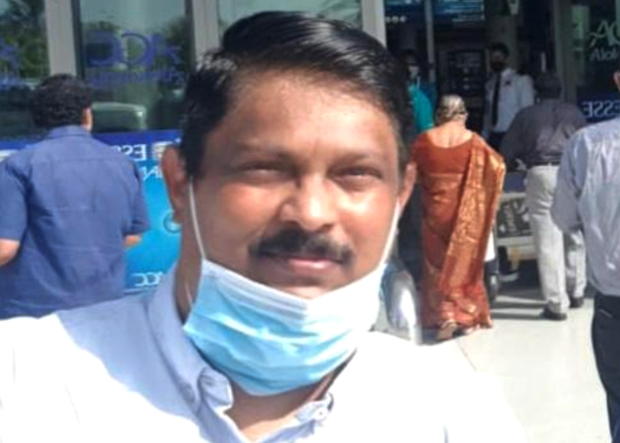
Dubai, Jul 28: A heart-broken father who lost his 19-year-old son in a tragic car accident during Christmas last year has sponsored the repatriation costs of 61 Indians stranded in the UAE.

 The special flydubai repatriation flight, chartered by the All Kerala Colleges Alumni Federation (Akcaf) volunteer group, of which he is a member of, departed from Dubai to Kochi on July 25 carrying 199 passengers.

 On this particular flight, I sponsored 55 air tickets," said TN Krishnakumar, a sales and marketing director. He had lost his son Rohit Krishnakumar in a car accident, which also claimed the life of the teen's friend, Sharat Kumar (21).

"All passengers who were registered with the Indian missions were also asked to register on the Akcaf volunteer group website. Each passenger was further vetted, after which we made home visits to ensure that all the applicants were genuinely in need of financial support and repatriation," he said.

Commenting on what inspired him to dedicate himself to community work, Krishankumar said: "When a situation like this comes up, you realise there is no meaning in money. I invested everything I made into my son, and that had crashed in front of my eyes. He was a third-year medical student at the University of Manchester in the UK and had returned home for a vacation when the accident took place. Since then, I have been involved in a lot of social activities. If I do not do this, there is no meaning to my existence."

Since the outbreak of the Covid-19 pandemic, Krishnakumar said the group has supported thousands of individuals in need of help. "We supported unemployed people with several hundred bags of grocery kits and other necessary items. We also supported Covid-19 patients by transferring them to the medical facility in Warsan, etc.," he said.

"I come from a very middle-class family. I got a scholarship to study in college, and I studied with the help of taxpayers' money. I have always wanted to give back to society. I have grown immensely in life and now is my time to give back.," he added.

Krishnakumar also sponsors the education of over 1,000 academically gifted school children in Kerala's government-aided schools. He is a life trustee at the College of Engineering Trivandrum Alumni Galaxy Charitable Trust and an active participant towards various educational causes.

Comments

Add new comment

  • Coastaldigest.com reserves the right to delete or block any comments.
  • Coastaldigset.com is not responsible for its readers’ comments.
  • Comments that are abusive, incendiary or irrelevant are strictly prohibited.
  • Please use a genuine email ID and provide your name to avoid reject.
Agencies
August 2,2020

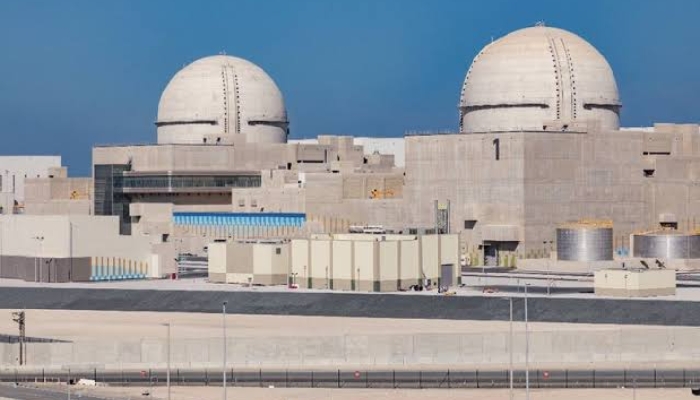
Dubai, Aug 2: The United Arab Emirates (UAE) announced on Saturday that it has started operations in the first of four reactors at the Barakah nuclear power station - the first nuclear power plant in the Arab world.

Emirates Nuclear Energy Corporation (ENEC), which is building and operating the plant with Korea Electric Power Corporation (KEPCO) said in a press release that its subsidiary Nawah Energy Company "has successfully started up Unit 1 of the Barakah Nuclear Energy Plant, located in the Al Dhafrah Region of Abu Dhabi".

That signals that Unit 1, which had fuel rods loaded in March, has achieved "criticality" - a sustained fission chain reaction.

"The start-up of Unit 1 marks the first time that the reactor safely produces heat, which is used to create steam, turning a turbine to generate electricity," said ENEC.

Barakah, which was originally scheduled to open in 2017, has been dogged by delays and is billions of dollars over budget. It has also raised myriad concerns among nuclear energy veterans who are concerned about the potential risks Barakah could visit upon the Arabian Peninsula, from an environmental catastrophe to a nuclear arms race.

Paul Dorfman, an honorary senior research fellow at the Energy Institute, University College London and founder and chair of the Nuclear Consulting Group, has criticised the Barakah reactors' "cheap and cheerful" design that he says cuts corners on safety.

Dorfman authored a report (PDF) last year detailing key safety features Barakah's reactors lack, such as a "core catcher" to literally stop the core of a reactor from breaching the containment building in the event of a meltdown. The reactors are also missing so-called Generation III Defence-In-Depth reinforcements to the containment building to shield against a radiological release resulting from a missile or fighter jet attack.

Both of these engineering features are standard on new reactors built in Europe, says Dorfman.

There have been at least 13 aerial attacks on nuclear facilities in the Middle East - more than any other region on earth.

The vulnerability of critical infrastructure in the Arabian Peninsula was further laid bare last year after Saudi Arabia's oil facilities at Abqaiq and Khurais were attacked by 18 drones and seven cruise missiles - an assault that temporarily knocked out more than half of the kingdom's oil production.

On Saturday, Dorfman reiterated his concern that there is no regional protocol in place to determine liability should an accident or incident at Barakah result in radioactive contamination spreading from the UAE to its neighbours. 

"Given Barakah has started up, because of all the well-rehearsed nuclear safety and security problems, it may be critically important that the Gulf states collectively evolve a Nuclear Accident Liability Convention, so that if anything does go wrong, victim states may have some sort of redress," Dorfman told Al Jazeera. 

The UAE has substantial oil and gas reserves, but it has made huge investments in developing alternative energy sources, including nuclear and solar.

Experts though have questioned why the UAE - which is bathed in sunlight and wind - has pushed ahead with nuclear energy - a far more expensive and riskier option than renewable energy sources.

When the UAE first announced Barakah in 2009, nuclear power was cheaper than solar and wind. But by 2012 - when the Emirates started breaking ground to build the reactors - solar and wind costs had plummeted dramatically.

Between 2009 and 2019, utility-scale average solar photovoltaic costs fell 89 percent and wind fell 43 percent, while nuclear jumped 26 percent, according to an analysis by the financial advisory and asset manager Lazard.

There are also concerns about the potential for Barakah to foment nuclear proliferation in the Middle East - a region rife with geopolitical fault lines and well-documented history of nuclear secrecy.

The UAE has sought to distance itself from the region's bad behaviour by agreeing not to enrich its own uranium or reprocess spent fuel. It has also signed up to the United Nation's nuclear watchdog's Additional Protocol, significantly enhancing inspection capabilities, and secured a 123 Agreement with the United States that allows bilateral civilian nuclear cooperation.

Comments

Add new comment

  • Coastaldigest.com reserves the right to delete or block any comments.
  • Coastaldigset.com is not responsible for its readers’ comments.
  • Comments that are abusive, incendiary or irrelevant are strictly prohibited.
  • Please use a genuine email ID and provide your name to avoid reject.