



Saudi: Companies given four more months to implement wage protection system

April 20, 2014

Saudi_wage_protection_system

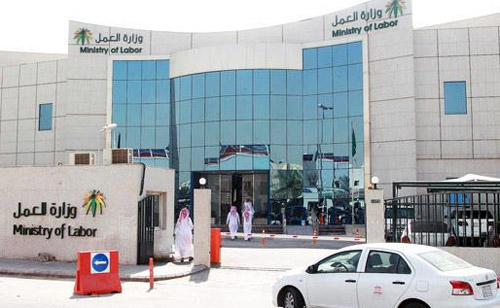
Riyadh, Apr 20: Companies with at least 1,000 workers are being given four more months to implement a wage protection system that was introduced by the Labor Ministry last year in a bid to ensure employees’ rights.

The ministry’s decision to postpone the implementation of the fourth phase of the protection bill for companies with more than 500 workers, originally scheduled for July 1, to Nov. 1 was taken after the Saudi Arabian Monetary Agency (SAMA) demanded that pressure be eased on the Kingdom’s banks, which have been tasked with salary payment under the new system.

The implementation of the fourth phase, however, will coincide with the payment of Hafiz unemployment benefits to jobless youth, putting more pressure on banks.

“The ministry made the decision following detailed studies and discussions with the SAMA,” Abdullah Abu Thnain, undersecretary for inspections and work environment development, told the SPA.

Companies employing 500 workers on average far outnumber establishments in other categories, he said.

The wage protection system involves the creation of a database containing updates on wage payment in the private sector. Information includes the amount and date the salary was paid. The new system also stipulates that salary payment should be made solely through banks.

Private companies in the Kingdom were categorized according to the number of workers they employ.

The first phase involved companies with more than 3,000 workers. A total of 119 companies fulfilled conditions out of 184 companies in that category, while 48 companies pledged to submit their updated data soon after the deadline and 17 had services halted by the ministry for failure to comply with the new system.

The second phase, which was implemented on companies with more than 2,000 workers, saw 81 companies fulfill the ministry’s demands and 13 penalized for failure to comply, while 17 companies had services resumed after complying past the deadline.

“Only 445 private schools out of a total of 1,183 schools fulfilled the criteria,” he said. “Services to 713 have been suspended, while 25 schools had services resumed after updating their information.”

Companies that fail to comply with the regulations within two months of the deadline have their services suspended. Renewal of work permits, however, is not affected by these suspensions.

Employees working with companies that fail to comply three months past the deadline can transfer to other companies without the permission of their sponsors.

Comments

Add new comment

  • Coastaldigest.com reserves the right to delete or block any comments.
  • Coastaldigset.com is not responsible for its readers’ comments.
  • Comments that are abusive, incendiary or irrelevant are strictly prohibited.
  • Please use a genuine email ID and provide your name to avoid reject.
Agencies
June 5,2020

Expatriate workers who fail to abide by the coronavirus protocols in Kingdom of Saudi Arabia may face deportation, according to media reports.

“Individuals who fail to abide by preventive measures, including wearing medical or cloth face masks, failing to observe social distancing and refusing to have their temperatures taken, will be fined SR1,000. The fine will be doubled if the violation is repeated. Residents will be deported after paying the fines,” Okaz newspaper said.

Authorities called on people to report offenders by dialling the toll free number 999, except for the holy city of Makka, where the toll free number is 911.

As per the newly-revised Saudi protocols, social gatherings such as mourning or celebration events that take place inside homes, rest houses or farms, are allowed, but attendants should not exceed 50 persons.

The private sector is also required to adhere to precautionary measures: providing their staff with disinfectants and sanitisers, taking the temperatures of both staff and customers at the entrances of shopping malls.

Other measures include sterilising shopping trolleys and baskets after each use, sanitising facilities and surfaces, closing children’s play areas and fitting rooms in shopping malls and ready-wear outlets.

Authorities highlighted the need for all individuals and entities to abide by health safety rules, social-distancing protocol and the new guidelines set for social gatherings.

Comments

Add new comment

  • Coastaldigest.com reserves the right to delete or block any comments.
  • Coastaldigset.com is not responsible for its readers’ comments.
  • Comments that are abusive, incendiary or irrelevant are strictly prohibited.
  • Please use a genuine email ID and provide your name to avoid reject.
News Network
February 5,2020

The Organisation of Islamic Cooperation (OIC) has said it rejects US President  Donald Trump 's recently unveiled Middle East plan.

The 57-member body, which held a summit on Monday  to discuss the plan in Saudi Arabia's Jeddah, said in a statement that it "calls on all member states not to engage with this plan or to cooperate with the US administration in implementing it in any form".

Requested by the Palestinian leadership, the meeting of the body came two days after the Arab League rejected Trump's so-called "deal of the century", saying: "It does not meet the minimum rights and aspirations of Palestinian people."

Addressing a pro-Israel audience at the White House with Israeli Prime Minister Benjamin Netanyahu by his side, Trump on Tuesday described his long-delayed plan for resolving the Israeli-Palestinian conflict as a "win-win solution" for both sides.

The US president said his proposed deal would ensure the establishment of a two-state solution, promising Palestinians a state of their own with a new capital in Abu Dis, a suburb just outside Jerusalem. Trump also said Jerusalem would be the "undivided capital" of Israel. The Palestinians want both occupied East Jerusalem and the West Bank to be part of a future state.

Palestinian leaders, who were absent during the announcement and had rejected the proposal even before its release, denounced the plan as "a new Balfour Declaration" that heavily favoured Israel and would deny them a viable independent state.

The OIC said in a statement on Twitter on Sunday that its "open-ended executive committee meeting" at the level of foreign ministers would "discuss the organisation's position after the US administration announced its peace plan".

With member states from four continents, the OIC is the second-largest intergovernmental organisation in the world after the United Nations, with a collective population reaching more than 1.8 billion.

The majority of its member states are Muslim-majority countries, while others have significant Muslim populations, including several African and South American countries. While the 22 members of the Arab League are also part of the OIC, the organisation has several significant non-Arab member states, including Turkey, Iran and Pakistan. It also has five observer members, including Russia and Thailand.

Iran 'barred'

Meanwhile, Iran on Monday accused its regional rival Saudi Arabia of blocking its officials from attending the OIC meeting.

"The government of Saudi Arabia has prevented the participation of the Iranian delegation in the meeting to examine the 'deal of the century' plan at the headquarters of the Organization of Islamic Cooperation," Fars news agency quoted Abbas Mousavi, spokesman for Iran's foreign ministry, as saying.

Mousavi said Iran - one of the countries to strongly condemn Trump's plan - had filed a complaint with the OIC and accused its regional rival of misusing its position as the host for the organisation's headquarters.

There was no immediate comment from Saudi officials.

Following the unveiling of Trump's plan, the Saudi foreign ministry expressed appreciation for Trump's efforts and support for direct peace negotiations under Washington's auspices, while state media reported that King Salman had called Palestinian President Mahmoud Abbas to reassure him of Riyadh's unwavering commitment to the Palestinian cause.

The announcement of Trump's plan drew mixed responses from Arab states.

Observers said the reaction was indicative of the division among Arab countries and their inability to prioritise the Palestinian people's plight over domestic economic agendas and political calculations in relation to the Trump administration.

Comments

Add new comment

  • Coastaldigest.com reserves the right to delete or block any comments.
  • Coastaldigset.com is not responsible for its readers’ comments.
  • Comments that are abusive, incendiary or irrelevant are strictly prohibited.
  • Please use a genuine email ID and provide your name to avoid reject.
News Network
March 18,2020

Riyadh, Mar 18: Private-sector businesses in Saudi Arabia on Wednesday were ordered to introduce enforced remote working for all employees for 15 days in an attempt to prevent the spread of the coronavirus.

Businesses that require staff to be physically present to ensure they continue to operate — including those in vital or sensitive sectors such as electricity, water and communications — must reduce the number of workers in their offices to the bare minimum. This can be no more than 40 percent of the total number of staff.

In such cases precautionary measures set by the Ministry of Health must be followed. At offices, and staff accommodation, with more than 50 workers, an area at the entrance must be provided where temperatures can be taken and symptoms checked.

Employers must also set up a mechanism for workers to report any symptoms, such as high temperature, coughing or shortness of breath, or contact they have had with infected individuals or people who recently returned from other countries without following proper Ministry of Health quarantine procedures.

Inside offices, a safe amount of space between employees must be maintained at all times. In addition, all health clubs and nurseries provided by employers must close.

Pregnant women and new mothers, people suffering from respiratory diseases, those with immune-system problems or chronic conditions, cancer patients and employees above the age of 55 are to be given 14 days compulsory paid leave, which will not be deducted from their annual entitlement.

Businesses that are excluded from the new measures include pharmacies and supermarkets, and their suppliers. Private-sector organizations that provide services to government agencies must contact them before suspending workplace attendance. Any other business that considers it impossible to operate with only 40 percent of staff in the workplace must submit an exemption request to the authority that supervises it.

Comments

Add new comment

  • Coastaldigest.com reserves the right to delete or block any comments.
  • Coastaldigset.com is not responsible for its readers’ comments.
  • Comments that are abusive, incendiary or irrelevant are strictly prohibited.
  • Please use a genuine email ID and provide your name to avoid reject.