


Saudi king opens key projects in Alkhobar

November 29, 2016

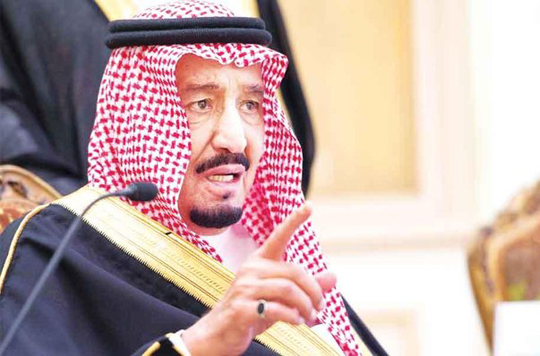
Riyadh, Nov 29: Custodian of the Two Holy Mosques King Salman on Monday inaugurated a number of key development projects in Alkhobar in Saudi Arabia’s Eastern Province.
salman

They include hospital developments with hundreds of new beds for patients as well as environment, water and agriculture projects.

Speaking on the occasion, the king said: “I am very pleased to be among you today to celebrate these projects that will serve our country and citizens.”

The king said that the Kingdom is blessed with security, tranquility and prosperity and that “our citizens come together as one.”

Health Minister Tawfiq Al-Rabiah highlighted health projects, which include a children and maternity hospital in Dammam with a capacity of 500 beds, Saud bin Jalawi Hospital in Al-Ahsa with a capacity of 300 beds, King Faisal General Hospital in Al-Ahsa with a capacity of 200 beds and Al-Omran General Hospital with a capacity of 100 beds.

King Salman and attendees later watched a visual presentation about the ministry’s programs. The king then inaugurated the health projects as well as environment, water and agriculture projects.

The Saudi Cabinet, chaired by King Salman at Al-Aziziyah Palace in Alkhobar Monday, condemned the recent deadly terrorist attacks in Turkey and Egypt.

The Cabinet also underlined the need to ensure more legitimacy and accountability in using social media networks, which will go a long way in curbing extremism and terrorism.

The Cabinet expressed sorrow over the explosion that killed and wounded several innocent people outside the governor’s office in the southern Turkish city of Adana.

In another incident, a bomb blast in the southeastern Turkish province of Sirnak killed at least two children and wounded several. Another target of terror was the Sinai in Egypt, where more than 12 soldiers were killed, reportedly by Daesh.

The Cabinet reaffirmed the Kingdom’s stand and solidarity with Egypt and Turkey in the fight against terrorism, expressing its sincere condolences and sympathy to the families of the victims and wishing a speedy recovery for the wounded.

At the outset of the Cabinet session, King Salman thanked Allah for “the development, growth and prosperity” of the Kingdom, especially the Eastern Province, stressing that “the nation is proceeding on right track to achieve prosperity for citizens and for the nation.”

King Salman briefed the Cabinet on the results of his meeting with the king of Sweden, the telephone call received from King Hamad bin Isa Al-Khalifa of Bahrain, and the invitation received from Bahrain to participate in the GCC summit.

Adel Al-Toraifi, minister of culture and information, said in a statement that the Cabinet commended various scientific and economic conferences hosted by the Kingdom during the past weeks. He also appreciated the first conference organized on the social media that called for legitimate control and use of the social networks “to fight extremism and terrorism.”

The Cabinet also underlined the Kingdom’s hosting of 14th International Arab Conference for Mineral Resources, and the accompanying exhibition under the theme “Arab Mineral Resources, Strategic Resources and Promising Investment Opportunities.”

The Cabinet lauded the signing of the pact for implementing a nutrition program to counter malnutrition in Hodeidah region of Yemen at a cost of $10 million.

The agreement was signed by KSRelief in Rome with the World Food Program that would address the risk of acute malnutrition for children under five. The Cabinet noted that emergency food aid is being provided for more than 464,000 beneficiaries in Hodeidah for the last six months.

The Cabinet commended the efforts that led to the arrest of a man who shot at soldiers in Tabuk, and seven other suspects in connection to the case. One soldier was killed in the shootout. The Cabinet also expressed its appreciation for “the high skills and the capabilities of security agencies that led to the foiling of several terror plots and plans.”

Comments

Add new comment

  • Coastaldigest.com reserves the right to delete or block any comments.
  • Coastaldigset.com is not responsible for its readers’ comments.
  • Comments that are abusive, incendiary or irrelevant are strictly prohibited.
  • Please use a genuine email ID and provide your name to avoid reject.
KT
May 18,2020

May 18: As the UAE authorities have asked all residents to avoid gatherings, it is clear that - for the first time - it's going to be a #StayHome Eid. But experts say that although it will be different, the celebration will be just as meaningful.

It is important to remember that the Eid prayer can be performed at home either individually or with family members under the sane roof, said Dr Mohammed Eyada Ayoub Alkobaisi, a Grand Mufti with the Islamic Affairs and Charitable Activities Department in Dubai.

Dr Alkobaisi said this prayer is a highly recommended Sunnah or practice urged by the Prophet Muhammad (Peace be upon him).

"Eid Prayer must be performed openly, unless we are prevented for an acceptable reason, such as fear for self, wellbeing, property, etc." Under the current circumstances, prayers can be offered from home, he said.

But what the faithful will likely miss is listening to the khutbah or the sermon of Eid with a crowd. The sight of people pouring out into the streets and coming together for prayer and worship would not be unfolding this time.

Dr Sheikh Mohamed Ashmawy, an Islamic researcher, said that in this time of Covid, doing away with several Eid traditions would be necessary for everyone's safety.

"The ban is is line with the ongoing preventive measures to curb the spread of Covid-19," he said.

However, it doesn't mean people can't celebrate and exchange heartfelt greetings, he added.

"We can greet each other remotely on the phone or via social media networks."

Islamic researcher Sheikh Mohamed Wasfi said audio-visual smart apps have made communication much easier, even bringing people closer than before.

"Of course, families and friends wish to hug, shake hands and see each other personally, but this will be a big risk these days," he said.

Sheikh Asadullah Del Mohamed, an imam, reminded that banquets, parties and visits are discouraged to avoid crowds and gathering.

Recently, 30 people from two families tested positive for the virus after breaking social distancing rules and holding a gathering.

Faithful's sentiments

Ibrahim Abdelkader, an Egyptian auditor, said that while it would be sad to spend Eid Al Fitr at home, he understood that it is for everyone's safety.

"Better to stay home than be sorry," said Ahmad Jamil, a Syrian resident.

Rashid Saeed, an Emirati national, said people are advised to just check on each other by phone or video and voice call apps.

"While Eid prayers is banned in congregation, it's not acceptable at all for some people to carelessly gather and exchange visits," he said.

Abdullah Al Saleh, an Emirati national, said he and all his relatives used to gather for breakfast after the Eid prayer - but this time, they are ready to do it in their own homes.

Mohamed Ibrahim, another Emirati, said he would surely miss seeing his kids happily prancing around with their new clothes and enjoying the outdoors like every year.

"But, I agree as it is for their health, safety and wellbeing," he said.

THINGS TO REMEMBER IN CELEBRATING EID THIS YEAR

>Perform the Eid prayer at home, individually or with family members living with you

>Exchange greetings with loved ones and friends via phone calls or online

>No hugs

>No handshakes

>No gatherings

>No visits to other homes

Comments

Add new comment

  • Coastaldigest.com reserves the right to delete or block any comments.
  • Coastaldigset.com is not responsible for its readers’ comments.
  • Comments that are abusive, incendiary or irrelevant are strictly prohibited.
  • Please use a genuine email ID and provide your name to avoid reject.
Agencies
May 14,2020

Dubai, May 14: As many as 242 beggars of different nationalities have been nabbed by the Dubai Police since the beginning of the holy month of Ramadan.

Among those arrested, 143 were men, 21 were women and 78 were hawkers, said the police. "An anti-begging campaign was launched, especially to find beggar hotspots, to combat the negative phenomenon," said Colonel Ali Salem Al Shamsi, director of the anti-infiltrators department at the Dubai Police.

"Strict warnings have been issued to beggars to refrain from exploiting the sentiments of people during Ramadan," he added.

Col Al Shamsi also called on the public to stop helping them with money. "The public must direct those in dire straits through proper channels in order to get support from charitable institutions."

Col Al Shamsi also urged residents to report begging activities by calling 901 or through the Dubai Police app's 'Police Eye' feature.

Comments

Add new comment

  • Coastaldigest.com reserves the right to delete or block any comments.
  • Coastaldigset.com is not responsible for its readers’ comments.
  • Comments that are abusive, incendiary or irrelevant are strictly prohibited.
  • Please use a genuine email ID and provide your name to avoid reject.
Agencies
February 27,2020

Riyadh, Feb 27: Saudi Arabia on Thursday halted travel to the holiest sites in Islam over fears about a new viral epidemic just months ahead of the annual hajj pilgrimage, a move coming as the Mideast has over 220 confirmed cases of the illness.

The extraordinary decision by Saudi Arabia stops foreigners from reaching the holy city of Mecca and the Kaaba, the cube-shaped structure the world's 1.8 billion Muslims pray toward five times a day. It also said travel was suspended to Prophet Muhammad's mosque in Medina.

The decision showed the worry about the outbreak potentially spreading into Saudi Arabia, whose oil-rich monarchy stakes its legitimacy on protecting Islam's holy sites. The epicenter in the Mideast's most-affected country, Iran, appears to be in the holy Shiite city of Qom, where a shrine there sees the faithful reach out to kiss and touch it in reverence.

"Saudi Arabia renews its support for all international measures to limit the spread of this virus, and urges its citizens to exercise caution before traveling to countries experiencing coronavirus outbreaks," the Saudi Foreign Ministry said in a statement announcing the decision.

"We ask God Almighty to spare all humanity from all harm." Disease outbreaks always have been a concern surrounding the hajj, required of all able-bodied Muslims once in their life, especially as pilgrims come from all over the world.

The earliest recorded outbreak came in 632 as pilgrims fought off malaria. A cholera outbreak in 1821, for instance, killed an estimated 20,000 pilgrims. Another cholera outbreak in 1865 killed 15,000 pilgrims and then spread worldwide.

More recently, Saudi Arabia faced a danger from a related coronavirus that caused Middle East respiratory syndrome, or MERS. The kingdom increased its public health measures in 2012 and 2013, though no outbreak occurred.

While millions attend the 10-day hajj, this year set for late July into early August, millions more come during the rest of the year to the holy sites in the kingdom.

"It is unprecedented, at least in recent times, but given the worldwide spread of the virus and the global nature of the umrah, it makes sense from a public health and safety point of view," said Kristian Ulrichsen, a research fellow at the James A Baker III Institute for Public Policy at Rice University. "Especially since the Iranian example illustrates how a religious crossroads can so quickly amplify the spread and reach of the virus." The virus that causes the illness named COVID-19 has infected more than 80,000 people globally, mainly in China. The hardest-hit nation in the Mideast is Iran, where Health Ministry spokesman Kianoush Jahanpour said 19 people have died among 139 confirmed cases.

Experts are concerned Iran may be underreporting cases and deaths, given the illness's rapid spread from Iran across the Persian Gulf. For example, Iran still has not confirmed any cases in Mashhad, even though a number of cases reported in Kuwait are linked to the Iranian city.

In Bahrain, which confirmed 33 cases as of Thursday morning, authorities halted all flights to Iraq and Lebanon. It separately extended a 48-hour ban overflights from Dubai and Sharjah in the United Arab Emirates, through which infected travellers reached the island kingdom off the coast of Saudi Arabia.

Iranian President Hassan Rouhani said there were no immediate plans to quarantine cities but acknowledged it may take "one, two or three weeks” to get control of the virus in Iran.

As Iran's 80 million people find themselves increasingly isolated in the region by the outbreak, the country's sanctions-battered economy saw its currency slump to its lowest level against the US dollar in a year on Wednesday.

Comments

Add new comment

  • Coastaldigest.com reserves the right to delete or block any comments.
  • Coastaldigset.com is not responsible for its readers’ comments.
  • Comments that are abusive, incendiary or irrelevant are strictly prohibited.
  • Please use a genuine email ID and provide your name to avoid reject.