


Saudi King's Month-Long Journey In Asia With Traveling Court Of 1,000

March 11, 2017

Mar 11: Saudi King Salman bin Abdul Aziz's month-long journey through Asia has been eye-catching because of its scale. The world's most powerful royal is touring seven countries with a traveling court of more than 1,000 people, including 25 princes and 10 ministers.
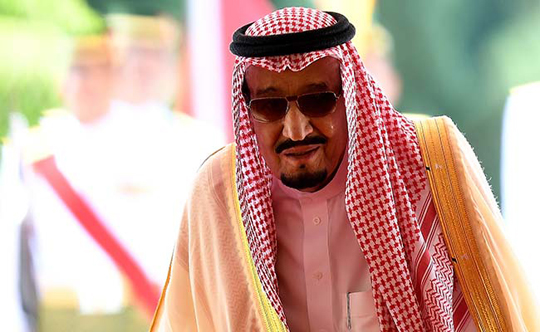
salman

The entourage's total baggage weighs a reported 506 tons.

This week, Salman decided to extend his stay at a luxury resort on the scenic Indonesian island of Bali - perhaps an easy decision - ahead of stops in Japan and China. Salman began his trip in Malaysia, where he oversaw the inking of lucrative oil pacts and was apparently the subject of a foiled assassination attempt before he called on the sultan of Brunei.

The trip has huge implications, both for regional politics and for Washington. The Saudis are deeply aware of the need to diversify their economy, which is heavily dependent on oil exports, and are keen to attract investment from major Asian economies in addition to spreading their own largesse. They also see Southeast Asia, with its huge population of Sunni Muslims, as a realm where they can exert power.

At a time when uncertainty and political paralysis seems to be gripping the West, a pivot to Asia makes a great deal of sense. "There can also be no doubt that the not-too-subtle subtext of the king's tour is a signal that Saudi Arabia will preserve its flexibility when it comes to its dealings with the United States," wrote Gerald Feierstein in Foreign Affairs.

But one arena for Saudi expansion is perhaps surprising: the Maldives, which Salman will visit on the way back to Riyadh. The nation made of Indian Ocean islands may have a tiny population - about 400,000 people - but it is a vast ocean state, spanning some 1,000 kilometers across some of the world's most significant shipping routes. Controversy is swirling there about a reported Saudi plan to invest billions of dollars in Faafu atoll, which comprises 26 islands.

The Maldivian government, led by President Abdulla Yameen, has argued that the deal would lead to infrastructure investment and new housing in a country imperiled by rising sea levels. Critics insist the government is essentially handing a chunk of the country to foreign buyers in order to line its own pockets.

A government statement this week rejected such claims. "The administration categorically rebuts allegations that the atoll has been 'sold off' to a foreign entity," it read. But little has been revealed about the plans for the atoll or the nature of the investment deal.

"I find it very difficult to believe this is a straightforward commercial enterprise," said opposition leader Mohamed Nasheed during a trip to Washington. "Usually you have to have a proper, transparent bidding process, but President Yameen has chosen to do it in the dark."

Nasheed, who lives in exile in London, endured years of imprisonment as a political dissident before helping bring down a three-decade-long dictatorship. He won the Maldives' first free and fair democratic elections in 2008, but his rule was cut short by what most international observers characterized as a coup in 2012.

A tumultuous period followed, in which Nasheed won fresh elections, was thwarted by political opponents and eventually ended up in jail once more on trumped-up charges. The work of an international team of lawyers, including Amal Clooney, won him medical leave last year and led him to claim asylum in Britain.

But Nasheed has not given up the fight, and he said he worries about the corrosive influence the Saudis may have on his country. "It's one thing not to have democracy and freedom of expression, to have a dictator," Nasheed said. "But it's another thing to lose an atoll, to lose sovereignty. I am sure that the Maldivian people are very worried, and they may see how they want to push back these designs."

The disquiet extends beyond simply the Saudi role in the atoll deal. The Maldives is an almost-exclusively Sunni Muslim country. In recent years, a troubling religious radicalization has taken root in what was historically one of the most laissez-faire corners of the Muslim world. An estimated 200 to 300 Maldivians have gone to Syria to join jihadist groups, an astonishing statistic when you consider the size of the nation's population. (If Americans went to Syria in the same proportion, there would be just under 165,000 of them - at minimum.)

Nasheed lays this in part at the feet of the Saudis, who have spent decades spreading their stridently orthodox brand of Islam to other Muslim-majority nations. In Indonesia, the world's most populous Muslim country, a network of Saudi-built schools, mosques and medical facilities has bred both goodwill toward the kingdom and a new generation of adherents to its uncompromising faith. "This very narrow version of Islam favors their authoritarian rule," Nasheed said of the Saudis. "It has been propagated in the Maldives for many years and has created a breeding ground for radical Islam."

The Saudis aren't the only outside power interested in the Maldives. China sees the Maldives as a key linchpin in its vision of a "new maritime Silk Route," threading Chinese energy and trade interests to the Middle East. Beijing has been steadily expanding its footprint in the Indian Ocean and deepening ties with Yameen's government.

Nasheed suggests Beijing may also have a role in the Saudi atoll project and may use its increasing leverage over the Maldives to shoulder aside its regional rival, India. The Maldivian government last year gave a Chinese state-run company a 50-year lease on an uninhabited island near the capital isle, Male.

"We do not want to sit in the middle of a Cold War in between countries," Nasheed said.

But when the mammoth entourage of the Saudi monarch eventually circles over the Maldives' turquoise lagoons, it will be hard not to see the start of a new Great Game in Asia.

Comments

Add new comment

  • Coastaldigest.com reserves the right to delete or block any comments.
  • Coastaldigset.com is not responsible for its readers’ comments.
  • Comments that are abusive, incendiary or irrelevant are strictly prohibited.
  • Please use a genuine email ID and provide your name to avoid reject.
Agencies
February 27,2020

Riyadh, Feb 27: Saudi Arabia on Thursday halted travel to the holiest sites in Islam over fears about a new viral epidemic just months ahead of the annual hajj pilgrimage, a move coming as the Mideast has over 220 confirmed cases of the illness.

The extraordinary decision by Saudi Arabia stops foreigners from reaching the holy city of Mecca and the Kaaba, the cube-shaped structure the world's 1.8 billion Muslims pray toward five times a day. It also said travel was suspended to Prophet Muhammad's mosque in Medina.

The decision showed the worry about the outbreak potentially spreading into Saudi Arabia, whose oil-rich monarchy stakes its legitimacy on protecting Islam's holy sites. The epicenter in the Mideast's most-affected country, Iran, appears to be in the holy Shiite city of Qom, where a shrine there sees the faithful reach out to kiss and touch it in reverence.

"Saudi Arabia renews its support for all international measures to limit the spread of this virus, and urges its citizens to exercise caution before traveling to countries experiencing coronavirus outbreaks," the Saudi Foreign Ministry said in a statement announcing the decision.

"We ask God Almighty to spare all humanity from all harm." Disease outbreaks always have been a concern surrounding the hajj, required of all able-bodied Muslims once in their life, especially as pilgrims come from all over the world.

The earliest recorded outbreak came in 632 as pilgrims fought off malaria. A cholera outbreak in 1821, for instance, killed an estimated 20,000 pilgrims. Another cholera outbreak in 1865 killed 15,000 pilgrims and then spread worldwide.

More recently, Saudi Arabia faced a danger from a related coronavirus that caused Middle East respiratory syndrome, or MERS. The kingdom increased its public health measures in 2012 and 2013, though no outbreak occurred.

While millions attend the 10-day hajj, this year set for late July into early August, millions more come during the rest of the year to the holy sites in the kingdom.

"It is unprecedented, at least in recent times, but given the worldwide spread of the virus and the global nature of the umrah, it makes sense from a public health and safety point of view," said Kristian Ulrichsen, a research fellow at the James A Baker III Institute for Public Policy at Rice University. "Especially since the Iranian example illustrates how a religious crossroads can so quickly amplify the spread and reach of the virus." The virus that causes the illness named COVID-19 has infected more than 80,000 people globally, mainly in China. The hardest-hit nation in the Mideast is Iran, where Health Ministry spokesman Kianoush Jahanpour said 19 people have died among 139 confirmed cases.

Experts are concerned Iran may be underreporting cases and deaths, given the illness's rapid spread from Iran across the Persian Gulf. For example, Iran still has not confirmed any cases in Mashhad, even though a number of cases reported in Kuwait are linked to the Iranian city.

In Bahrain, which confirmed 33 cases as of Thursday morning, authorities halted all flights to Iraq and Lebanon. It separately extended a 48-hour ban overflights from Dubai and Sharjah in the United Arab Emirates, through which infected travellers reached the island kingdom off the coast of Saudi Arabia.

Iranian President Hassan Rouhani said there were no immediate plans to quarantine cities but acknowledged it may take "one, two or three weeks” to get control of the virus in Iran.

As Iran's 80 million people find themselves increasingly isolated in the region by the outbreak, the country's sanctions-battered economy saw its currency slump to its lowest level against the US dollar in a year on Wednesday.

Comments

Add new comment

  • Coastaldigest.com reserves the right to delete or block any comments.
  • Coastaldigset.com is not responsible for its readers’ comments.
  • Comments that are abusive, incendiary or irrelevant are strictly prohibited.
  • Please use a genuine email ID and provide your name to avoid reject.
Saudi Gazette
May 27,2020

Riyadh, May 27: Following the announcement of easing of lockdown measures, which includes reopening of all mosques for daily congressional as well as Friday prayers across the Kingdom except the holy city of Makkah, the Ministry of Islamic Affairs, Call and Guidance has set mandatory guidelines.

In a circular issued to mosque staff, Minister of Islamic Affairs, Call and Guidance Sheikh Abdullatif Al-Asheikh has instructed that all mosques must comply with the following precautionary measures and instructions:

1. Open mosques 15 minutes before the Adhan and close them 10 minutes after prayer

2. Reduce the waiting period between the Adhan and Iqamah to 10 minutes

3. Open windows and doors from entering time to the end of the prayer

4. Remove copies of Holy Qur’an and other books temporarily from mosques

5. Ensure attendees keep a distance of two meters between each other

6. Ensure one space is left between each row

7. Close all water coolers and refrigerators

8. Do not allow distribution of water or food in mosques

9. Close toilets and places of ablution

Precautionary measures on Friday prayers are as follows:

1. Open mosques 20 minutes before Friday prayer and closing them 20 minutes after prayer.

2. Friday sermon with prayer should not exceed 15 minutes.

The circular also stipulates to keep the suspension of the religious courses, programs and lectures, as well as the memorizing Holy Qur'an sessions in the mosques and to continue education and lectures remotely until further notice.

The circular pointed out that the imams of mosques should urge the worshipers to take the following precautionary measures:

1. Wear a face mask

2. Bring their own prayer rugs and not leave them after the prayer

3. Prevent accompanying children under 15 years of age from entering mosques

4. Perform ablution at home

5. Avoid crowding when entering or exiting mosques

Meanwhile, the spokesman of the Ministry of Interior clarified later in the day that people are allowed to perform congressional prayers in their locality during the time of curfew.

Comments

Add new comment

  • Coastaldigest.com reserves the right to delete or block any comments.
  • Coastaldigset.com is not responsible for its readers’ comments.
  • Comments that are abusive, incendiary or irrelevant are strictly prohibited.
  • Please use a genuine email ID and provide your name to avoid reject.
coastaldigest.com news network
June 29,2020

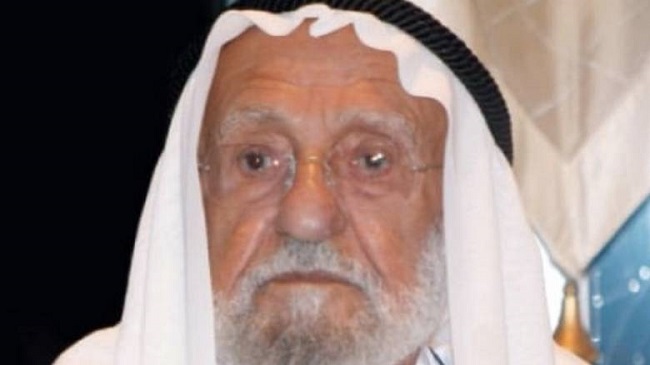
Dubai, Jun 29: Saeed bin Ahmed Al Lootah, a pioneering Emirati businessman and the founder of the world's first Islamic bank, is no more. He breathed his last on June 28.

Born in 1923, Saeed was instrumental in setting up the Dubai Islamic Bank (DIB) in 1975 to provide the community with a Sharia-compliant alternative to conventional banking.

He established several companies, organisations and societies, including the Dubai Consumer Cooperative. He also established the Islamic Education School in 1983 and the Dubai Medical College for Girls in 1986.

In 1992, Haj Saeed established the first College of Pharmacology in Dubai. Later he launched the Dubai Centre for Environmental Research, the Dubai Specialised Medical Centre, and the Medical Research Labs for health control and research into medicinal herbs and Islamic (Nabawi) medicine. He also set up an orphanage.

Saeed bin Ahmed Al Lootah was a self-made businessman who progressed from being a seafarer and trader to an accomplished tutor, author, economist, banker, entrepreneur, businessman and visionary community leader.

According to details available on the S.S. Lootah Group website, his "fervent adherence to the core values of education, cooperation and economy" helped empower "people to excel at everything they do".

"He realised the need to build permanent houses and ventured into construction. His 'capital' at that time were his skills, knowledge and hard work," the website said.

He laid the foundation of S.S.Lootah Contracting Company as a joint venture with his brother Sultan in 1956. "With the enduring values of education, cooperation and economy set as the foundations of his work, Haj Saeed started a number of businesses as well as not-for-profit education and research ventures, with an aim to serve the people of the UAE.

"Thanks to his vision and leadership, our home grown ventures continue to demonstrate unique values that extend well beyond its functional benefits - creating greater economic, social and environmental benefits for people in UAE and beyond."

Sheikh Mohammed bin Rashid Al Maktoum, Vice-President and Prime Minister of the UAE and Ruler of Dubai, took to Twitter on Sunday to offer his respects.

Sheikh Mohammed said: "He was a trader who started with nothing. His touch is visible in several aspects of the Dubai economy."

Calling the deceased a "wise and smart man", Sheikh Mohammed said: "May Allah bless his soul and grant his family the strength to endure and persevere."

Sheikh Hamdan bin Mohammed bin Rashid Al Maktoum, Crown Prince of Dubai, also paid his respects. "He combined economic leadership with charitable work. He launched charitable educational institutions and sponsored many orphans. His memory will live on. May Allah have mercy on him and grant his family patience."

Comments

Add new comment

  • Coastaldigest.com reserves the right to delete or block any comments.
  • Coastaldigset.com is not responsible for its readers’ comments.
  • Comments that are abusive, incendiary or irrelevant are strictly prohibited.
  • Please use a genuine email ID and provide your name to avoid reject.