Saudi-led coalition accuses Houthis of Hodeidah hospital attack

Agencies
August 4, 2018

Riyadh, Aug 4: The Saudi-led coalition on Friday accused the Houthi militia of carrying out an attack on a hospital and fish market in Yemen that killed dozens of people. 

Coalition spokesman Col. Turki Al-Maliki said the Iran-backed group targeted the sites in the port of Hodeidah on Thursday with mortar shells in what he described as a “terrorist attack.” 

Initial reports said more than 20 people were killed in the attack which hit near Al-Thawra Hospital — one of the county’s biggest. But the Red Cross on Friday said the series of explosion in Hodeidah had killed 55 with dozens more injured.
Pro-Houthi media accused the Arab coalition of carrying out an airstrike on the hospital, but Al-Maliki strongly refuted the allegation.

“These targets were not from the coalition and the weaponry used was mortars, which are from the Houthis,” he said.

The spokesman presented evidence including pictures he said showed the Houthi mortars used in the attack and maps of Hodeidah showing coalition targets in relation to the location of the hospital.

He said the nearest Houthi position targeted by the coalition on the day of the hospital attack was a weapons storage facility 7.5km from the hospital, east of Hodeidah. A day earlier, on Tuesday, the coalition hit a target 2.5km away from the hospital. 

Hodeidah, the country’s largest port, is still held by the Houthis. Pro-government forces backed by the coalition were close to capturing the city before pausing the offensive last month to allow UN mediation efforts to continue. 

Al-Maliki said the UN had received “incorrect reports from invalid organizations” which had blamed the coalition.
He said the coalition had aways applied the highest international and humanitarian standards in its targeting operations in Yemen.

Earlier, Lise Grande, the UN humanitarian coordinator for Yemen, condemned the hospital attack as “shocking”.

“Hospitals are protected under international humanitarian law. Nothing can justify this loss of life,” she said, adding that hundreds of thousands of people depended on the hospital to survive.

On Thursday, Martin Griffiths, the UN envoy to Yemen, told a Security Council meeting that he had called for talks between the warring parties to take place on Sept. 6 in Geneva.
A Yemeni government official told AFP that the government would attend the meeting although it was “not optimistic” over the outcome.

Al-Maliki said the coalition had always sought to find a political solution, but that the Houthis continued aggression had hindered this.

“We have given them time for a political solution and also, many opportunities,” he said.  “We know that 22 million Yemenis have been devastated through this time. However, the real reasons behind the suffering of the people is the coup.”

“The collation shall continue its work to free Yemen and return the Yemeni land to the legitimate government.”  

The conflict in Yemen began when the Houthis seized the capital Sanaa in 2014 and forced the internationally recognized government to flee to Aden. The Arab coalition intervened in 2015 to return the country to the control of President Abed Rabbo Mansour Hadi.

Yemen’s war has killed nearly 10,000 people and triggered what the UN calls the world’s largest single humanitarian crisis.

On Friday, the World Health Organization warned that Yemen may be on the brink of a new cholera epidemic and called for a three-day truce to allow vaccinations.

“We’ve had two major waves of cholera epidemics in recent years and unfortunately the trend data that we’ve seen in the last days to weeks suggests that we may be on the cusp of the third major wave of cholera epidemics in Yemen,” WHO emergency response chief Peter Salama said in Geneva.

Comments

Add new comment

  • Coastaldigest.com reserves the right to delete or block any comments.
  • Coastaldigset.com is not responsible for its readers’ comments.
  • Comments that are abusive, incendiary or irrelevant are strictly prohibited.
  • Please use a genuine email ID and provide your name to avoid reject.
News Network
April 16,2020

Dubai, Apr 16: Most of the patients who have fully recovered from Covid-19 in the UAE followed healthy behaviours that helped strengthen their immune systems, said Dr Farida Al Hosani, Official Spokesperson for the UAE Health Sector.

Dr Al Hosani made the remarks during the UAE Government's regular briefing on the latest developments related to the spread of coronavirus in the country, which was held on Wednesday in Abu Dhabi.

During the briefing, Dr Al Hosani spoke about the precautionary measures that aimed to prevent the spread of the virus.

Ammar Al Muaini, Official Spokesperson of the National Programme for Happiness and Quality of Life, also explained the outcomes of the National Mental Health Programme.

During the briefing, Dr Al Hosani affirmed that recorded cases in the country, especially recoveries, were related to key factors and reasons.

"In most cases of recoveries, we noticed that they have followed several daily health behaviours, such as doing exercise, eating a healthy diet, strengthening the immune system, and maintaining an ideal weight, as well as abstaining from bad habits, such as smoking and unhealthy eating. The psychological aspect is also important, and it is necessary to support the mental health of individuals, along with their physical health," she said.

"These practices, which we always emphasise and promote, will help raise a person's immunity and resistance to diseases, in addition to medicines, and can speed up the process of recovering from disease," she added.

Dr Al Hosani also talked about the importance of not being complacent if one's temperature rises. "We highlight the importance of periodic temperature checks for family members at home. This step is one of the health measures that we are encouraging.

"Everyone who has a high temperature must contact the nearest health centre or hospital or go to a drive-through testing centre because personal health is linked to the health of those around us and we are responsible for it. There is no room for hesitation in protecting our families," she stressed.

Dr Al Hosani highlighted the importance of covering the nose and mouth, whether by wearing surgical, paper or cloth masks, or any other covering or clothing.

"This procedure is important for everyone leaving home to avoiding the transmission of any infection and preserving the safety of everyone, along with leaving a safe physical distance between people in public places, markets and workplaces, and following the precautions," she explained.

Regarding high temperatures and their relationship to the coronavirus, Dr. Al Hosani said: "All studies that attempt to understand the relationship between the virus and climate have not been able to confirm that higher temperatures will help kill the virus. We are continuing to monitor the results of these studies."

Al Muaini explained the details and developments of the national campaign, titled, 'Don't Worry,' which aims to support the mental health of community members.

"The UAE Government, represented by the National Programme for Happiness and Quality of Life, has launched, under the current circumstances, the national campaign, titled, 'Don't Worry,' that aims to provide psychological support to members of society facing the repercussions of the novel coronavirus, in line with relevant national efforts," Al Muaini said.

"The campaign reflects the directives of His Highness Sheikh Mohammed bin Rashid Al Maktoum, Vice President and Prime Minister of the UAE and Ruler of Dubai, and His Highness Sheikh Mohamed bin Zayed Al Nahyan, Crown Prince of Abu Dhabi and Deputy Supreme Commander of the UAE Armed Forces, affirming that quality of life is a high priority, and health is the most important pillar of quality of human and society," Al Muaini added.

Al Muaini stated that the phrase, 'Don't Worry,' is profound in its meaning, according to His Highness Sheikh Mohamed bin Zayed, and reassures everyone that everything will be fine. "Today, the concept of health is not limited to physical health, but it also includes mental health. During this period, and due to the social, professional, and educational changes that directly affect our lives, we need to support and enhance our mental health to overcome these challenges," he  added.

Al Muaini said that over 50 specialists, psychologists and social workers are voluntarily participating in the national campaign to serve the country, which includes three main components focusing on providing psychological support to all members of society, especially as this type of support is one of the necessary community needs during the current circumstances.

The first component, 'Let's Support Together,' aims to answer enquiries regarding psychological challenges, provide educational advice, and support individuals in facing challenges, through daily live broadcasts on the social media networks of the National Programme for Happiness and Quality of Life, @HappyUAE. Two events are broadcast every day, with the first being at 17:30 in English and the second at 20:30 in Arabic to benefit all segments of society.

Al Muaini explained that the number of live broadcasts on the programme's social media accounts has reached 30 and covers various topics, including psychological care for senior citizens, psychological care for children, psychological support for working mothers, and how to address anxiety and psychological concerns.

According to scientific studies, fear and anxiety are among the strongest influences that weaken human immunity, and, therefore, it is necessary to learn about how to deal with them. The duration of each broadcast is one hour, attracting some 250,000 views each.

Al Muaini explained that the second component of the campaign is the hosting of closed virtual sessions, entitled, 'Let's Talk Together,' which aim to provide psychosocial support to specific groups of society, to enable them to talk to each other in a safe environment to discuss the psychological challenges they are facing.

The programme has organised over eight closed psychological support sessions to maintain the privacy of participants, under the supervision of certified physicians and psychologists. Some 300 people have participated and some sessions were held for those under quarantine, including working mothers, school and university students, and doctors working in the first line of defence.

Some 300,000 people watched "Let's Reassure Each Other" programme Al Muaini noted that the third component of the campaign, titled, "Let's Reassure Each Other," focuses on raising awareness of the importance of psychological resilience and promoting its importance to society. The programme has so far posted more than 21 video clips containing messages of support and reassurance to the community.

The number of people who watched the programme reached some 300,000 viewers.

Al Muaini stressed that the campaign is an effective interactive platform available on a daily basis, to provide psychological support to all segments of society at a time when people require reassurance and psychological support to overcome the current crisis. The campaign hosted doctors working in the first line of defence and their enquiries were answered directly. A group of people under quarantine was also involved in the closed support sessions, which were also popular with participating doctors.

Comments

Add new comment

  • Coastaldigest.com reserves the right to delete or block any comments.
  • Coastaldigset.com is not responsible for its readers’ comments.
  • Comments that are abusive, incendiary or irrelevant are strictly prohibited.
  • Please use a genuine email ID and provide your name to avoid reject.
Agencies
July 31,2020

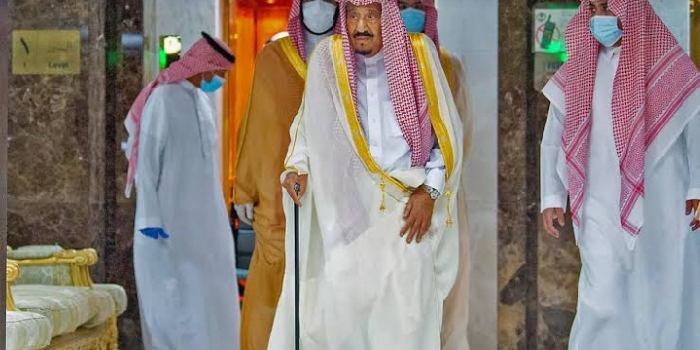
Makkah, Jul 31: Organising this year's scaled-down hajj required "double efforts" by Saudi authorities amid the coronavirus pandemic, King Salman said Friday after being discharged from hospital following gall bladder surgery.

Only up to 10,000 people already residing in the kingdom are participating in this year's pilgrimage, compared with 2019's gathering of some 2.5 million from around the world.

"Holding the ritual in the shadow of this pandemic... required reducing the numbers of pilgrims, but it obliged various official agencies to put in double efforts," 84-year-old King Salman said in a speech read out on state television by acting media minister Majid Al-Qasabi.

"The hajj this year was restricted to a very limited number of people from multiple nationalities, ensuring the ritual was completed despite the difficult circumstances," he said.

The speech came on the occasion of Eid al-Adha, the Muslim festival of sacrifice, a day after the king left hospital following a 10-day stay for surgery to remove his gall bladder.

The hajj, which began on Wednesday, is one of the five pillars of Islam and a must for able-bodied Muslims at least once in their lifetime.

Authorities implemented the "highest health precautions" during the rituals, the king said.

Pilgrims, who were all tested for the virus, are required to wear masks and observe social distancing.

For Friday's "stoning of the devil", the last major ritual of the hajj, Saudi authorities offered the pilgrims pebbles that were sanitised to protect against the pandemic.

In a sign that its strict measures were working, the health ministry reported no coronavirus cases in the holy sites on Wednesday or Thursday.

Comments

Add new comment

  • Coastaldigest.com reserves the right to delete or block any comments.
  • Coastaldigset.com is not responsible for its readers’ comments.
  • Comments that are abusive, incendiary or irrelevant are strictly prohibited.
  • Please use a genuine email ID and provide your name to avoid reject.
Agencies
July 31,2020

Mount Arafat, July 30: Muslim pilgrims converged Thursday on Saudi Arabia's Mount Arafat for the climax of this year's hajj, the smallest in modern times and a sharp contrast to the massive crowds of previous years.

A tight security cordon has been erected all around the foot of the rocky hill outside Mecca, also known as Jabal al-Rahma or Mount of Mercy.

Pilgrims, donning masks and observing social distancing, were brought in buses from neighbouring Mina, state television showed, as Saudi authorities impose measures to prevent a coronavirus outbreak.

They were subject to temperature checks and attended a sermon -- which state media said was translated into 10 languages -- before they set off on the climb to the summit for hours of Koran recitals and prayers to atone for their sins.

The scene was strikingly different to last year's ritual when a sea of pilgrims ascended Mount Arafat, marshalled by tens of thousands of stewards in a bid to prevent any crushes.

After sunset prayers, pilgrims will make their way down Mount Arafat to Muzdalifah, another holy site where they will sleep under the stars to prepare for the final stage of hajj, the symbolic "stoning of the devil".

It takes place on Friday and also marks the beginning of Eid al-Adha, the festival of sacrifice.

The hajj, one of the five pillars of Islam and a must for able-bodied Muslims at least once in their lifetime, is usually one of the world's largest religious gatherings.

But only up to 10,000 people already residing in the kingdom will participate in this year's ritual, compared with 2019's gathering of some 2.5 million from around the world.

"You are not our guests but those of God, the custodian of the two holy mosques (Saudi Arabia's King Salman) and the nation," Hajj Minister Mohammad Benten said in a video released by the media ministry on Wednesday.

Security cordon

A security cordon has been thrown around the holy sites to prevent any security breaches, an interior ministry spokesman said.

Riyadh faced strong criticism in 2015 when some 2,300 worshippers were killed in the deadliest stampede in the gathering's history.

But this year, those risks are greatly reduced by the much smaller crowd.

The pilgrims have all been tested for the virus, and foreign journalists were barred from this year's hajj, usually a huge global media event.

As part of the rites completed over five days in the holy city of Mecca and its surroundings, the pilgrims converged on Mount Arafat after spending the night in Mina.

A district of Mecca, Mina sits in a narrow valley surrounded by rocky mountains, and is transformed each year into a vast encampment for pilgrims.

They began the hajj on Wednesday with their first "tawaf", the circumambulation of the Kaaba, a large structure in Mecca’s Grand Mosque towards which Muslims around the world pray.

The Kaaba is draped in a black cloth embroidered in gold with Koranic verses and known as the kiswa, which is changed each year during the pilgrimage.

Pilgrims were brought inside the mosque in small batches, walking along paths marked on the floor, in sharp contrast to the normal sea of humanity that swirls around the Kaaba during hajj.

Comments

Add new comment

  • Coastaldigest.com reserves the right to delete or block any comments.
  • Coastaldigset.com is not responsible for its readers’ comments.
  • Comments that are abusive, incendiary or irrelevant are strictly prohibited.
  • Please use a genuine email ID and provide your name to avoid reject.