Saudi-led coalition accuses Houthis of Hodeidah hospital attack

Agencies
August 4, 2018

Riyadh, Aug 4: The Saudi-led coalition on Friday accused the Houthi militia of carrying out an attack on a hospital and fish market in Yemen that killed dozens of people. 

Coalition spokesman Col. Turki Al-Maliki said the Iran-backed group targeted the sites in the port of Hodeidah on Thursday with mortar shells in what he described as a “terrorist attack.” 

Initial reports said more than 20 people were killed in the attack which hit near Al-Thawra Hospital — one of the county’s biggest. But the Red Cross on Friday said the series of explosion in Hodeidah had killed 55 with dozens more injured.
Pro-Houthi media accused the Arab coalition of carrying out an airstrike on the hospital, but Al-Maliki strongly refuted the allegation.

“These targets were not from the coalition and the weaponry used was mortars, which are from the Houthis,” he said.

The spokesman presented evidence including pictures he said showed the Houthi mortars used in the attack and maps of Hodeidah showing coalition targets in relation to the location of the hospital.

He said the nearest Houthi position targeted by the coalition on the day of the hospital attack was a weapons storage facility 7.5km from the hospital, east of Hodeidah. A day earlier, on Tuesday, the coalition hit a target 2.5km away from the hospital. 

Hodeidah, the country’s largest port, is still held by the Houthis. Pro-government forces backed by the coalition were close to capturing the city before pausing the offensive last month to allow UN mediation efforts to continue. 

Al-Maliki said the UN had received “incorrect reports from invalid organizations” which had blamed the coalition.
He said the coalition had aways applied the highest international and humanitarian standards in its targeting operations in Yemen.

Earlier, Lise Grande, the UN humanitarian coordinator for Yemen, condemned the hospital attack as “shocking”.

“Hospitals are protected under international humanitarian law. Nothing can justify this loss of life,” she said, adding that hundreds of thousands of people depended on the hospital to survive.

On Thursday, Martin Griffiths, the UN envoy to Yemen, told a Security Council meeting that he had called for talks between the warring parties to take place on Sept. 6 in Geneva.
A Yemeni government official told AFP that the government would attend the meeting although it was “not optimistic” over the outcome.

Al-Maliki said the coalition had always sought to find a political solution, but that the Houthis continued aggression had hindered this.

“We have given them time for a political solution and also, many opportunities,” he said.  “We know that 22 million Yemenis have been devastated through this time. However, the real reasons behind the suffering of the people is the coup.”

“The collation shall continue its work to free Yemen and return the Yemeni land to the legitimate government.”  

The conflict in Yemen began when the Houthis seized the capital Sanaa in 2014 and forced the internationally recognized government to flee to Aden. The Arab coalition intervened in 2015 to return the country to the control of President Abed Rabbo Mansour Hadi.

Yemen’s war has killed nearly 10,000 people and triggered what the UN calls the world’s largest single humanitarian crisis.

On Friday, the World Health Organization warned that Yemen may be on the brink of a new cholera epidemic and called for a three-day truce to allow vaccinations.

“We’ve had two major waves of cholera epidemics in recent years and unfortunately the trend data that we’ve seen in the last days to weeks suggests that we may be on the cusp of the third major wave of cholera epidemics in Yemen,” WHO emergency response chief Peter Salama said in Geneva.

Comments

Add new comment

  • Coastaldigest.com reserves the right to delete or block any comments.
  • Coastaldigset.com is not responsible for its readers’ comments.
  • Comments that are abusive, incendiary or irrelevant are strictly prohibited.
  • Please use a genuine email ID and provide your name to avoid reject.
Agencies
March 15,2020

Riyadh, Mar 15: Saudi Aramco on Sunday reported a 20.6 percent drop in its net profit for 2019 due to low oil prices and production levels, the company said in a statement.

These are the first annual results to be announced by the energy giant after its historical $29.4 billion initial public offering and listing on the Saudi Tadawul market last December.

Aramco posted net profits of $88.2 billion last year compared to $111.1 billion in 2018, Monday's statement said.

"The decrease was primarily due to lower crude oil prices and production volumes, coupled with declining refining and chemical margins," it said.

The company also made $1.6 billion of impairment provisions for losses associated with Sadara Chemical Company, an Aramco subsidiary.

"2019 was an exceptional year for Saudi Aramco. Through a variety of circumstances -- some planned and some not -- the world was offered unprecedented insight into Saudi Aramco's agility and resilience," CEO Amin Nasser said.

"Our unique scale, low costs, and resilience came together to deliver both growth and world-leading returns, while also maintaining our position as one of the world's most reliable energy companies," Nasser said.

The earnings for last year are not affected by the coronavirus outbreak or the ongoing price war between Saudi Arabia and Russia that has sent oil prices crashing.

Aramco said it will distribute dividends worth $73.2 billion for 2019 but based on its commitments under the IPO, its dividends for the next five years starting this year will be at least $75 billion.

It said its capital spending last year dropped to $32.8 billion from $35.1 billion in 2018.

The company expects capital spending, which is expenditure on projects, to be between $25 billion and $30 billion this year "in light of current market conditions and recent commodity price volatility."

But it said that capital expenditure for 2021 and beyond is currently under review.

The results were announced amid a price war between Saudi Arabia and Russia after they failed to agree on additional output cuts to support prices dented by the outbreak of the coronavirus pandemic.

"The recent COVID-19 outbreak and its rapid spread illustrate the importance of agility and adaptability in an ever-changing global landscape," Nasser said.

The kingdom said last week Aramco will pump 12.3 million barrels of oil per day, boosting output by at least 2.5 million bpd.

It also announced plans to raise production capacity from 12 million bpd to 13 million bpd.

Forecasts for future crude prices and demand are also bleak.

In its latest monthly report, the Organization of Petroleum Exporting Countries lowered its forecast for global average daily demand by 0.92 million barrels to 99.73 million barrels.

Saudi Arabia is also in the midst of a royal purge that saw King Salman's brother and nephew detained after sources said they were accused of plotting a palace coup to unseat the crown prince, heir to the Saudi throne.

Aramco shares rallied immediately after the listing on December 11, rising by 19 percent to 38 riyals ($10.1) and temporarily lifting the company's valuation above the $2 trillion mark, which was sought by Crown Prince Mohammed bin Salman, Saudi Arabia's de facto ruler.

But as oil prices tumble, Aramco shares have lost 29 percent from its highest point, slipping below the listing price.

On Thursday, Aramco's market value dropped to around $1.55 trillion, but it still remains the world's largest publicly listed company.

Comments

Add new comment

  • Coastaldigest.com reserves the right to delete or block any comments.
  • Coastaldigset.com is not responsible for its readers’ comments.
  • Comments that are abusive, incendiary or irrelevant are strictly prohibited.
  • Please use a genuine email ID and provide your name to avoid reject.
News Network
March 5,2020

Dubai, Mar 5: A 16-year-old Indian girl here has tested positive for the deadly coronavirus, bringing the total number of confirmed infection cases in the UAE to 28, according to media reports.

Health officials here confirmed on Wednesday that a new coronavirus case was detected in the girl who attended an Indian school in Dubai, Al-Arabiya website reported.

The girl tested positive for the COVID-19 after she contracted the infection from her father who travelled overseas, Dubai Health Authority (DHA) was quoted as saying by the report.

The Indian High School in Dubai will be closed from Thursday as a precautionary measure, the Gulf News reported.

"As a precautionary measure, Indian High School Group of schools is closed from Thursday, March 5. Detailed circular about exams will be mailed. Your well-being is important. Take care," the report said.

The father developed symptoms of the virus five days after returning to Dubai. Both the student and family members have been quarantined in hospital and are stable and recovering well. All other family members have also been quarantined, the Khaleej Times reported.

"Within the framework of comprehensive preventive measures against the spread of coronavirus, the DHA is conducting tests and monitoring the students, staff and workers of the school that may have interacted with the coronavirus patient," the DHA was quoted as saying by the Gulf News.

Comments

Add new comment

  • Coastaldigest.com reserves the right to delete or block any comments.
  • Coastaldigset.com is not responsible for its readers’ comments.
  • Comments that are abusive, incendiary or irrelevant are strictly prohibited.
  • Please use a genuine email ID and provide your name to avoid reject.
Agencies
August 2,2020

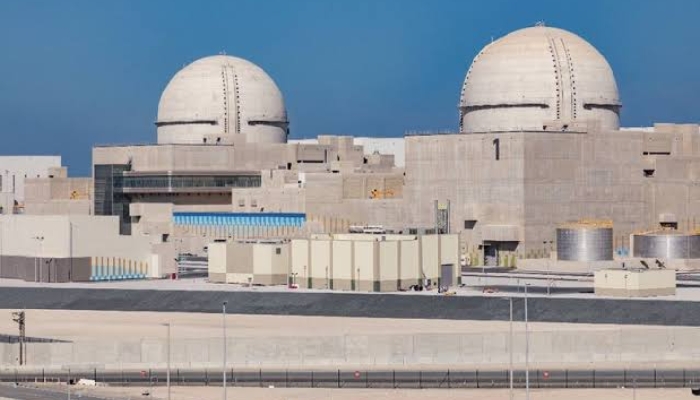
Dubai, Aug 2: The United Arab Emirates (UAE) announced on Saturday that it has started operations in the first of four reactors at the Barakah nuclear power station - the first nuclear power plant in the Arab world.

Emirates Nuclear Energy Corporation (ENEC), which is building and operating the plant with Korea Electric Power Corporation (KEPCO) said in a press release that its subsidiary Nawah Energy Company "has successfully started up Unit 1 of the Barakah Nuclear Energy Plant, located in the Al Dhafrah Region of Abu Dhabi".

That signals that Unit 1, which had fuel rods loaded in March, has achieved "criticality" - a sustained fission chain reaction.

"The start-up of Unit 1 marks the first time that the reactor safely produces heat, which is used to create steam, turning a turbine to generate electricity," said ENEC.

Barakah, which was originally scheduled to open in 2017, has been dogged by delays and is billions of dollars over budget. It has also raised myriad concerns among nuclear energy veterans who are concerned about the potential risks Barakah could visit upon the Arabian Peninsula, from an environmental catastrophe to a nuclear arms race.

Paul Dorfman, an honorary senior research fellow at the Energy Institute, University College London and founder and chair of the Nuclear Consulting Group, has criticised the Barakah reactors' "cheap and cheerful" design that he says cuts corners on safety.

Dorfman authored a report (PDF) last year detailing key safety features Barakah's reactors lack, such as a "core catcher" to literally stop the core of a reactor from breaching the containment building in the event of a meltdown. The reactors are also missing so-called Generation III Defence-In-Depth reinforcements to the containment building to shield against a radiological release resulting from a missile or fighter jet attack.

Both of these engineering features are standard on new reactors built in Europe, says Dorfman.

There have been at least 13 aerial attacks on nuclear facilities in the Middle East - more than any other region on earth.

The vulnerability of critical infrastructure in the Arabian Peninsula was further laid bare last year after Saudi Arabia's oil facilities at Abqaiq and Khurais were attacked by 18 drones and seven cruise missiles - an assault that temporarily knocked out more than half of the kingdom's oil production.

On Saturday, Dorfman reiterated his concern that there is no regional protocol in place to determine liability should an accident or incident at Barakah result in radioactive contamination spreading from the UAE to its neighbours. 

"Given Barakah has started up, because of all the well-rehearsed nuclear safety and security problems, it may be critically important that the Gulf states collectively evolve a Nuclear Accident Liability Convention, so that if anything does go wrong, victim states may have some sort of redress," Dorfman told Al Jazeera. 

The UAE has substantial oil and gas reserves, but it has made huge investments in developing alternative energy sources, including nuclear and solar.

Experts though have questioned why the UAE - which is bathed in sunlight and wind - has pushed ahead with nuclear energy - a far more expensive and riskier option than renewable energy sources.

When the UAE first announced Barakah in 2009, nuclear power was cheaper than solar and wind. But by 2012 - when the Emirates started breaking ground to build the reactors - solar and wind costs had plummeted dramatically.

Between 2009 and 2019, utility-scale average solar photovoltaic costs fell 89 percent and wind fell 43 percent, while nuclear jumped 26 percent, according to an analysis by the financial advisory and asset manager Lazard.

There are also concerns about the potential for Barakah to foment nuclear proliferation in the Middle East - a region rife with geopolitical fault lines and well-documented history of nuclear secrecy.

The UAE has sought to distance itself from the region's bad behaviour by agreeing not to enrich its own uranium or reprocess spent fuel. It has also signed up to the United Nation's nuclear watchdog's Additional Protocol, significantly enhancing inspection capabilities, and secured a 123 Agreement with the United States that allows bilateral civilian nuclear cooperation.

Comments

Add new comment

  • Coastaldigest.com reserves the right to delete or block any comments.
  • Coastaldigset.com is not responsible for its readers’ comments.
  • Comments that are abusive, incendiary or irrelevant are strictly prohibited.
  • Please use a genuine email ID and provide your name to avoid reject.