


Saudi royals appointed to International Olympic Committee

Arab News
August 29, 2018

Dubai, Aug 29: Three Saudi royals have been appointed to the International Olympic Committee, it was announced on Wednesday.

The three are Prince Abdulaziz Bin Turki Al-Faisal Al-Saud, Vice Chairman of the General Sports Authority (GSA) of Saudi Arabi, Princess Reema Bint Bandar Al Saud, Vice President of Planning and Development for the GSA, and Prince Fahad bin Juluwe bin Abdulaziz, Executive Director of International Relations for the Saudi Arabian Olympic Committee.

The appointments come as Saudi Arabia’s Olympic vision gathers strength with 137 athletes from the Kingdom currently competing in the Asian Games in Jakarta.

Prince Abdulaziz has been appointed to the Marketing Commission of the IOC, a body which works to advance the values of the Olympic movement.

“It comes at a moment that the Kingdom is focused on our athletes and their performance on the world stage, both now and into the future. The team we have sent to the Asian Games is our most representative and competitive yet, and we hope it will prove a springboard for our young athletes, a number of whom have already qualified for the Youth Olympic Games in Buenos Aires, Argentina.”

Saudi Arabia’s team at the Asian Games has the largest number of female athletes competing in the tournament, and Princess Reema has said she intends to build the numbers even further as a member of the IOC’s Women and Sports Commission.

Princess Reema said: “We value many mutual goals with the commission and have been working to realize them. We are committed to increasing participation of women athletes in the Olympic program and in leadership positions within the Olympic Movement.”

Meanwhile Prince Fahad has joined the IOC’s Public Affairs and Social Development Committee, which works on the international stage around sport for development and peace in and beyond the Olympic Games.

One of its focuses is to devise strategies promoting the integration of sport and physical activity in government policy and programs.

Comments

Add new comment

  • Coastaldigest.com reserves the right to delete or block any comments.
  • Coastaldigset.com is not responsible for its readers’ comments.
  • Comments that are abusive, incendiary or irrelevant are strictly prohibited.
  • Please use a genuine email ID and provide your name to avoid reject.
News Network
July 28,2020

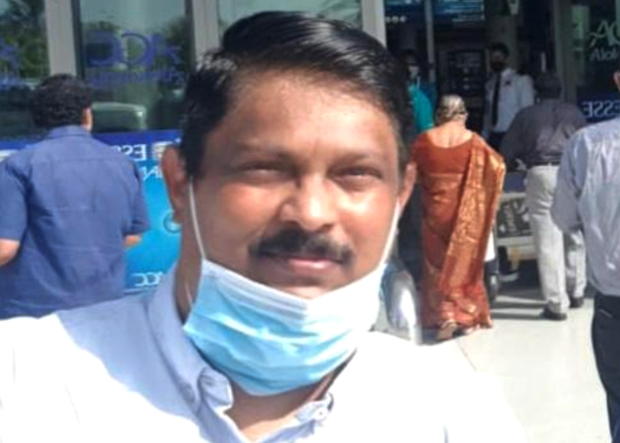
Dubai, Jul 28: A heart-broken father who lost his 19-year-old son in a tragic car accident during Christmas last year has sponsored the repatriation costs of 61 Indians stranded in the UAE.

 The special flydubai repatriation flight, chartered by the All Kerala Colleges Alumni Federation (Akcaf) volunteer group, of which he is a member of, departed from Dubai to Kochi on July 25 carrying 199 passengers.

 On this particular flight, I sponsored 55 air tickets," said TN Krishnakumar, a sales and marketing director. He had lost his son Rohit Krishnakumar in a car accident, which also claimed the life of the teen's friend, Sharat Kumar (21).

"All passengers who were registered with the Indian missions were also asked to register on the Akcaf volunteer group website. Each passenger was further vetted, after which we made home visits to ensure that all the applicants were genuinely in need of financial support and repatriation," he said.

Commenting on what inspired him to dedicate himself to community work, Krishankumar said: "When a situation like this comes up, you realise there is no meaning in money. I invested everything I made into my son, and that had crashed in front of my eyes. He was a third-year medical student at the University of Manchester in the UK and had returned home for a vacation when the accident took place. Since then, I have been involved in a lot of social activities. If I do not do this, there is no meaning to my existence."

Since the outbreak of the Covid-19 pandemic, Krishnakumar said the group has supported thousands of individuals in need of help. "We supported unemployed people with several hundred bags of grocery kits and other necessary items. We also supported Covid-19 patients by transferring them to the medical facility in Warsan, etc.," he said.

"I come from a very middle-class family. I got a scholarship to study in college, and I studied with the help of taxpayers' money. I have always wanted to give back to society. I have grown immensely in life and now is my time to give back.," he added.

Krishnakumar also sponsors the education of over 1,000 academically gifted school children in Kerala's government-aided schools. He is a life trustee at the College of Engineering Trivandrum Alumni Galaxy Charitable Trust and an active participant towards various educational causes.

Comments

Add new comment

  • Coastaldigest.com reserves the right to delete or block any comments.
  • Coastaldigset.com is not responsible for its readers’ comments.
  • Comments that are abusive, incendiary or irrelevant are strictly prohibited.
  • Please use a genuine email ID and provide your name to avoid reject.
Arab News
March 21,2020

Jeddah, Mar 21: Saudi government ministers on Friday announced a war chest of more than SR120 billion ($32 billion) to fight the “unprecedented” health and economic challenges facing the country as a result of the killer coronavirus pandemic.

During a press conference in Riyadh, finance minister and acting minister of economy and planning, Mohammed Al-Jadaan, unveiled a SR70 billion stimulus package to support the private sector, especially small- and medium-sized enterprises (SMEs) and businesses worst-hit by the virus outbreak.

And the Saudi Arabian Monetary Authority (SAMA) has also sidelined SR50 billion to help the Kingdom’s banking sector, financial institutions and SMEs.

Al-Jadaan said the government had introduced tough measures to protect the country’s citizens while immediately putting in place a financial safety net. He added that the Kingdom was moving decisively to address the global COVID-19 disease crisis and cushion the financial and economic impact of the outbreak on the country.

The SR70 billion package of initiatives revealed by the minister will include exemptions and postponement of some government dues to help provide liquidity for private-sector companies.

Minister of Health Dr. Tawfig Al-Rabiah noted the raft of precautionary measures that had been introduced by the Kingdom in cooperation with the private sector and government agencies to combat the spread of the coronavirus, highlighting the important contribution of the data communication services sector.

He reassured the Saudi public that the Kingdom would continue to do whatever was required to tackle the crisis.

“This pandemic has a lot of challenges. It’s difficult to make presumptions at this moment as we’ve seen; many developed countries did not expect the rate of transmission of this virus.

“We see that the reality of the situation is different from what many expected. The virus is still being studied and though we know the means of transmission, it is transmitted at a very fast rate, having spread to many countries faster than expected.

“We see that many countries have not taken the strong precautionary measures from the beginning of the crisis which led to the vast spread of the virus in these countries,” Al-Rabiah said.

He pointed out that social distancing would help slow the spread.

Al-Jadaan said the Saudi government had the financial and economic capacity to deal with the situation. “We have large reserves and large investments, but we do not want to withdraw from the reserves more than what was already announced in the budget. We do not want to liquidate any of the government’s investments so we will borrow.

“We have approval from the government after the finance committee raised its recommendations to increase the proportion of the domestic product borrowing from 30 percent to 50 percent. We do not expect to exceed 50 percent from now until the end of 2022,” he added.

The government would use all the tools available to it to finance the private sector, especially SMEs, and ensure its ongoing stability.

The finance minister said that at this stage it was difficult to predict the economic impact of the pandemic on the private sector, but he emphasized that international coordination, most notably through G20 countries and health organizations, was ongoing.

On recorded cases of the COVID-19 disease in the Kingdom, Al-Rabiah said: “Many of the confirmed cases are without symptoms, this is due to the precautionary measures being considered.

“As soon as a case is confirmed, we contact and examine anyone who was in direct contact with the patient. This epidemiological investigation, is conducted on a large scale to investigate any case that was in contact with the patient.”

Al-Jadaan also announced the formation of a committee made up of the ministers of finance, economy and planning, commerce, and industry and mineral resources, along with the vice chairman of the board of the Saudi National Development Fund, and its governor.

The committee will be responsible for identifying and reviewing incentives, facilities, and other initiatives led by the fund.

Committees had also been established, said Al-Jadaan, to study the impact and repercussions of the coronavirus crisis on all sectors and regions, and look at ways of overcoming them through subsidies or stimulus packages.

Comments

Add new comment

  • Coastaldigest.com reserves the right to delete or block any comments.
  • Coastaldigset.com is not responsible for its readers’ comments.
  • Comments that are abusive, incendiary or irrelevant are strictly prohibited.
  • Please use a genuine email ID and provide your name to avoid reject.
News Network
July 1,2020

Riyadh, Jul 1: Saudis braced Wednesday for a tripling in value added tax, another unpopular austerity measure after the twin shocks of coronavirus and an oil price slump triggered the kingdom's worst economic decline in decades.

Retailers in the country reported a sharp uptick in sales this week of everything from gold and electronics to cars and building materials, as shoppers sought to stock up before VAT is raised to 15 percent.

The hike could stir public resentment as it weighs on household incomes, pushing up inflation and depressing consumer spending as the kingdom emerges from a three-month coronavirus lockdown.

"Cuts, cuts, cuts everywhere," a Saudi teacher in Riyadh told AFP, bemoaning vanishing subsidies as salaries remain stagnant.

"Air conditioner, television, electronic items," he said, rattling off a list of items he bought last week ahead of the VAT hike.

"I can't afford these things from Wednesday."

With its vast oil wealth funding the Arab world's biggest economy, the kingdom had for decades been able to fund massive spending with no taxes at all.

It only introduced VAT in 2018, as part of a push to reduce its dependence on crude revenues.

Then, seeking to shore up state finances battered by sliding oil prices and the coronavirus crisis, it announced in May that it would triple VAT and halt a cost-of-living monthly allowance to citizens.

The austerity push underscores how Saudi Arabia's once-lavish spending is becoming a thing of the past, with the erosion of the welfare system leaving a mostly young population to cope with reduced incomes and a lifestyle downgrade.

That could pile strain on a decades-old social contract whereby citizens were given generous subsidies and handouts in exchange for loyalty to the absolute monarchy.

The rising cost of living may prompt many to ask why state funds are being lavished on multi-billion-dollar projects and overseas assets, including the proposed purchase of English football club Newcastle United.

Shopping malls in the kingdom have drawn large crowds in recent days as retailers offered "pre-VAT sales" and discounts before the hike kicks in.

A gold shop in Riyadh told AFP it saw a 70 percent jump in sales in recent weeks, while a car dealership saw them tick up by 15 percent.

Once the new rate is in place, businesses are predicting depressed sales of everything from cars to cosmetics and home appliances.

Capital Economics forecast inflation will jump up to six percent year-on-year in July, from 1.1 percent in May, as a result.

"The government ended the country's lockdown (in June) and there are signs that economic activity has started to recover," Capital Economics said in a report.

"Nonetheless, we expect the recovery to be slow-going as fiscal austerity measures bite."

The kingdom also risks losing its edge against other Gulf states, including its principal ally the United Arab Emirates, which introduced VAT at the same time but has so far refrained from raising it beyond five percent.

"Saudi Arabia is taking massive risks with contractionary fiscal policies," said Tarek Fadlallah, chief executive officer of the Middle East unit of Nomura Asset Management.

But the kingdom has few choices as oil revenue declines.

Its finances have taken another blow as authorities massively scaled back this year's hajj pilgrimage, from 2.5 million pilgrims last year to around a thousand already inside the country, and suspended the lesser umrah because of coronavirus.

Together the rites rake in some $12 billion annually.

The International Monetary Fund warned the kingdom's GDP will shrink by 6.8 percent this year -- its worst performance since the 1980s oil glut.

The austerity drive would boost state coffers by 100 billion riyals ($26.6 billion), according to state media.

But the measures are unlikely to plug the kingdom's huge budget deficit.

The Saudi Jadwa Investment group forecasts the shortfall will rise to a record $112 billion this year.

Comments

Add new comment

  • Coastaldigest.com reserves the right to delete or block any comments.
  • Coastaldigset.com is not responsible for its readers’ comments.
  • Comments that are abusive, incendiary or irrelevant are strictly prohibited.
  • Please use a genuine email ID and provide your name to avoid reject.