


Saudi UN envoy slams Houthi fabrications against coalition

May 14, 2017

Washington/Jeddah, May 14: Saudi Arabia’s permanent representative at the UN, Abdullah Al-Mouallimi, said the human aspect in the Yemen war is most important for the Arab coalition waging military operations to restore government legitimacy there, contradicting propaganda circulated by the Houthi militias.
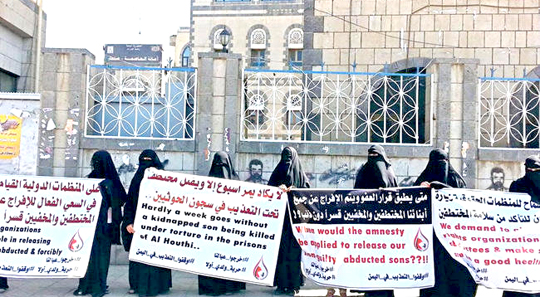
Houthi

Speaking at a symposium at the Arab Gulf Countries Institute in Washington, Al-Mouallimi refuted as “fairy tales” Houthi allegations against the coalition about the war in Yemen.

He rejected the Houthi stance that the war erupted in March 2015, while in reality it started in September 2014.

He also described as false that the Houthis represent a large percentage of the Yemeni population, but instead represent only 2 to 3 percent.

Al-Mouallimi said that the coalition has not laid a sea siege on the country, barring food supplies from reaching Yemenis as claimed by the militias. He noted that food shortages exist in areas under Houthi control and relief sent to these areas does not find its way to the needy.

Al-Mouallimi also denied Houthi allegations that the coalition is not concerned about the damage done to the Yemeni infrastructure and key facilities. He said Saudi Arabia and other GCC countries have pledged more than $4 billion of continued aid to Yemenis, in addition to allocating $10 billion for Yemen’s reconstruction.

Al-Mouallimi said the Houthis will be defeated and the Yemeni people will restore their destiny under an internationally recognized leadership, a government elected with the help of Saudi Arabia, GCC countries and members in the coalition.

Hamdan Al-Shehri, a political analyst and international relations expert, told Arab News Saturday that the Houthi militias are cooperating with Iran, which is playing a dirty game by utilizing its media to spread Houthi lies to present them to the world as the underdog.

He said: “The international community should not be fooled by the Houthi and Iranian propaganda. The facts on the ground speak for themselves. The Yemeni citizens in the Houthi-controlled areas are suffering and are being oppressed and deprived of their basic needs, while the Houthi militias continue to confiscate the humanitarian aid and distribute it among themselves or sell them to the citizens to cover the expenses.”

A report by Yemen’s National Human Rights Commission issued in March pointed to crimes against unarmed civilians including indiscriminate shelling of residential compounds and popular markets, using artillery and Katyusha rocket launchers.

The report described grave violations of international human rights law and crimes against humanity, saying the perpetrators must be punished.

It cited 11 incidents in which Houthis and forces loyal to deposed President Abdullah Saleh carried out massacres, including the targeting and killing of displaced people from Tawahi, with militias dropping mortars on unarmed civilians fleeing in small boats.

According to the report, human rights teams recorded the killing of nearly 11,000 Yemeni civilians, including 679 women, 1,002 children and 9,160 men, over the past two years by Houthi gunfire and shelling.

The majority of victims were killed in 2015, the report said, confirming that Houthi and Saleh militias had been deliberately targeting civilians.

Previously, Abdul Raqeeb Fatah, the Yemeni minister of local administration and president of the Supreme Committee of Relief, accused the Houthis and Saleh’s militias of willfully starving the Yemeni people by detaining the 34 ships carrying relief, humanitarian and medical aid provided by GCC countries. He said that Houthi militias prevented ships from entering seaports of Hodeidah and Saleef.

In a statement to the Yemeni Press Agency, he said the Yemeni people have been deprived of 496,000 tons of foodstuff, 146,000 tons of oil and 275,000 tons of iron and cement.

“Despite repetitive calls to drop weapons and resort to the negotiations table with the legitimate government, this (Houthi) militia refuses to engage in a political process based on the UN Resolution 2216 and the GCC initiative and the outcomes of the Yemeni national dialogue. The international community and the United Nations have not been up to their duties either by implementing the relevant resolutions or by pressuring the militias to abide by the relevant international legitimacy and the will of the Yemeni people,” said Al-Shehri.

He added that the previous US administration opted to stay out of the Yemen conflict, unlike the Trump administration, which is willing to be more active to end the Iranian intervention in the region and put an end to the Iranian expansionist designs.

Maj. Gen. Yahya Asiri of the Saudi Defense Ministry said that the humanitarian aspect is the most important objective and that the coalition forces take maximum care to protect civilians. They keep updated lists of places, people and things that must not be targeted, he added.

Asiri said the Houthis continuously disrupt relief and humanitarian efforts and attack the Saudi border, but the Armed Forces in most cases deter the attacks through pre-emptive operations.

He said Houthis have launched as many as 49 missiles into Saudi territories and planted dozens of mines along the Kingdom’s southern border, in addition to many sea mines.

He added that the Arab Coalition respects all pertinent UN decisions on the issue, including Resolution 2216, and the truce agreements, while the Houthis constantly fail to live up to binding commitments, and have committed as many as 4,500 violations of the cease-fire agreements.

Comments

Add new comment

  • Coastaldigest.com reserves the right to delete or block any comments.
  • Coastaldigset.com is not responsible for its readers’ comments.
  • Comments that are abusive, incendiary or irrelevant are strictly prohibited.
  • Please use a genuine email ID and provide your name to avoid reject.
KT
April 10,2020

Apr 10: The UAE reported 331 new coronavirus cases - through extensive testing - and two deaths late Thursday night.

The UAE conducted over 40,000 coronavirus tests over the past two days across various segments of society, including citizens and residents, using latest state-of-the-art-technology in line with the Ministry of Health and Prevention's plans to intensify Covid-19 screenings to contain the spread of the virus.

The Ministry also revealed that two patients suffering from Covid-19, an Asian national and an Arab, had died due to complications caused by the virus. Both of the deceased had prior chronic illnesses. The total number of deaths has now reached 14.

UAE announced on Thursday that places of worship will be closed in the country until further notice - amid the coronavirus situation. Authorities decided to extend the closure of mosques, churches and other places of worship in the UAE until further notice for the safety of community members, Wam reported. The measure has been taken to prevent the spread of Covid-19 in the country.

The decision was taken in coordination with the National Authority for Emergency and Disaster Management, the General Authority for Islamic Affairs and Endowments, federal, local religious bodies and health authorities in the state.

Residents face deportation for breaking rules

People who repeatedly flout 'stay at home' measures and endanger others' lives are inviting harsh punishments including deportation, a senior police officer has said.

"The UAE's Attorney-General has already announced the fines and punishments for breaking rules on social distancing and curfew restrictions. Repeated offenders or those who commit crimes that have a 'snowball' effect on the society will be fined, jailed and deported at the end of their term," said Col Saeed Al Hajeri, head of the Cyber Crime Department at Dubai Police, in an exclusive interview with Khaleej Times.

Al Hajeri said the Dubai police are tightening the noose against violators by resorting to 'naming and shaming' them.

The officer said 'reckless residents' will face serious consequences as they are not allowing the government to serve the people.i.  

Movement permit not to be misused

The officer said residents should not misuse the movement permit introduced by the Dubai Police and those who go out without a permit will be fined on their Emirates ID. Al Hajeri said they expect residents to be highly responsible. "Those who are exempted from taking movement permit can use the company letter to go to work but not for other purposes. You cannot fool the system by obtaining a permit for buying medicine and then going out to visit your sister or brother."

Social media as a double-edged sword

Warning people against circulating rumours and videos mocking authorities, the he said people should instead use the time to be productive or creative.

"We encourage people to use this time to learn new skills and not create scams and endanger the society. This is a difficult time and it will pass. What is more important is what you gain out of this."

Col Al Hajeri said the Dubai Police are aware that many people are using social media as a positive tool and encourage them. "We encourage that, and want people to use social media for positive messaging, to spread awareness about personal hygiene, social distancing and various precautions to be followed."

13 new drive-through coronavirus test centres open across UAE

Thirteen new drive-through testing facilities for Covid-19 have been opened across the UAE over the recent days. The Abu Dhabi Media Office on Thursday reported that under the directives of His Highness Sheikkh Mohamed bin Zayed Al Nahyan, Crown Prince of Abu Dhabi and Deputy Supreme Commander of the UAE Armed Forces, 13 additional Covid-19 drive-through testing facilities were opened in 10 days, in addition to the centre previously opened in Zayed Sports City in AbuDhabi.

According to authorities, more than 12,000 people have been tested since the centres opened .

The examination process begins by booking an appointment in advance by calling the 8001717 Estijaba centre, or through the SEHA smart application, for an initial assessment.

Priority will be given to those with symptoms, senior citizens, pregnant women and those who suffer from chronic diseases.

Precautionary examinations costs Dh370, and payment will be done electronically through the SEHA application.
 
50,000 workers to be screened in a month

A massive initiative has been launched by healthcare provider Right Health and Al Futtaim Health's HealthHub to screen 50,000 workers for Covid-19 within a month.

Out of the 58 facilities across the UAE, 33 primary health centres of the Right Health are located at the workers' accommodation areas in Jebel Ali, Sonapur and Al Qouz.

"We will be working with businesses across the UAE to ensure their workforces stay safe and healthy. It is essential that private healthcare providers do everything they can to support the government's efforts to combat the Covid-19 pandemic. The objective of this campaign is to screen as many people as possible.

Crime falls by 96% in Sharjah

A massive drop in crimes has been observed in Sharjah after the implementation of Covid-19 precautionary measures. The crime rate has declined by 96 per cent, according to the Sharjah Police. Only 48 cases were reported in the emirate during this period compared to 717 cases registered last year.

Dispose of masks, gloves safely, say police

Motorists caught throwing face masks and gloves out of their vehicle windows will be fined Dh1,000 and six black points will be registered against their driving licences, the police have warned. The Abu Dhabi Police on Thursday said some people have been throwing used masks and gloves out of the car windows, violating traffic laws. "The masks and gloves pose a threat to public health and the environment. They may have been contaminated and lead to the spread of diseases," the police said in a statement. The police also noted that adhering to precautionary measures that prevent the spread of communicable diseases is everyone's responsibility.

Medical experts explain UAE's high Covid-19 recovery and low death rates

Compared to global rates of Covid-19, the UAE has been showing very high recovery and very low death rates.

According to statistics made available on the World O Meter, the Covid-19 death rate in the UAE is only 0.5 per cent of the total 2,659 infected.
Khaleej Times reached out to UAE doctors and medical experts who have attributed this phenomenon to the UAE's high healthcare standards, the country's predominant younger population, and residents' compliance to the Stay at Home guidelines.

'UAE age structure plays a role'

However, Dr Standford said: "Although death occurs at all ages, there is a predominance of the elderly. The age structure in the UAE is completely different from most countries outside the GCC as there is a predominance of young expatriates here under work permits.
He added: "Most (expatriates) will leave the country by the age of 60. There is therefore only 1.5 per cent of residents aged 65 or more. Compare this with a country like the UK where the equivalent number is 18.2 per cent."

Early intervention

Dr Jacob Cherian, specialist internal medicine, Medcare Medical Centre Marina and medical director for Medcare Medical Centres, attributed early intervention and intensive testing as one of the main reasons for the UAE's faster recovery rates.

"Compared to other countries, the UAE adopted early intervention measures. The UAE closed schools and limited social gatherings when there were hardly any cases," he said. Compliance from residents and a relatively younger and healthier population are other reasons for the lower death rates and high recovery rates, according to Dr Jacob.

Pakistan extends suspension flight operations till April 21

The Pakistan government has extended the suspension of domestic and international flight operations in the country until April 21 in a bid to contain the coronavirus spread, said a notification issued by the Civil Aviation Authority (CAA).

In its last notification, the CAA had said that diplomatic, special/cargo flights and flights of national carrier to/from Pakistan holding special approval from the competent authority for transporting stranded passengers would be exempted from the ban.

Comments

Add new comment

  • Coastaldigest.com reserves the right to delete or block any comments.
  • Coastaldigset.com is not responsible for its readers’ comments.
  • Comments that are abusive, incendiary or irrelevant are strictly prohibited.
  • Please use a genuine email ID and provide your name to avoid reject.
Agencies
February 27,2020

Riyadh, Feb 27: Saudi Arabia on Thursday halted travel to the holiest sites in Islam over fears about a new viral epidemic just months ahead of the annual hajj pilgrimage, a move coming as the Mideast has over 220 confirmed cases of the illness.

The extraordinary decision by Saudi Arabia stops foreigners from reaching the holy city of Mecca and the Kaaba, the cube-shaped structure the world's 1.8 billion Muslims pray toward five times a day. It also said travel was suspended to Prophet Muhammad's mosque in Medina.

The decision showed the worry about the outbreak potentially spreading into Saudi Arabia, whose oil-rich monarchy stakes its legitimacy on protecting Islam's holy sites. The epicenter in the Mideast's most-affected country, Iran, appears to be in the holy Shiite city of Qom, where a shrine there sees the faithful reach out to kiss and touch it in reverence.

"Saudi Arabia renews its support for all international measures to limit the spread of this virus, and urges its citizens to exercise caution before traveling to countries experiencing coronavirus outbreaks," the Saudi Foreign Ministry said in a statement announcing the decision.

"We ask God Almighty to spare all humanity from all harm." Disease outbreaks always have been a concern surrounding the hajj, required of all able-bodied Muslims once in their life, especially as pilgrims come from all over the world.

The earliest recorded outbreak came in 632 as pilgrims fought off malaria. A cholera outbreak in 1821, for instance, killed an estimated 20,000 pilgrims. Another cholera outbreak in 1865 killed 15,000 pilgrims and then spread worldwide.

More recently, Saudi Arabia faced a danger from a related coronavirus that caused Middle East respiratory syndrome, or MERS. The kingdom increased its public health measures in 2012 and 2013, though no outbreak occurred.

While millions attend the 10-day hajj, this year set for late July into early August, millions more come during the rest of the year to the holy sites in the kingdom.

"It is unprecedented, at least in recent times, but given the worldwide spread of the virus and the global nature of the umrah, it makes sense from a public health and safety point of view," said Kristian Ulrichsen, a research fellow at the James A Baker III Institute for Public Policy at Rice University. "Especially since the Iranian example illustrates how a religious crossroads can so quickly amplify the spread and reach of the virus." The virus that causes the illness named COVID-19 has infected more than 80,000 people globally, mainly in China. The hardest-hit nation in the Mideast is Iran, where Health Ministry spokesman Kianoush Jahanpour said 19 people have died among 139 confirmed cases.

Experts are concerned Iran may be underreporting cases and deaths, given the illness's rapid spread from Iran across the Persian Gulf. For example, Iran still has not confirmed any cases in Mashhad, even though a number of cases reported in Kuwait are linked to the Iranian city.

In Bahrain, which confirmed 33 cases as of Thursday morning, authorities halted all flights to Iraq and Lebanon. It separately extended a 48-hour ban overflights from Dubai and Sharjah in the United Arab Emirates, through which infected travellers reached the island kingdom off the coast of Saudi Arabia.

Iranian President Hassan Rouhani said there were no immediate plans to quarantine cities but acknowledged it may take "one, two or three weeks” to get control of the virus in Iran.

As Iran's 80 million people find themselves increasingly isolated in the region by the outbreak, the country's sanctions-battered economy saw its currency slump to its lowest level against the US dollar in a year on Wednesday.

Comments

Add new comment

  • Coastaldigest.com reserves the right to delete or block any comments.
  • Coastaldigset.com is not responsible for its readers’ comments.
  • Comments that are abusive, incendiary or irrelevant are strictly prohibited.
  • Please use a genuine email ID and provide your name to avoid reject.
News Network
May 19,2020

Dubai, May 19: In a heart-warming decision to reunite families that have been split by anti-Covid travel restrictions, the UAE has announced that residents with valid visas stranded outside the country can return from June 1.

The Ministry of Foreign Affairs and International Cooperation and the Federal Authority for Identity and Citizenship said they will begin the process on Monday, June 1, by allowing the return of those residency holders currently stranded outside the country who have relatives in the UAE. Residents who meet this criteria must apply for a Resident Entry Permit on smartservices.ica.gov.ae.

The ministry and the authority said the decision was taken to reunite families that have been affected by the anti-coronavirus measures taken due to the exceptional circumstances.

"The UAE is keen to facilitate the procedures for holders of UAE residency visas who are stuck outside the country and reunite them with their families who were affected by the precautionary measures taken by the country in light of the current exceptional circumstances to combat Covid-19," the federal authorities were quoted by state news agency Wam.

Hundreds of UAE residents are currently stuck abroad and are separated from their families due to the unexpected freeze on air travel imposed by many countries as precautionary measures to curb the spread of coronavirus.

The #BringBackUAEresidents hashtag was trending on Twitter on Monday as several residents and families requested the government to expedite their return to the UAE.

Comments

Add new comment

  • Coastaldigest.com reserves the right to delete or block any comments.
  • Coastaldigset.com is not responsible for its readers’ comments.
  • Comments that are abusive, incendiary or irrelevant are strictly prohibited.
  • Please use a genuine email ID and provide your name to avoid reject.