Saudi a ‘valued friend’: PM Modi in Riyadh

Agencies
October 29, 2019

Riyadh, Oct 29: Prime Minister Narendra Modi arrived in Riyadh late on Monday night on a two-day visit, during which he will attend the third edition of Saudi Arabia's high-profile annual financial conference and hold bilateral talks with top leadership of the Gulf Kingdom.

"Landed in the Kingdom of Saudi Arabia, marking the start of an important visit aimed at strengthening ties with a valued friend. Will be taking part in a wide range of programmes during this visit," the Prime Minister tweeted.

He will deliver the keynote address under the title ''What's next for India?'' at the Future Investment Initiative (FII), which is dubbed as ''Davos in the Desert''.

Besides addressing the forum, he will hold bilateral talks with Saudi King Salman bin Abdulaziz and Crown Prince Mohammed bin Salman. The two sides are expected to sign a number of agreements in several key sectors including oil and gas, renewable energy and civil aviation to bolster their ties.

The three-day forum, beginning on Tuesday, will host financiers, governments, and industry leaders who would discuss global trade and explore the trends, opportunities and challenges shaping the global investment landscape over the coming decades.

"India and Saudi Arabia have enjoyed traditionally close and friendly relations. Saudi Arabia has been one of the largest and reliable suppliers of India's energy needs," PM Modi said in his departure statement in New Delhi.

He noted that defence, security, trade, culture, education and people-to-people contacts are the other important areas of bilateral cooperation with Saudi Arabia.

The two sides would also sign an agreement to establish a Strategic Partnership Council to coordinate on key issues. The council will be headed by Prime Minister Modi and the crown prince and it will meet every two years.

"The Agreement for establishment of the Strategic Partnership Council will further elevate the India-Saudi Arabia Strategic Partnership to a new level," the prime minister said in his statement.

This would be Prime Minister Modi's second visit to the Gulf Kingdom. During his first visit in 2016, King Salman conferred Saudi's highest civilian award on him. The Crown Prince visited India in February 2019, giving a further fillip to the bilateral ties.

India's relations with Saudi Arabia have been on an upswing over the last few years. India's bilateral trade with Saudi Arabia was at USD 27.48 billion in 2017-18, making Saudi Arabia its fourth largest trading partner.

Saudi Arabia last month said that it was looking at investing USD 100 billion in India in areas of energy, refining, petrochemicals, infrastructure, agriculture, minerals and mining.

At the FII forum, Prime Minister Modi will speak on India's economy, its challenges and opportunities for equitable growth and prosperity.

"I will speak about the growing trade and investment opportunities for the global investors in India as the country marches forward to a 5 trillion dollar economy by 2024," PM Modi said.

The high-profile forum faced widespread boycott in 2018 in the aftermath of killing of Saudi dissident journalist Jamal Khashoggi, who was murdered in the Kingdom's consulate in Istanbul, Turkey by Saudi security agents.

Comments

Add new comment

  • Coastaldigest.com reserves the right to delete or block any comments.
  • Coastaldigset.com is not responsible for its readers’ comments.
  • Comments that are abusive, incendiary or irrelevant are strictly prohibited.
  • Please use a genuine email ID and provide your name to avoid reject.
News Network
March 4,2020

New Delhi, Mar 4: The government on Wednesday permitted NRIs to own up to 100 per cent stake in disinvestment-bound Air India.

The decision comes at a time when the government is looking to sell 100 per cent stake sale in the national carrier.

Union minister Prakash Javadekar said the Cabinet has approved allowing Non-Residents Indians (NRIs) to hold up to 100 per cent stake in Air India.

Allowing 100 per cent investment by Non-Resident Indians (NRIs) in the carrier would also not be in violation of SOEC norms. NRI investments would be treated as domestic investments.

Under the Substantial Ownership and Effective Control (SOEC) framework, which is followed in the airline industry globally, a carrier that flies overseas from a particular country should be substantially owned by that country's government or its nationals.

Currently, NRIs can acquire only 49 per cent in Air India. Foreign Direct Investment (FDI) in the airline is also 49 per cent through the government approval route.

As per the existing norms, 100 per cent FDI is permitted in scheduled domestic carriers, subject to certain conditions, including that it would not be applicable for overseas airlines.

In the case of scheduled airlines, 49 per cent FDI is permitted through automatic approval route and any such investment beyond that level requires government nod.

On January 27, the government came out witha Preliminary Information Memorandum (PIM) for Air India disinvestment. It has proposed selling 100 per cent stake in Air India along with budget airline Air India Express and the national carrier's 50 per cent stake in AISATS, an equal joint venture with Singapore Airlines.

Under the latest disinvestment plan, the successful bidder would have to take over only debt worth Rs 23,286.5 crore while the liabilities would be decided depending on current assets at the time of closing of the transaction.

This is the second attempt by the government in as many years to divest Air India, which has been in the red for long.

Comments

Add new comment

  • Coastaldigest.com reserves the right to delete or block any comments.
  • Coastaldigset.com is not responsible for its readers’ comments.
  • Comments that are abusive, incendiary or irrelevant are strictly prohibited.
  • Please use a genuine email ID and provide your name to avoid reject.
News Network
March 18,2020

Washington, Mar 18: Hundreds of distressed Indian students, stuck in the Philippines, are seeking help through video messages as they are unable to fly back home due to the travel restrictions imposed by India to contain the spread of the deadly novel coronavirus, according to friends and relatives of some of these students in the US.

The Indian government on Tuesday banned the entry of passengers from Afghanistan, Philippines and Malaysia to India with immediate effect amid stepped up efforts against the spread of COVID-19.

In a video message by one of these students Akhil Bala Nair, around 200 Indian students had booked their flight tickets for India in the next few days. But all of them have been cancelled due to the new policy.

Most of the students, she said, had booked their flights for March 17 and rest were schedule to travel to India on March 19 and 20. But the flights were cancelled and scores of Indian students are now stuck at the airport in Manila, Nair said in the video message sent to Prem Bhandari, head of the Jaipur Foot USA.

“It is need of the hour that the Indian government send a plane to bring these Indian students back home,” Bhandari, who in the past has worked for the cause of the Indian diaspora, and who was approached by these students told PTI.

According to these students, some 100 of them have been at the airport since Tuesday.

They all have confirmed tickets but the airport authorities are not allowing them to check in because of the new travel regulations.

While the airport authorities have asked them to go back to their respective place of residence, the students said they were unable to travel because of the absence of local taxi or shared ride services.

The students said that they are running out of time as the Philippines government has given them 72 hours time to exit the country, which started from March 16, after which the country will go into lockdown.

“This means we would not be able to travel anywhere outside Philippines after March 20,” Nair said in her message.

The students said that there are many of them who have applied for renewal of their visas and are unable to travel to India.

There are nearly 1,000 Indian students presently in Manila who are willing to travel back home, they said.

Meanwhile, the Indian Embassy in Manila, in a tweet, said that they, along with the Ministry of External Affairs, are trying to work out a solution.

“It is requested to all to kindly have patience,” the embassy said.

Comments

Add new comment

  • Coastaldigest.com reserves the right to delete or block any comments.
  • Coastaldigset.com is not responsible for its readers’ comments.
  • Comments that are abusive, incendiary or irrelevant are strictly prohibited.
  • Please use a genuine email ID and provide your name to avoid reject.
Agencies
July 29,2020

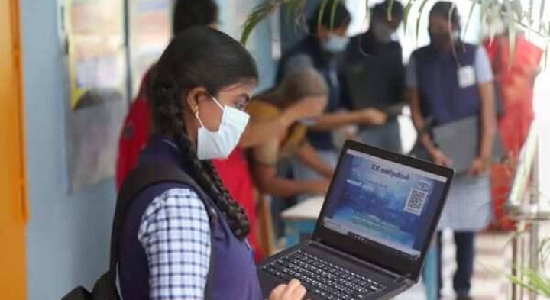
New Delhi, Jul 29: The new National Education Policy (NEP) approved by the Union Cabinet on Wednesday is set to usher in a slew of changes with the vision of creating an education system that contributes directly to transforming the country, providing high-quality education to all, and making India a global knowledge superpower.

The draft of the NEP by a panel headed by former Indian Space Research Organisation (ISRO) chief Kasturirangan and submitted to the Union Human Resource Development Minister Ramesh Pokhriyal when he took charge last year. The new NEP replaces the one formulated in 1986.

Some of the key highlights of the New Education Policy are:-

The policy aims to enable an individual to study one or more specialized areas of interest at a deep level, and also develop character, scientific temper, creativity, spirit of service, and 21st century capabilities across a range of disciplines including sciences, social sciences, arts, humanities, among others.

It identified the major problems facing the higher education system in the country and suggested changes such as moving towards multidisciplinary universities and colleges, with more institutions across India that offer medium of instruction in local/Indian languages, a more multidisciplinary undergraduate education, among others. 

The governance of such institutions by independent boards having academic and administrative autonomy has also been suggested.

Under the suggestions for institutional restructuring and consolidation, it has suggested that by 2040, all higher education institutions (HEIs) shall aim to become multidisciplinary institutions, each of which will aim to have 3,000 or more students, and by 2030 each or near every district in the country there will be at least one HEI.

The aim will be to increase the Gross Enrolment Ratio in HEIs including vocational education from 26.3 per cent (2018) to 50 per cent by 2035.

Single-stream HEIs will be phased out over time, and all will move towards becoming vibrant multidisciplinary institutions or parts of vibrant multidisciplinary HEI clusters.

It also pushes for more holistic and multidisciplinary education to be provided to the students.

Comments

Add new comment

  • Coastaldigest.com reserves the right to delete or block any comments.
  • Coastaldigset.com is not responsible for its readers’ comments.
  • Comments that are abusive, incendiary or irrelevant are strictly prohibited.
  • Please use a genuine email ID and provide your name to avoid reject.