



Saudi woman held at Bangkok airport pleads for asylum

Agencies
January 7, 2019

Bangkok, Jan 7: A Saudi woman being held at Bangkok airport on Monday appealed for asylum and for other passengers to help protest her looming deportation, in desperate tweets from the hotel room where she barricaded herself.

The incident comes against the backdrop of intense scrutiny of Saudi Arabia over its investigation and handling of the shocking murder of journalist Jamal Khashoggi last year, which has renewed criticism of the kingdom's rights record.

Rahaf Mohammed al-Qunun told AFP she ran away from her family while travelling in Kuwait because they subjected her to physical and psychological abuse.

She said she had planned to travel to Australia and seek asylum there, and feared she would be killed if she was repatriated by Thai immigration officials who stopped her during transit on Sunday.

The 18-year-old said she was stopped by Saudi and Kuwaiti officials when she arrived at Suvarnabhumi airport and her travel document was forcibly taken from her, a claim backed by Human Rights Watch.

She tweeted that she was due to be deported on a Kuwait Airways flight to Kuwait due to depart at 11.15am (0415 GMT).

"I ask the government of Thailand... to stop my deportation to Kuwait," she said on Twitter. "I ask the police in Thailand to start my asylum process."

Shortly before the scheduled departure, Qunun posted a plea for people within "the transit area in Bangkok to protest against deporting me".

"Please I need u all," she wrote. "I'm shouting out for help of humanity."

In a sign of growing desperation during the night, Qunun posted video of her barricading her hotel room door with furniture.

If sent back, she said she will likely be imprisoned, and is "sure 100 percent" her family will kill her, she told AFP.

A senior Thai immigration official said Sunday that Qunun was denied entry because she lacked "further documents such as return ticket or money" and Thailand had contacted the "Saudi Arabia embassy to coordinate".

Phil Robertson of Human Rights Watch said Qunun "faces grave harm if she is forced back to Saudi Arabia" and Thailand should allow her to see the United Nations High Commissioner for Refugees (UNHCR) and apply for asylum.

"Given Saudi Arabia's long track record of looking the other way in so-called honour violence incidents, her worry that she could be killed if returned cannot be ignored," he said.

The UNHCR said that according to the principle of non-refoulement, asylum seekers cannot be returned to their country of origin if their life is under threat.

"The UN Refugee Agency has been following developments closely and has been trying to seek access from the Thai authorities to meet with Rahaf Mohammed Alqunun, to assess her need for international protection," it said in a statement.

The ultra-conservative kingdom has long been criticised for imposing some of the world's toughest restrictions on women.

That includes a guardianship system that allows men to exercise arbitrary authority to make decisions on behalf of their female relatives.

In addition to facing punishment for "moral" crimes, women can also become the target of "honour killings" at the hands of their families, activists say.

Abdulilah al-Shouaibi, charge d'affaires at the Saudi embassy in Bangkok, acknowledged in an interview with Saudi-owned channel Rotana Khalijial that the woman's father had contacted the diplomatic mission for "help" to bring her back.

But he denied that her passport had been seized and that embassy officials were present inside the airport.

Saudi Arabia has come under fierce criticism following the murder of dissident journalist Khashoggi inside the kingdom's Istanbul consulate on October 2 -- a case that stunned the world.

Another Saudi woman, Dina Ali Lasloom, was stopped in transit in the Philippines in April 2017 when she attempted to flee her family.

Comments

Shameer
 - 
Monday, 7 Jan 2019

please make copy and past to word file ..

Add new comment

  • Coastaldigest.com reserves the right to delete or block any comments.
  • Coastaldigset.com is not responsible for its readers’ comments.
  • Comments that are abusive, incendiary or irrelevant are strictly prohibited.
  • Please use a genuine email ID and provide your name to avoid reject.
Agencies
August 2,2020

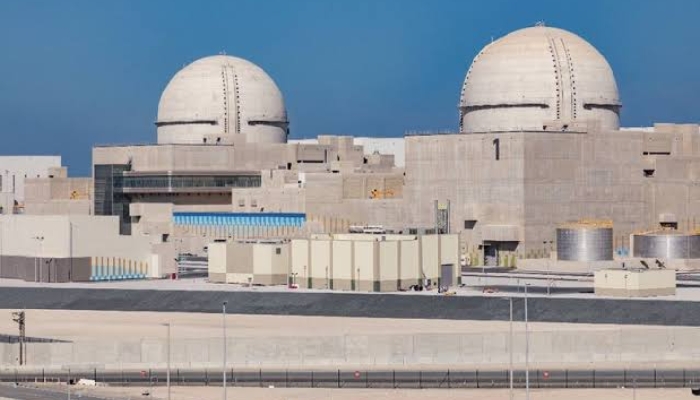
Dubai, Aug 2: The United Arab Emirates (UAE) announced on Saturday that it has started operations in the first of four reactors at the Barakah nuclear power station - the first nuclear power plant in the Arab world.

Emirates Nuclear Energy Corporation (ENEC), which is building and operating the plant with Korea Electric Power Corporation (KEPCO) said in a press release that its subsidiary Nawah Energy Company "has successfully started up Unit 1 of the Barakah Nuclear Energy Plant, located in the Al Dhafrah Region of Abu Dhabi".

That signals that Unit 1, which had fuel rods loaded in March, has achieved "criticality" - a sustained fission chain reaction.

"The start-up of Unit 1 marks the first time that the reactor safely produces heat, which is used to create steam, turning a turbine to generate electricity," said ENEC.

Barakah, which was originally scheduled to open in 2017, has been dogged by delays and is billions of dollars over budget. It has also raised myriad concerns among nuclear energy veterans who are concerned about the potential risks Barakah could visit upon the Arabian Peninsula, from an environmental catastrophe to a nuclear arms race.

Paul Dorfman, an honorary senior research fellow at the Energy Institute, University College London and founder and chair of the Nuclear Consulting Group, has criticised the Barakah reactors' "cheap and cheerful" design that he says cuts corners on safety.

Dorfman authored a report (PDF) last year detailing key safety features Barakah's reactors lack, such as a "core catcher" to literally stop the core of a reactor from breaching the containment building in the event of a meltdown. The reactors are also missing so-called Generation III Defence-In-Depth reinforcements to the containment building to shield against a radiological release resulting from a missile or fighter jet attack.

Both of these engineering features are standard on new reactors built in Europe, says Dorfman.

There have been at least 13 aerial attacks on nuclear facilities in the Middle East - more than any other region on earth.

The vulnerability of critical infrastructure in the Arabian Peninsula was further laid bare last year after Saudi Arabia's oil facilities at Abqaiq and Khurais were attacked by 18 drones and seven cruise missiles - an assault that temporarily knocked out more than half of the kingdom's oil production.

On Saturday, Dorfman reiterated his concern that there is no regional protocol in place to determine liability should an accident or incident at Barakah result in radioactive contamination spreading from the UAE to its neighbours. 

"Given Barakah has started up, because of all the well-rehearsed nuclear safety and security problems, it may be critically important that the Gulf states collectively evolve a Nuclear Accident Liability Convention, so that if anything does go wrong, victim states may have some sort of redress," Dorfman told Al Jazeera. 

The UAE has substantial oil and gas reserves, but it has made huge investments in developing alternative energy sources, including nuclear and solar.

Experts though have questioned why the UAE - which is bathed in sunlight and wind - has pushed ahead with nuclear energy - a far more expensive and riskier option than renewable energy sources.

When the UAE first announced Barakah in 2009, nuclear power was cheaper than solar and wind. But by 2012 - when the Emirates started breaking ground to build the reactors - solar and wind costs had plummeted dramatically.

Between 2009 and 2019, utility-scale average solar photovoltaic costs fell 89 percent and wind fell 43 percent, while nuclear jumped 26 percent, according to an analysis by the financial advisory and asset manager Lazard.

There are also concerns about the potential for Barakah to foment nuclear proliferation in the Middle East - a region rife with geopolitical fault lines and well-documented history of nuclear secrecy.

The UAE has sought to distance itself from the region's bad behaviour by agreeing not to enrich its own uranium or reprocess spent fuel. It has also signed up to the United Nation's nuclear watchdog's Additional Protocol, significantly enhancing inspection capabilities, and secured a 123 Agreement with the United States that allows bilateral civilian nuclear cooperation.

Comments

Add new comment

  • Coastaldigest.com reserves the right to delete or block any comments.
  • Coastaldigset.com is not responsible for its readers’ comments.
  • Comments that are abusive, incendiary or irrelevant are strictly prohibited.
  • Please use a genuine email ID and provide your name to avoid reject.
News Network
June 8,2020

New Delhi, Jun 8: Places of worship on Monday across the country reopened after staying shut since March due to the COVID-19 induced lockdown.

Scores of temples, mosques and gurudwaras were seen opening up keeping in view the Standard Operating Procedure (SOP) issued by Union Home Ministry to prevent coronavirus spread.

As per Ministry of Health guidelines, touching of idols/holy books, choir/singing groups, etc are not allowed.

In Delhi, people gathered at Gauri Shankar Temple in Chandni Chowk to offer prayers. With national capital seeing a rise in coronavirus cases, the devotees were seen wearing masks and taking precautions. People were also seen offering prayers at Kalka Ji Temple.

Several people arrived at Sri Bangla Sahib Gurudwara to offer prayers. Devotees were made to pass through the disinfectant tunnel before entering the Gurdwara in order to prevent the virus.

In Uttar Pradesh, Chief Minister Yogi Adityanath offered prayers at Gorakhnath Temple after state government allowed re-opening of places of worship from today.

Devotees were seen offering prayers at Eidgah Mosque in Lucknow.

Devotees also offered prayers at Shree Dodda Ganapathi Temple in Basavanagudi, Bengaluru.

Hanuman Garhi Temple in Ayodhya also reopened on Monday.

Prayers were offered at Durga Mata Mandir near Jagraon Bridge in Ludhiana, as the government has allowed reopening of places of worship.

Although religious places have opened in most of the states, however, there are some states which are yet to do so.

Preparations related to Yatra of Char Dhams including Badrinath have been completed, however, local representative of the areas from where the routes of this yatra pass have requested the government to not allow the commencement of the Yatra.

Based on the assessment of the situation, the Odisha Government ordered that all religious places/places of worship for the public will continue to remain closed till June 30.

Earlier, the Union Ministry of Home Affairs (MHA) said that religious places and places of worship for public, hotels, restaurants and other hospitality services along with shopping malls will be permitted to open from June 8.

However, these facilities will not be able to resume operations inside containment zones designated by authorities in states.

Comments

Add new comment

  • Coastaldigest.com reserves the right to delete or block any comments.
  • Coastaldigset.com is not responsible for its readers’ comments.
  • Comments that are abusive, incendiary or irrelevant are strictly prohibited.
  • Please use a genuine email ID and provide your name to avoid reject.
News Network
May 12,2020

Srinagar, May 12: Two paramilitary Central Reserve Police Force (CRPF) officers committed suicide after shooting themselves with their service rifles in Kashmir on Tuesday.

In the first incident, a CRPF sub-inspector on Tuesday committed suicide after shooting himself with his service rifle at Mattan area of south Kashmir’s Anantnag district. The deceased, identified as Fatah Singh of Jaisalmer in Rajasthan, had reportedly left behind a suicide note that read: “I am afraid, I may have Corona.”

Station House Officer (SHO) Akura, Mattan police station Jazib Ahmed said that they have followed the COVID-19 protocol while dealing with the body of the CRPF sub-inspector. “His samples have been taken and post-mortem conducted. Only results would confirm whether he was a COVID-19 positive,” he said.

CRPF spokesman in Srinagar Pankaj Singh said the officer had returned to his unit after performing a day-long duty. “As such, there is no evidence that he had caught COVID-19. Let’s wait for the final report. Details will be shared with the media,” Singh said.

Hours after the first incident, an assistant-sub-inspector of the CRPF posted in Srinagar also committed suicide by shooting himself dead with his service rifle.

Special Director General of CRPF, Zulfikar Hassan said they were trying to find out the reason for the two boys taking this extreme step.

Suicides and fratricide incidents are not uncommon among the CRPF and the Army personnel deployed in Kashmir. In 2006, recognising the rising fratricide and suicide cases among the armed forces, the then Defence Minister had constituted an expert group of psychiatrists under the Defence Institute of Psychological Research in order to suggest remedial measures to prevent suicide and fratricide incidents.

Over the last decade, incidents of fratricide have reportedly reduced in the Army as the force has taken measures to address the issue.

Comments

Add new comment

  • Coastaldigest.com reserves the right to delete or block any comments.
  • Coastaldigset.com is not responsible for its readers’ comments.
  • Comments that are abusive, incendiary or irrelevant are strictly prohibited.
  • Please use a genuine email ID and provide your name to avoid reject.